The Corporate Disconnect in Stamford
You wake up, check your phone, and the internet tells you where you are working this weekend.
For an independent wrestler stringing together dates in sweaty armories, that might just be a normal Tuesday. You take the bookings where you can get them. But for a 14-time women's champion who has main-evented WrestleMania, it is a catastrophic structural failure.
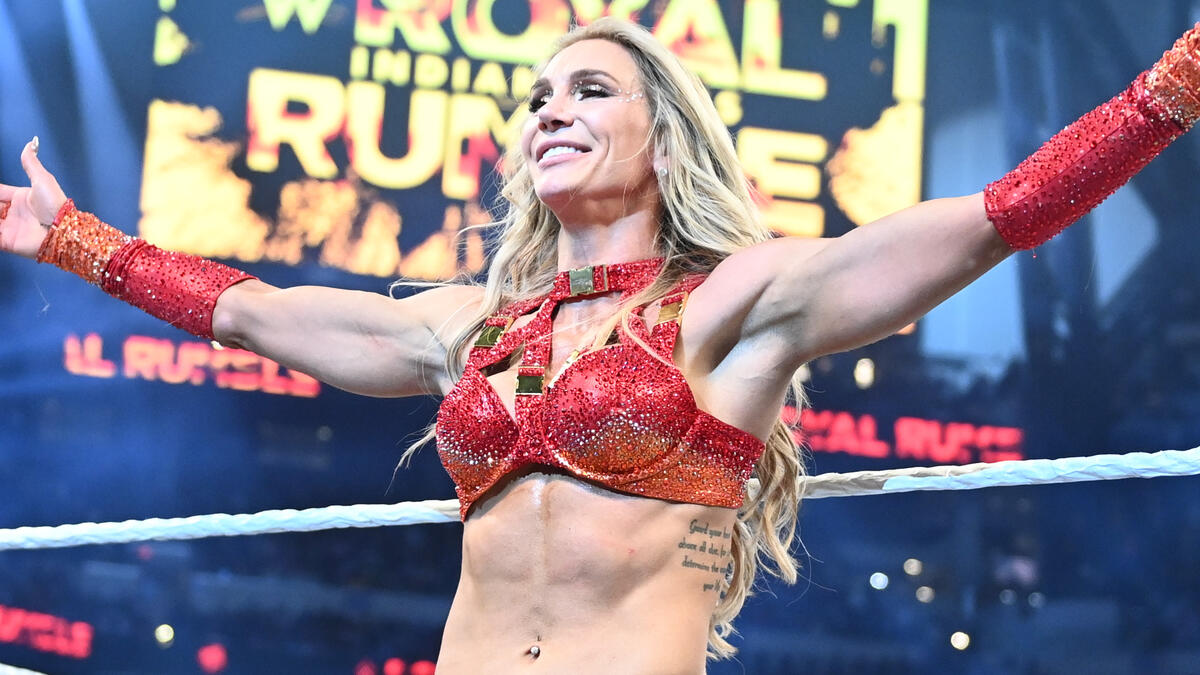
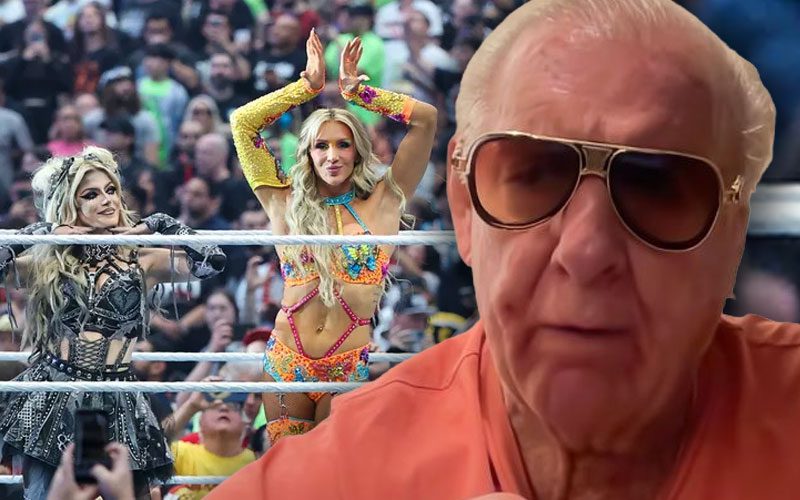
Charlotte Flair is heading to the White House Freedom 250. She is going out to represent WWE, shake hands with sponsors, and smile for the cameras. The only problem is that she had to find out about it on Twitter.
According to reports surfacing this week, Flair was completely unaware of her scheduled appearance at the NASCAR event until WWE's social media team blasted the graphic out to millions of followers. She discovered her own itinerary exactly the same way a fan in Omaha did. By scrolling.
This is not a funny social media oversight. It exposes a massive, glaring flaw in how the modern WWE machine operates behind the scenes. The front office in Stamford is currently functioning like a football team with a completely broken midfield.
The marketing department is pressing high up the pitch. They are aggressively securing lucrative crossover deals, booking media hits, and locking in television integrations. Meanwhile, the talent relations department is dropping deep, entirely out of the loop and failing to communicate with the locker room.
The result is a massive gap in the middle of the formation. And right now, Charlotte Flair is the one caught isolated in that empty space.
The Illusion of Professionalism
The TKO era was supposed to bring clinical, UFC-level professionalism to the professional wrestling business. Endeavor bought the promotion to clean up the chaotic, unpredictable backstage environment that defined the final decades of the Vince McMahon years.
They installed a massive corporate apparatus. Dozens of new executives, marketing directors, and brand integration managers were brought in to legitimize the operation. The goal was to turn WWE into a predictable, sanitized corporate entity.
But a sanitized corporate entity does not forget to text its biggest stars.
Under the old regime, communication was erratic. You might get a furious phone call at three in the morning changing your creative direction. But you generally knew where you were supposed to be, primarily because the boss was micromanaging every single plane ticket.
Today, the company is too big for its own operational limits. The left hand frequently has zero concept of what the right hand is doing. A corporate vice president signs a crossover deal with NASCAR. The public relations team mocks up the promotional graphics. The social media manager hits publish.
Somewhere in that chain of command, absolutely nobody thought to notify the actual human being required to show up. They treated one of the most decorated performers in company history like a line item on an Excel spreadsheet.
The Independent Contractor Fiction
This situation highlights the ongoing friction of WWE's labor model. The company classifies its wrestlers as independent contractors, a legal distinction that allows Stamford to avoid paying for certain benefits and workplace protections.
Yet, they continually treat these contractors like salaried employees who can be deployed at a moment's notice.
You do not see Real Madrid announcing Vinícius Júnior for a weekend sponsor appearance without his representation clearing the dates. You do not see a major Hollywood studio booking an actor for a regional press junket without running it through their agent first.
In those industries, the talent has a buffer. In WWE, the company simply assumes ownership of the talent's time. They post the graphic first and expect the wrestler to fall in line.
Flair's reaction online was remarkably restrained. She pointed out the absurdity of the situation without burying the front office. She knows exactly how to play the corporate game. She has survived a decade of bizarre management decisions and political reshuffling.
But behind closed doors, you can guarantee her representation was making aggressive phone calls. WWE generated a record $1.3 billion in revenue recently. You would think a company operating at that financial scale could afford an automated calendar integration.
The NASCAR Crossover Logic
From a purely tactical business perspective, sending Flair to the White House Freedom 250 makes perfect sense. The demographic overlap between stock car racing and professional wrestling is massive, particularly in the southeastern United States.
The Flair name is essentially royalty in the Carolinas. Sending Charlotte to a NASCAR track is booking 101. She is the perfect ambassador for this exact crowd.
She looks like a massive star, she handles chaotic media scrums with complete professionalism, and she brings immediate mainstream credibility to the broadcast. If you want to pop a rating and get some easy local news coverage, you put Charlotte Flair next to a stock car.
Which makes the communication breakdown even more baffling. If she is that important to the promotional beat, why is she the last person to know about it?
Locker Room Paranoia
This level of administrative sloppiness sends a terrible message to the rest of the roster. If you are a mid-card talent struggling to get television time, you watch very closely how the office treats the main eventers.
Flair is the absolute ceiling. She is the standard for the women's division. If the front office does not respect her time enough to send a heads-up text message, they certainly do not respect the time of a rookie working dark matches.
It breeds quiet resentment in the locker room. Wrestlers talk. They complain in rental cars on the long drives between towns. They vent in private group chats. Every missed text, every surprise booking, and every delayed flight itinerary chips away at the trust between the talent and the office.
Triple H's creative regime prides itself on being highly communicative and wrestler-friendly. They want to be seen as the antithesis of the previous administration. But being friendly in the hallway means absolutely nothing if the underlying corporate machinery treats your roster like rental cars.
A Fractured Blueprint
Look at the historical precedent. WWE has an abysmal track record of communicating basic employment details to its workers. During the early iterations of the brand split, wrestlers frequently found out they were moving to a different show by watching the television monitor backstage.
During the pandemic era, talent found out about their own releases via online reports before management even called them.
Those instances were often excused by management as necessary evils of live television or fast-moving corporate cuts. But this NASCAR appearance is neither. This is just pure, unadulterated administrative incompetence. It is a failure of basic workflow.
WWE is heading into a massive summer. The schedule is packed, the television deals are shifting, and the logistical demands on the talent are only going to increase. If they cannot manage the calendar of their top female star for a simple domestic crossover appearance, how are they going to handle the logistics of their upcoming international stadium tours?
The Final Whistle
So what happens this weekend? Flair will undoubtedly show up to the track. She will put on the sponsor jacket, smile for the cameras, wave the green flag, and hit every required talking point.
She is a veteran. She is not going to no-show a mainstream media hit and give the office a reason to label her difficult to work with. She will execute the play exactly as it was drawn up, even if she wasn't in the huddle when the play was called.
But the damage is already done internally. The illusion of a perfectly oiled TKO machine has slipped, revealing the same old chaotic wrestling promotion underneath.
My prediction? Flair handles the appearance flawlessly, generating exactly the social media engagement the front office wanted. But by Monday morning, there will be a very quiet, very tense restructuring of the approval process in Stamford.
You only get to embarrass a champion once before the system snaps back.