
Bishop Dyer is right about the dangerous culture of spots in NXT
The structural failure of risk management in developmental wrestling
Today is April 24, 2026, and the industry is still dissecting the fallout from WrestleMania 41. While the main roster focuses on the post-Vegas shuffle heading into WWE Backlash 2026 on May 9, a more technical debate is brewing in Orlando. The machinery of the WWE Performance Center, once designed to churn out safe, TV-ready workers, is facing a new kind of architectural debt. The recent criticism from Bishop Dyer regarding a particularly nasty bump taken by Sol Ruca isn't just a veteran airing a grievance. It is a signal that the feedback loops meant to protect young talent are beginning to fail.
Bishop Dyer, the veteran formerly known as Baron Corbin, has transitioned into a role that feels like a lead systems architect for the NXT locker room. He has seen the transition from the black-and-gold era to the 2.0 experiment and now the current hybrid model. When he speaks about safety, he isn't talking from a place of fear, but from a place of optimization. Dyer understands that the most valuable stat in professional wrestling isn't your star rating or your social media impressions. It is your availability. A wrestler who is on the shelf because of a avoidable high-risk spot is a 0.0 on the productivity scale.
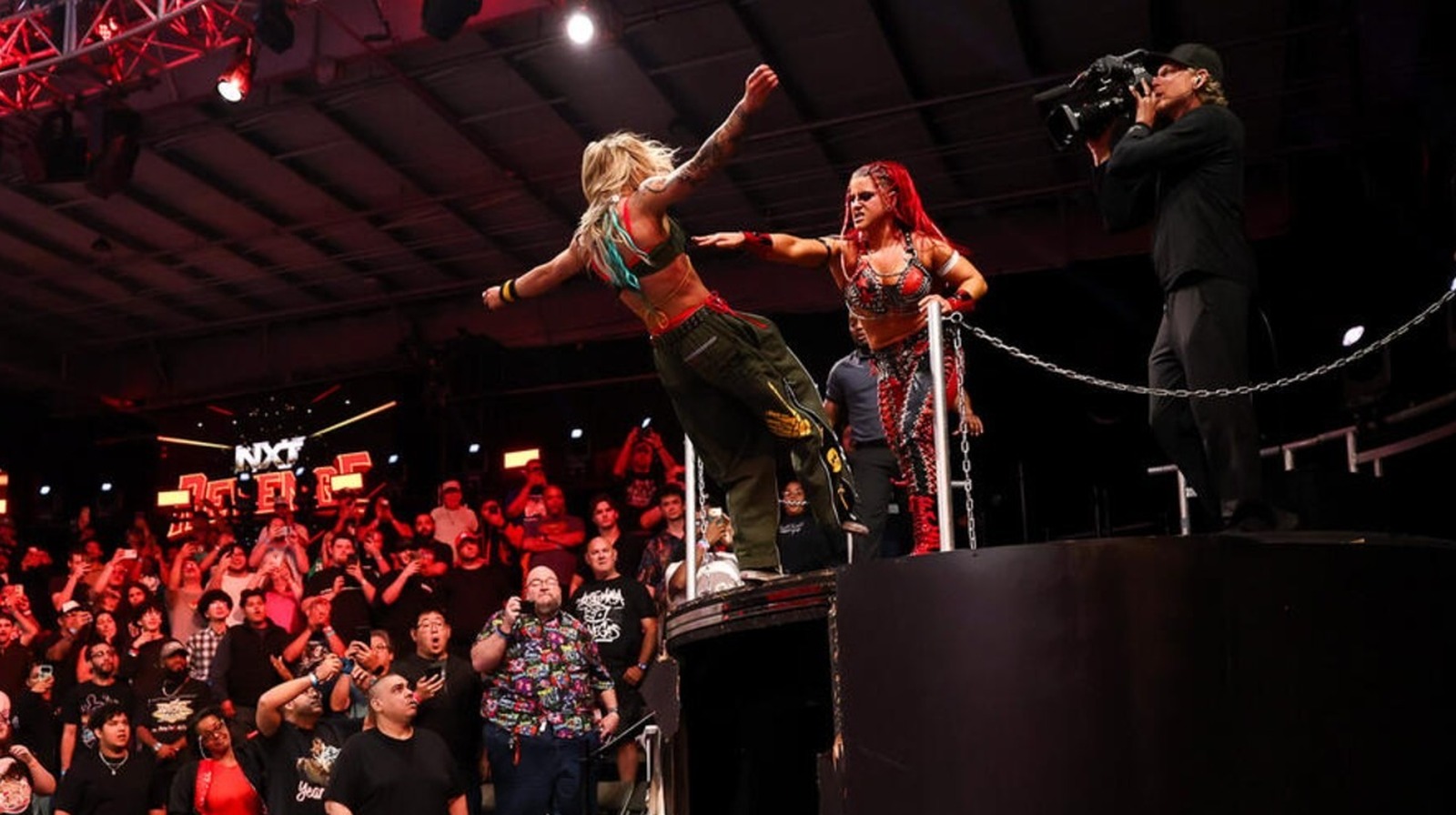
The incident in question involved Sol Ruca, perhaps the most gifted pure athlete currently signed to a WWE contract. Ruca is capable of moves that look like glitches in a physics engine. Her Sol Snatcher is a viral masterpiece, but as Wrestling Inc reported, Dyer’s critique focused on a specific, dangerous bump that went beyond the necessary bounds of storytelling. Dyer made a point that should resonate with anyone who has ever managed a high-stakes project: the creative team likely didn't even ask for it. This suggests a culture where talent is self-monetizing their own safety to stand out in a crowded developmental system.
The myth of the creative mandate
One of the most revealing aspects of Dyer’s commentary is the assertion that the office isn't the one pushing these dangerous spots. In the corporate hierarchy of WWE, there is often a misconception that 'Creative' demands these high-risk moments. Dyer’s insight flips that narrative. It suggests that the pressure is internal, driven by a generation of wrestlers who have been conditioned to believe that viral clips are the only way to earn a promotion to the main roster. If the writers aren't pitching these spots, then the wrestlers are acting as their own worst project managers, adding 'feature creep' to their matches that the system can't actually support long-term.
Sol Ruca is an outlier in terms of athletic capability. She can land a backflip with the precision of a gymnast, but even the best code has bugs. When you are operating at the edge of human physical limits, the margin for error becomes razor-thin. At 14 minutes into a high-intensity television match, your cognitive load is high and your physical reserves are low. That is exactly when the 'nasty' bumps happen. Dyer’s critique isn't about stifling Ruca’s creativity; it is about ensuring she is still around to headline WrestleMania 45 instead of being a 'what if' story in a documentary ten years from now.
The creative team wouldn't have pitched it to her. You have to know when to say no to yourself and protect your own career path before a single spot ends it.
We are currently 15 days away from Backlash 2026, and the stakes for the next generation of stars have never been higher. The merger between TKO and the global expansion of the WWE brand means more eyes, more revenue, and more pressure. But that pressure shouldn't manifest as a race to the bottom in terms of physical safety. If a veteran like Bishop Dyer—who has survived multiple character shifts and spent years as a safe, reliable hand—is calling out these spots, the Performance Center staff needs to listen. They are currently training athletes who are faster and more agile than any previous generation, but they might be failing to teach them the most critical skill: the art of the 'no.'
Comparing the risk-reward ratio in 2026
If we look at the broader environment, we see a similar trend in other promotions. As we approach AEW Double or Nothing 2026 on May 24, the conversation there often centers on the 'deathmatch' style that has defined certain segments of their roster. WWE has traditionally been the safer alternative, the place where you go to have a 20-year career. But the current NXT product is starting to mimic the high-risk indie style that Dyer is warning against. This isn't just an aesthetic choice; it’s a structural one. When the training environment encourages 'holy shit' moments over fundamental storytelling, the long-term health of the roster suffers.
Sol Ruca represents the future of the women's division. She is a demographic-shifting talent who brings a level of athleticism that was unimaginable in the Trish Stratus era. However, the data on high-flyers is clear. The shelf life of a wrestler who relies on high-impact, high-risk bumps is significantly shorter than that of a technician or a powerhouse. If Ruca is taking 'nasty' bumps on a Tuesday night in Orlando in front of 400 people, the risk-reward ratio is completely broken. You save those chips for the Allegiant Stadiums of the world, not the CWC.
- Sol Ruca's athleticism is a 10/10, but her career longevity depends on spot selection.
- Bishop Dyer (Baron Corbin) serves as a necessary 'safety auditor' for the younger roster.
- NXT's current culture risks prioritizing viral clips over sustainable career building.
- Creative teams are often used as an excuse for risks that talent chooses to take themselves.
The technical analyst in me sees a system that is over-clocking its hardware. NXT is the development server. You don't run your most dangerous, unoptimized code on the development server; you test it, refine it, and ensure it won't crash the entire production environment. Sol Ruca is a high-end GPU being forced to run at 100% capacity during a routine stress test. It is inefficient, and it leads to hardware failure. Dyer is simply the technician pointing at the rising temperature gauges and telling the operator to dial it back before something melts.
The veteran's role as a system debugger
Dyer’s move to criticize this publicly is also a tactical choice. By making these comments, he is providing cover for other young wrestlers who might feel pressured to do something they aren't comfortable with. If a veteran says 'that was too dangerous,' it gives the rookie permission to say 'I’m not doing that' the next time a peer suggests a reckless spot. It is a form of collective bargaining for safety. In an industry without a union, these public stances by respected veterans are the only mechanism for enforcing labor standards regarding physical risk.
We also have to look at the 'survivor bias' in the wrestling industry. The people who make it to the top are often the ones who took the risks and didn't get hurt. But for every superstar who landed the 450 splash safely for a decade, there are a dozen others whose names we've forgotten because their knees or necks gave out in their mid-20s. Sol Ruca is too talented to become a statistic. She has the potential to be a generational anchor for the company, but only if she learns the lessons that Dyer is trying to teach.
The argument isn't against athleticism. It is against the lack of a filter. A great match is a series of controlled risks that create the illusion of danger. When the danger becomes real, the art form has failed. The 'nasty bump' Dyer referred to wasn't a masterpiece of storytelling; it was a lapse in judgment. As we head into the summer of 2026, with the UCL Final on May 28 and the World Cup kickoff on June 11, the world of sports will be looking at peak athletic performance. WWE needs to ensure its version of peak performance is sustainable.
There is at least one critical observation to be made about Dyer's own career path, however. While he is right about safety, his own transition from the 'End of Days' powerhouse to the Bishop Dyer persona has sometimes lacked the very 'spark' that Ruca's high-risk style provides. There is a middle ground. You don't want a roster full of people who are so safe they are boring, but you certainly don't want a roster full of people who are so exciting they are retired by 30. The balance is currently tilted too far toward the latter in NXT.
Ultimately, the industry should thank Bishop Dyer for his bluntness. He isn't being a 'hater' or a 'gatekeeper.' He is acting as a necessary constraint on a system that is currently running without enough guardrails. Sol Ruca will likely be a multi-time champion, and she will have her share of highlight-reel moments. But if she listens to the veterans now, she might actually be around to enjoy her Hall of Fame induction 20 years from now. That is the only stat that really matters in the long run.
The Performance Center needs to recalibrate its curriculum. It isn't enough to teach a former college athlete how to take a flat-back bump. They need to be taught the politics of the locker room and the psychology of the 'no.' They need to understand that their body is the only asset they truly own. If they spend it all in NXT for a few thousand likes on social media, they are filing for physical bankruptcy before they even reach the big leagues. Dyer is just trying to make sure the next generation doesn't end up broke.
WWE Winged Eagle Championship Mini Replica Title Belt
Own a piece of history from WWE's most iconic era.
More Coverage
When Ozzy wasn't looking: The weirdest wrestling crossover of the year
5 hours ago
AJ Styles is reflecting on his legacy while others look elsewhere
5 hours ago
Ethan Page is playing a dangerous game with his ego in NXT
5 hours ago
Ethan Page says his custom NXT title was the real top prize and fans are split
5 hours agoGear Check: Sorting the Must-Haves from the Merch Table Filler
6 hours ago
Why CM Punk vs Cody Rhodes is a game of psychological chicken
7 hours agoMore Analysis
Sol Ruca needs to listen to Bishop Dyer before she destroys her career
2 months, 3 weeks ago
Sol Ruca is doing too much and Bishop Dyer is tired of the hospital runs
2 months, 3 weeks ago
Sol Ruca's main roster jump is a dangerous gamble for WWE
1 month, 4 weeks ago
The NXT roster raid has left a void that athleticism alone cannot fill
2 months, 3 weeks agoNXT dark match injury underscores risk in developmental ring work
5 days, 5 hours ago