Big Daddy Crabtree and the lost art of British technical wrestling
The preservation of a distinct technical legacy
British wrestling history often suffers from the same sanitization that plagues all archival media. As recent reports confirm, a documentary focusing on Big Daddy Crabtree is currently in production. For those of us who prioritize the geometry of the ring over mere promotional glitz, this represents a welcome shift toward documenting the technical lineage of the UK scene.
Technical wrestling from the mid-to-late 20th century in Britain relied on a closed-circuit logic that differs wildly from contemporary high-octane sequences. Crabtree operated in an era where weight distribution and chain wrestling were the primary tools of engagement. He understood that a well-applied hammerlock wasn't just a rest spot; it was a psychological anchor.
Tactical spacing in the traditional British ring
When analyzing historical footage of figures like Crabtree, one observes a deliberate approach to spacing. Modern athletes often move with a frantic, cardio-heavy cadence, sacrificing defensive integrity for visual complexity. Crabtree, by contrast, mastered the art of the 5-minute feeling-out period, focusing on wrist control and base rather than aerial transitions.
The current trend of fast-paced, move-for-move offense leaves little room for the subtle tension created by technical grounding. We see this contrast today in how the tag team division fluctuates in quality, similar to the frustrations found in other recent coverage of division staples. If a performer isn't in the ring, they cannot build the narrative muscle memory that made legends like Crabtree so effective.
The missed opportunity in modern curation
However, the project faces a significant hurdle regarding the lack of digitized footage from the regional circuits. Much of the 1970s and 80s footage remains locked in incomplete archives or private collections, complicating a true tactical breakdown. We risk creating a hagiography rather than a genuine analysis if the directors rely too heavily on talking heads rather than match footage.
If we examine the shot maps of modern bouts, we see a heavy reliance on high-impact spots in the final 10 minutes. Crabtree's bouts, meanwhile, often saw a crescendo of pressure starting as late as the 22nd minute. This patience is a dying art. When talent is rotated off television for weeks at a time without an injury designation, we lose the continuity required to build that kind of slow-burn intensity.
We must demand that this documentary provide more than just sentimentality. It needs to showcase the mechanics of a European uppercut, the grip pressure of a legitimate submission hold, and the way the ring ropes were utilized as a weapon in a restricted, smaller venue. Wrestling journalism has become obsessed with booking charts and contractual status updates. It is time we return to the notebook and break down the literal work rate that established these regional stars originally.
Ultimately, the value of this film depends on whether the producers acknowledge the imperfections of the era. Crabtree was not a perfect worker, but he was a technician who understood the mathematics of the mat. If the documentary captures this, it will be a rare piece of honest wrestling history.
WWE Elite Collection Roman Reigns Action Figure
Acknowledge your Tribal Chief with this highly detailed figure.
Frequently Asked Questions
What characterized Big Daddy Crabtree's technical wrestling style?
How did Crabtree use ring spacing differently than modern wrestlers?
What is the primary challenge for the Big Daddy Crabtree documentary?
What does the author suggest is missing from modern wrestling analysis?
How does rotational booking impact modern match psychology?
More Coverage
Gotham Wrestling’s trajectory depends on the Drew Gulak experiment
1 week, 2 days agoMaple Leaf Pro Wrestling is finding a rhythm in the ring
1 week, 3 days ago
Bandido and Shibata proved technical wrestling still has a heartbeat
2 weeks agoSky's acquisition of ITV could finally bring World of Sport to Peacock
2 weeks, 6 days ago
Deonna Purrazzo is more focused on the ring than the noise
1 month agoRemembering Jordan Saint as the industry prepares to say goodbye
1 month, 1 week agoMore Analysis
Why patience is the forgotten weapon in today's ring psychology
5 days, 7 hours ago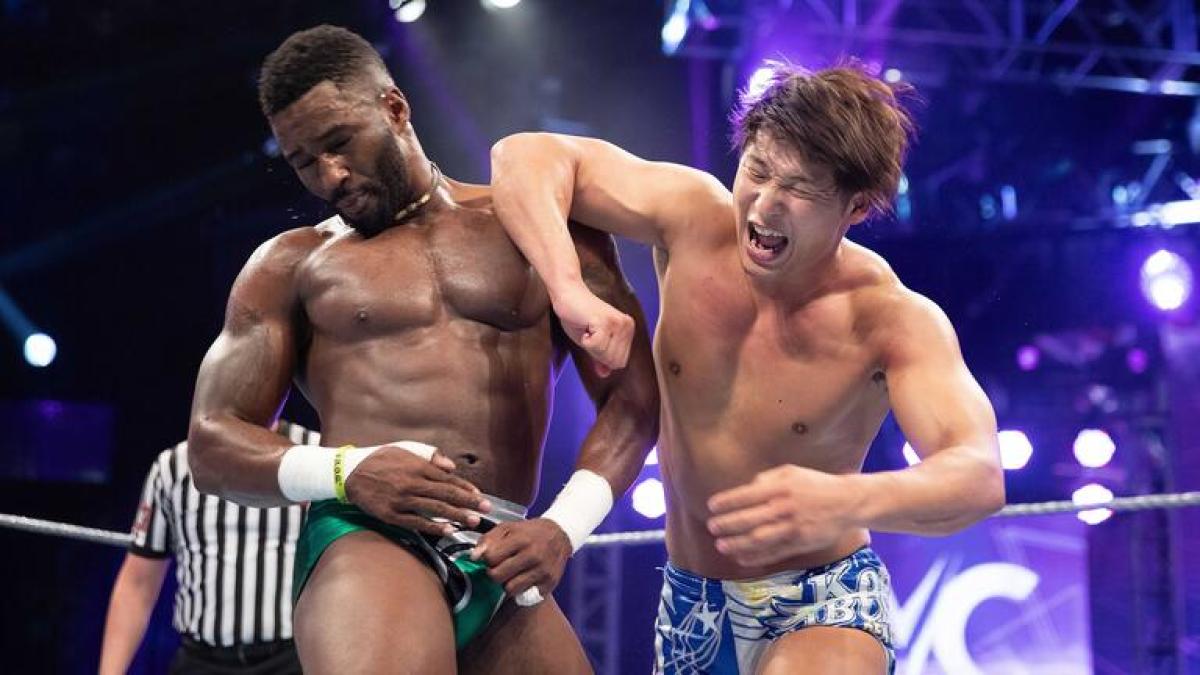
Why the Cruiserweight Classic still defines modern technical wrestling
3 months, 3 weeks ago
Ted DiBiase's legacy goes far beyond the gimmick
1 month, 1 week agoThe disconnect between indie heat and television polish
2 months, 4 weeks ago
EVE 150 showcased why the London scene is vital for technical growth
1 month, 2 weeks ago