There is a straight line in professional wrestling history that people conveniently ignore. We talk about the evolution of the anti-hero as if it started with a broken neck and a beer can in 1996. It didn't. The modern wrestling loner—the guy who trusts nobody, has no friends, and fights entirely for himself—started in the late 1980s. It started with Bad News Brown.
The news breaking this week that Bad News Brown is finally entering the WWE Hall of Fame ahead of WrestleMania 41 is genuinely surprising. WWE rarely reaches back to this specific era to honor a talent who wasn't a world champion or a multi-decade company man. Allen Coage was neither of those things. He was a legitimately terrifying presence who walked into a cartoon-era WWF and flatly refused to smile.
To understand why this induction actually matters to wrestling purists, you have to look at the reality of the business in 1988. Everything was neon. Everybody had a buddy. Tag teams were booming, massive stables were forming, and the good guys always gave each other high-fives after a victory. The heel locker room was full of cowardly managers and cartoonish monsters who ran away from a fair fight.
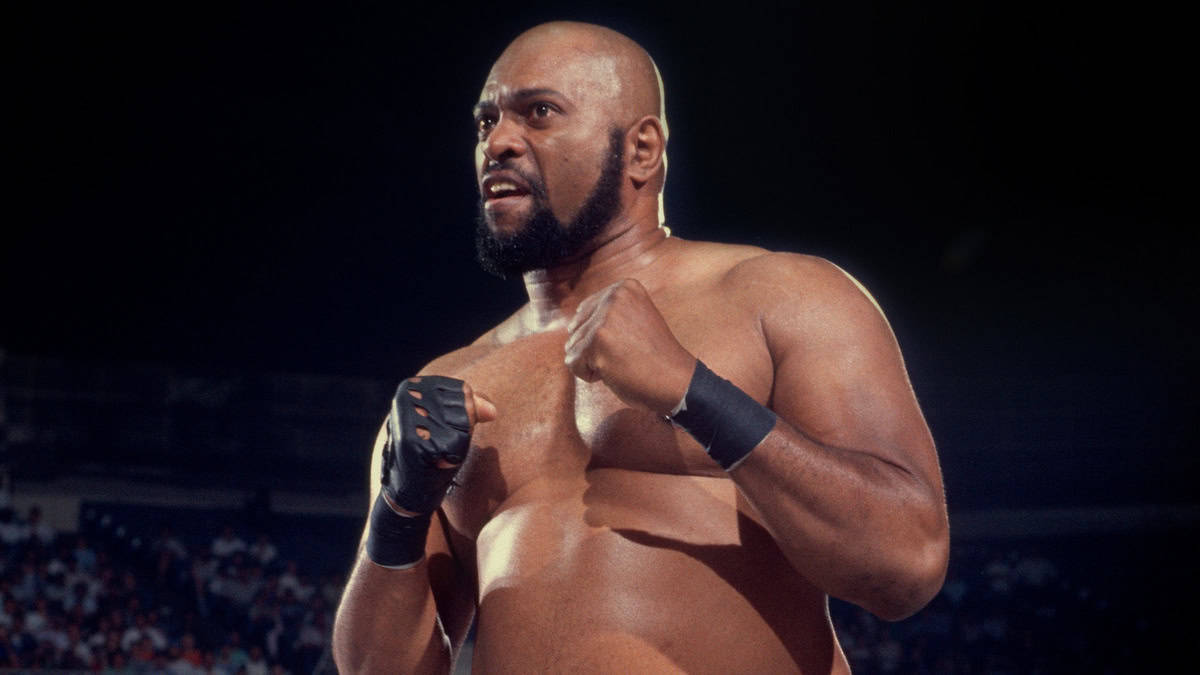
Then this guy from Harlem walks out. No flashy robe. No loud entrance music. No manager screaming at ringside. Just black trunks, black boots, and a cold, unblinking scowl. He cut promos like he was warning you about a debt collection, not selling pay-per-view buys. The sheer contrast between Bad News Brown and the rest of the roster made him completely undeniable.
Legitimacy in a Plastic Era
Allen Coage was not a guy playing a tough guy on television. He won a bronze medal in Judo at the 1976 Olympics in Montreal. He was a two-time Pan American Games gold medalist. He was a serious martial artist who transitioned into a business full of bodybuilders. When he broke into pro wrestling, trained by Antonio Inoki in Japan and hardened in the brutal environment of Stu Hart's Stampede Wrestling, he brought an unteachable credibility.
Watch his television matches back now on the WWE Network. The work holds up perfectly. While everyone else was throwing looping, theatrical punches that missed by a foot, Brown was hitting stiff strikes and tossing guys around with actual judo throws. He worked incredibly snug. The locker room knew he could genuinely stretch anybody if he felt like it, and he carried that aura straight to the ring.
His promo style was a revelation. While Hulk Hogan was screaming about pythons and Ultimate Warrior was talking about crashing spaceships, Bad News stood in front of Mean Gene Okerlund and spoke softly. He called out the hypocrisy of the promotion. He famously referred to President Jack Tunney and the front office as "beer-bellied sharecroppers." He didn't yell to get his point across. He just glared into the camera and promised violence.
His finishing move, the Ghetto Blaster, was just a brutally crisp enzuigiri. In an era where top guys were finishing matches with a running hug or an elbow drop, he was stepping up and kicking people right in the back of the head. It looked sudden. It looked like it hurt. And he could hit it on anybody, regardless of their size.
The WrestleMania IV Betrayal
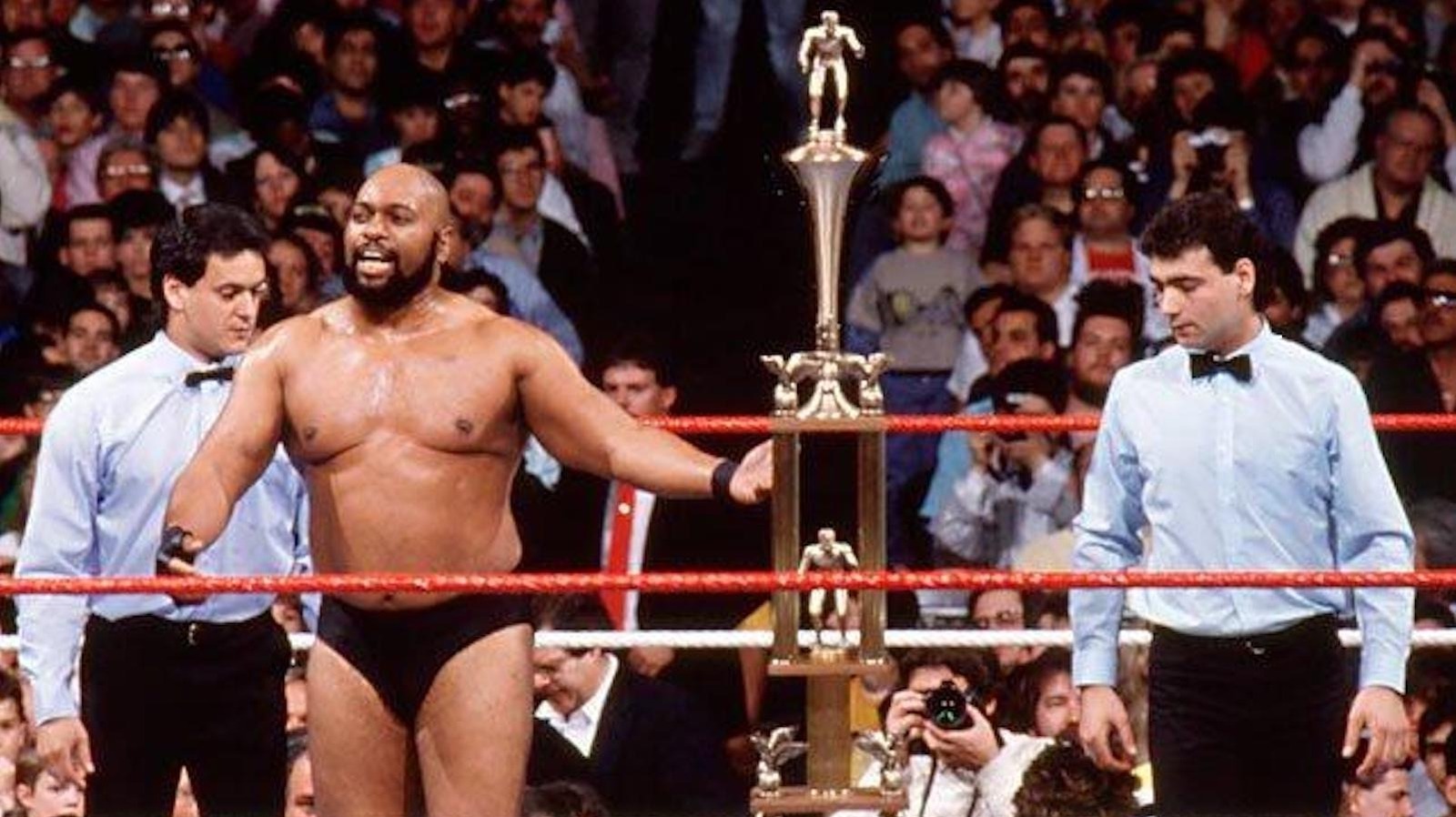
His defining moment on the main roster remains the conclusion of the WrestleMania IV battle royal in Atlantic City. He and Bret Hart were the final two men standing. They had formed a momentary, unspoken truce to eliminate Paul Roma. The crowd fully expected them to square off like honorable competitors. Instead, immediately after Roma hit the floor, Brown blindsided Hart with the Ghetto Blaster and tossed him out like garbage.
He didn't gloat like a traditional heel. He didn't grab a microphone and brag about how smart he was. He just demanded his massive trophy, grabbed it, and left the ring. He owed Bret nothing. The alliance was a means to an end, and the moment it outlived its usefulness, he ended it. It was brilliant, minimalist character work.
That match sparked a fun, physical feud with Hart that carried through the house show circuit. Hart always preferred working with guys who made the fight look like a struggle, and Brown gave him exactly that. They beat the hell out of each other night after night, setting a standard for mid-card work rate that the rest of the card struggled to match.
The Booking Misses and the Piper Match
But it wasn't all perfect. We need to be honest about how WWE completely botched his main event run. For a guy who looked and worked like a legitimate threat to anyone on the roster, the creative direction ultimately fell off a cliff. The front office simply didn't know how to book a heel who wasn't a coward.
The absolute lowest point is still incredibly uncomfortable to revisit today. WrestleMania VI in Toronto should have been a massive payday and a star-making performance for Brown. He was paired against Roddy Piper, a master of chaotic brawls. It should have been a violent, bloody classic. Instead, the company booked a bizarre, highly offensive angle where Piper painted half his body black.
It was a confusing, tasteless mess that completely derailed the match before the bell even rang. They brawled around the ring to a flat double count-out in under seven minutes. It did absolutely nothing to help either man, and it stands as one of the most embarrassing booking decisions of the era. The fans didn't know how to react, and Coage himself was reportedly disgusted by the entire presentation.
Behind the scenes, the frustrations were entirely justified. Coage claimed he was explicitly promised a main event program with Hulk Hogan by Vince McMahon. That program never materialized on television. The company kept him stuck in mid-card purgatory, feeding him to Randy Savage at SummerSlam and keeping him away from the WWF Championship picture. When McMahon failed to deliver on the promised Hogan feud, Brown simply packed his bags and walked away in 1990. He didn't complain to the dirt sheets. He didn't beg for his job back. He just left.
The Stampede Connection
You cannot talk about the legacy of Bad News Brown without talking about Calgary. Stu Hart saw the immense potential in Coage almost immediately after he arrived from Japan. He quickly became a fixture in Stampede Wrestling as Bad News Allen, terrorizing the territory and drawing incredible heat. He was the perfect monster for that rugged environment.
He feuded violently with the Dynamite Kid, Davey Boy Smith, and a young Bret Hart. Those Stampede crowds in the Victoria Pavilion legitimately feared him. He cut promos where he promised to break limbs, and given his background, the fans believed him entirely. He never broke character to make anyone feel comfortable.
He wasn't doing twenty-minute broadway classics with fifty false finishes. He was doing five-minute street fights. The pacing of his matches felt like an actual mugging in an alley. He would stalk his opponent, cut off the ring, and methodically dismantle them. It was psychological warfare as much as physical dominance.
This is exactly why Bret Hart has always been one of his biggest advocates behind the curtain. Hart understood the immense value of working with someone who made the audience believe the violence was real. There is a reason Bret wanted to work with him at WrestleMania IV. He knew Bad News would make the finish look like an absolute murder.
What This Induction Actually Means
WWE has a persistent habit of rewriting history to suit their own corporate narrative. They like to pretend every successful idea was birthed in a creative meeting in Stamford. But Bad News Brown was a complete anomaly. He was an idea they clearly didn't fully understand, yet he got over organically anyway. The fans respected him because he didn't insult their intelligence.
He was an essential pioneer for black wrestlers who didn't want to be pigeonholed into dancing gimmicks or smiling, overly friendly babyface roles. He demanded to be taken seriously as a dangerous prizefighter. That uncompromising attitude paved the way for so many serious, grounded characters that followed in the decades after he left the spotlight.
It took way too long for the company to formally recognize this. Coage passed away in 2007, meaning this induction is strictly posthumous. His family will have to accept the Hall of Fame ring on his behalf in Las Vegas. It is a massive shame he isn't here to give the speech himself.
If he were standing at that podium, the speech probably would have been two minutes long. It would have been completely unscripted. And it would have been slightly terrifying for everyone sitting in the front row. He would not have thanked the front office, and that is exactly why the fans loved him.
Looking Ahead to WrestleMania Weekend
As we gear up for WrestleMania 41 in Las Vegas next month, the Hall of Fame class is finally starting to take shape. Adding a gritty, uncompromising worker like Bad News Brown provides a much-needed counterbalance to the glitz and corporate polish of the modern product. It adds a layer of genuine toughness to a weekend that often focuses too much on celebrity appearances.
The only real question left is who steps up to do the inducting. If Bret Hart is available and willing to travel, he is the only logical choice. He took the Ghetto Blaster on the biggest stage, he bled with him in Calgary, and he respected the hell out of the man. Let the Hitman stand up there and tell the stories about the guy who actually scared the locker room.
Bad News Brown was decades ahead of his time. He was doing reality-based character work before anyone knew what the term meant. Now, his name is permanently etched into the history books alongside the biggest stars in the industry. And the best part? He didn't have to make a single friend to get there.