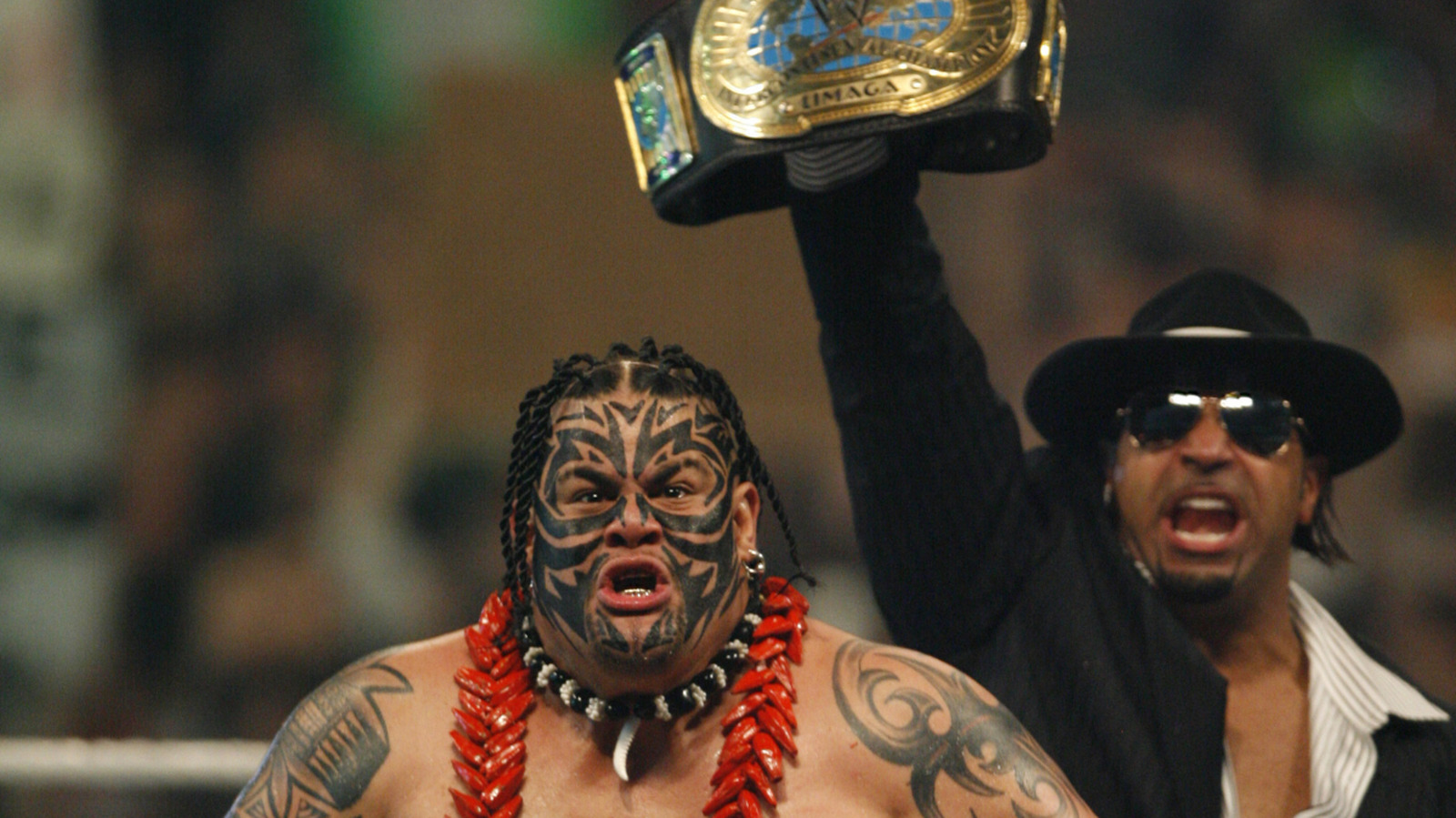
The Umaga Connection
Armando Estrada served as the fast-talking architect of Umaga’s push in the mid-2000s. From April 2006 until his transition to other roles in 2007, Estrada functioned as the bridge between the silent, destructive Samoan Bulldozer and the WWE audience. His recent reflections on that period highlight the raw intensity of the character and the physical toll it extracted on everyone involved.
Umaga was a generational talent who thrived on stiff physicality. Estrada noted that managing a performer whose primary gimmick involved systematic destruction required a unique level of trust. You were not just a manager; you were a target for the aftermath.
The Reality of the Samoan Bulldozer
Estrada’s role forced him to interact with top-level talent immediately upon entering the WWE scene. By putting a mouthpiece on Umaga, the company allowed the character to remain mysterious while Estrada navigated the narrative demands of a weekly television program. It remains one of the most successful pairings of that era, grounded in the contrast between Estrada’s verbal arrogance and Umaga’s quiet, lethal efficiency.
I enjoyed it, I loved it. I mean, here I am a 28-year-old kid from Chicago, and a year later, I'm at WrestleMania headlining with the guy.
That quote, pulled from his appearance on the Wrestling Inc. podcast, underscores the meteoric rise Estrada experienced. Going from the independent circuit to a featured spot on the biggest stage is a narrative arc few wrestlers sustain. Estrada’s work centered on keeping the heat focused on his client, a task he performed with a level of charisma that allowed the company to keep Umaga away from microphones entirely.
Critical Assessment of the Stint
While the act was effective, historians often point to the limitations of placing Umaga in a spot where he was booked into corners that hampered his long-term viability. The character was designed to mow down opposition, which created a stagnant cycle. Once the primary feuds were exhausted, the reliance on violent beatdowns often led to a lack of genuine storyline progression.
Estrada’s own career trajectory suffered from the lack of creative mobility afforded to the manager-wrestler tandem once the initial heat faded. By late 2007, the act felt disconnected from the main event picture, a clear failure by the creative team to iterate on the successful persona they had built just twelve months earlier. Managing such a powerful monster is a restrictive box; you are either winning by total destruction or you lose and the character’s credibility is evaporated.
Contextualizing the Influence
Umaga remains a reference point for modern power-based performers looking to balance physicality with a distinct look. Estrada provided the necessary vocal flair that prevented the character from becoming a repetitive trope. As Wrestling Inc. detailed, the collaborative effort between the two was built on genuine personal chemistry that transcended the screen.
Looking back now, the 2006-2007 window serves as a masterclass in how to build a monster character from the ground up. It required patience, clear booking, and a performer—Estrada—who understood that the manager should never outshine the main attraction. The transition to the mid-card later in their tenure serves as a cautionary tale for how quickly momentum can stall in a company that rarely knows when to end a series of successful, yet repetitive, encounters.
The legacy of this run is solidified by the undeniable impact it left on the audience, who remained invested even as the booking choices became increasingly predictable. The physicality was genuine, and the storytelling was clear, which is why the pairing is still analyzed by fans today as they head into the 41st edition of WrestleMania. It is a reminder that in professional wrestling, a well-defined character with a clear purpose is often more effective than complex, over-written storylines.