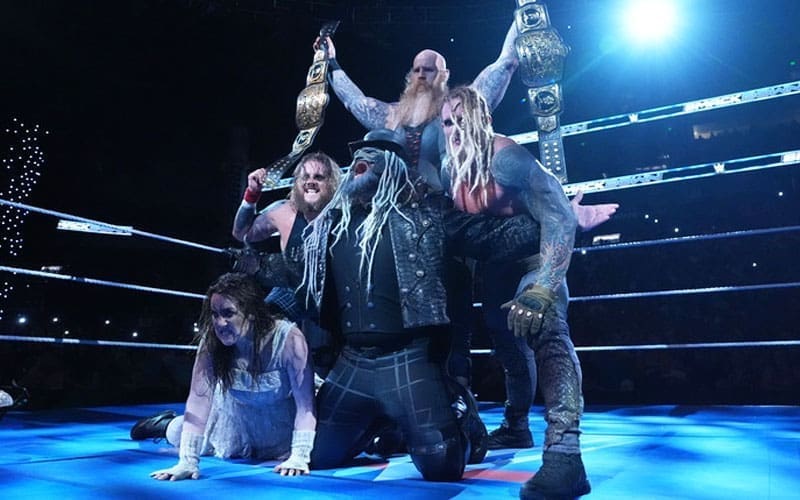
Bliss breaks silence on Wyatt Sicks exit
The fallout from Monday’s internal roster restructuring continues to ripple through WWE. Alexa Bliss, a key figure in the extended Wyatt storytelling universe, addressed the release of the Wyatt Sicks faction on social media earlier today. The departure of the stable leaves a massive hole in creative, specifically regarding the Bray Wyatt legacy programs that dominated television for months.
Bliss provided a brief acknowledgment of the staff involved, serving as one of the few high-profile talents to address the cuts publicly. Her statement followed a chaotic administrative week that saw multiple performers released without prior warning. The lack of an official statement from the company regarding the future of the Wyatt lore has only fueled frustration among the writing team and long-term fans.
Creative vacuum following the purge
With the Wyatt Sicks removed from the roster, WWE creative has essentially abandoned the dark, supernatural narrative thread that was meant to carry the mid-card through the summer. This sudden abandonment is reminiscent of the 2021 release cycle, where creative momentum was similarly halted by executive decisions to cut talent mid-storyline. The absence of this group impacts upcoming house show scheduling and potential developmental call-ups that were reportedly tied to the stable's expansion.
The current state of the roster suggests a trend toward short-term booking rather than long-term character arcs. Fans tracking the latest leaks note that the decision was likely financial, yet the impact on the industry's ability to maintain coherent mythology is significant. Without the Wyatt Sicks to anchor the darker side of the show, writers are now scrambling to fill three hours of television with filler.
Roster impact and injury management
The constant churn of personnel puts an immense strain on those remaining. Physical wellness is often dictated by schedule stability, and the current instability creates a frantic environment. As Seth Rollins manages his own recovery timeline from his recent appearance, the lack of depth on the roster becomes a critical liability. WWE currently operates with a condensed list of full-time stars capable of working main events.
Medical teams are already monitoring the output of the core roster to prevent injury. When factions are gutted, the remaining talent is often forced to work harder, busier schedules to compensate for the missing bodies. This creates a high-pressure environment where training loads are hard to manage. Expecting the same output from fewer people, specifically with WWE Backlash only 14 days away, is a recipe for further medical setbacks.
Strategic failure in brand building
The decision to discard the Wyatt Sicks signals a shift back to standard corporate presentation, potentially losing the audience that gravitated toward the complex, multimedia-heavy stories developed over the last year. Critics point to this move as a failure in brand identity. The company had spent significant airtime establishing the lore, only to discard it, which discourages audience investment in new talent.
Historical data shows that these types of abrupt purges rarely yield financial success in the long term. Fans eventually sour on the lack of continuity. While executives cite the need to streamline, the absence of the supernatural elements leaves many performers without a clear path forward. The total roster size is now at a point where depth is a legitimate concern for touring executives.
Management must now decide if the remaining talent can sustain interest through the summer build-up or if a new strategy will emerge. For now, the locker room remains on edge, waiting to see if further cuts occur before the May 9th premium live event. The lack of transparency remains the primary grievance for both talent and the viewing audience, leaving morale in a fragile spot as the spring touring schedule intensifies.