
AJ Mendez and the risk of reviving reality TV nostalgia
The conceptual disconnect in the women's division
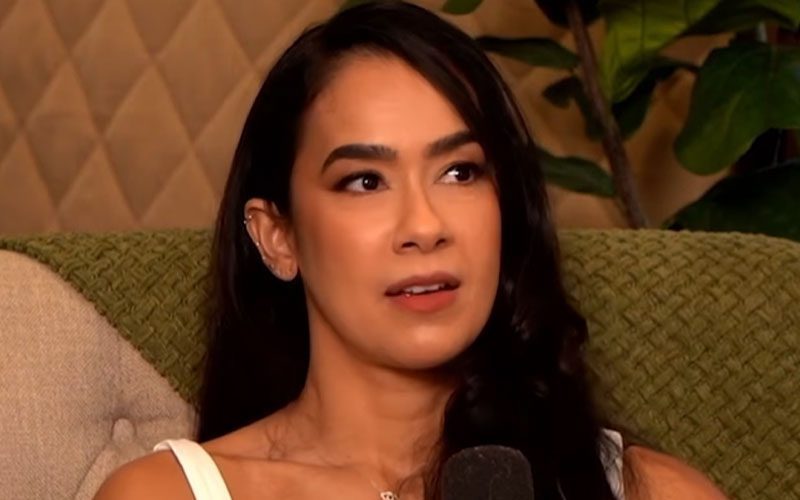
Modern professional wrestling has trended toward high-work-rate aestheticism. AJ Mendez, returning to the fold, represents an era where character nuance often outweighed pure technical output. Her recent transparency regarding her mental health journey—specifically identifying her darker impulses as "Jean"—suggests she is returning not as a nostalgic act, but as a performer with increased psychological depth.
However, the company’s internal chatter suggests a jarring pivot in creative direction. Cathy Kelley recently voiced support for a potential reboot of Total Divas. This is a strategic blind spot. Promoting an influencer-heavy reality format while simultaneously pushing elite in-ring competition creates unnecessary tonal whiplash.
Why reality television metrics are misleading
The original reality experiment served a purpose in 2013 by broadening the audience demographic, but 2026 demands different markers of success. Viewership engagement now prioritizes viral clips of athletic sequences—spots like an inverted code red or a perfectly timed double jump cross-body—over scripted arguments about interior design or relationship disputes.
Bringing back low-stakes reality television ignores how the audience consumes content. Fans pull clips of high-leverage athletic maneuvers on social media immediately after the bell rings. A reality show requires a different behavioral investment that rarely converts into the kind of focused, long-term viewership that high-level wrestling demands.
The Mendez factor and psychological narrative
AJ Mendez approaches her craft through a lens of extreme honesty. When she names her internal friction "Jean," it provides a psychological anchor that fans can follow. This level of character work serves natural storytelling, allowing her to build feuds based on internal conflict rather than external reality show drama.
If WWE forces its talent to toggle between gritty in-ring character work and the performative melodrama of reality TV, the brand loses its competitive edge. AJ Mendez revealed her internal struggles in a way that feels authentic to her persona. Trying to fold that personality into a reality series would dilute the gravity she brings to a wrestling ring.
The tactical flaw in audience management
The primary flaw in the Total Divas reboot narrative is the assumption that crossover audiences will stick around for the matches. The data from the early 2010s shows that reality viewership often stayed within the reality bubble. It did not create a pipeline of dedicated wrestling pay-per-view buyers.
By chasing the ghost of reality television, the booking team risks alienating the core audience that values the evolution of the women's division. The current standard of technical excellence is high. Introducing reality-based tropes threatens to drag the discourse back toward the "diva" era, which modern performers have spent years actively dismantling.
There is also the matter of time allocation. Performance centers and training rings must focus on refining athletic output. If talent is required to spend days filming manufactured reality segments, their rehearsal time for high-stakes matches suffers. A decline in match quality is an inevitable byproduct of dividing focus between athletic excellence and reality production.
The business of professional wrestling in 2026 should be about heightening the prestige of the championship belt. Every segment should build toward a logical crescendo. Reality programming, by contrast, is designed to be episodic and cyclical, with little narrative momentum. It is a distraction that the current division cannot afford during its most important developmental phase.
AJ Mendez brings a sharpened focus to her comeback. She understands exactly who she is within a ring. If the company ignores this clarity in favor of reality TV nostalgia, they are missing the forest for the trees. Success lies in the tension of the match, not the production of the reality television subplot.
WWE 2K26 Standard Edition
The most complete wrestling simulation featuring a massive 400-star roster.
Frequently Asked Questions
Why is a Total Divas reboot considered a strategic risk?
How does AJ Mendez approach her current character work?
What is the shift in wrestling audience engagement priorities?
Why does the article argue against mixing wrestling with reality TV?
What lessons did WWE learn from the original reality television experiment?
More Coverage

Tatum Paxley is running out of road in NXT
2 hours ago
Vince Russo is talking again, and the internet is collectively rolling its eyes
3 hours ago
Top 10: Defining Moments in Professional Wrestling
3 hours ago
AJ Mendez returns to the fold as the modern women's scene evolves
3 hours ago
AJ Mendez is getting the flowers she deserves for speaking up
3 hours ago
Why bringing back Total Divas is a strategic mistake for WWE
3 hours agoMore Analysis
Tatum Paxley is running out of road in NXT
2 hours ago
Why the internet is still obsessed with bitter wrestling feuds
3 hours ago
Vince Russo is talking again, and the internet is collectively rolling its eyes
3 hours ago
Top 10: Defining Moments in Professional Wrestling
3 hours ago
AJ Mendez returns to the fold as the modern women's scene evolves
3 hours ago