A Trial By Fire on National Television
Double or Nothing weekend always brings a flood of media appearances. Every wrestler on the roster gets shuffled through radio hits, morning shows, and digital scrums. Most of it is repetitive promotional noise. You hear the same talking points repeated ad nauseam.
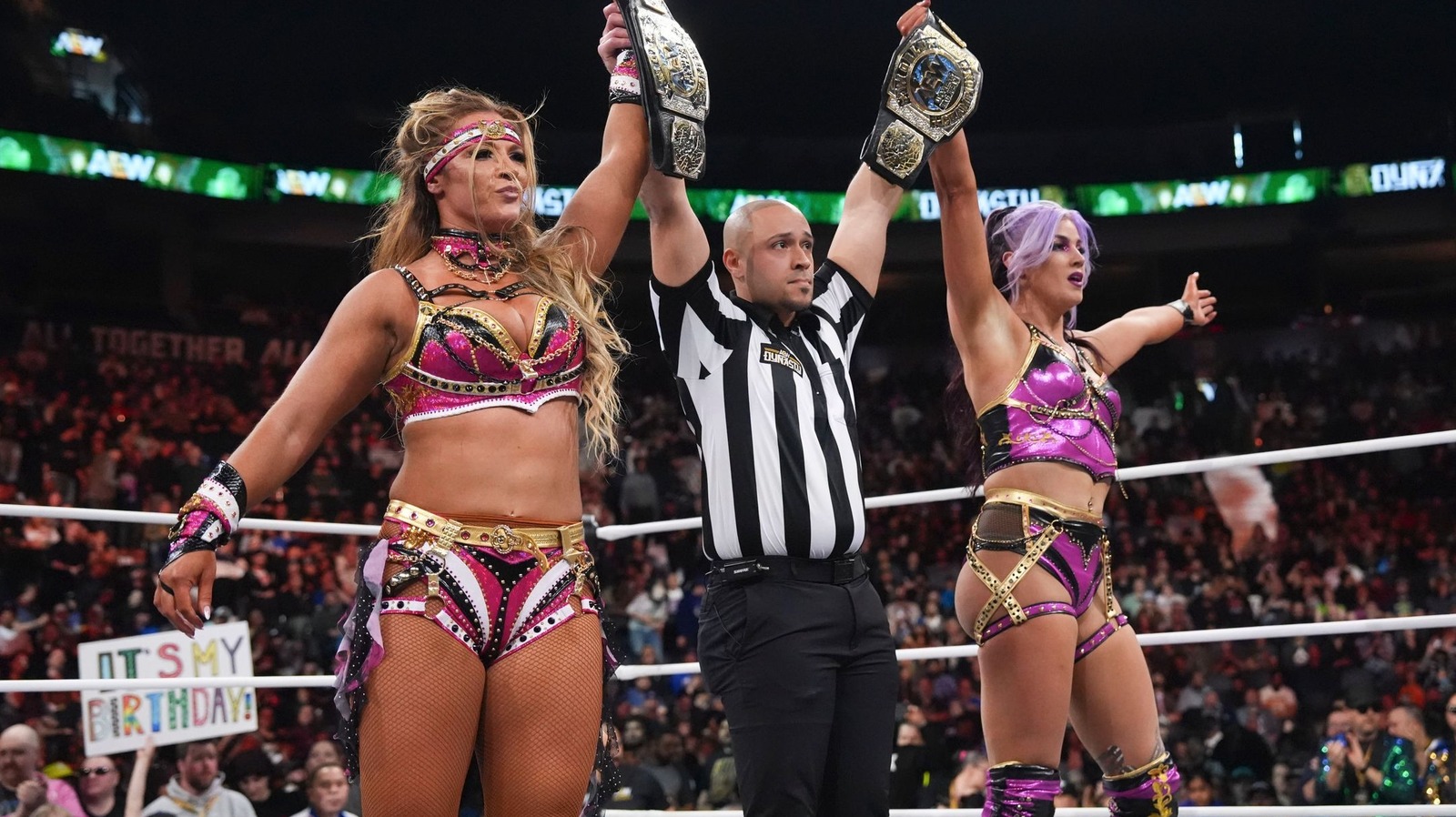
But Harley Cameron's latest sit-down cut through the usual chatter. She addressed the undeniable elephant in the room regarding her career trajectory. The former AEW Women's World Tag Team Champion has been wrestling for less than five years.
She did not have the luxury of a hidden developmental system. She was forced to learn the mechanics of the sport on live national television. It is a terrifying way to build a career.
The Performance Center Contrast
WWE operates a massive machine in Orlando. They recruit athletes, hide them in a sterile facility, and drill them for years. Prospects learn how to find the hard cam long before they ever step in front of a paying crowd.
The footwork becomes muscle memory before the red light ever turns on. AEW does not have that luxury. When Tony Khan launched the promotion, he promised a sports-centric alternative. But that alternative often translates to a brutal trial by fire for younger talent.
You either figure it out on TNT and TBS, or you fade into obscurity. Cameron was thrown directly into the deep end. She debuted heavily involved in the QTV faction, and the character work clicked immediately because she has undeniable natural charisma.
But character work only buys you so much time. Eventually, the bell has to ring. When you transition into an active in-ring competitor on premium cable, the audience does not grade on a curve.
They expect a finished, polished product. Cameron did not have a finished product to offer initially. She had to build the airplane while it was already in a steep dive.
A Critical Look at AEW's Development Flaws
Winning the tag team championship eventually validated her grind. But looking back at her early televised matches, the growing pains were painfully obvious. And this is exactly where AEW's operational philosophy deserves heavy criticism.
The promotion routinely sacrifices the development of its greener roster members to fill weekly television time. You simply cannot rush in-ring experience. Cameron was thrust into high-stakes matches before she had mastered the basic nuances of ring pacing.
There were missed cues. There were spots that looked visibly uncooperative. Putting someone with minimal experience into a prominent television angle is unfair to the talent.
It is equally unfair to the viewer at home. The audience should not be paying cable rates to watch an athlete learn how to take a proper back bump. It worked out for Cameron in the end.
She pushed through the awkward, sloppy phase and found her footing. But how many other prospects have had their confidence completely shattered because they were exposed on live television too early? The sink-or-swim method ruins more careers than it saves.
The Reality of Live Broadcast Execution
Wrestling on television is a completely different medium than wrestling on the independent circuit. An indie match is built entirely around the live crowd in the building. A television match is built for the millions watching at home.
Cameron had to learn how to constantly communicate with the referee. The official is always receiving instructions from the back through an earpiece, counting down commercial breaks. She had to learn how to structure a narrative around a rigid three-minute picture-in-picture window.
If you get blown up in the ring, there is nowhere to hide. You cannot rest in a loose chinlock for three minutes while the production truck figures out what to do. You have to hit your designated commercial out-cues on the second.
Doing that while simultaneously trying to remember the mechanics of a complex sequence is sheer mental overload. The fact that she navigated this minefield without suffering a major injury is remarkable. It speaks to her raw athletic instincts.
It also highlights a massive structural gap in AEW's long-term planning. Learning how to run the ropes sounds elementary. But doing it on live television, hitting the second rope with enough velocity to reverse momentum without slipping, takes hundreds of repetitions.
Cameron didn't have hundreds of repetitions in a warehouse. She had a live audience scrutinizing her every step. When she miscalculated a distance or rushed a transition, Twitter clipped it instantly.
Navigating a Chaotic Locker Room
The physical toll is only half the battle. Cameron also had to learn the cadence of a live microphone segment. You have to pause for crowd reactions.
You have to adjust your delivery if the fans decide to hijack the promo with an unpredictable chant. Doing this with under five years in the business is like being handed the keys to a Formula 1 car after passing a written exam. The AEW women's locker room features a wild mix of experience levels.
You have seasoned international veterans sharing ring time with absolute rookies. Cameron found herself dropped right into the middle of that chaotic spectrum. Working with a veteran provides a vital safety net.
They can guide you through the match, call the spots loudly, and position you exactly where you need to be. But AEW frequently books inexperienced wrestlers against each other on live episodes of Rampage or Collision. When that happens, the match often breaks down completely.
The timing falls apart. Cameron survived those dangerous, chaotic moments by leaning heavily into her character work. If a sequence looked sloppy, she would bail out and draw heat using her facial expressions.
She bought herself time when the wrestling failed. That is a veteran instinct developed out of pure, terrifying necessity. She learned how to mask her mechanical shortcomings with personality.
Looking Ahead to Las Vegas
Tomorrow night is Double or Nothing. The biggest party on the AEW calendar takes over Las Vegas. The pressure inside the locker room will be suffocating.
Cameron's reflections this week serve as a stark reminder of the modern wrestling business. The era of the slow, methodical territory build is entirely dead. If you sign with a major television product today, you are expected to perform instantly.
You are expected to draw ratings. You are expected to move merchandise. You are expected to execute flawlessly. And for someone like Cameron, you have to do all of that while literally learning how to wrestle.
Her story is a massive success, but it should also be viewed as a glaring cautionary tale. She beat the incredible odds. She took the reckless sink-or-swim mandate and somehow turned it into championship gold.
But Tony Khan cannot rely on miracles to build his women's division. If AEW wants to cultivate the next generation of stars, they need a structured environment to prepare them for the bright lights. Until they build one, we will keep watching green athletes learn the hardest lessons on the biggest stages.