The Evolution of a Trophy
For the first couple of years, the Owen Hart Foundation Tournament felt like a nice gesture that lacked narrative teeth. It gave us some solid television matches and a heartwarming presentation ceremony, but the actual stakes were muddy. You got a pink belt and a trophy. In the ruthless hierarchy of professional wrestling, a shiny cup doesn't main event pay-per-views.
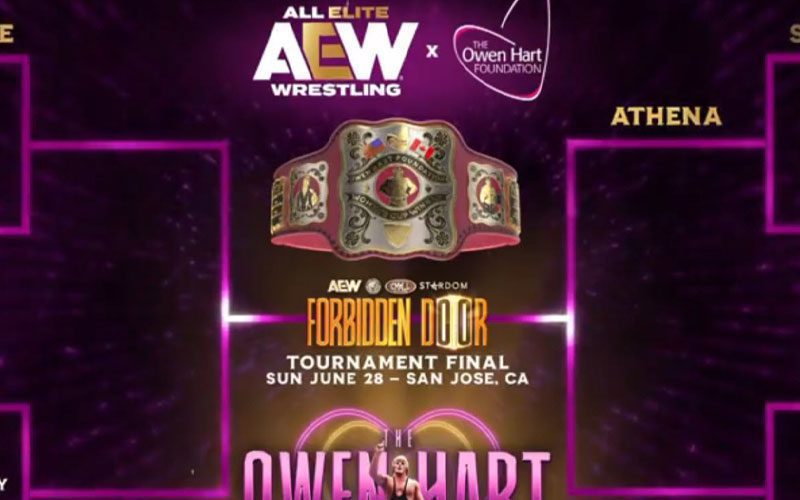
That shifted dramatically when AEW finally attached a guaranteed World Championship shot to the winner. As WrestleTalk correctly noted this week, the Owen has officially transformed into one of the premier tournaments of the entire wrestling calendar. It is no longer just a tribute. It is a star-making vehicle and a structural necessity for a company that often struggles to naturally rotate its crowded main event scene.
We are sitting in mid-April. WrestleMania 41 is just days away, sucking up all the oxygen in the industry. Tony Khan knows he needs a massive hook to pivot fan attention back to AEW television once the dust settles in Las Vegas. The 2026 iteration of the Owen Hart Tournament is that hook. But announcing a tournament is easy. Booking it to mean something over six weeks of television is where AEW has historically stumbled.
The Predictability Problem
Let’s get the negative out of the way first because it is glaring. AEW loves tournaments, but they are absolutely terrible at seeding them. Think back to the Continental Classic or past Owens. You look at the graphic on Dynamite, and you can instantly pick the semi-finalists with a 95 percent accuracy rate. The first round is almost always a parade of sacrificial lambs.
Putting Kyle Fletcher against Jon Moxley in a first-round match might result in a fun 14-minute sprint, but nobody in the arena believes Fletcher is advancing. That kills the drama immediately. If this tournament is truly the premier event of the year, the field needs to be exclusive. No more throwing lower-midcard talent in just to take pins. Every single first-round matchup needs to look like a potential main event.
Furthermore, the pacing has to change. AEW has a bad habit of cramming important bracket matches onto taped episodes of Rampage. If a match determines who challenges for the AEW World Championship, it belongs on Dynamite or Collision. Period. Relegating these stakes to the Friday night death slot actively devalues the entire concept. Khan has to protect the prestige of this bracket at all costs.
Who Actually Needs This Run?
Looking at the AEW roster right now, there are about six guys who desperately need this tournament to reset their momentum. The obvious name is Jay White. The Switchblade has been trapped in a strange holding pattern for months. He is too good for the midcard, but the main event picture has been locked up. Winning the Owen would instantly validate his status as a top-tier threat without needing a convoluted storyline to get him there.
Then there is Konosuke Takeshita. The Don Callis Family stuff has run its course. Takeshita is a generational athlete who consistently has the best match on any given pay-per-view, yet he rarely holds gold. Letting Takeshita tear through a grueling, single-elimination bracket would be the easiest way to strap a rocket to his back. Imagine him countering a top-rope dive into a devastating Blue Thunder Bomb for a near-fall in the semi-finals, before finally securing the win with a vicious running knee. The heat would be nuclear.
The Ospreay Factor
You cannot talk about AEW in 2026 without talking about Will Ospreay. He is the franchise player right now. But putting Ospreay in this tournament might actually be a massive mistake. He doesn't need a tournament win to justify a title shot. He just needs to grab a microphone.
Using the Owen to elevate someone else—while keeping Ospreay busy in a high-profile grudge match at Double or Nothing on May 24—seems like the smarter play. If Ospreay is in the bracket, the predictability problem returns with a vengeance. Everyone will just assume he is winning, stripping the finals of any real suspense.
The Women's Bracket Has Higher Stakes
While the men's side usually gets the spotlight, the women's bracket is arguably more important for the long-term health of the division. The AEW women's roster is incredibly top-heavy. You have the absolute elite tier, and then a steep drop-off in television time and character development. The Owen Hart Tournament is the perfect excuse to force 15-minute women's matches onto Dynamite every single week.
We need to see fresh matchups that haven't been done to death. We need to see someone like Queen Aminata get a deep run, upsetting a former champion in the first round to shock the crowd. The company has a terrible habit of keeping its top female stars separated until a pay-per-view. Put them in the bracket together.
Let Jamie Hayter and Mariah May beat the hell out of each other in a semi-final on free television. That is exactly how you build an audience that cares about the division beyond just the current champion. The winner of the women's side also needs a clear, undeniable destination. The prize needs to be identical: a guaranteed World Championship match at a major stadium show. No vague promises. A hard date, a contract, and an immediate staredown with the champion at the trophy presentation.
The Shadow of the King of the Ring
Whenever a major American promotion runs a tournament, the comparisons to WWE's King of the Ring are inevitable. For decades, that was the gold standard of wrestling brackets. It made Stone Cold Steve Austin. It made Bret Hart. But in recent years, the King of the Ring has been relegated to a tired gimmick, usually saddling the winner with a cheap crown and a fake royal accent.
AEW has the opportunity to claim the concept of a serious, high-stakes tournament entirely for themselves. New Japan Pro Wrestling owns the round-robin format with the G1 Climax. Nobody in North America is ever going to touch that level of endurance prestige. But the single-elimination, sudden-death format is wide open for the taking. The Owen Hart Tournament should be the definitive test of strategy on national television.
To achieve that, the presentation has to be completely flawless. From the bracket reveals to the backstage interviews, every segment has to treat the tournament like the NFL playoffs. The announcers need to emphasize the physical toll of wrestling multiple high-profile matches in a short window. If a wrestler gets their knee worked over in the quarter-finals, they need to be limping heavily in the semis. Continuity is everything in this format.
Capitalizing on the May Lull
The timing of the tournament is its absolute biggest advantage. Late April and May are traditionally a weird transitional period for professional wrestling. WWE is resetting after WrestleMania 41, usually cooling off before the summer build truly begins. This is AEW's window to dominate the weekly news cycle with pure, unadulterated in-ring storytelling.
Single-elimination tournaments naturally create their own organic urgency. A champion cutting a 10-minute promo about respect is fine, but a desperate wrestler fighting through an injury in a semi-final match is infinitely more compelling television. It provides a simple, sports-based framework that allows the talent to just go out there and wrestle without getting bogged down in melodramatic angles.
Tony Khan has all the pieces on the board right now. He has the best in-ring roster on the planet. He has a prestigious tournament with a deeply emotional lineage. He has the television time. The only thing standing in the way is execution.
If he can resist the urge to overbook the finishes, and if he can keep the brackets tight and unpredictable, the 2026 Owen Hart Tournament won't just be a good set of matches. It will be the creative anchor that AEW desperately needs heading into the summer. This is the ultimate proving ground. Not just for the wrestlers in the bracket, but for the booking committee itself.