The Vertical Experiment
AEW and Warner Brothers Discovery are bringing live professional wrestling to the vertical screen. Ahead of the May 27 episode of Dynamite in Philadelphia, All Elite Wrestling and its broadcast partner will stream an exclusive pre-show on TikTok. The announcement, confirmed by a report from PWInsider, signals a deliberate shift in how the promotion handles its digital lead-in programming and raises immediate questions about modern wrestling distribution.
This is not just a random Wednesday night television taping. The May 27 broadcast serves as the direct television fallout from AEW Double or Nothing, which takes place just three days prior on May 24. Post-pay-per-view episodes are traditionally among the most heavily viewed shows on the company’s calendar. By anchoring a new digital initiative to this specific date, WBD and AEW are actively testing a modern promotional vehicle on a night when baseline interest is already elevated.
The Dynamite following a major pay-per-view usually dictates the creative direction for the next three months. New champions make their first appearances. Feuds that ended in bloody violence get their post-match explanations. By placing a TikTok broadcast right before this specific episode, AEW is using its most valuable television real estate to prop up a digital initiative. Doing it on the Double or Nothing fallout show means the company wants maximum eyeballs on the experiment.
Chasing the Casual Scroller
Historically, wrestling pre-shows lived strictly on traditional television. WWE utilized Sunday Night Heat to drive late pay-per-view buys. WCW ran Main Event for similar purposes. Over the last decade, the industry shifted those kickoff shows to digital platforms, primarily YouTube. AEW’s own Buy-In specials have reliably generated strong concurrent viewership on Google’s video platform, operating as an effective bridge for hardcore fans. Moving a pre-show to TikTok, however, represents a completely different distribution model and targets a wildly different demographic.
TikTok operates on an algorithmic feed rather than a subscriber-driven destination format like YouTube. A live broadcast on the vertical platform is designed to catch users mid-scroll. The goal is not necessarily to serve the hardcore wrestling fan who already knows Dynamite airs at 8 PM on TBS. The primary objective is to capture the casual scroller, show them an engaging piece of live action, and convince them to migrate to a traditional television screen.
The Conversion Problem
That brings up the glaring problem with this strategy. The conversion rate from short-form vertical video to linear cable television is notoriously terrible across all forms of media.
Wrestling promotions routinely generate millions of views on viral TikTok clips. Those massive digital numbers rarely move the needle for Nielsen television ratings. A user watching a two-minute live feed on their phone while waiting for a bus is not an easily transferable viewer. Transitioning them over to a two-hour cable block requires breaking their current viewing habit and forcing a platform switch. AEW has struggled for years to turn its loud, dedicated social media engagement into consistent viewership growth on traditional television.
Adding a live pre-show on a phone app might heavily inflate digital engagement metrics for WBD executives. Expecting it to reverse cable television's steady overall decline is wildly optimistic.
Furthermore, producing live professional wrestling for a 9:16 aspect ratio requires very specific framing and direction. Traditional wrestling is shot 16:9, built around wide camera shots that capture the ring, the performers, and the surrounding ringside environment. A live match broadcast on TikTok either requires dedicated vertical camera operators or an awkward, zoomed-in crop of the hard cam. If AEW simply crops their standard television feed, the product looks cheap and claustrophobic. If they deploy a dedicated vertical production setup, logistical costs increase for a pre-show that generates no direct revenue.
Corporate Motives in Philadelphia
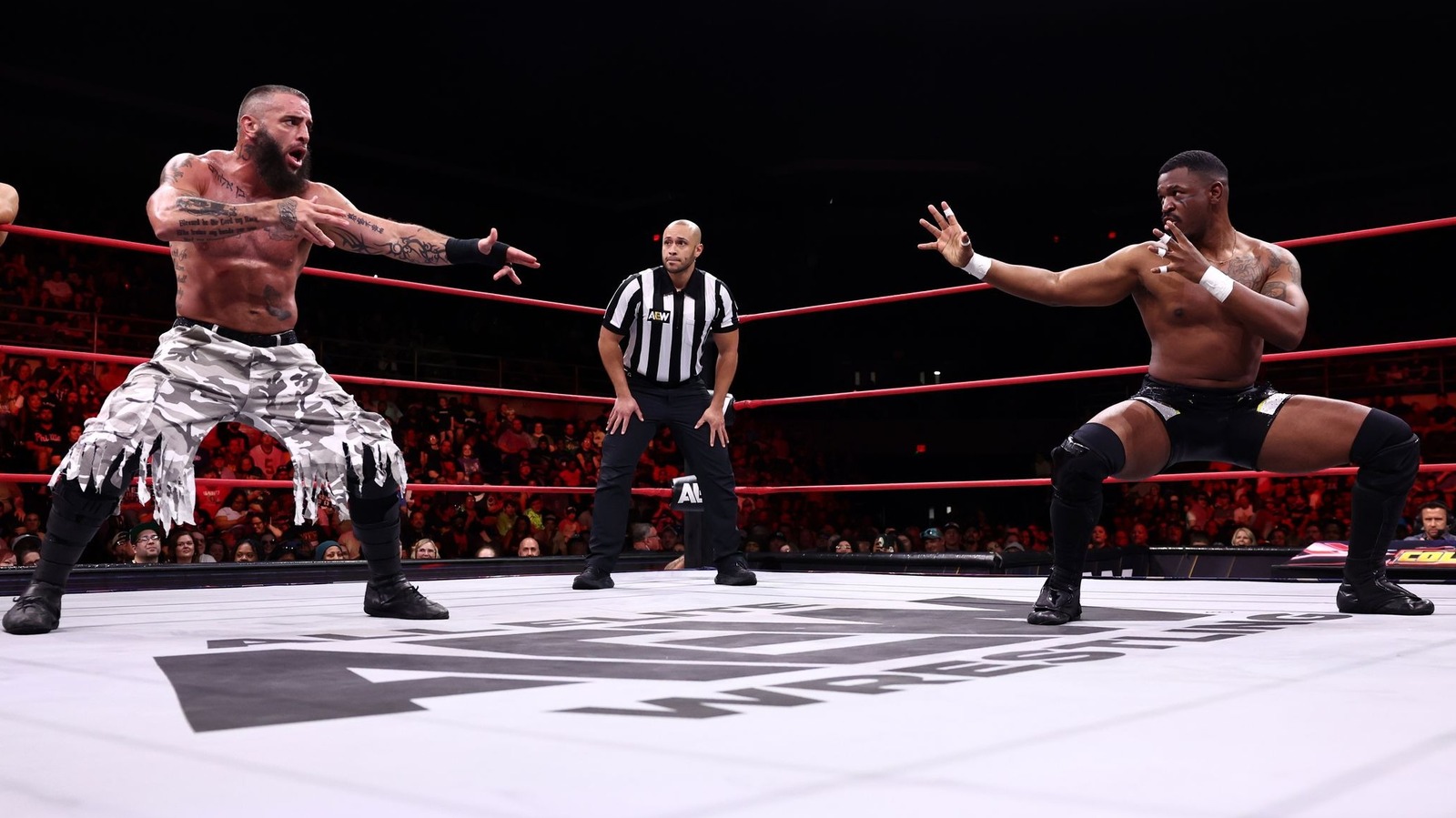
Despite the obvious logistical hurdles, the Philadelphia market is arguably the right place to test the concept. The city has a long, violent history with professional wrestling. The local fans are loud, aggressive, and highly engaged. That kind of raw energy translates extremely well through a screen. If you are going to present a live product to a cold audience mindlessly scrolling on their phones, a hot Philadelphia crowd reacting to the fallout from Double or Nothing is your best possible pitch. It immediately communicates that this live event has stakes.
Warner Brothers Discovery has been aggressively searching for ways to attract younger demographics across all of their live sports properties. The NBA on TNT regularly features alternate digital feeds. Bleacher Report, owned by WBD, heavily prioritizes short-form social content over long-form journalism. This AEW pre-show aligns directly with that broader corporate mandate. It gives WBD digital sales teams a specific, targeted inventory block to sell against. Brands desperately want to advertise on TikTok, but they prefer brand-safe, professionally produced live content rather than unpredictable influencer streams. AEW provides live sports inventory that WBD can easily monetize in pitch meetings.
The timing of this digital test is also notable from a political standpoint. AEW is constantly working to prove its ongoing value to its network partners. Showing a willingness to adapt to WBD’s specific digital priorities is a smart, calculated move by Tony Khan. It demonstrates to WBD executives that AEW is willing to serve as a live laboratory for their social media experiments, making the promotion a flexible partner.
A Clash of Distribution Models
However, the core AEW wrestling product remains stubbornly built for traditional television viewing. The success or failure of the May 27 Dynamite will ultimately be judged by its cable rating and its live ticket sales, not its TikTok concurrent viewer count. If the pre-show features an actual in-ring match, it risks diluting the live crowd's energy before the television broadcast even begins. If it only features talking heads, backstage interviews, and video packages, it is highly unlikely to hold the attention of the average TikTok user for more than a few seconds before they swipe away.
This initiative highlights the rapidly shifting battleground in professional wrestling media rights. WWE recently signed a massive global deal with Netflix, moving their flagship Raw program entirely off linear television. AEW currently remains deeply tied to the traditional cable bundle through TBS and TNT. While their primary competitor prepares for a streaming-first future, AEW and WBD are trying to find creative ways to drag a younger digital audience backward into the aging cable television model.
It is a fascinating contrast in media distribution strategies. WWE is attempting to go exactly where the audience already lives. AEW is attempting to use modern platforms as a billboard to point fans back to a legacy distribution method.
For the ticket buyers in Philadelphia, the TikTok pre-show probably just means they need to find their seats half an hour earlier to catch the dark matches. For WBD and AEW, it is a low-risk, high-visibility experiment in audience acquisition. They want to see if the chaotic, unpredictable energy of live professional wrestling can break through the algorithm and convert passive scrollers into active channel surfers.
We will find out on Wednesday whether the vertical screen can actually drive meaningful traffic to the horizontal one. It might work. Or it might just be another expensive way to generate meaningless social media impressions that do absolutely nothing to improve the core business. If the ratings for the Double or Nothing fallout show fail to jump, the industry will have a clear answer regarding the absolute limits of viral reach.
Read Next
- AEW's women's division just lost its most reliable engine
- Willow's injury forces AEW into a tactical corner ahead of Double or Nothing
- Willow Nightingale vacates TBS Title in massive blow to AEW roster
- Swerve Strickland is about to expose Will Ospreay's biggest technical flaw
- 🎲 AEW Double or Nothing 2026 — Full Coverage Hub