
WWE Bad Blood 2026
Card Predictions
Bad Blood is WWE’s most volatile premium live event — a night built on hatred, unfinished business, and revenge. Here is our full predicted card for Bad Blood 2026, including the Hell in a Cell main event, championship defences, and the post-SummerSlam grudge matches that bring the autumn pay-per-view season to a boil.
Bad Blood: A History of Violence
The original Bad Blood pay-per-view debuted in October 1997 at the Kiel Center in St. Louis, Missouri. It is remembered as the night Hell in a Cell was born — Shawn Michaels and the Undertaker inside the original cell, Kane’s debut shocking the arena, one of the most iconic moments in professional wrestling history created in a single evening.
Bad Blood ran intermittently through the Attitude Era and early Ruthless Aggression period, hosting some of the most significant grudge matches of the era. The event’s identity was always the same: Bad Blood was the night for feuds that had escalated beyond normal in-ring resolution. Triple H vs Kevin Nash in 2003 — inside Hell in a Cell — defined the event’s legacy in that generation.
The last original Bad Blood pay-per-view ran in June 2004, headlined by Triple H defending the World Heavyweight Championship against Shawn Michaels inside Hell in a Cell. The event was then retired as WWE consolidated its pay-per-view calendar. For two decades, Bad Blood existed only as a memory — until WWE revived it in a dramatically different form twenty years later.
WWE revived Bad Blood in October 2024 at State Farm Arena in Atlanta — headlined by Cody Rhodes defending the WWE Championship against Roman Reigns in a high-profile grudge match. The 2024 revival re-established Bad Blood as a premium live event defined by its darkness and personal animosity, positioning it as the natural bridge between SummerSlam and the Survivor Series WarGames season.
Hell in a Cell — The Ultimate Grudge Match
Hell in a Cell is the structure synonymous with Bad Blood. An enormous steel cage that encloses the ring, the ringside area, and the floor space surrounding it — the Cell is not merely a cage but an enclosure that traps two competitors inside with nowhere to escape. No disqualifications. No count-outs. No interference. Just two people settling a feud with the full authority of a steel structure sealing them inside.
The original Cell — introduced at Bad Blood 1997 — measured twenty feet tall and weighed two tons. Modern iterations preserve the visual spectacle while managing safety, but the psychological impact has never diminished. A Hell in a Cell match feels final in a way that almost no other stipulation can. When a feud graduates to Hell in a Cell, the audience understands that this is the end of something. That weight is what makes Bad Blood the logical home for the match.
The original Cell stood twenty feet tall — tall enough to make the top of the structure a genuine weapon in itself. Undertaker vs Mankind in 1998 demonstrated exactly what that height meant in practice. The modern Cell preserves the visual scale while ensuring performer safety.
The Cell has no exit once locked. The match only ends via pinfall or submission. No disqualifications, no outside interference, no escape hatch. The enclosed environment is why Hell in a Cell remains the definitive grudge match stipulation in professional wrestling — nothing else removes every variable as completely.
Hell in a Cell is reserved for feuds that have escalated beyond standard resolution — when personal animosity demands a definitive conclusion. The match earns its place only when the story justifies it. When WWE gives a feud a Cell match, the audience understands: this is the night we find out who was right all along.
Predicted Match Card — WWE Bad Blood 2026
Our predicted full card for WWE Bad Blood 2026, built from SummerSlam fallout and the autumn grudge storylines running into October.
CELL
CM Punk vs Drew McIntyre — Hell in a Cell
The Punk vs McIntyre rivalry is one of professional wrestling’s great unresolved narratives. Their feud — which escalated through 2024 and has periodic resurgences driven by McIntyre’s burning obsession — is the perfect candidate for a Hell in a Cell conclusion. McIntyre’s claim that Punk has never truly been beaten, that every victory was stolen or tainted, is the exact kind of personal grievance the Cell was designed to settle. A Bad Blood main event between these two inside Hell in a Cell is not just a match prediction — it is the logical end point of a feud that has resisted resolution at every previous attempt. The enclosed steel environment removes every variable McIntyre has used to deflect from his losses. Inside the Cell, there are no exits, no excuses, and no escape from the reckoning that has been building for two years.
TITLE
WWE Champion vs No. 1 Contender — Autumn Title Defence
The WWE Championship match at Bad Blood is the event’s prestige anchor alongside the Hell in a Cell spectacle. Bad Blood typically positions itself as the point where the post-SummerSlam title picture crystallises — whoever won and whoever fell short at SummerSlam now meets in a Bad Blood championship match that establishes the hierarchy heading into the Survivor Series and Royal Rumble season. Cody Rhodes as a defending champion at Bad Blood carries enormous narrative weight: the American Nightmare defending his championship in an atmosphere dripping with darkness and personal grievance suits his character arc perfectly. Alternatively, a freshly crowned champion defending for the first time creates legitimate tension about whether the title change can hold.
HVYWT
World Heavyweight Champion — Bad Blood Defence
The World Heavyweight Championship match at Bad Blood is typically a showcase for Raw’s top title programme, distinct from the WWE Championship story on SmackDown. Gunther’s era with the World Heavyweight Championship — characterised by ruthless, technically dominant defences — would suit a Bad Blood defence where the challenger has legitimate personal grievance. A championship match inside the Bad Blood aesthetic pushes both competitor and storyline into darker, more desperate territory. Gunther thrives when the stakes are existential, when losing means more than losing a title — when losing means his entire worldview has been disproved.
CHAMP
Women’s Champion — Grudge Rematch at Bad Blood
Bad Blood’s dark aesthetic is not limited to the men’s division — the women’s championship match at the event carries the same atmosphere of personal reckoning. The women’s title picture post-SummerSlam often features a rematch that the challenger has demanded on the basis of controversial finish or unresolved personal animosity. Rhea Ripley and Iyo Sky have demonstrated in recent years that women’s championship matches can be genuine show-stealer candidates on any card — a Bad Blood women’s title bout with appropriate build has the potential to be the most emotionally invested match of the entire evening.
BELT
IC Champion — Bad Blood Statement Defence
The Intercontinental Championship traditionally produces some of the night’s most technically accomplished in-ring work at Bad Blood — a singles championship match without a gimmick stipulation that stands in contrast to the Cell match and allows two performers to demonstrate what pure professional wrestling looks like. Bron Breakker’s approach to IC title defences — explosive, physical, and genuinely athletic — has elevated the belt back to the prestige it held in the 1980s and 1990s. A Bad Blood IC title match that pushes Breakker against a credible challenger could easily be the night’s show-stealer in terms of pure in-ring quality.
TEAM
Tag Championship or Tag Grudge Match
A tag team match at Bad Blood serves multiple narrative functions. It either delivers a championship match that generates pace and spectacle in the middle of the card, or it stages a tag team grudge confrontation between former allies whose partnership collapsed in dramatic fashion. The tag division in 2026 has developed genuine depth on both brands — several teams have prolonged rivalries with legitimate personal animosity that qualifies for Bad Blood’s grudge-match identity. The most intriguing scenario is a tag match with a stipulation that prevents the competitors from escaping the physical confrontation their feud has been building toward.
MATCH
Steel Cage Undercard Bout — SummerSlam Unresolved Business
Bad Blood has always been willing to stack gimmick matches across the card — not just in the main event. A Steel Cage match on the undercard, separate from the Hell in a Cell headline, resolves a mid-card feud that developed through summer and reached the point where a standard singles match cannot provide the definitive conclusion. Post-SummerSlam, several rivalries typically carry unresolved anger that escalates through September — Bad Blood in October is the natural resolution point. The cage eliminates interference, the rulesets ensure a clean finish, and the visual of two performers settling their feud inside steel walls before the main event generates energy for the entire arena.
SummerSlam 2026 Fallout — What Builds to Bad Blood
The Betrayal That Nobody Saw Coming
Every Bad Blood event is defined by a betrayal that occurred at SummerSlam. The most effective storyline pattern in WWE’s autumn calendar is a shocking heel turn at SummerSlam that creates genuine emotional devastation — and then routes that devastation directly into a Bad Blood grudge match two months later. The betrayed superstar spends September processing the shock, building their response, and making clear that Bad Blood is where they take their revenge. That emotional arc — from SummerSlam devastation to Bad Blood reckoning — is the event’s defining narrative engine.
The Championship That Changed Hands Controversially
When a title changes hands at SummerSlam via controversial means — a fast count, outside interference, or a dubious referee decision — the rematch clause demands satisfaction at Bad Blood. The new champion defending under the Bad Blood banner, with the legitimacy of their reign being questioned by a furious former champion, creates a title match with genuine stakes beyond the championship itself. Credibility is on the line in a way that straightforward defences rarely achieve.
The Feud That Cannot Be Settled in a Normal Match
By October, certain rivalries have accumulated enough personal animosity that a standard singles match is inadequate. These are the feuds Bad Blood was built for — the ones where the competitors have attacked each other backstage, destroyed each other’s families kayfabe, and made clear that only a contained environment with no escape and no disqualifications can produce a definitive resolution. Hell in a Cell is not given to every feud. It is reserved for the ones that have earned it through months of escalating violence.
Setting the Stage for WarGames
Bad Blood also functions as the staging ground for Survivor Series WarGames team formations. The results of Bad Blood determine who allies with whom, who has been betrayed by a former ally, and who carries a grudge into the cage at Survivor Series. Bad Blood is not an isolated event — it is the first chapter of the autumn arc that builds through WarGames and into the Royal Rumble season. Every match result at Bad Blood has downstream consequences for the next three months of WWE television.
Who Should Main Event Bad Blood 2026?
The most narratively complete option. Punk and McIntyre have fought across two companies, through injury, through controversial finishes, through McIntyre’s obsession. The only match that can truly end it is Hell in a Cell — no exits, no excuses, no way out. If Bad Blood 2026 gets this match, it will be remembered as one of the defining grudge match bookings of the modern era.
Cody Rhodes inside Hell in a Cell, defending his championship against someone who has made the feud deeply personal, carries a different kind of dramatic weight. Cody’s in-ring storytelling — his ability to absorb punishment and overcome it emotionally — makes him an ideal Hell in a Cell protagonist. A villain who has attacked his family, destroyed his reputation, or stolen something irreplaceable creates a genuinely compelling Bad Blood main event.
Gunther and Seth Rollins represent entirely different philosophies of professional wrestling dominance. Gunther’s methodical, European-influenced brutality against Rollins’ chaotic, athletic brilliance creates a stylistic clash that Hell in a Cell would amplify rather than diminish. Both men have the in-ring intelligence to make the Cell environment feel genuinely dangerous rather than merely theatrical. A World Heavyweight Championship main event at Bad Blood with these two would be a genuine candidate for match of the year.
Bad Blood 2026 — Venue Predictions
State Farm Arena — 21,000 capacity. Bad Blood 2024 debuted here and the event has natural equity in the city. Atlanta is one of WWE’s strongest markets in the American South, and the arena’s design — circular with steep upper bowl seating — creates an atmosphere of enclosure that perfectly matches the Hell in a Cell aesthetic.
United Center — 22,000 capacity. Chicago is CM Punk country, and if Punk vs McIntyre main events Bad Blood 2026, there is no venue more loaded with narrative resonance. The United Center crowd bringing Punk home for a Hell in a Cell match would produce one of the most emotionally charged atmospheres in recent WWE history. The city’s wrestling history runs deep — this feels right.
Toyota Center — 19,300 capacity. Houston has hosted numerous major WWE events and the Texas wrestling market remains one of the most passionate in North America. The October weather in Houston is reliably comfortable for an outdoor media presence, and the arena dimensions create the intimate-but-enormous atmosphere that Bad Blood’s dark tone requires.
Bad Blood & Hell in a Cell Highlights

Jalen Brunson & Roman Reigns OWN The Garden | SNME Recap: WWE Now
Jul 19, 2026

Will Ospreay vs Adam Brooks | AEW Collision, 7/18/26
Jul 19, 2026

Will Ospreay vs Adam Brooks MATCH HIGHLIGHTS | AEW Collision, 7/18/26
Jul 19, 2026
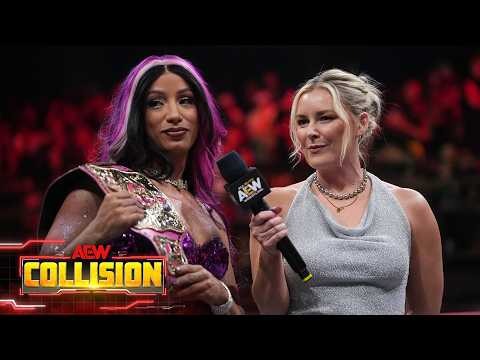
Mercedes Moné is going ALL IN against the competition! | AEW Collision, 7/18/26
Jul 19, 2026

Tommaso Ciampa gives Paul Wight a NO HOLDS BARRED message for Jericho | AEW Collision, 7/18/26
Jul 19, 2026
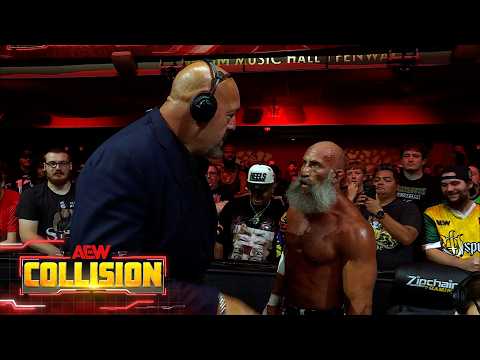
Tommaso Ciampa gives Paul Wight a NO HOLDS BARRED message for Jericho | AEW Collision, 7/18/26
Jul 19, 2026
WWE Bad Blood 2026 News & Analysis
AEW Programming Will Soon No Longer Be Available On NJPW World In Japan
·
Cody Rhodes Expresses Interest In Pursuing Hollywood Career After Eventual WWE Retirement: ‘It’s A Definite Natural Extension Of What We Do’
·
WWE BACKLASH IN MOVIE THEATERS, HEAT COMPLAINTS ABOUT RAW IN LAREDO AND MORE
·
Darby Allin ‘very grateful’ Sting was there for AEW World title victory
·
THEN, NOW, FOREVER – WWE in Europe: A look at three iconic matches from WWE’s journeys overseas over the decades
·
Bad Blood’s Greatest Moments
The Night Kane Was Born — 1997
The original Bad Blood in 1997 produced the debut of Kane — the Undertaker’s kayfabe brother tearing the cell door off its hinges and delivering the Tombstone Piledriver that cost HBK the match. The visual of that moment — the enormous figure in red and black emerging from beneath the arena — remains one of professional wrestling’s most iconic single images. Bad Blood did not just host a great match. It created a character whose legacy ran for more than two decades.
Mankind Falls from the Cell — 1998
Though this happened at King of the Ring rather than Bad Blood specifically, it cemented Hell in a Cell as the most dangerous environment in professional wrestling. Mick Foley’s two falls at King of the Ring 1998 — thrown off the top of the cell, then falling through it — defined what the structure meant. Every Hell in a Cell match since has operated in the shadow of that night: the knowledge that inside this structure, anything can happen and nobody is truly safe.
Triple H vs Kevin Nash in 2003
The final Hell in a Cell match before the concept was integrated into the Hell in a Cell pay-per-view came at Bad Blood 2003 — Triple H and Kevin Nash inside the structure, with the Game at the peak of his Reign of Terror. The match demonstrated that Hell in a Cell could be built around a specific character moment rather than a specific in-ring style. Nash’s physical size and the personal animosity of the rivalry made the Cell feel genuinely appropriate rather than gratuitous.
The 2024 Revival
WWE’s decision to revive Bad Blood in 2024 after a twenty-year absence was validated by the quality of the event. State Farm Arena provided an appropriately dramatic setting, and the card delivered on the event’s identity: darkness, personal grudges, and physical intensity. The revival confirmed that Bad Blood has a permanent place in WWE’s premium live event calendar — a distinct identity that no other show occupies. October needs Bad Blood. The autumn season of professional wrestling demands a night that is darker than everything surrounding it.