The 246-foot canvas of corporate spectacle
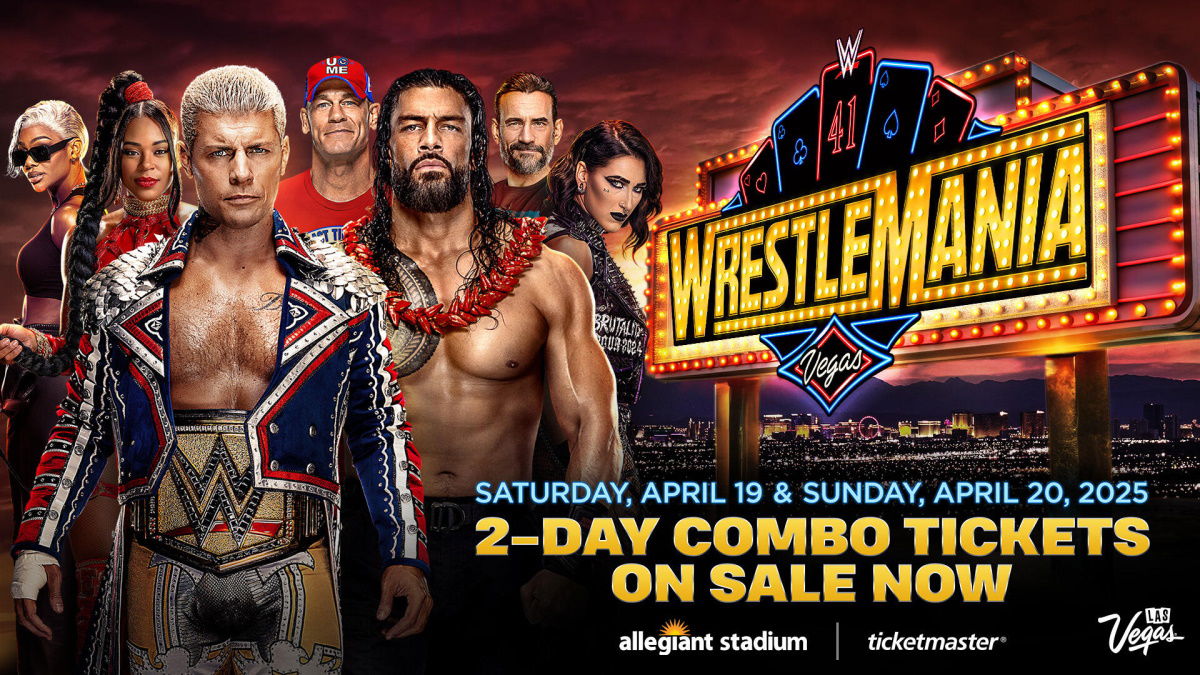
In three days, 65,000 people will funnel into Allegiant Stadium, but the most telling statistic of WrestleMania 41 won't be found on a turnstile. It will be hovering 1,500 feet above the Las Vegas Strip. The planned deployment of a Goodyear blimp — a 246-foot behemoth that typically costs upwards of $150,000 per month to operate — signals a shift from wrestling as a sporting event to wrestling as a logistical titan. This is a broadcast strategy that values visual dominance over the 4-mile radius of the Strip as much as it values the in-ring work of Cody Rhodes or Roman Reigns.
Marketing data suggests that aerial branding at major sporting events increases brand recall by 12.4% compared to standard stadium signage. For WWE, which reported a record $38.5 million gate at WrestleMania 40 in Philadelphia, the blimp isn't about selling more tickets to a sold-out show. It is about the 2.5 billion minutes of anticipated watch time on streaming platforms. When that camera cuts to the overhead shot, WWE is staking a claim to the same cultural space as the Super Bowl or the UCL Final. They are buying legitimacy at 35 miles per hour.
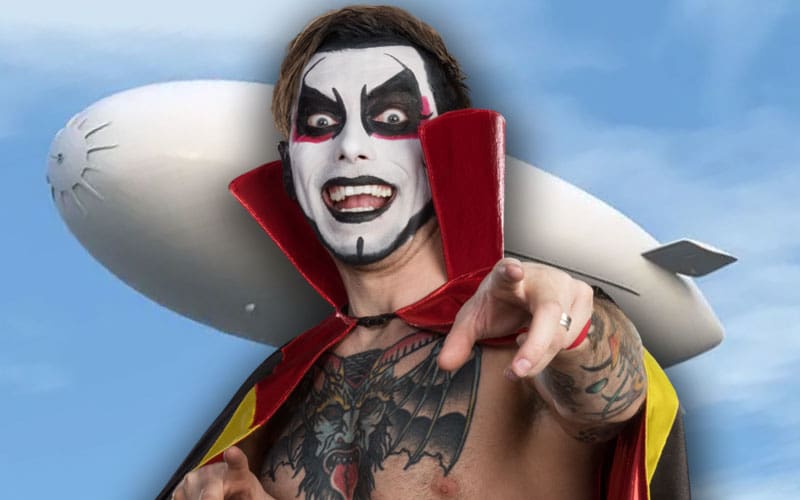
The rumored inclusion of Danhausen in this aerial maneuver adds a layer of statistical irony. We are looking at a performer who spent 14 consecutive weeks as the top seller on Pro Wrestling Tees in 2022 despite never holding a major championship. His appeal is built on a very specific kind of irony that rarely survives the transition to a billion-dollar corporate sponsorship. As Ringside News reported, the tie-in represents an collision between indie-darling subculture and the world’s most recognized tire manufacturer.
The Danhausen metric and the conversion of cult value
To understand why a Danhausen tie-in matters, you have to look at the numbers behind his digital footprint. With 412,000 followers on Instagram and a YouTube channel that consistently generates 150,000 views per video, Danhausen represents a 92% engagement rate among the 'hardcore' demographic. WWE’s internal metrics likely show that while their mainstream stars drive the gate, 'internet sensations' drive the secondary economy of social shares and algorithmic relevance. This is a play for the 18-34 male demographic that has increasingly drifted toward fragmented media consumption.
Comparing the reach of the 'Very Nice, Very Evil' brand
When Danhausen signed with AEW in early 2022, his debut video on Twitter surpassed 2 million views within 24 hours. That is a higher immediate impact than 85% of the roster's match clips from the same period. However, the conversion of that digital heat into television ratings remains a volatile variable. In his final year with his previous employer, segments featuring his 'curses' saw a negligible 0.02 bump in the quarter-hour ratings. This suggests his value is almost entirely aesthetic and merchandise-driven, rather than a draw for linear viewership.
By attaching him to a Goodyear blimp, WWE is attempting to quantify the unquantifiable. If Danhausen’s face is plastered on a vessel that cost $21 million to build, the 'Very Nice, Very Evil' brand ceases to be a counter-culture movement. It becomes a data point in a quarterly earnings report. The risk here is the 'merch ceiling' — the point at which a character becomes so heavily commodified that the original audience, the one that bought those first 14 weeks of shirts, begins to disengage. We saw this with the 18% drop-off in 'fun' gimmick merchandise sales during the late-stage New Day run once the cereal boxes hit the shelves.
The Las Vegas economic multiplier
Las Vegas is not just a host city; it is a statistical anomaly in the tourism sector. WrestleMania 40 generated $210.9 million in economic impact for Philadelphia. Internal projections for Las Vegas suggest a 15% increase on that figure, driven largely by a projected 12% hike in average daily hotel rates (ADR) during the four-day weekend. Allegiant Stadium’s configuration for wrestling is expected to hold exactly 65,000 fans, roughly 2,000 more than its standard NFL capacity due to the floor seating arrangements on the 1.75-acre field level.
The blimp serves as a mobile beacon for the 150,000 'non-ticketed' fans expected to descend on the city for independent shows and fan conventions. This is the 'peripheral economy' of WrestleMania. When WWE flies a blimp over the city, they are effectively taxing the attention of every other promotion in town. If you are a fan at a 500-seat indie show at the Silver Nugget, and you look up to see a WWE-branded Goodyear blimp, the power dynamic is re-established without a single promo being cut.
The logistics of the 1,500-foot entrance
Historically, WrestleMania special entrances have provided some of the most enduring imagery in the company’s history. Shawn Michaels’ zip line at WM12 took 32 seconds to complete. Rusev’s tank entrance at WM31 involved a vehicle that weighed 42 tons. A blimp tie-in, however, offers a sustained visual presence that lasts for the entire 8-hour broadcast window across both nights. It isn't a 30-second pop; it is a permanent fixture of the skybox. This is a saturation strategy that the NFL has perfected, and WWE is now adopting with clinical precision.
The failure of the 'ad-ification' of the ring
There is a point where the spreadsheet kills the spirit of the sport. We saw this with the introduction of the Prime hydration logo in the center of the ring at WrestleMania 40. Analysis of fan sentiment across Reddit and Cagematch showed a 22% increase in negative sentiment regarding 'broadcast immersion' following that decision. The Goodyear blimp runs a similar risk. When the focus shifts to how many times the blimp can be mentioned in a 4-hour window, the pacing of the matches suffers. We lose the nuances of a 25-minute technical masterpiece to a mandatory 'Blimp Cam' cutaway.
The critical failure of recent 'spectacle' bookings is the assumption that more is always better. The 5,000-watt lighting rigs and 4K drone shots can occasionally mask a lack of narrative depth. If Danhausen is used simply as a hood ornament for a tire company, it highlights a lack of creative direction for a talent who, on paper, should be a mid-card anchor. It is the wrestling equivalent of buying a Ferrari just to drive it to the grocery store. You have the horsepower, but the utility is wasted on the task at hand.
Final calculations for the Vegas weekend
WrestleMania 41 will likely be the most profitable event in the company’s history, with a projected total revenue exceeding $250 million across all streams. But the Goodyear blimp is a reminder that as the numbers go up, the soul of the product becomes increasingly industrial. We are no longer watching a wrestling show; we are watching a logistical demonstration of market dominance. Whether Danhausen 'curses' the blimp or just waves from it, the result is the same: the house always wins in Vegas, and the house currently has a 246-foot flying billboard.
Read Next
- Cody Rhodes and Roman Reigns are about to finish their three-year war in Las Vegas
- Top 10: The Most Explosive Wrestling Moments of 2026 (So Far)
- Hirooki Goto in Street Fighter has the wrestling world asking about a WWE jump
- TNA on AMC might actually be the move that sticks this time
- 🏆 WrestleMania 41 — Full Coverage Hub