So here we go again. Just when you thought the Triple H era was going to be a utopian indie-wrestling paradise where everyone gets to keep their real names, their favorite boots, and their exact independent gimmick, reality bites back hard.
Word trickled out today via WrestlingNews.co that WWE has mandated name changes for six prospects currently wrapped up in their shiny new WWE ID program.
I know. I know. You are utterly shocked. A massive publicly traded sports entertainment behemoth wants to own the intellectual property of the people appearing on their television screens? Stop the presses. Call the UN. Alert the Hague.
But seriously, it is hilarious how the internet wrestling community reacts to this stuff every single time. It is like we all developed a collective amnesia about how this business actually functions.
The Illusion of the WWE ID Program
Let's talk about the WWE Independent Development program for a second, because the spin on this thing has been masterclass-level corporate PR. On paper, it sounded like a revolutionary bridge between the grimy, beautiful world of the independent circuit and the sterile, over-produced Performance Center in Orlando.
They slap a WWE ID badge on your favorite local promotion. They throw some money around to upgrade the lighting rigs. They pretend they are fostering the grassroots of professional wrestling out of the goodness of their hearts.
But let's be entirely honest with ourselves right now. The whole concept is a glorified, highly-weaponized scouting network. It is designed to lock down talent before AEW, New Japan, or even TNA can get a sniff. And part of locking down talent means making sure they are a proprietary corporate asset.
You didn't really think they were going to let a guy named "Skullcrusher Steve" from a 200-person rec hall in Ohio keep his name, did you? Of course not. Because Endeavor cannot copyright that. But they can definitely copyright "Slade Ronson" and sell a million terrible black t-shirts with his logo on it.
The indie promotions get a fancy logo to put on their posters, and WWE gets first right of refusal on anyone who manages to string together a decent chain wrestling sequence without blowing out their quad. It's a predatory system dressed up as a charity.
The More Things Change...
Remember when Vince McMahon was running the show and every single person who walked through the doors of NXT had to get a new, completely sanitized name? We hated it. We absolutely despised it with the fire of a thousand suns.
Bryan Danielson became Daniel Bryan. Tyler Black became Seth Rollins. Kevin Steen became Kevin Owens. Jon Moxley got stuck with Dean Ambrose and a potted plant named Mitch.
And then there was the dark period. The deeply stupid period where Pete Dunne, a terrifying bruiser from Birmingham, became "Butch." He dressed up like an extra from Peaky Blinders and chewed on people's fingers. Where Walter, an Austrian murder machine who chopped chests so hard they bruised purple in three seconds, suddenly became "Gunther."
We complained on Twitter. We wrote angry 4,000-word Reddit essays. We threatened to cancel the Network and pirate the pay-per-views. We swore up and down that WWE was ruining professional wrestling.
And what actually happened? Gunther went on to become one of the greatest Intercontinental Champions in the history of the company. He put on absolute clinics with Sheamus and Drew McIntyre. Seth Rollins main-evented WrestleMania. Kevin Owens brawled with Stone Cold Steve Austin in Texas.
The hard truth is that the names don't matter nearly as much as we pretend they do. It is the raw talent that gets over. A bad name can hold you back for a few weeks, maybe a few months, but cream rises to the top.
If you can hit a perfect rolling elbow into a Code Red for a near-fall at the 14-minute mark of a grueling match, the crowd is going to pop whether your name is Fergal Devitt or Finn Bálor.
The Hypocrisy of the Cool Dad Era
Here is my critical gripe, though. It is the sheer, unadulterated hypocrisy of it all. Triple H has spent the last two years desperately cultivating this "cool dad" image behind the scenes.
He takes pictures pointing at people. He books long, logical title reigns that actually reward fan investment. He brings back old names that Vince arbitrarily stripped away. He lets Tommaso Ciampa be Tommaso Ciampa.
But the corporate machinery underneath the hood is exactly the same as it was in 2018. They want the indie credibility that comes with the WWE ID program, but they don't want to actually operate like an indie promotion.
They want the finished, polished performer. They want the guy who knows how to work the hard cam, who can structure a 20-minute television match, and who already has a built-in fanbase. But they want to slap their own barcode on the packaging before they put him on the shelf.
Mandating name changes for six prospects who are still technically just in a "development" tier feels incredibly heavy-handed. These kids haven't even made it to an NXT Level Up taping yet. They are probably still taking flat back bumps in an un-air-conditioned warehouse somewhere in the Midwest.
And yet, WWE lawyers are already swooping in like vultures to change their Twitter handles and file trademark applications. It is deeply restrictive. It stifles the organic connection these wrestlers built with their local audiences.
If a guy got over in Defy or Progress because of a highly specific persona, stripping it away before he even signs a full-time main roster contract is just classic corporate overreach. You are basically telling a rising star, "Hey, that thing you did that made us notice you? Stop doing it. Do this corporate-approved version instead."
The Indie Economy Squeeze
Think about the sheer economics of being an independent wrestler in 2026. You are your own marketing department. You are your own booking agent, your own travel coordinator, and your own merchandise designer. You build an entire brand around a specific name. You convince thousands of hardcore fans to buy your t-shirts on ProWrestlingTees. You hustle.
And the second WWE ID taps you on the shoulder, that entire entrepreneurial machine you built is basically incinerated. They want the equity you built, but they refuse to pay for the brand name. It is like buying a wildly successful local burger joint and immediately rebranding it to "Burger Shack" because corporate doesn't want to pay the original owner a licensing fee. It kills the magic.
Let's be brutally honest about why they do this. It is not about the fans being confused by indie names. It is purely about merchandise percentages and trademark disputes. If you make a name famous on their television time, they want to ensure you can never take that name to a rival promotion if you get released or your contract expires.
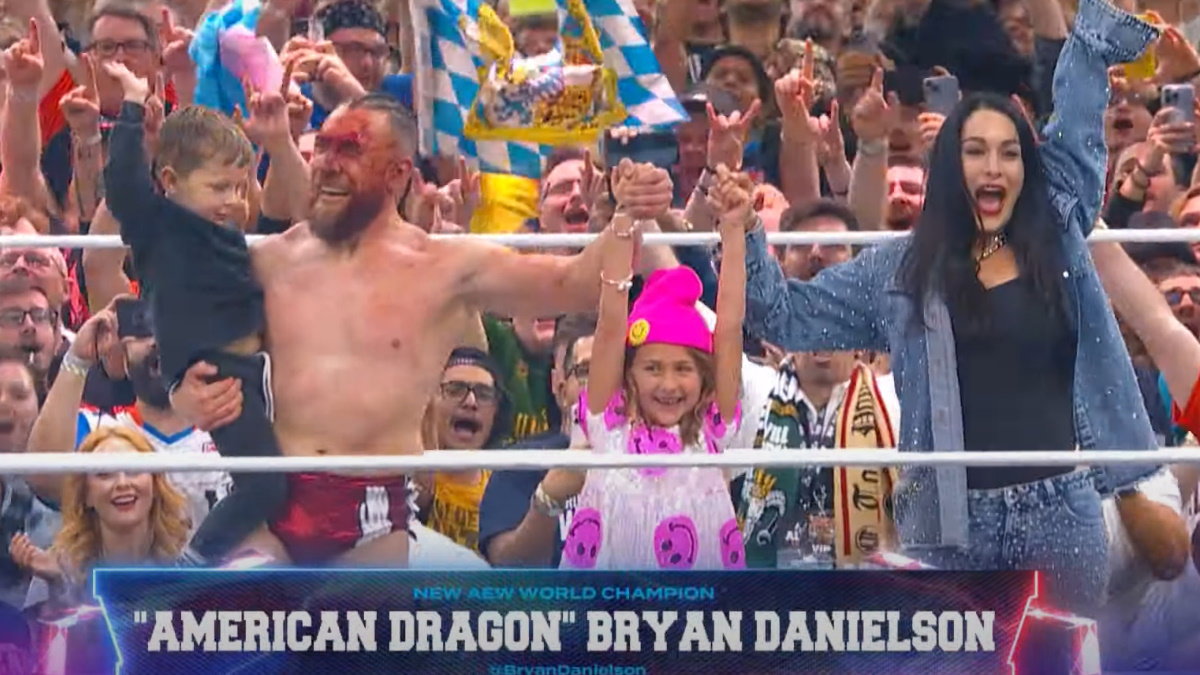
Look at what happened when Bryan Danielson left. WWE kept the "Daniel Bryan" trademark, the "Yes!" chants, the entire packaged identity they cultivated. He had to go back to being Bryan Danielson. He succeeded because he's a generational talent, but for mid-card guys, losing that WWE-owned name is a death sentence for their marketability on the outside.
By changing these six ID prospects' names now, before they even get a sniff of the main roster, WWE is hedging their bets. They are securing the bag early. It is a brilliant, ruthless, cold-blooded business move disguised as a developmental strategy.
The False Prophet of the Performance Center
We keep hearing how the Performance Center has evolved. We hear how Shawn Michaels is down there running NXT like an old territory, booking bangers and letting kids learn the ropes organically. And to be fair, NXT has been putting on some incredibly entertaining television.
But the undercurrent of homogenization is still there. Shawn Michaels might be a more benevolent boss than the old regime, but he is still operating within the rigid confines of a publicly traded conglomerate. He has to answer to the board. He has to answer to TKO.
And TKO does not do "handshake deals" and "indie cred." TKO does global branding and cross-platform monetization. They look at a wrestler the same way they look at a UFC fighter—as an independent contractor who exists solely to generate revenue for the mothership.
The tragedy here isn't just the lost names. It's the lost authenticity. Professional wrestling works best when the volume is turned up on real personalities. When Steve Austin became Stone Cold, it was an extension of his real frustration. When CM Punk dropped the pipebomb, it was real anger bleeding through the script.
When you take a kid from the indies, strip away his name, give him a script written by a former Hollywood sitcom writer, and tell him to hit his poses exactly on the 12-minute mark, you aren't making a professional wrestler. You are making an action figure. And fans can spot an action figure from a mile away.
What This Means for the Immediate Future
Look at the state of the industry right now. We are exactly two days away from AEW Double or Nothing 2026. Tony Khan is sitting in Jacksonville, probably monitoring this exact situation with a massive grin on his face.
Because AEW's entire pitch to young talent is fundamentally different. Their pitch is: "Come here, be yourself, keep your name, keep your Twitch channel, work dates for PWG if you want, and we will pay you national television money."
WWE's pitch remains rigidly unchanged: "Come here, change your name to something a random Florida naming generator spits out, delete your Cameo account, wear our gear, and maybe you'll get to main event WrestleMania in five years."
Both models work. I won't pretend they don't. Both models have created massive stars and generated millions of dollars. But the WWE ID program was supposed to be a middle ground. It was pitched as a softer, gentler approach to talent acquisition in a post-Vince world.
This news proves beyond a shadow of a doubt that the middle ground does not exist. You are either fully in the WWE system, or you aren't. And if you are in, you play by their rules.
You wear their t-shirts. You hit your marks. You look at the camera with the red light. And you use the name that a corporate boardroom decides is best for quarterly earnings.
I genuinely feel for these six unnamed prospects. I really do. You grind for six years. You drive 400 miles on a Friday night to wrestle in front of 50 people at a VFW hall for hot dogs and a handshake. You blow out your knees. You sacrifice your personal life.
You finally get recognized by the biggest company in the world. The dream is finally real. And the very first thing they tell you is that the identity you bled for isn't good enough for their television show.
But hey, maybe one of them will get lucky. Maybe they won't end up saddled with a name like "Bronco Nima" or "Tavion Heights" or "Lexis King." Maybe they'll just get a slightly modified version of their real name. We can only hope.
Until then, the TKO trademark machine keeps churning. It doesn't care about your gritty indie run. It doesn't care about your 5-star rating in the Wrestling Observer. It only cares about what it can own. And right now, it owns these six kids.
Welcome to the big leagues. Please leave your identity at the door. Your new merchandise will be available on WWE Shop on Tuesday.