We are exactly two days away from WrestleMania 41. The staging is being constructed inside Allegiant Stadium.
The promotional graphics featuring John Cena’s farewell tour and the never-ending Bloodline civil war are plastered across every billboard in Las Vegas. The company is hyping up a massive two-night event spanning April 19 and April 20.
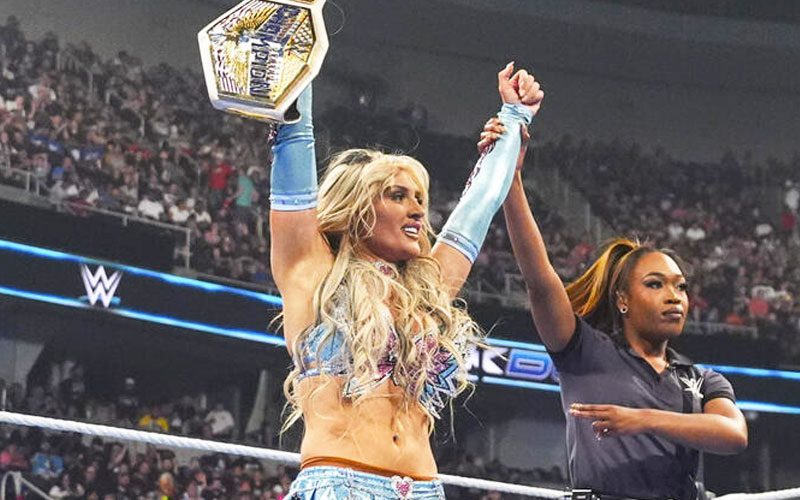
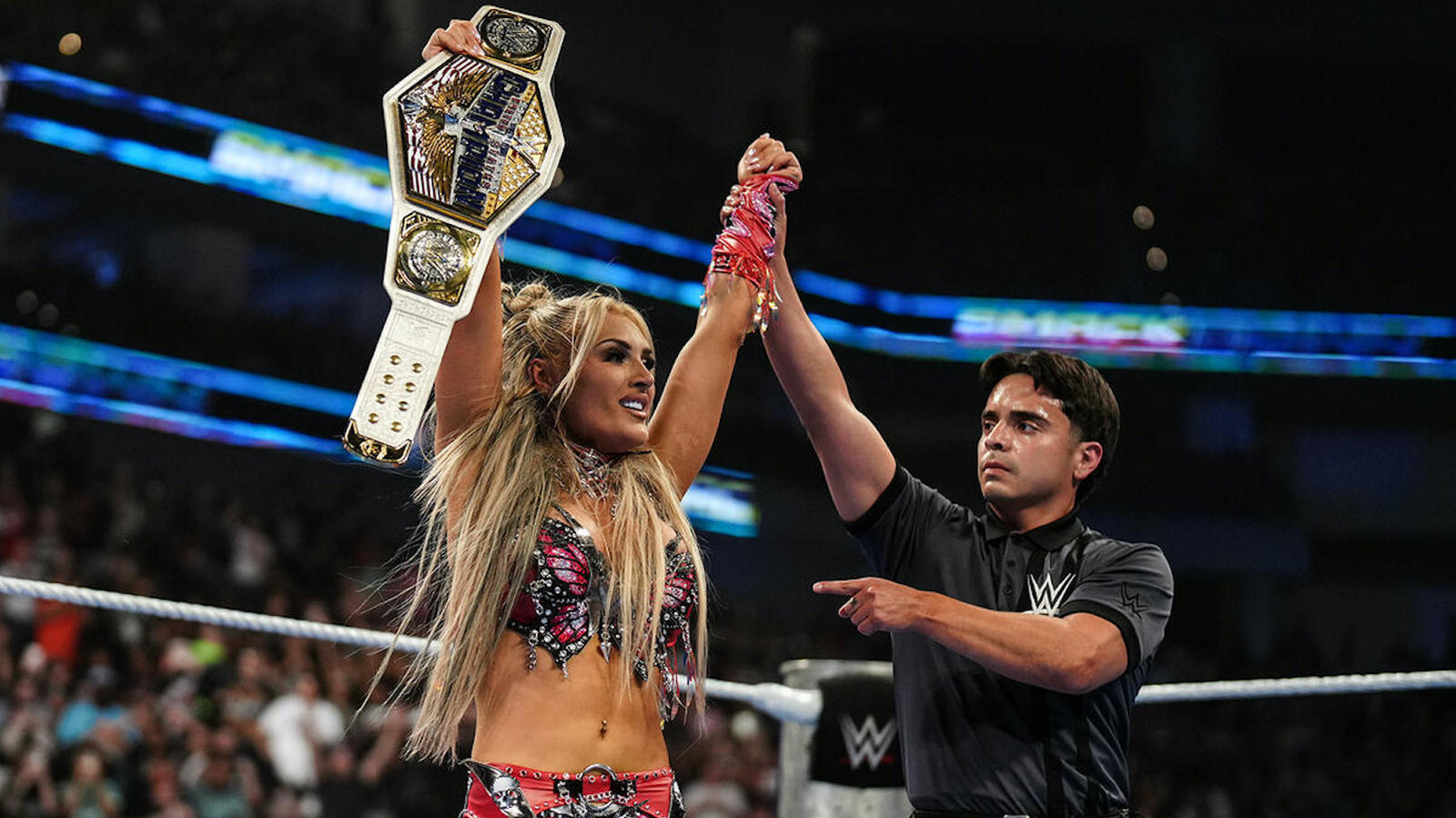
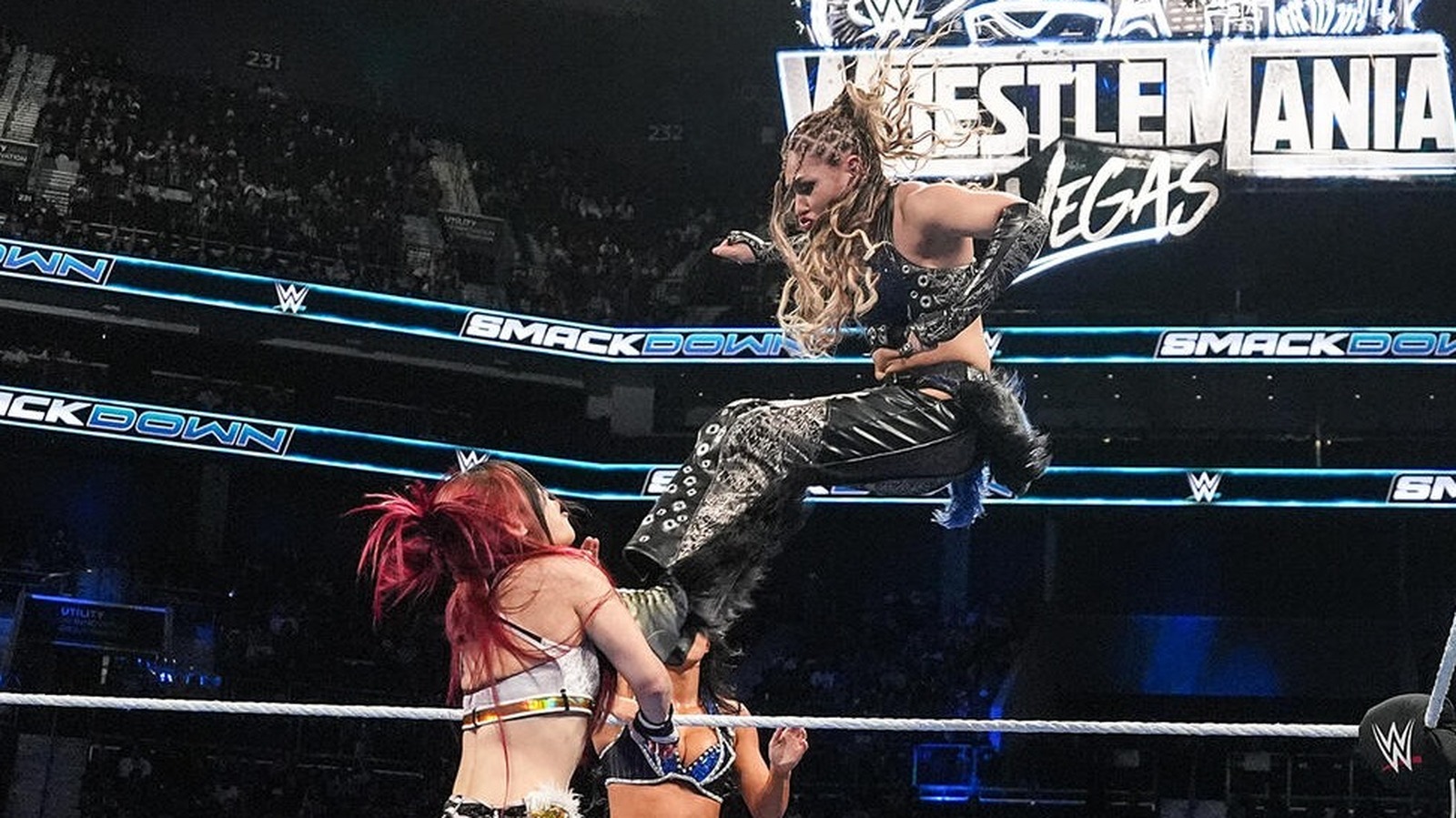
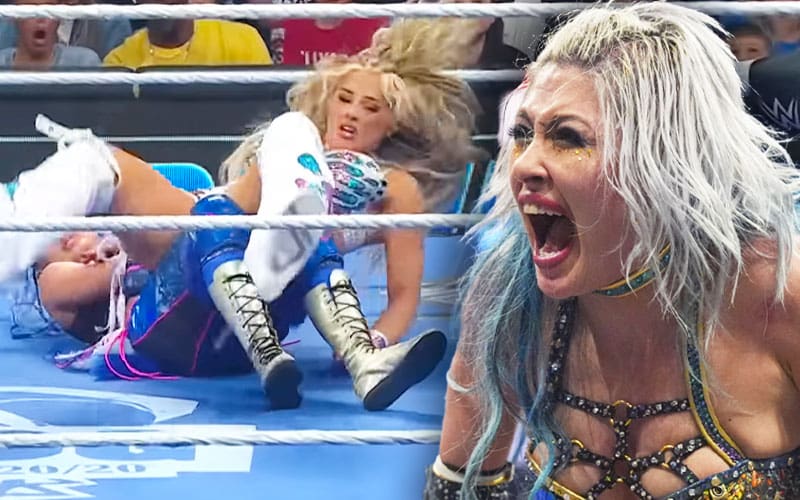
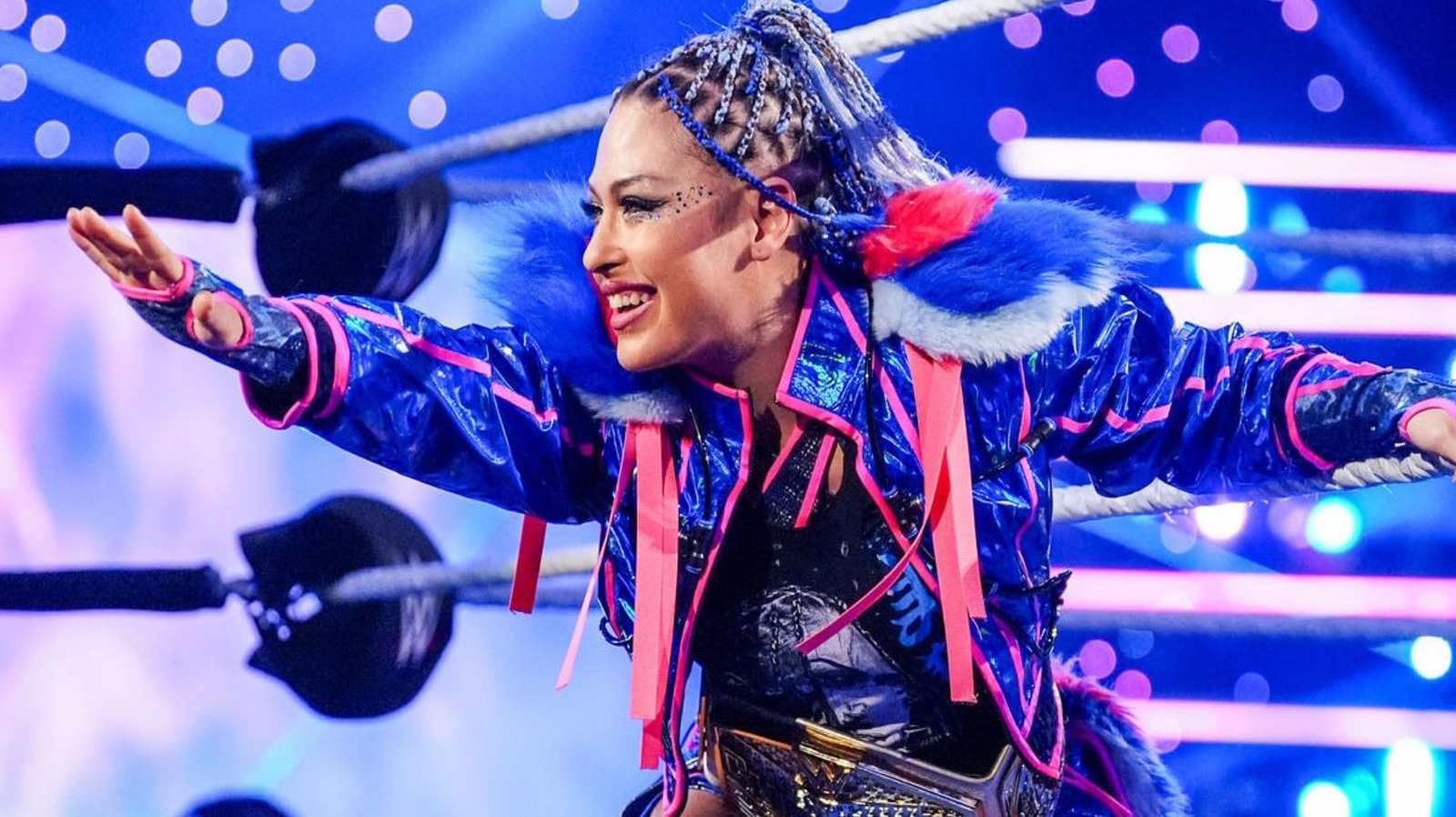
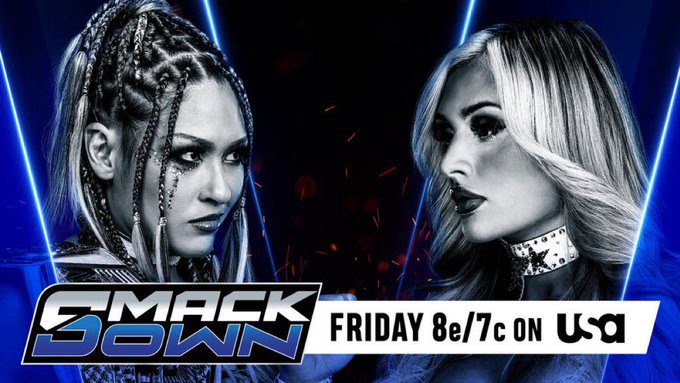
And yet, as reported by BodySlam.net, WWE just made a baffling decision regarding one of their best midcard feuds. The highly anticipated Women’s United States Championship match between the reigning champion, Giulia, and the former WWE Women’s Champion, Tiffany Stratton, is officially happening.
But it is not happening under the bright stadium lights.
Instead, WWE has quietly relegated this title clash to SmackDown. It will take place tonight, Friday night, on the eve of the biggest weekend of the year. They have taken a premium live event caliber match and thrown it onto free television to act as a warm-up act.
For months, Giulia and Stratton have been the most consistent part of Friday nights. Giulia brings a relentless, stiff, unforgiving offensive style. Stratton counters with freakish gymnastics and absolute arrogance.
It is the classic striker versus athlete dynamic. The feud has been built perfectly over weeks of escalating backstage attacks and in-ring promos.
Putting this on television instead of the biggest show of the year feels like a massive miscalculation. You have a stadium setup, a combined run time of nearly 14 hours of weekend programming, and you cannot find twelve minutes for your secondary women's champion?
The Triple H pacing problem
Ever since Triple H took over main roster creative, we have seen a massive shift in how premium live events are structured. He prefers shorter cards. Five to seven matches per night.
He wants every match to have plenty of time to breathe. In theory, this is great. Nobody misses the bloated, seven-hour broadcasts from the late 2010s where exhausted fans were falling asleep during the main event.
But there is a glaring consequence to this booking philosophy. When you drastically reduce the number of spots on the card, phenomenal talent gets left out in the cold.
When Vince McMahon was running the show, he would throw a twenty-person battle royal on the pre-show just to make sure the locker room got a WrestleMania payday. It was chaotic, but it got people on the broadcast.
Now, we have a different problem entirely. WWE introduced the Women's United States Championship specifically to give the women's division more screen time.
The entire point of a secondary title is to create meaningful, non-main-event storylines. It was supposed to fix the exact issue of talented wrestlers missing out on premium live events because they were not actively feuding with Rhea Ripley.
If the champion cannot get on the WrestleMania 41 card, what is the point of the belt?
WWE is essentially telling us that a match between two of their most popular female stars is less important than making sure a celebrity guest gets a sponsored ring entrance. We all know there will be a ten-minute segment on Saturday night featuring legends drinking beer or a musical performance that nobody asked for. That time could have gone to Giulia and Stratton.
The commercial break tragedy
Let us be entirely honest about what a SmackDown title match means during WrestleMania week. It is a pacing disaster waiting to happen.
A match on a premium live event is allowed to build organically. The wrestlers can tell a story, escalate the violence, and hit a crescendo without interruptions.
A match on SmackDown is at the mercy of the television broadcast format. It is sliced into artificial chunks to accommodate advertisers.
You get the ring entrances. You get the pre-match staredown. The bell rings, they tie up, maybe hit one big spot to the outside, and then the broadcast aggressively cuts to a commercial for cheap domestic beer.
When the show returns from the break, one of the wrestlers is inevitably trapped in a tedious rest hold. The momentum is completely dead, and they have to spend the next two minutes waking the crowd back up.
Giulia’s matches thrive on escalation. She starts stiff and just gets meaner as the bell time increases. She takes punishment, smiles, and then unloads a terrifying barrage of headbutts and high-angle Saito suplexes.
You cannot build that kind of raw intensity when the match is carved into three-minute blocks.
Stratton deserves better here, too. She has proven she can hang in main event spots. She held the top title.
Having her challenge for the United States Championship should instantly elevate the prestige of the belt. Instead, it feels like WWE scrambled to find something for them to do on Friday night to pop a TV rating.
A clash of two different wrestling worlds
The frustration is compounded by the fact that this match is a fascinating stylistic clash. It is the ultimate meeting of two completely different wrestling ideologies.
Giulia was the most sought-after free agent in the world before signing with WWE. She built her reputation in Japan by having absolute wars.
She hits the ropes hard, she throws forearms that echo through the arena, and she carries an aura of legitimate danger. She does not look like she is performing a routine. She looks like she is trying to knock her opponent unconscious.
Tiffany Stratton is the exact opposite. She is the crown jewel of the modern WWE Performance Center system. She is a homegrown talent with a background in competitive gymnastics.
Her offense relies on explosive bursts of athleticism. Her signature Prettiest Moonsault Ever is a spectacular finish, but her real skill is her uncanny timing on reversals.
Stratton uses her incredible core strength to hit back handsprings to dodge clotheslines. She turns botched spots into impressive recoveries. She leans into her wealthy, arrogant character to draw massive heat from the crowd.
We saw glimpses of their chemistry over the winter. When Stratton tries to big-league Giulia with her condescending attitude, Giulia simply stares a hole through her.
The character work has been excellent. Giulia does not care about Stratton's expensive gear or her gymnastics routine. She just wants to hit her in the mouth.
But great character work demands a proper payoff. A rushed fifteen-minute TV match that ends in a disqualification so they can run a video package about Cody Rhodes is not a proper payoff.
When you put two wrestlers with highly specific offenses into a compressed time slot, something has to break. Wrestling is essentially violent geometry.
It requires space, timing, and most importantly, an understanding of the crowd's emotional state.
Giulia relies on a very specific rhythm. She uses a hesitation dropkick that requires her opponent to be draped over the middle rope for an extended period.
On a premium live event, the crowd anticipates the strike. The silence before the impact adds to the violence.
On free television, the director is frantically cutting between four different camera angles, trying to hide the setup while the commentator screams about an upcoming sponsor.
Stratton’s offense suffers equally from television constraints. Her Swanton Bomb to the outside is spectacular, but it requires a very specific setup sequence.
On SmackDown, high spots to the floor are almost exclusively used as cues to cut to a commercial break. The impact of the move is completely erased because the viewer is instantly subjected to a fast-food advertisement.
When the broadcast returns, the referee will be arbitrarily counting to five, and both women will be lying on the mat pretending they have been incapacitated for the last three minutes. It is insulting to the viewer and detrimental to the performers.
The reality of the modern roster bloat
We cannot discuss this relegation without acknowledging the elephant in the room. The WWE roster is currently too deep for its own good.
They have stockpiled an absurd amount of talent over the last three years, hoarding independent standouts and fast-tracking athletes from the Performance Center.
The result is a bottleneck at the top of the card. You have Cody Rhodes, Roman Reigns, CM Punk, Drew McIntyre, Seth Rollins, and Gunther all demanding main event time.
Then you add in the part-timers and legends who parachute in for a massive payday.
The women's division suffers the most from this bottleneck. Rhea Ripley and Bianca Belair are locked into the premium spots. Everyone else is fighting over scraps.
The creation of the Women's United States Championship was pitched as a solution to this exact problem.
The company promised that the secondary title would provide a platform for rising stars and international veterans to showcase their skills on the biggest stages.
By bumping the title match to SmackDown, WWE has completely undermined that promise. They have proven that when push comes to shove, the midcard women are still the first ones off the boat.
It sends a terrible message to the locker room. You can grab the brass ring, you can get over with the crowd, you can put on stellar matches on weekly television, but if a part-timer decides they want a ten-minute segment at WrestleMania, your title match is getting bumped to Friday.
There is an obvious, cynical business reason for this booking decision. SmackDown always needs a major main event draw on the Friday before WrestleMania.
It is notoriously a tough night for television viewership. A huge portion of the hardcore fanbase is either traveling to the host city or already sitting in a gymnasium watching an independent wrestling show.
To prevent the ratings from tanking, network executives demand high-stakes matches on the go-home broadcast. Throwing a highly requested title match onto the card guarantees that fans will tune in.
It provides an immediate hook for the episode. But from a pure wrestling perspective, it is a massive letdown.
This match is going to be good regardless of the platform. Giulia is currently physically incapable of having a bad match. She is going to hit Stratton with lariats that look devastating.
Stratton is going to bump like a maniac to make the champion look like an unstoppable monster.
There will probably be a brilliant sequence where Giulia catches Stratton mid-air during a springboard attempt and seamlessly transitions into a punishing submission hold. The Las Vegas crowd will erupt.
But what happens after the referee counts to three? The bell will ring, a winner will be declared, and the broadcast team will immediately pivot to reading promotional copy for the main events.
Whoever walks out of SmackDown with the Women's United States Championship is going to be holding a slightly devalued belt.
If Giulia retains, her dominant reign continues, but it will always carry a subtle asterisk. Defending your championship on the go-home television show does not look nearly as impressive on a historical resume as defending it at WrestleMania.
If Tiffany Stratton wins, we get a major title change that will immediately be overshadowed. Whatever happens between Cody Rhodes and the Bloodline in the main event will completely dominate the news cycle.
By the time the post-WrestleMania television broadcasts roll around, nobody will even be discussing the United States Championship switch.
This was WWE's first real chance to legitimize the Women's United States Championship on the grandest stage possible. They had the opportunity to prove that the secondary title has actual prestige and means something to the division.
Instead, they are using two of their best workers as bait to pop a Friday night television rating.
We will watch the match. We will likely enjoy the physical ring work. But we are absolutely allowed to point out that WWE is still treating its secondary women's feuds as an afterthought when the big stadium lights finally turn on.
Read Next
- Rhea Ripley breaks silence on eating disorder and Giulia's WWE start
- Rhea Ripley's real WWE numbers prove her Twitter critics are just noise
- WrestleMania 41 Medical Brief: Cage Risks, The Rousey Factor, and Vince's Shadow
- Liv Morgan is currently having the most chaotic WrestleMania week in history
- 🏆 WrestleMania 41 — Full Coverage Hub