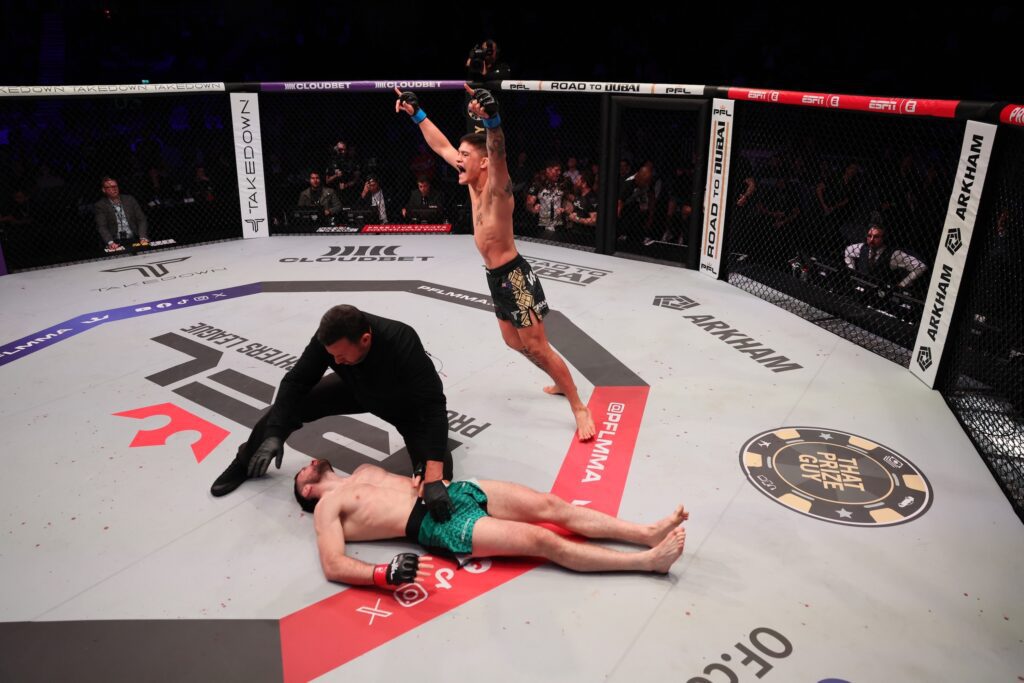
WWE is playing with fire by bringing a major star back at MSG
The adrenaline trap of Madison Square Garden
The news filtering through WrestlingNews.co is straightforward but structurally chaotic. A major WWE star is scheduled to return at the upcoming Monday Night Raw in Madison Square Garden. On paper, it is an easy win for the company. You put a big name in the world's most famous arena, you get a massive pop, and you dominate social media for 48 hours.
But professional wrestling is not booked on paper. We are sitting on March 29, exactly three weeks away from WrestleMania 41 at Allegiant Stadium. The board is already set. Cody Rhodes is locked into his WWE Championship defense. John Cena is preparing for his highly publicized farewell. CM Punk has his major program carved out. The Bloodline saga is eating up a massive chunk of television time every single week.
Dropping a main event-level talent into this tightly wound mix right now isn't a masterstroke of late-season plotting. It is a booking grenade.
Breaking the television slope
To understand why this is such a volatile move, you have to look at the mechanics of television pacing. WrestleMania builds operate on a strict, predictable slope. By late March, the heavy lifting of narrative exposition is supposed to be finished. You are no longer establishing motives or introducing new variables. You are simply escalating the existing tension.
A surprise return fundamentally breaks that slope. It forces the writing team to compress three months of organic storyline development into a frantic three-week sprint. We have seen this happen repeatedly in modern WWE history, and it rarely yields a classic match. When you bring someone back in the final hours of the season, they usually end up in a hastily assembled multi-man match.
Alternatively, they get thrown into a cold singles bout reliant entirely on the residual heat of their return pop. It is the defining difference between a wrestling storyline and a cheap stunt. Madison Square Garden is the ultimate enabler for this kind of short-term booking. The building possesses a unique gravitational pull that makes bad ideas feel temporarily brilliant.
WWE executives know that an MSG crowd will react to a surprise return with a deafening roar. That noise translates perfectly to chopped-up social media clips. It looks amazing in a vacuum. But television is not a vacuum. The Monday after the MSG show, the adrenaline inevitably wears off, and the creative team has to actually book a wrestling match for Vegas.
The geometry of Allegiant Stadium
There is also a physical reality to returning right before the biggest show of the year. Ring rust is not a myth. You cannot simulate the cardiovascular demands of a premium live event match in an empty Performance Center ring. Returning talent consistently look a half-step slow when they first step back through the ropes.
Their timing on complex reversals is slightly off. They blow up and start sucking wind earlier in the match. Putting a ring-rusty performer in the ring at Allegiant Stadium is a recipe for a heavily criticized bout. The sheer size of an NFL stadium already swallows crowd noise and makes matches feel visually slower than they are.
Matches that work in the tight, intimate confines of MSG often die in a cavernous stadium because the visual scale requires bigger, broader movements. If a returning star is gassed after 12 minutes of work, the Allegiant crowd will turn on the match immediately. You cannot hide cardio deficiencies under the bright lights of WrestleMania.
Usually, producers hide these limitations with smoke and mirrors. They book brawling on the outside, heavy weapon spots, and long submission holds to let the returning talent catch their breath. But WrestleMania 41 is already going to be extremely heavy on those exact tropes. The Bloodline matches are guaranteed to feature extensive outside interference and chaotic brawling.
You cannot have four no-disqualification brawls on the same card. A wrestling show needs dynamic pacing. If the returning star is forced to work a straight, athletic wrestling match to balance the card, their physical limitations will be entirely exposed.
Destabilizing the existing card
Let's look closely at the available real estate on the WrestleMania 41 card. Night 1 on April 19 is firmly anchored by Cena's emotional farewell and Punk's high-profile match. Night 2 belongs to Cody Rhodes and Roman Reigns. If this returning star is a legitimate main eventer, where exactly do they fit into this puzzle?
You cannot reasonably wedge them into the WWE Championship picture. Cody's title reign relies heavily on clear, one-on-one defining challengers. Adding a third variable at the last minute dilutes the drawing power of the match. It makes the champion look like an afterthought in his own title defense.
You also cannot stick them with John Cena. Cena's farewell tour has been meticulously planned for months. Interjecting a returning star just to get them on the card would be a massive disservice to a retirement angle that fans have deeply invested in. It would hijack the emotional resonance of Cena's final bow.
This leaves the midcard titles or a non-title grudge match. Building a credible, heated grudge in just 21 days requires taking massive creative shortcuts. You inevitably end up with the dreaded "I'm back and I want a match" promo, immediately followed by a cheap blindside attack. It is lazy, predictable wrestling architecture.
If you force a 15-minute match for the returning star onto Night 1, you have to cut time from elsewhere. You shave three minutes off Punk's match. You rush the entrances. You trim the video packages that actually explain why the matches matter. The entire rhythm of the broadcast accelerates, and suddenly nothing feels allowed to breathe. A sprawling six-hour broadcast starts to feel weirdly claustrophobic. You are sacrificing the structural integrity of your biggest show just to accommodate one person who wasn't around for the winter build.
The ratings mirage
We have decades of data detailing exactly how these returns impact the business metrics. The initial television rating for the quarter-hour of the return will be excellent. WWE will inevitably send out a press release touting a massive viewership spike in the key 18-to-49 demographic. But if you look at the minute-by-minute breakdowns, the story is always far more complicated.
Audiences are incredibly savvy to the structural rhythms of Monday Night Raw. They will tune in at the top of the hour to see the surprise, watch the signature finisher, and then instantly change the channel. They do not stick around for the subsequent 20-minute midcard tag team match. A return is a blunt force instrument for ratings, not a sustainable tool for audience retention.
The USA Network executives look at the quarterly spreadsheets and see a bump, which validates the booking decision in the boardroom. But the live crowds tell a completely different story. Go back and watch any late-season Raw where a returning legend ate up 20 minutes of the first hour. The second hour is dead. The crowd is exhausted. You have effectively burned out the live audience before the main event participants even lace their boots.
If the goal is simply to pop a big number for the television partners, then the Madison Square Garden return makes cynical sense. But if the goal is to build long-term equity in the characters actually headlining WrestleMania 41, it is a blatant distraction. The television focus should be entirely on Cody Rhodes and his physical deterioration ahead of the Roman Reigns match.
The locker room tax
This dynamic also extracts a heavy tax on the locker room. The modern WWE roster is arguably the deepest and most mechanically gifted in the history of the industry. Guys are working brutal European tours in November and December, taking high-impact bumps on hard mats, specifically to earn their spot on the April card.
When management parachutes a returning star into a premium slot three weeks before the event, it completely undercuts that unwritten contract. You cannot preach a culture of grabbing the brass ring if the ring is arbitrarily handed to someone who just walked back through the door. It breeds a very specific type of backstage resentment.
We saw this exact scenario play out a decade ago when part-time stars routinely hijacked the main event scene. The crowd eventually rejected the returning heroes because they recognized the inherent unfairness of the booking. If the Madison Square Garden crowd decides they prefer the current roster over the returning star, the entire segment could backfire spectacularly.
The counter-argument, usually pushed heavily by the promotion itself, is that a stacked roster creates internal competition. The corporate line is that iron sharpens iron. But professional wrestling isn't a meritocracy. It is a scripted television show with strictly finite screen time. You cannot outwork a script that doesn't include your name. If a returning star bumps a regular off the main card and into the pre-show battle royal, that isn't competition. That is just brutal corporate hierarchy in action.
A smarter path forward
So what is the optimal tactical play for the Madison Square Garden show? If WWE is absolutely committed to this return, they need to resist the overwhelming urge to book a match for WrestleMania 41. Instead, they should use the MSG appearance as a disruptive element that pays off later.
The post-WrestleMania hangover is a very real phenomenon. The Raw after Mania is always huge, but the month following is historically a creative wasteland. A returning star is exactly what you need to anchor the WWE Backlash event on May 9. Burning the return just to cram them onto the April card is terrible asset management.
Let the returning star cost someone a match at Allegiant Stadium. Let them sit in the front row and act as a looming threat. Build the angle properly over six or seven weeks instead of frantically cramming it into three. That approach requires immense creative discipline.
It requires looking at an MSG crowd, hearing the inevitable roar of approval, and actively deciding not to cash that ticket immediately. It requires acknowledging that WrestleMania 41 does not need to be a crowded clown car of every available talent under contract.
The card is already strong enough to sell out Allegiant Stadium twice over. The discipline to hold off is incredibly rare in professional wrestling. The temptation to maximize the immediate, visceral moment almost always wins out over long-term logical booking.
When that Madison Square Garden pop hits on Monday Night Raw, it will feel like an absolute triumph in the building. The announcers will lose their minds at the desk. The clip will generate millions of impressions across social media platforms within hours.
But the real test comes the following Monday. When the noise completely dies down, the writing team still has to sit in a room and figure out what happens next. And right now, looking at the layout of the WrestleMania 41 card, there is simply no obvious space on the page.
Read Next
- Why Cody Rhodes will survive Roman Reigns in the WrestleMania 41 tiebreaker
- Why wrestling fans are melting down over Roman Reigns' movie career
- WWE's WrestleMania 41 card is a massive mess and time is running out
- WrestleMania 41 is three weeks away and the booking feels unusually tense
- 🏆 WrestleMania 41 — Full Coverage Hub
RDX Weight Lifting Belt for Gym Workout
Train like a champion with heavy-duty lumbar support.
Frequently Asked Questions
When is the surprise WWE return scheduled to happen?
Why is a late return before WrestleMania considered a bad idea?
Who is already confirmed for major storylines at WrestleMania 41?
What type of match usually results from a last-minute WWE return?
How does ring rust affect a returning wrestler at a major event?
More Coverage

Top 10: The Most Impactful Pro Wrestling Moments of 2026
21 minutes ago
Claudio Castagnoli’s creative stagnation is a major AEW failure
an hour agoWhy the Broken Hardy act is a major gamble for Philadelphia
an hour ago
WWE reshuffles NXT pipeline as Meghan Walker eyes main roster debut
2 hours ago
Andre Chase pulls back the curtain on the Shawn Michaels era at NXT
3 hours ago
The Andre Chase effect: Why Shawn Michaels is the ultimate NXT headmaster
3 hours agoMore Analysis
Cody Rhodes suggests Pat McAfee could return for a big stage moment
3 months ago
Cody Rhodes and the massive problem hiding behind WWE's media blitz
3 months, 3 weeks ago
Cody Rhodes has a massive tactical problem heading into WrestleMania 41
3 months, 3 weeks ago
Why John Cena's MSG return match against Cody Rhodes is a tactical nightmare
2 weeks, 5 days agoWhy Cody Rhodes is completely mismanaging his final 20 days
3 months, 2 weeks ago