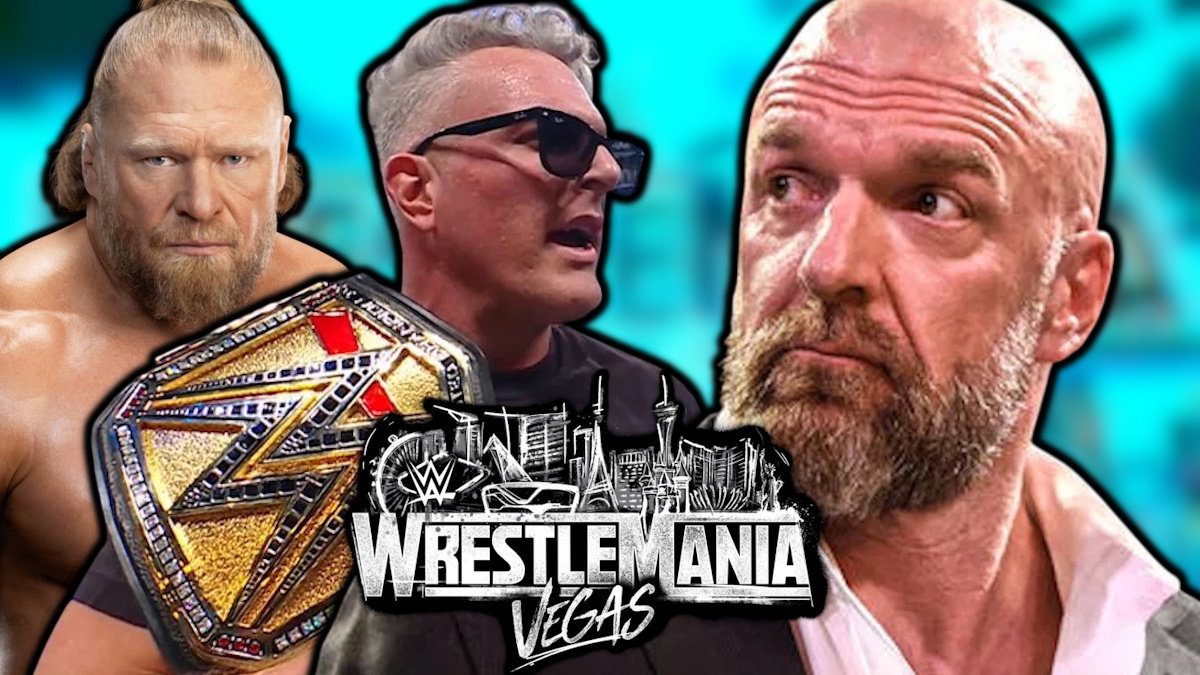
WrestleMania 41 is the ultimate test for a burned-out locker room
The reality check of Allegiant Stadium
We are finally here in Las Vegas. The neon lights and massive casino ads fade into the background as Allegiant Stadium swallows the wrestling world whole. Tonight is April 19, 2026. Night one of WrestleMania 41.
This is not a rebuilding year. Management has pushed all their chips to the middle of the table. The booking over the last six months has been entirely reliant on massive, undeniable star power carrying the emotional weight of the television product. It works on paper. But executing it across two nights in a cavernous football stadium is a massive logistical and creative challenge.
The chatter online about future events — some even foolishly looking ahead to next year — entirely misses the point. The company has to deliver right now. The roster is dealing with lingering injuries, the schedule has been brutal, and the audience is demanding a payoff that actually respects their investment.
We have reached the saturation point with two-night stadium shows. The pacing often drags. Video packages run too long. But tonight and tomorrow, the bell rings, and the athletes have to make us forget about the corporate sponsor logos painted on the ring mat.
John Cena and the final bell
Tonight features the John Cena farewell. This is not a drill, nor a temporary hiatus for a movie shoot in London. It is the definitive end of an era that defined the company for two decades.
Cena debuted in 2002. He carried the promotion through its most awkward, transitional phases. He absorbed deafening boos in Chicago, Philadelphia, and New York, only to smile, adjust his ballcap, and hit the Attitude Adjustment. But the man lacing his boots tonight in Vegas is not the invincible superhero of 2007.
He is older, slower, and noticeably more vulnerable in the ring. The matches leading up to tonight have been carefully protected. Tag matches, short sprints, heavily scripted brawls. Tonight, the training wheels come off. He has to deliver a main-event caliber singles match one last time.
Think back to WrestleMania IX in this very city. Jim Ross making his debut in a toga, Undertaker wrestling Giant Gonzalez in broad daylight. It was a bizarre, disjointed spectacle. Vegas has always been a weird fit for wrestling because the local crowd is largely comprised of tourists who comped their tickets at the blackjack tables. The noise doesn't bounce in these open-air setups. Cena knows this. He knows he cannot rely on organic crowd heat. He has to manufacture it from scratch.
When Cena locks in the STF, watch his eyes. He scans the front row. He is reading the room in real-time. If they aren't buying the struggle, he will audible. He will break the hold, roll to the outside, and yell at a fan just to reset the emotional baseline. That level of ring awareness cannot be taught at the Performance Center. It takes two decades of trial and error on house shows in Poughkeepsie to learn how to manipulate human psychology like that.
His opponent tonight has an impossible task. If you beat John Cena in his final match, you are forever the villain who ended the childhood of millions. If you lose, you are just another notch on the belt of a man walking into Hollywood retirement. There is no winning hand here. The only path forward is to deliver a match so physical, so undeniable, that the result becomes secondary to the violence.
CM Punk chasing the ghost in the machine
Also on the docket for tonight is CM Punk's major match. The journey from his shocking return to this specific ring in Las Vegas has been turbulent. Triceps tears, backstage politics, and the relentless grind of the road have clearly taken a toll.
Punk's entire appeal has always been his abrasive authenticity. He doesn't look like a bodybuilder. He doesn't move like a gymnast. He moves like a guy you fought in a parking lot outside a dive bar. That gritty, unpolished style is precisely why the audience connects with him. In an era of overly choreographed routines, Punk still looks like he is actually trying to hurt you.
But the injuries are a massive red flag. The triceps tears. The foot issues. Every time he hits the ropes, there is a collective gasp from the hardcores wondering if his body will hold up. The opponent tonight knows this. They will target the arm. They will ground him. Expect heavy use of joint manipulation and slow, methodical pacing in the opening ten minutes.
If Punk can survive the opening onslaught, his counter-wrestling is still top-tier. He uses small packages, backslides, and schoolboy pins better than anyone on the roster. He doesn't need to lift a 250-pound man over his head to win. He just needs to catch him making a mistake. The GTS is a great visual, but Punk winning with a sudden, desperate roll-up at the 18-minute mark would be far more compelling and realistic given his physical state.
Tonight's matchup is a massive test. He is in the ring with a younger, faster opponent who wants to push the pace. Punk has to act as the ring general. He has to ground the match. If it turns into a track meet, Punk will look his age. He needs to chop down the legs, use submissions, and turn the bout into a gritty, ugly fight rather than an athletic exhibition.
This is where the criticism of recent booking comes in. The company has a terrible habit of over-producing these blood-feud matches. They add run-ins, referee bumps, and unnecessary weapons. Punk doesn't need a steel chair to get a reaction. He needs a microphone and a clear path to tell his story in the ring. If management overbooks this, they will ruin the organic magic.
Cody Rhodes and the weight of the crown
Tomorrow is April 20. Night two. Cody Rhodes walks down the massive ramp to defend the WWE Championship. The chase is over. The "finish the story" narrative is dead and buried. Now, he has to live with the reality of being the champion.
The "American Nightmare" persona is a fascinating case study in modern wrestling psychology. He essentially manufactured his own main-event status by leaving the company, building his brand on the independent scene, and returning as a fully formed superstar. Management didn't make Cody Rhodes. Cody Rhodes forced management to accept him.
But that rogue, anti-establishment energy has completely vanished now that he wears the suit and holds the gold. He is doing the morning talk shows. He is shaking hands with executives. He has become the very machine he used to rebel against. The Vegas crowd sees this. They are smart. They know when a character has lost its edge.
Tomorrow night is different. The pressure is astronomical. He is defending the championship on the biggest stage imaginable. The opponent has a legitimate claim to the throne. The crowd in Vegas will be tired. They will have sat through seven hours of wrestling over two days. Cody has to wake them up.
He cannot rely on his standard babyface comeback sequence. The Vegas crowd is notoriously cynical. If they smell complacency, they will turn on him. He needs to show edge. He needs to bleed, or at least fight like a desperate man protecting his life's work. The squeaky-clean, smiling champion routine will not work at minute 22 of a grueling main event.
The Bloodline fatigue is setting in
Then there is Roman Reigns and the ever-present shadow of the Bloodline. This story has dominated television for years. At its peak, it was the best soap opera in professional wrestling history. The subtle facial expressions, the manipulation, the gaslighting — it was brilliant.
But we are in 2026. The faction has splintered, reformed, added cousins, removed cousins, and dragged out every possible plot thread. The audience is exhausted. The segments still get reactions, but it is muscle memory at this point.
Tomorrow night needs to be the definitive conclusion to this chapter. Roman Reigns is a generational talent, but he has been trapped in the same narrative loop for far too long. He needs a hard reset. He needs to step away from the tribal chief character and evolve.
The match tomorrow will undoubtedly feature the usual tropes. The referee will take a bump. Solo Sikoa will appear on the apron. Someone will hit a spear through the barricade. We have seen this exact match layout a dozen times. The producers need to abandon the formula.
Let Roman Reigns wrestle a straight, clean match. Let him remind the world that he is an elite in-ring performer who doesn't need interference to tell a compelling story. If we get another overbooked mess with three run-ins and a visual pinfall while the referee is unconscious, the Vegas crowd will loudly reject it.
The glaring hole in the undercard
While the main events suck all the oxygen out of the room, the state of the undercard remains a massive point of frustration. The tag team division, in particular, has been treated like an afterthought. We have immensely talented teams relegated to a multi-man scramble match just to get them on the card.
This is lazy booking. Instead of building a compelling two-on-two feud with actual stakes, the creative team just throws six teams into the ring and tells them to hit their high spots. It is a car crash. It looks impressive on a highlight reel, but it means absolutely nothing. There is no emotional investment when twelve guys are just standing on the outside waiting to catch someone diving over the top rope.
The women's division is facing a similar bottleneck. The top of the card is stacked with undeniable Hall of Fame talent. But the mid-card women are given three-minute TV segments and zero character development. Tonight, a handful of them will be thrown into a meaningless battle royal. It is insulting to their work ethic.
When you have a roster this deep, the failure to create compelling secondary storylines is entirely on the writers. They rely too heavily on the main event to sell the pay-per-view, treating the first three hours of the show as skippable filler. The fans in Allegiant Stadium paid premium prices. They deserve a top-to-bottom card that actually matters.
The structural flaws of modern pay-per-views
This brings us to a larger, unavoidable issue with the current product. The formatting of these stadium shows is broken. The pacing is entirely designed for television viewing, completely ignoring the live audience freezing in a massive concrete bowl.
Between every single match, we are subjected to a five-minute video package, a three-minute backstage interview, and a two-minute commercial for a sugary energy drink. It kills the momentum dead. By the time the next wrestlers make their entrance, the crowd has entirely deflated.
You can literally see the exhaustion in the background shots. Fans are sitting on their hands, checking their phones. This is supposed to be the wildest, most passionate weekend of the year. But the corporate formatting drains the life out of the building.
They need to tighten the ship. Cut the filler. Give the mid-card matches an extra five minutes instead of running a prolonged ad for a mobile game. Treat the event like a legitimate sporting contest, not a seven-hour infomercial.
The verdict on the Vegas gamble
WrestleMania 41 is a massive stress test for the entire operation. They have the talent. They have the venue. The storylines, while occasionally flawed, have enough heat to deliver. But the execution has to be sharp.
Cena has to survive his physical limitations. Punk has to outsmart a chaotic booking sheet. Cody Rhodes has to prove he isn't just a transitional champion. And Roman Reigns has to finally break free from a creatively exhausted faction.
If they get it right, this weekend will be remembered as a masterclass in emotional storytelling. The Vegas crowd will explode, and the company will ride the momentum straight into the summer. But if they rely on cheap finishes, bloated match times, and excessive run-ins, the backlash will be immediate.
The bell is about to ring. The talking is over. Now it is time for the roster to earn their money.
Read Next
- WrestleMania 41 is the most expensive gamble in WWE history
- Top 10: The Biggest WWE Stars on the Eve of WrestleMania 41
- John Cena and Cody Rhodes face their final boss at WrestleMania 41
- Top 10: Moments Defining the Road to WrestleMania 41
- 🏆 WrestleMania 41 — Full Coverage Hub
- 👴 John Cena Retirement Tour 2026
Cody Rhodes Commemorative Weight Lifting Belt
Channel the American Nightmare's intensity during your next gym session.
Frequently Asked Questions
When and where is WrestleMania 41 taking place?
Who are the key wrestlers featured at WrestleMania 41?
Why is John Cena's match at WrestleMania 41 significant?
What challenges does John Cena face in his final match?
How does the Las Vegas crowd affect wrestling events?
More Coverage
When Ozzy wasn't looking: The weirdest wrestling crossover of the year
an hour ago
AJ Styles is reflecting on his legacy while others look elsewhere
an hour ago
Ethan Page is playing a dangerous game with his ego in NXT
an hour ago
Ethan Page says his custom NXT title was the real top prize and fans are split
an hour agoGear Check: Sorting the Must-Haves from the Merch Table Filler
2 hours ago
Why CM Punk vs Cody Rhodes is a game of psychological chicken
3 hours agoMore Analysis
WrestleMania 41 is the ultimate test of Cody Rhodes' staying power
3 months, 1 week ago
WrestleMania 41 is the most expensive gamble in WWE history
3 months agoCody Rhodes and Roman Reigns are about to finish their three-year war in Las Vegas
3 months ago
WWE is betting everything on WrestleMania 41 despite some shaky TV numbers
3 months ago
WrestleMania 41 in Las Vegas is the ultimate test of WWE's new era
3 months ago