The technical debt of the three-city disaster
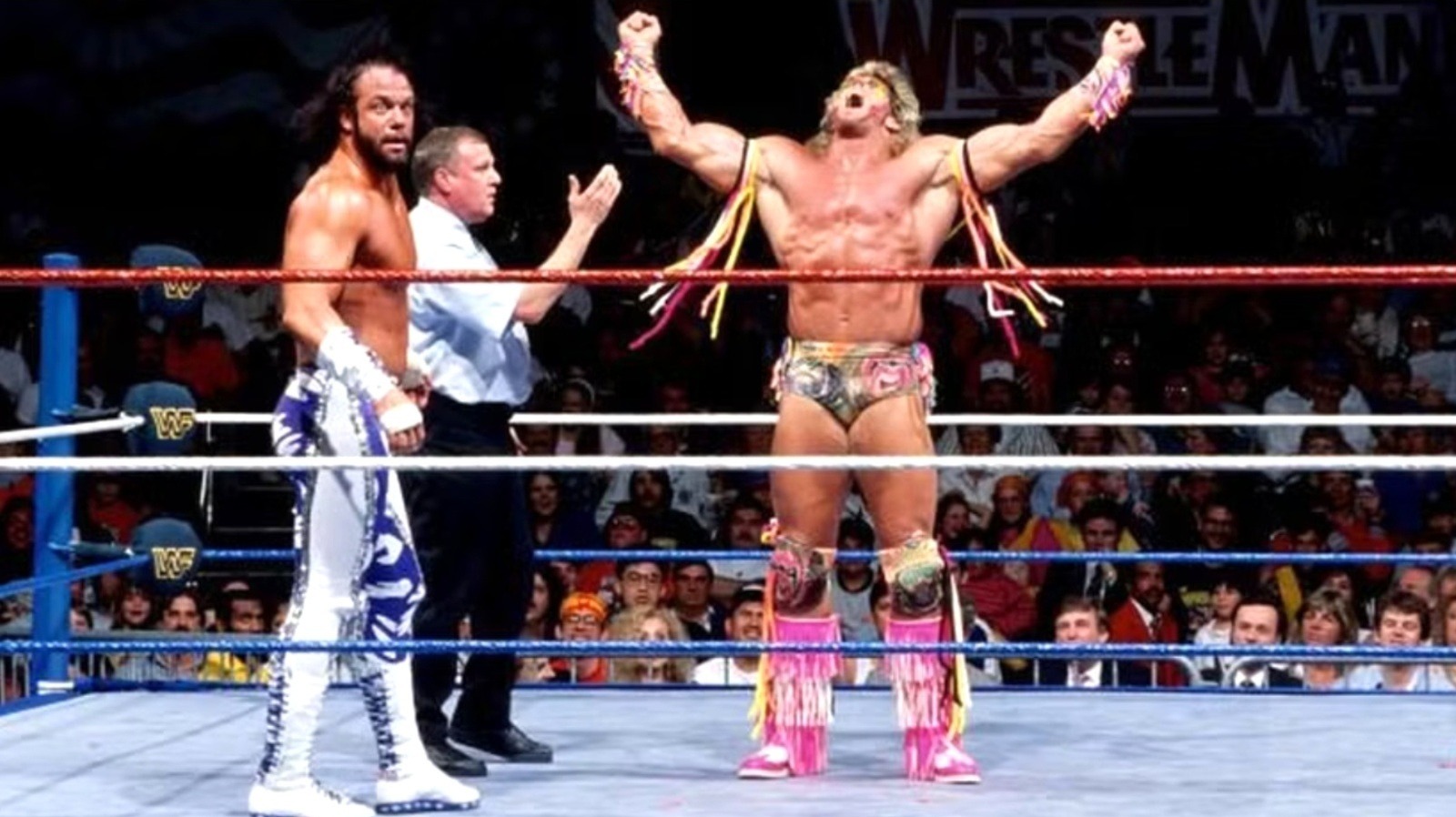
WrestleMania 2 was a logistical nightmare that should have buried the concept of the super-show before it even found its feet. Splitting the event across New York, Chicago, and Los Angeles created a fragmented, disjointed experience that felt more like a closed-circuit experiment than a cultural milestone. Yet, amidst the clunky commentary and the awkward celebrity cameos, the Rosemont Horizon in Chicago hosted a match that remains the structural benchmark for tag team wrestling. While the rest of the card struggled with pacing and identity, the British Bulldogs and the Dream Team delivered a masterclass in efficiency that still makes the current tag division look like it is running in slow motion.
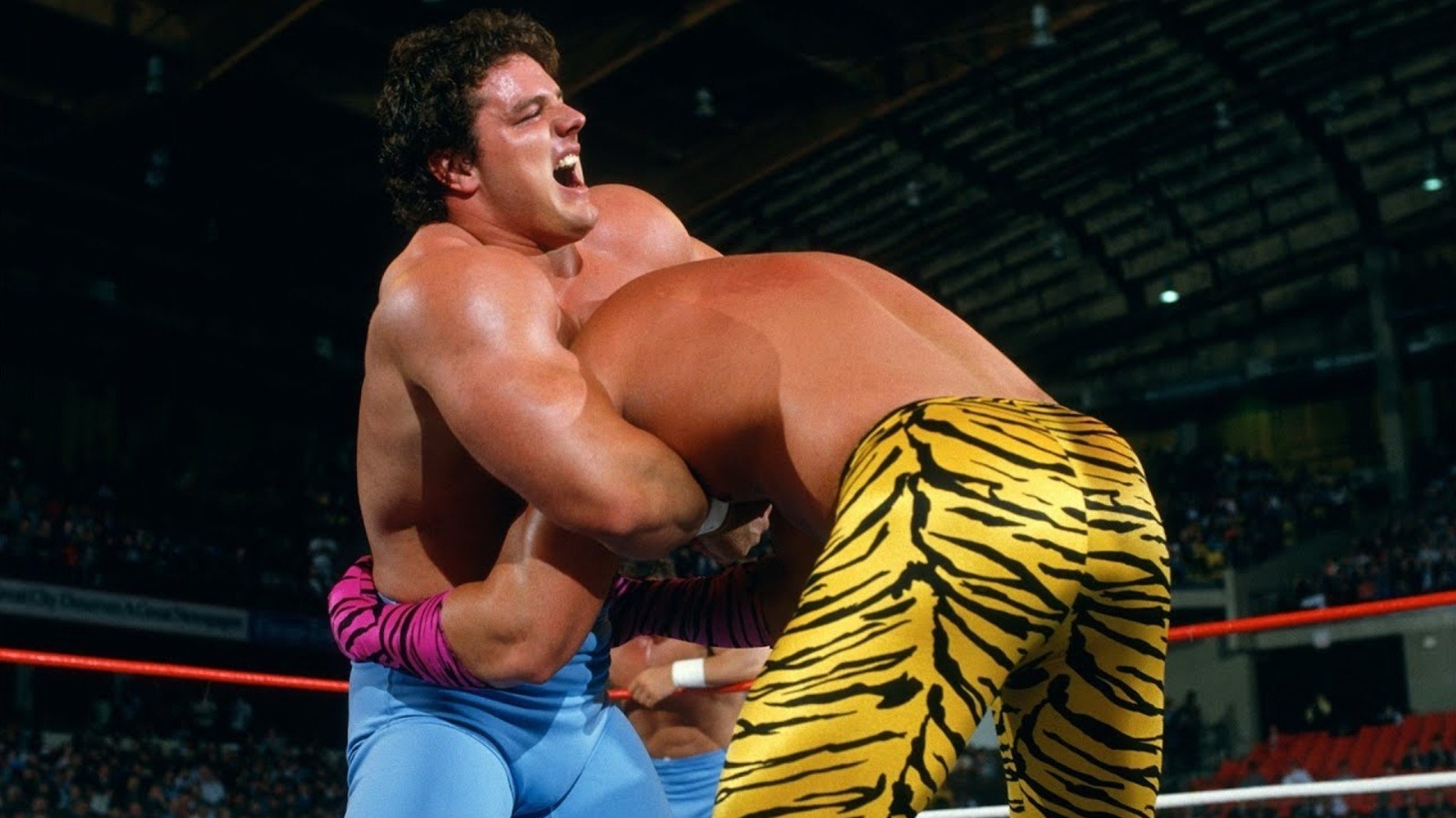
As we sit three days out from WrestleMania 41, the industry is obsessed with cinematic storytelling and the soap opera mechanics of the Bloodline. We have traded technical precision for narrative weight. Looking back at the Bulldogs vs. the Dream Team is a sobering reminder of what happens when the workrate is the story. Dynamite Kid and Davey Boy Smith didn't need twenty-minute promos to establish their threat; they did it with a snap suplex that looked like it was designed to crack the canvas. The Bulldogs were a high-speed collision in an era of slow-motion heavyweights, and their collision with Greg Valentine and Brutus Beefcake was the precise moment tag wrestling moved from a secondary attraction to a main-event art form.
The velocity of Dynamite Kid
To understand why this match worked, you have to analyze the biomechanics of Dynamite Kid. In April 1986, Dynamite was operating at a speed that the human eye wasn't quite accustomed to seeing in a wrestling ring. His movements were violent, sudden, and devoid of the wasted motion that plagues modern high-fliers. When he hit the ropes, he didn't bounce; he exploded. His diving headbutt wasn't a theatrical gesture; it was a self-destructive projectile. This match serves as the ultimate case study in his peak before the injuries turned his back into a roadmap of surgical failures.
Davey Boy Smith provided the necessary contrast. While Dynamite was the spark, Davey Boy was the engine. His military press slams and sheer power allowed the Bulldogs to control the vertical space in the ring, forcing the Dream Team to play a desperate game of catch-up. This was a team trained in the Hart Dungeon, and every transition, every wrist-lock, and every counter-move carried the weight of that legitimate catch-wrestling pedigree. They weren't just playing a role; they were demonstrating a technical superiority that made the Dream Team's status as champions feel like a clerical error.
Greg Valentine as the structural anchor
Every great match needs a technician who understands how to manage the flow, and for the Dream Team, that was Greg "The Hammer" Valentine. While Brutus Beefcake was largely a passenger in this match—a green performer who relied heavily on his look and Johnny Valiant’s ringside interference—Valentine was the one who kept the match from devolving into a chaotic sprint. His work on the legs of the Bulldogs was methodical and cruel. Valentine understood the value of the quiet moments between the big spots, a skill that seems to have been lost in the frantic pacing of the 2020s.
The critical flaw in the Dream Team's strategy, and perhaps the only negative observation one can make about this technical exhibition, was the over-reliance on Beefcake’s limited toolbox. Every time Beefcake tagged in, the match slowed to a crawl. He lacked the intensity to match the Bulldogs and the technical depth to complement Valentine. If you watch the match back with a cynical eye, you can see Valentine doing the heavy lifting to ensure the Bulldogs' velocity didn't completely derail the narrative. He was the anchor that kept the ship from drifting into pure spot-fest territory, even if his partner was mostly there to look good in the promotional photos.
The anatomy of the finish
The match lasted exactly 13:03, and not a single second was wasted. Compare that to the bloated, twenty-five-minute marathons we expect at WrestleMania 41. The Bulldogs and the Dream Team told a more coherent story in half the time because they understood the economy of motion. They didn't need ten near-falls to convince the crowd that someone might actually win. They built the tension through escalating violence, culminating in one of the most memorable finishes in the history of the tag division.
The finish—Dynamite Kid hitting a headbutt from the second rope while Davey Boy Smith executed a shoulder block—was a perfect encapsulation of their team identity. It was coordinated, high-impact, and slightly reckless. When the referee counted the three, the explosion from the Chicago crowd wasn't just for a title change; it was a validation of a new style. The Bulldogs had arrived, and they had done so by out-wrestling the establishment. Ozzy Osbourne’s presence in their corner was a nice PR touch, but the real star was the physics of the match itself. They won because they were faster, stronger, and more willing to destroy their own bodies for the win.
The tragic legacy of the 1980s workrate
Forty years on, we have to acknowledge the cost of this brilliance. The Bulldogs' style was unsustainable. Dynamite Kid’s self-destruction is well-documented, a cautionary tale of what happens when you refuse to dial back the intensity. But for one night in Chicago, that intensity created magic. It set a standard that teams like the Hart Foundation, the Rockers, and eventually the Hardy Boyz would strive to meet. It proved that tag team wrestling could be the highlight of a four-hour show, even on a card that featured Hulk Hogan and King Kong Bundy.
The modern tag scene at WrestleMania 41 feels sanitized by comparison. We have better athletes now, certainly. They are more acrobatic, more polished, and more aware of their health. But do they have the same raw, unbridled grit that the Bulldogs brought to the Rosemont Horizon? There is a level of stiffness in the 1986 tape that you just don't see in the modern era. When Valentine hit a forearm, it didn't just land; it reverberated. That sense of danger is what made the Bulldogs' victory feel so earned. It wasn't just a scripted moment; it felt like a survival.
Predicting the ceiling of WrestleMania 41
As we look forward to the festivities in Las Vegas, the shadow of WrestleMania 2 looms surprisingly large. We are celebrating the 40th anniversary of an event that was largely a mess, yet we find ourselves yearning for the technical clarity of its best match. The current tag team title situation is mired in multi-man matches and ladder-stunt spectacles. We have replaced the art of the tag-team cut-off and the hot-tag build with a series of isolated stunts that often fail to connect into a cohesive whole.
The Bulldogs vs. the Dream Team is a reminder that the best wrestling doesn't need a gimmick. It needs four people who understand their roles and a crowd that respects the struggle. The 61,000 fans who watched WrestleMania 2 across the three venues saw a lot of garbage that night—the NFL battle royal comes to mind—but those who were in Chicago saw the future of the sport. It is a future that we have, in many ways, moved away from in our pursuit of broader entertainment appeal.
My prediction for WrestleMania 41 is a cynical one, but it is grounded in the data of the last decade. We will see incredible athleticism in Vegas. We will see moves that Dynamite Kid couldn't have dreamed of performing. But when the dust settles, none of the tag matches on the April 19 or 20 cards will achieve the same technical rating as the Bulldogs' masterpiece. I am predicting that this 40-year-old match will remain the gold standard for at least another decade. No team in the current WWE locker room has the combination of technical catch-wrestling and reckless abandon required to dethrone the Bulldogs' performance. Own the history, because the present isn't quite measuring up to the 100 mph pace set in the Rosemont Horizon.