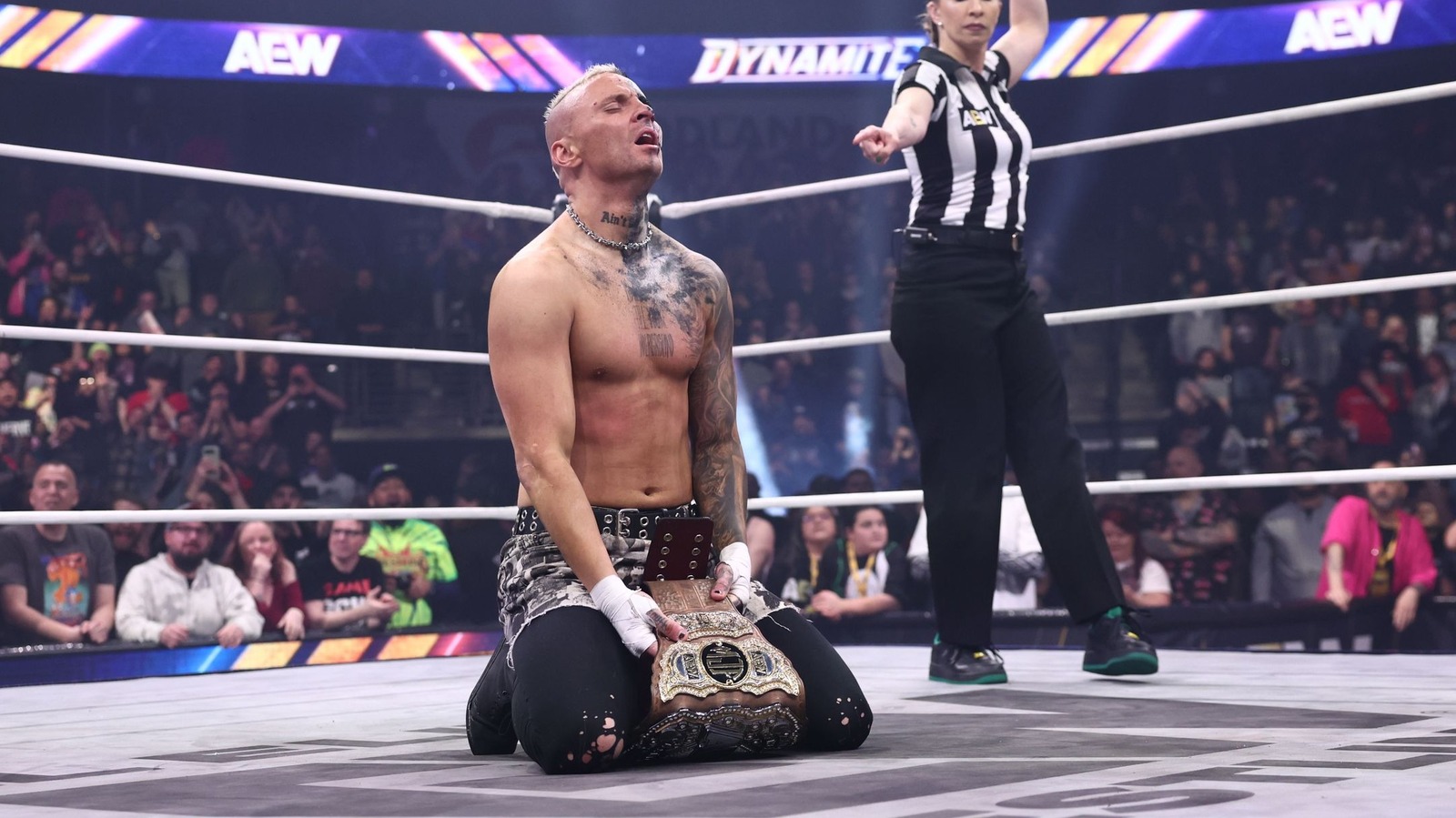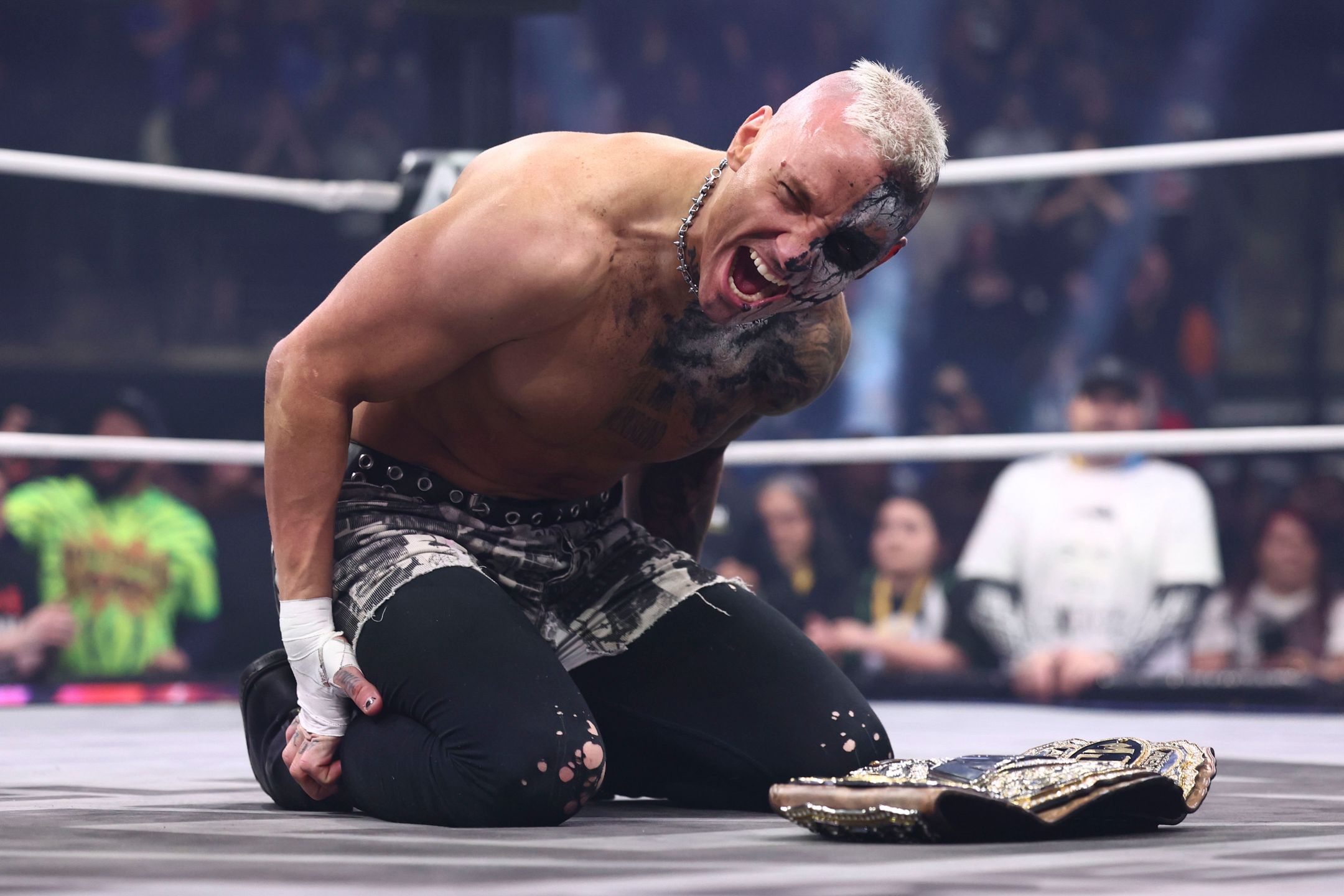
Darby Allin is a weird anomaly in modern wrestling. He is barely 170 pounds soaking wet. He paints half his face and rides a skateboard to the ring.
In any other era, he is a cruiserweight afterthought or a manager for a bigger monster. But in AEW, he has become something else entirely. He is the guy the legends point to, and the guy the top heels despise.
As we stare down the barrel of AEW Double or Nothing this Sunday, the discourse around Allin has shifted. We are no longer simply wondering if he will break his neck on a balcony dive. The conversation has shifted to his permanent place in the historical lineage of professional wrestling.
A chorus of voices from different eras have weighed in on what Darby actually means to the business. From Sting to MJF, the reactions are wildly different but equally intense.
You have a performer who is simultaneously viewed as the spiritual successor to the 1990s daredevils and a philosophical guide for a guy who started wrestling in the 1980s. That does not happen by accident. It requires a raw, uncomfortable level of authenticity.
Sting's unexpected mentor
Sting recently opened up about his relationship with Allin, and the framing was completely backward from what you would expect. Usually, the veteran teaches the rookie how to work. Instead, Sting admits that the younger man changed his own perspective.
Sting believes that Darby Allin changed the way he looks at life.
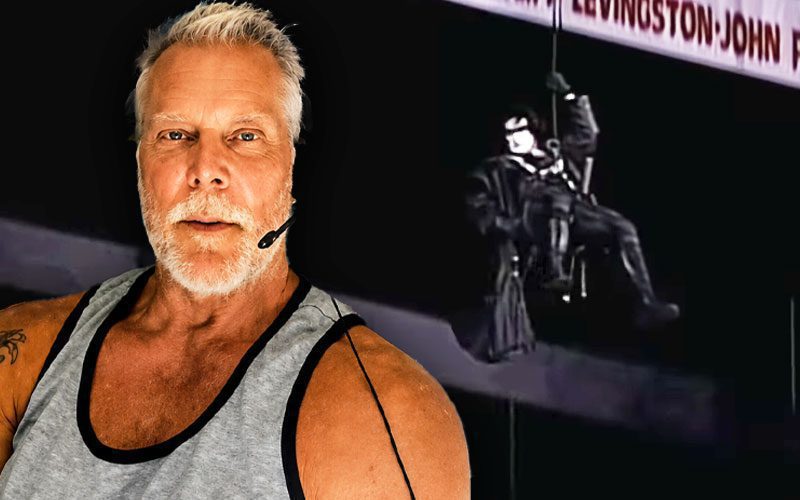
According to the WWE Hall of Famer, Allin "taught me how to live life to the fullest." That is a massive statement from a man who has main-evented pay-per-views across four different decades. Sting, who famously teamed with Allin for a three-year undefeated run in AEW before riding off into the sunset, admitted he did not fully understand his partner at first.
When they initially met, Sting was deeply concerned about the risks Allin took in the ring. Sting watched the industry grind down bodies for thirty years. He saw what happened to guys who worked a high-impact style every single night.
But eventually, that concern morphed into admiration. Allin’s refusal to compromise on his vision rubbed off on the veteran.
Sting wasn't just talking about taking bumps. He was talking about a philosophy. Allin's entire brand is built on the idea that tomorrow is not guaranteed.
Whether he is skateboarding over a helicopter or jumping off a bridge, he treats everyday life with the same reckless urgency he brings to the ring. That kind of energy is infectious.
The Hardy influence
While Sting views Allin through the lens of a concerned partner turned admirer, Darby himself traces his lineage back to a different set of pioneers. Allin has openly stated that Matt and Jeff Hardy showed him he could actually make it in this business. If you grew up watching wrestling in the late 1990s, you understand exactly what he means.
Before the Hardys, smaller guys were largely confined to the lightweight division. The Hardys smashed that ceiling by using ladders, tables, and absolute disregard for their own safety to get over with the crowd.
They proved that fans would react to reckless abandon just as loudly as they reacted to a 280-pound bodybuilder hitting a clothesline. Allin took that lesson and sprinted with it. He looked at Jeff Hardy launching himself off a 20-foot ladder and realized that was his path to the main event.
Matt and Jeff wore baggy jeans, dyed their hair, and looked like kids you would see hanging out at a skate park. Darby Allin is the direct descendant of that cultural shift. He is the skate park kid pushed to his logical extreme.
MJF sees the Foley blueprint
Not everyone looks at Allin’s career choices with admiration. His long-time rival MJF sees the same historical parallels but draws a deeply cynical conclusion. To MJF, the comparisons are not a badge of honor, but a sign of stupidity.
The former AEW World Champion stated bluntly that Mick Foley "Was The Blueprint Of What Darby Allin Is Now, Which Makes Me Hate Him Even More." This is a sharp observation about the mechanics of wrestling. Foley got over by taking amounts of punishment that made audiences uncomfortable.
He absorbed chair shots, went through flaming tables, and got thrown off a cell. Mick Foley wasn't the best pure wrestler, but he had an undeniable connection with the crowd.
They knew he was suffering for their entertainment. Darby Allin taps into that exact same vein of empathetic masochism. When Allin takes a powerbomb onto the ring apron, the crowd gasps because it looks awful, and then they cheer because he gets back up.
MJF understands this dynamic perfectly. His entire persona is built around entitlement and natural gifts. MJF hates the idea that someone could become just as popular as him simply by being willing to jump off a taller balcony.
MJF represents the old-school heel mentality: do the absolute minimum required to get a reaction, protect your body, and collect the check. To MJF, guys like Foley and Allin are ruining the curve for everyone else by setting unrealistic expectations for what a wrestler should sacrifice.
By connecting Allin directly to Foley, MJF is simultaneously putting his rival over as a tough guy while completely burying his intelligence. It is the perfect distillation of their feud.
The ugly truth about reckless abandon
But MJF’s complaints bring up a valid, undeniable point about Allin’s trajectory. While fans cheer the Coffin Drops onto the concrete, you have to ask if this is actually good for his long-term career. The reality is that Allin takes far too many unnecessary risks.
It is one thing to take a massive bump on pay-per-view to end a bloody feud. It is another thing entirely to get thrown down a flight of stairs on a random Wednesday night episode of Dynamite. Allin frequently sacrifices his body for matches that will be forgotten by next week.
His psychology relies so heavily on near-death experiences that he struggles to pace a regular television match. A random match against a mid-card opponent shouldn't require a bump that takes a year off his career.
Yet, Allin constantly insists on delivering pay-per-view level violence in throwaway situations. This isn't bravery; sometimes, it is just poor match psychology. If you give the audience a car crash every single week, they eventually become desensitized to the impact.
The margin for error shrinks to zero. We have seen this movie before with his idols. Foley paid a massive physical price for his legendary status, and Jeff Hardy's physical issues are well-documented.
Allin is currently writing checks with his body that he will eventually have to cash. He cannot outrun the concrete floor forever. You cannot help but wonder if Sting’s initial concerns were entirely justified.
We all love watching the spectacle, but the bill eventually comes due. Allin is operating at an elite level, but the human body has a finite bump card.
Despite the valid criticisms of his in-ring choices, it is impossible to deny his impact. Allin serves as a fascinating bridge between multiple eras of wrestling history. He carries the DIY, punk-rock energy of the early 2000s independent scene.
He utilizes the death-defying spectacle popularized by the Hardys and Foley in the Attitude Era. When a guy like Sting says you changed his outlook on life, you are doing something right. When a guy like MJF uses your style as the focal point of his hatred, you are hitting the right nerves.
As we head into Double or Nothing this Sunday, the spotlight will be heavily focused on the main event picture. But whether he is opening the show or closing it, Allin remains the emotional core of the AEW roster. He is the guy who makes you believe the violence is real.
Let us just hope he figures out how to survive his own legacy before it is too late.