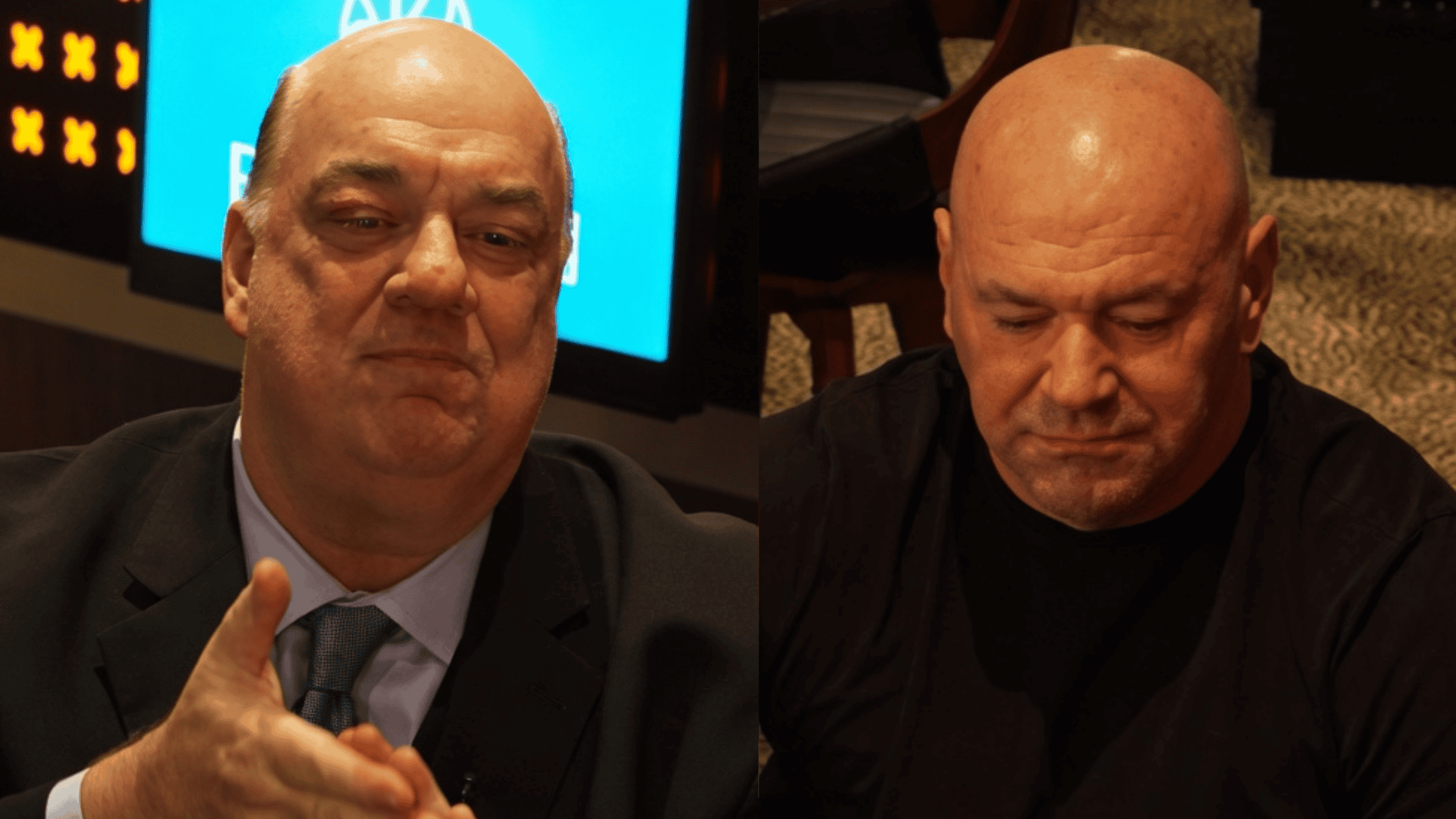
A Baccarat Table and a Billion-Dollar Whisper
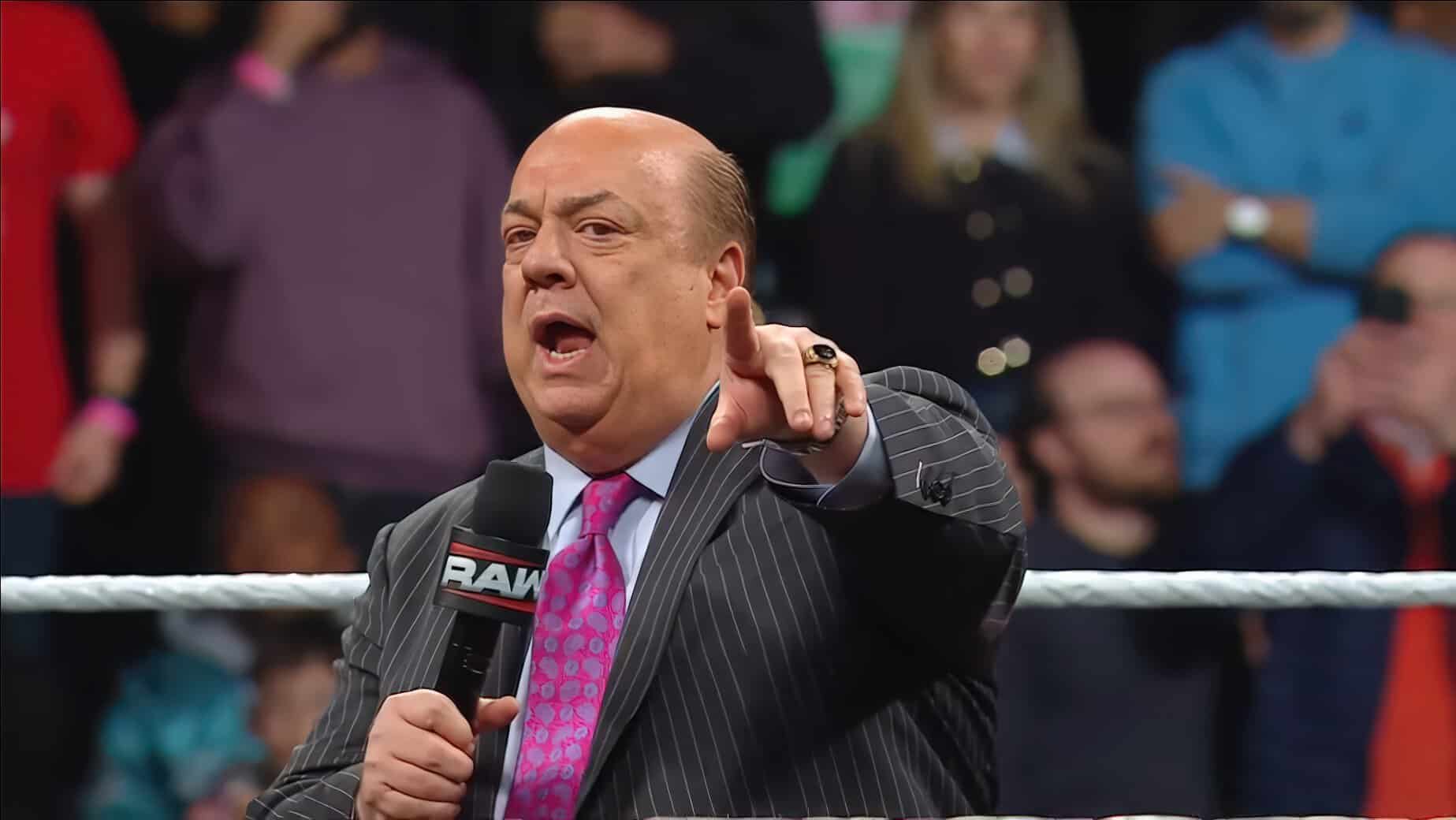
The visual is almost too on-the-nose to ignore. Paul Heyman and Dana White, sitting across from each other at a high-stakes Baccarat table, suited up and looking every bit the ruthless power brokers they are. The footage dropped this week as the debut Instagram reel for MGM Live. On paper, it is a straightforward, localized casino promotion. In reality, it operates as a massive, deliberate flare gun fired directly over the professional wrestling and mixed martial arts industries.
You do not put the president of the UFC and the most influential creative mind in WWE in the same frame by accident. The optics are heavily calculated. Within minutes of the video hitting social media timelines, the insider whisper network went into absolute overdrive. The immediate read from well-connected sources is that this shoot was not just a commercial. It served as the public-facing backdrop for finalizing the first true, formalized talent transfer under the unified TKO corporate banner.
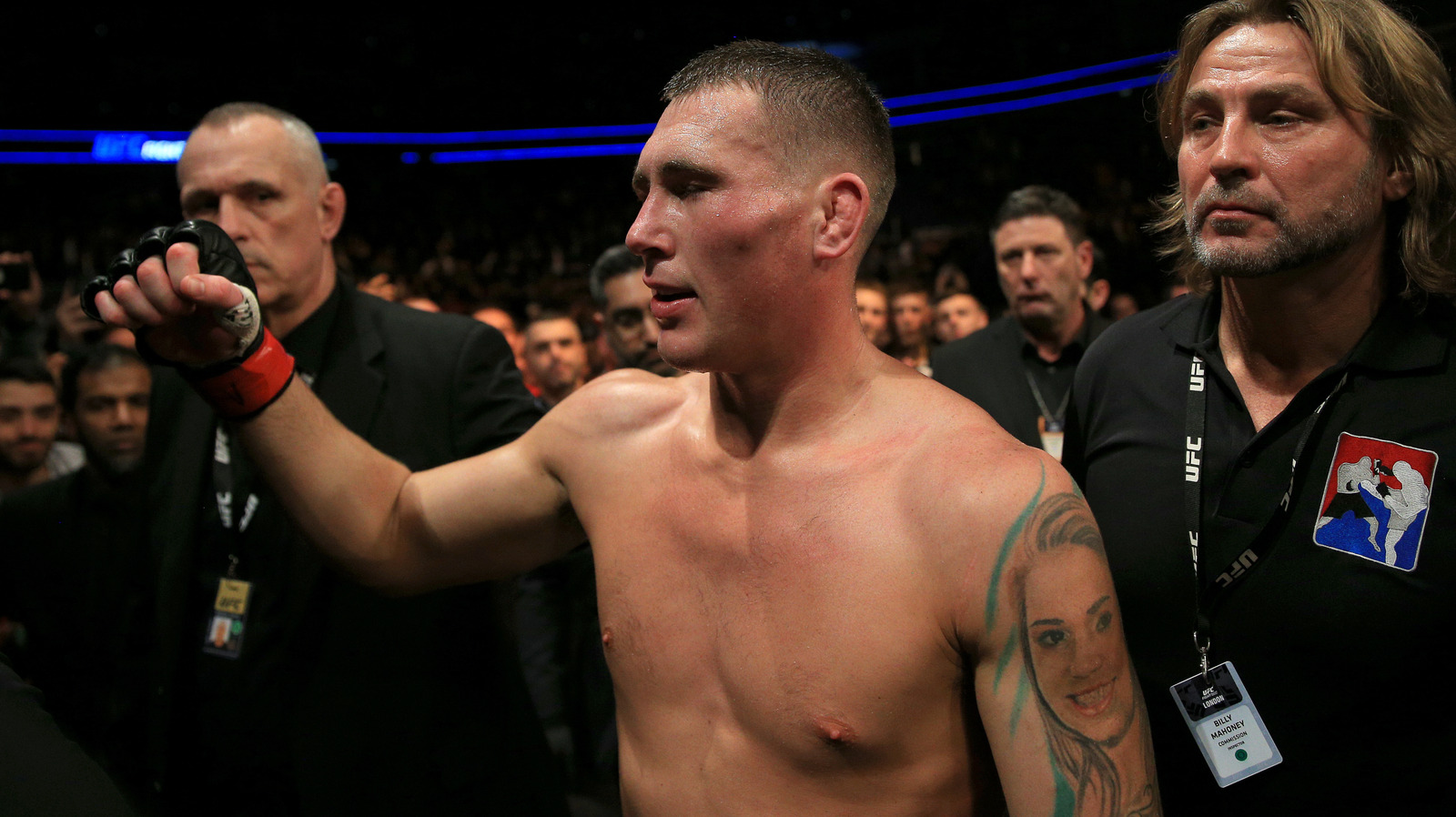
We have seen crossovers before, of course. Brock Lesnar is the ultimate anomaly, and Ronda Rousey shifted the entire women's division for a brief window. But those were individual, highly bespoke deals negotiated in entirely different eras of the business. What is being discussed now is a direct, mechanized pipeline. TKO executives have reportedly been pushing hard for a major, headline-grabbing demonstration of their combined operational assets. They want an active, dangerous UFC star stepping directly into a WWE ring, and they want Heyman holding the microphone when the transition happens.
The Corporate Mandate for Cross-Pollination
The financial logic behind the scenes is impossible to ignore. Since the Endeavor acquisition and the creation of TKO, investors have been waiting for the promised cross-promotion to bear actual fruit. You can only sell the idea of shared audiences for so long before Wall Street demands to see a physical manifestation of that concept.
This rumored deal is the ultimate stress test of that theory. Moving a contracted fighter from the harsh reality of the Octagon to the scripted squared circle is a legal and logistical labyrinth. There are broadcast rights conflicts, injury insurance hurdles, and entirely different drug testing protocols to navigate. That is why it rarely happens seamlessly while a fighter is still in their physical prime.
However, the unified corporate structure was supposedly designed to erase those exact boundaries. If White and WWE management can agree on the baseline financials and mitigate the physical risks, the floodgates open. The persistent chatter points to a specific profile. The target is a heavyweight or light heavyweight fighter nearing the end of their peak title-contention window. They need massive name value and raw, undeniable charisma, but perhaps lack the desire to absorb unprotected head strikes against twenty-something phenoms for another three years. WWE offers a highly lucrative, highly controlled second act on a global stage.
The Wiseman Protocol for Shooters
You cannot simply drop a cage fighter onto Monday Night Raw, hand them a microphone, and expect them to understand the intricate psychology of a modern television feud. They need a translator. They need someone who can mask their obvious deficiencies in ring positioning and amplify their aura of legitimate, unscripted danger. That is precisely where the man sitting across from Dana White in that casino comes in.
Paul Heyman is the undisputed master of managing legitimate athletes in a scripted environment. He laid the blueprint with Lesnar. He extracted peak value from CM Punk. He has spent the last few years orchestrating the most complex, layered emotional storyline in decades with Roman Reigns. Heyman knows how to sell the threat of violence better than anyone alive.
If a UFC fighter is crossing over, Heyman is the only logical choice to guide them. A legitimate fighter stepping into WWE does not need to learn how to cut a heavily scripted monologue about their feelings. They need to stand perfectly still, look incredibly intimidating, and let Heyman explain to the arena exactly why the man standing in the ring is going to permanently hospitalize their favorite superstar.
The booking formula writes itself, and it is brutally effective. You debut the fighter as an uncontrollable, anomalous force. You completely bypass the traditional midcard progression and the standard fifty-fifty booking trap. You have them dismantle an established, highly respected veteran in under three minutes. No trading complex holds, no convoluted high spots. Just a double-leg takedown, vicious ground and pound, and a terrified referee calling for a stoppage. Heyman then grabs the microphone and declares that the sport of professional wrestling has been permanently altered.
The Risk of Boardroom-Mandated Authenticity
This is where the heavy skepticism creeps in, and rightfully so. For every successful, needle-moving crossover, there are five forgotten, embarrassing disasters. Professional wrestling fans are inherently protective of their medium. They possess a finely tuned radar for inauthenticity, and they can spot a forced corporate mandate from a mile away.
If this rumored debut feels synthetic, the audience will turn. If it looks like a TKO board member simply demanded a UFC presence on a premium live event just to satisfy quarterly shareholder expectations, the fans will reject it violently. The current WWE product is riding an incredible high based on long-term, emotionally resonant storytelling and deep character work. Throwing a silent MMA fighter into the main event picture disrupts that delicate, carefully constructed balance.
Furthermore, legitimate fighters routinely struggle with the core, foundational mechanic of professional wrestling. That mechanic is selling. Taking a flat back bump is a deeply unnatural act for an athlete who has spent decades training their nervous system to avoid taking damage at all costs. If our rumored crossover star looks awkward taking a standard clothesline, or hopelessly mistimes a basic running sequence, the illusion shatters immediately. You go from being a terrifying, unpredictable invader to an awkward guest star in the blink of an eye. The magic is gone forever.
There is also the very real resentment factor simmering in the locker room. Guys who have spent 300 days a year on the road, grinding through grueling house shows in secondary markets, are rarely thrilled when an outsider walks straight into a massive payday and a heavily protected television spot. If the match quality drops significantly when the MMA star steps between the ropes, the backstage backlash from both fans and peers will be severe and unforgiving.
Probability and the Timeline to Debut
So, when does this hypothetical tectonic shift actually materialize on our screens? Do not expect anything immediate. WWE Backlash is slated for May 9, taking place in France. That is far too soon, and logistically too complicated, to execute a debut of this massive magnitude. The build requires significant breathing room.
The logical target is late summer, specifically SummerSlam. It provides a massive stadium backdrop, mainstream media attention, and enough runway to properly establish the narrative. Perhaps we see Heyman dropping subtle hints on television throughout June and July. A cryptic reference to a dangerous new associate. A leaked, grainy shot of Heyman walking out of a TKO boardroom meeting with a blurred figure. The slow, methodical build is absolutely essential to generate the right kind of anticipation rather than immediate rejection.
If this deal is real, and the MGM Live video was indeed the public handshake that sealed it, WWE is about to receive a massive injection of mainstream volatility. It is a wildly high-risk, high-reward play. Get it right, and you create a box office sensation that completely dominates sports media for six months. Get it wrong, and you waste millions of dollars on a corporate vanity project that actively alienates your fiercely loyal core audience. We are watching the Baccarat table closely. The cards have been dealt, and now we wait to see who pushes their chips into the center.