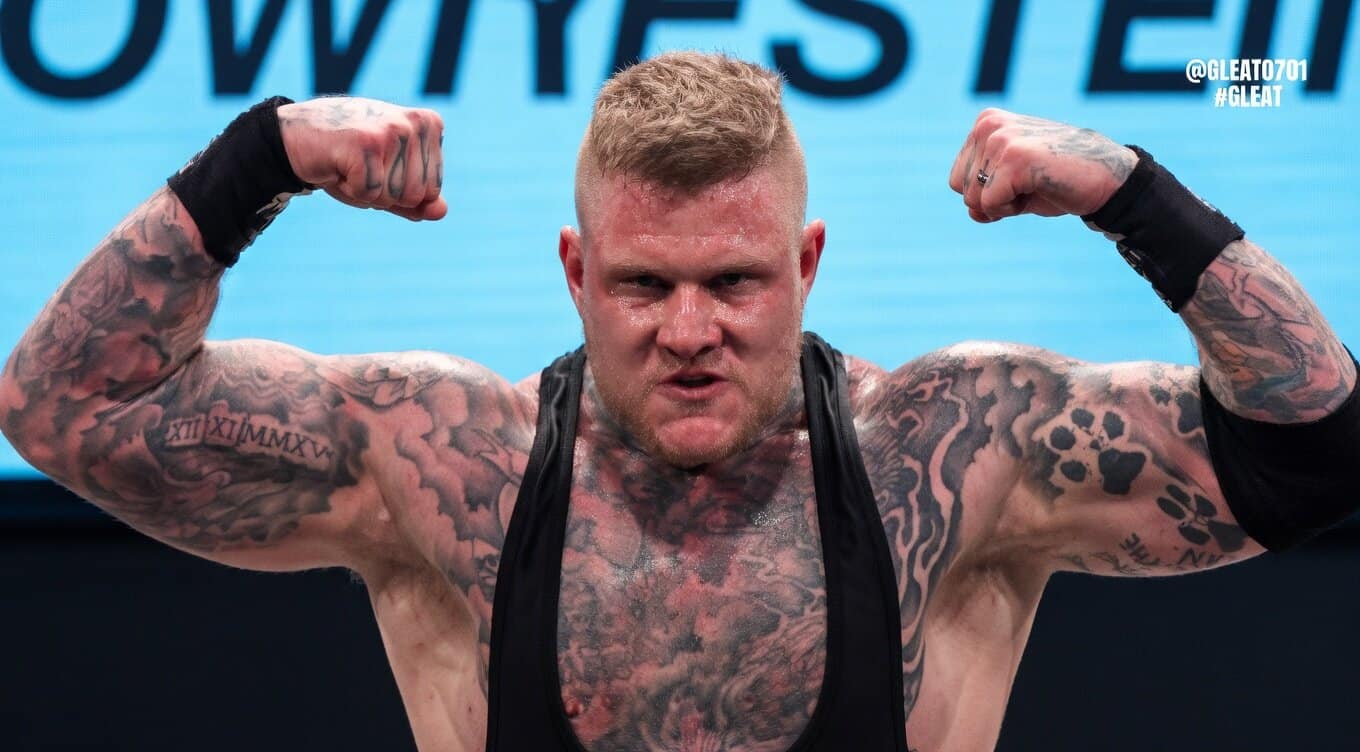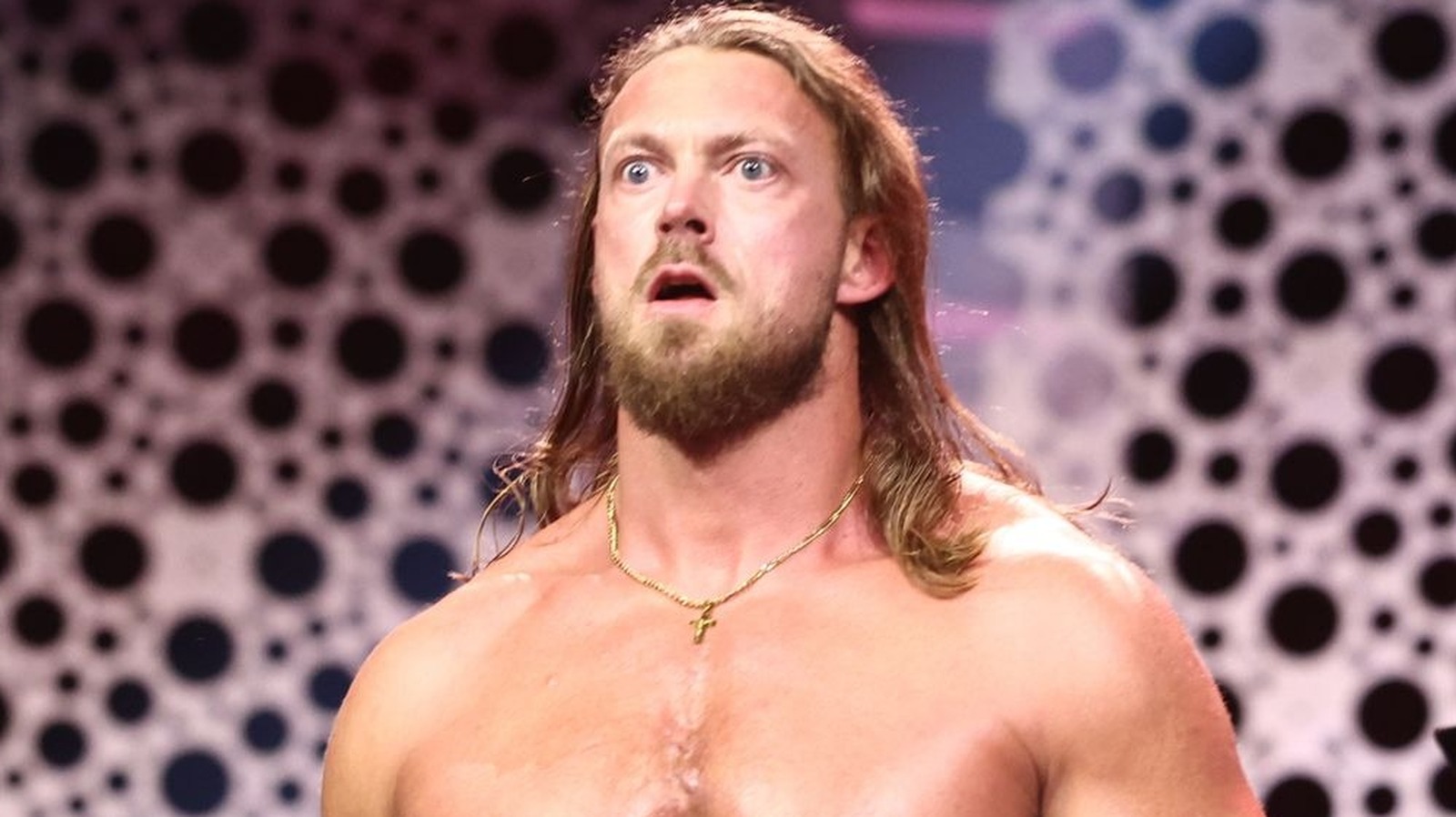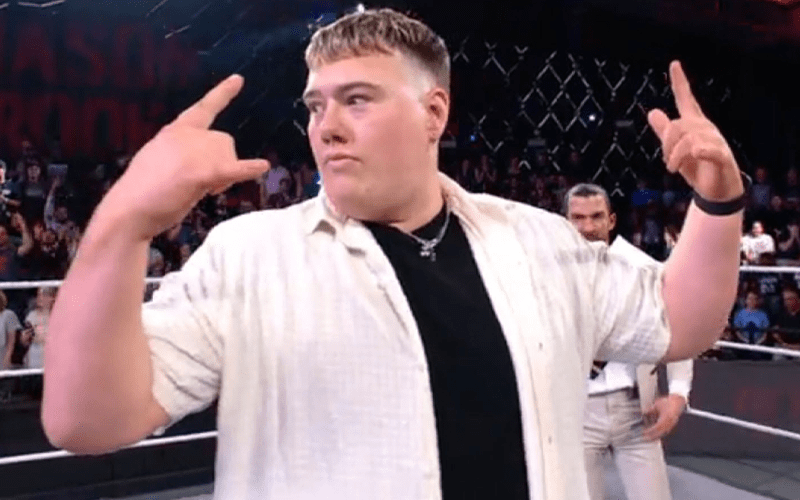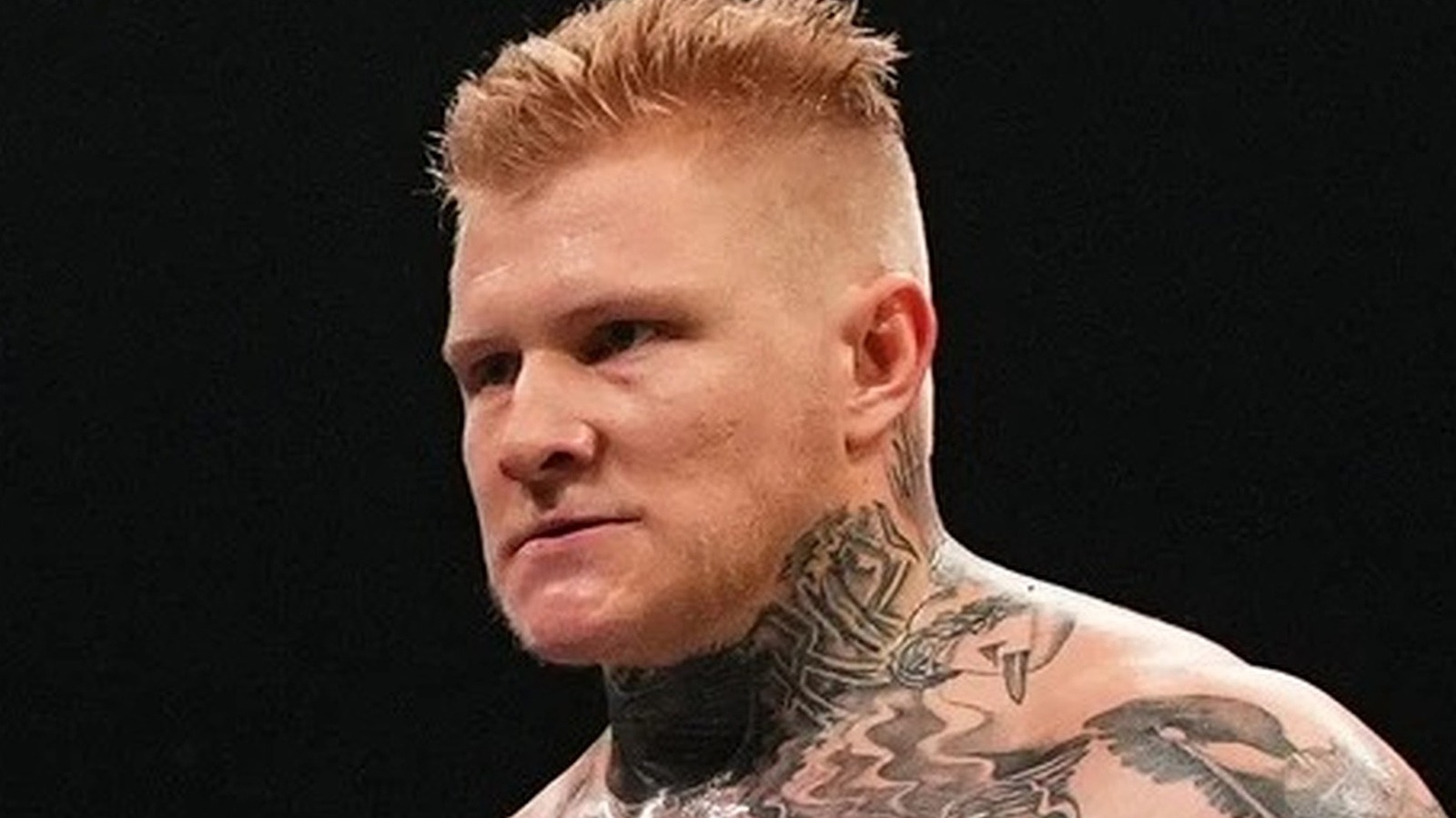
The corporate machinations of professional wrestling rarely make logical sense. But even by the bizarre standards of sports entertainment, the timeline of Parker Boudreaux’s initial WWE exit is staggering.
According to a new interview, Boudreaux claims WWE gave him a pay bump exactly two weeks before releasing him. It is a detail that Wrestling Inc highlighted in a recent report. You do not hand a developmental talent more money unless someone in the office views them as a long-term asset.
Yet, fourteen days later, his name was on the chopping block.
The administrative whiplash
To understand how a talent gets a pay raise and a pink slip in the same fiscal month, you have to look at the structural chaos of WWE in early 2022. During the John Laurinaitis era of talent relations, WWE was engaged in a brutal cycle of roster purging. They were cutting costs at an unprecedented rate, often releasing talent in massive waves.
These decisions rarely came from the creative team. They came from spreadsheets. It is the only logical explanation for the Boudreaux situation. One executive, likely on the developmental side, saw his gym numbers and his viral social media traction, and approved a standard developmental salary bump.
Weeks later, someone higher up the corporate ladder ran a cost-benefit analysis on the roster, saw an unpolished rookie, and axed him. This was not a creative failure. It was administrative whiplash.
The Brock Lesnar curse
The worst thing that ever happened to Parker Boudreaux was a tweet from Paul Heyman.
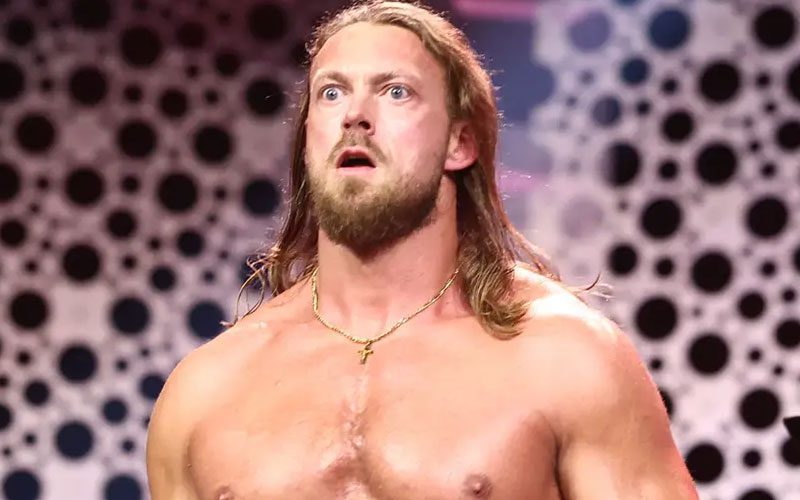
Before Boudreaux ever took a bump in the Performance Center, he was labeled the next big thing. He had the bleached blonde hair, the massive traps, and the menacing scowl. On a purely superficial level, the Brock Lesnar comparison was easy for fans to make.
But wrestling is not bodybuilding. It is dynamic, kinetic motion. Lesnar was an NCAA Division I heavyweight wrestling champion. He possessed terrifying fast-twitch muscle fibers and a preternatural understanding of balance and leverage.
Boudreaux was a former offensive lineman at the University of Central Florida. Football players often struggle with the transition to the ring because their physical conditioning is built on explosive, linear movement for three-second intervals. They are taught to block, resist, and stand their ground. Pro wrestling requires you to flow, bump, and move fluidly with your opponent.
When you watched Boudreaux in his early days, that stiffness was glaring. His footwork was heavy. When he hit the ropes, he did not explode off them. He bounced off them like a man trying not to lose his footing. You cannot market someone as a generational monster if they run the ropes like a rookie.
The Harland experiment
WWE tried to mask these deficiencies when they debuted him on NXT 2.0 as Harland. They shaved his head, took away the Lesnar comparisons, and paired him with Joe Gacy.
The booking strategy was obvious. Keep him silent. Keep his matches short. Let him stand menacingly on the apron while Gacy did the heavy lifting on the microphone.
But eventually, the bell has to ring. When Harland stepped into the ring, the illusion shattered. His strikes were the biggest giveaway. A monster heel needs to throw punches and forearms that look like they belong in a bar fight.
Boudreaux’s strikes were tentative. He was visibly thinking about his placement, pulling his punches too much, and failing to follow through with his hips. He was green, which is entirely normal for a developmental prospect. But he was thrust onto national television before he had mastered the basics.
Watch his tape from NXT. When Boudreaux hit a basic clothesline, he threw his arm like a baseball bat rather than driving through the opponent's chest with his core. His base was too wide. He planted his lead foot too early, killing his own forward momentum. That is day-one performance center mechanics, yet he was pushed onto television because his trap muscles looked great on a promotional poster.
The mechanics of a monster
To truly understand why Boudreaux floundered, you have to study what makes a real super-heavyweight worker successful. Look at the tape of prime Big Van Vader or Bam Bam Bigelow.
They were massive men, but their footwork was surprisingly light. Vader did not just club people. He used his weight intelligently, shifting his center of gravity to make every splash and suplex look devastating. Bigelow moved with the agility of a cruiserweight but struck with the mass of a super-heavyweight.
Boudreaux operated with a bizarre hesitation. A monster heel needs to dictate the pace of the match. They need to grab the opponent, dictate the positioning, and project an aura of complete physical control.
Boudreaux was entirely reactive. He waited for the smaller guys to call the spots. He allowed himself to be led through matches, which instantly shattered the illusion that he was a dangerous, uncontrollable force.
Tony Khan's reclamation project
When Boudreaux showed up in All Elite Wrestling a few months later, it felt like a forced acquisition. Tony Khan has a habit of picking up discarded WWE prospects, but Boudreaux did not fit the AEW house style.
AEW is built on high work rate, fast-paced sequences, and independent wrestling fundamentals. Boudreaux was a purely WWE-trained powerhouse who had not even finished his basic training. The mismatch was immediately apparent.
First, AEW put him in the Trustbusters faction alongside Ari Daivari and Slim J. It was a lower-card comedy act that completely undermined his intimidating physical presence. He was standing at ringside in a tracksuit, looking completely out of place.
When that failed, Khan pivoted. Boudreaux was suddenly repackaged as a violent enforcer for Swerve Strickland’s Mogul Affiliates, alongside another heavily tattooed big man named Trench. This was an absolute disaster.
Exposed in the deep water
The Mogul Affiliates were thrust into a feud with Keith Lee and Dustin Rhodes. This was not a pre-taped squash match on AEW Dark. This was live television against seasoned veterans who work stiff and expect their opponents to keep up.
Watch the tape of his interactions with Keith Lee. Boudreaux looked terrified. When you are a monster heel, you have to take bumps that make the babyface look like a killer. But Boudreaux was taking bumps defensively.
He was tucking his chin too early, bracing for impact rather than flowing into the mat. He looked lost. He was missing cues, standing in the wrong position during multi-man spots, and moving with a sluggishness that killed the crowd's momentum.
It was not his fault. He was put in a position to fail by a promoter who valued the visual of a big man over the reality of his skill level. AEW eventually quietly removed him from television after an injury. By the time his contract expired, few fans even noticed he was gone.
The reality of the independent circuit
This brings us to the present day. Boudreaux is no longer under contract with a major American promotion. He has recently started working for Lucha Libre AAA Worldwide in Mexico.
Ironically, this is the best possible career move he could have made. For the last three years, Boudreaux has been trying to learn how to wrestle while millions of people watched him on television. That is an impossible task.
You cannot learn ring psychology while worrying about hard-cam positioning and commercial break cues. Working in Mexico forces him to strip away the hype. Lucha libre requires completely different footwork and timing.
It forces bigger men to serve as solid bases for high-flyers. If he cannot catch a luchador safely, he will not get booked. It is a trial by fire that he desperately needs.
Where does he go from here?
The story of the pre-firing pay raise is a funny anecdote. It will make the rounds on wrestling aggregators today and be forgotten tomorrow. But it reveals the inherent flaw in how the modern industry manufactures its stars.
Promoters are obsessed with finding the next physical freak. They want the shortcut. They see a 300-pound collegiate athlete and immediately start printing t-shirts, bypassing the essential, unglamorous years of learning the craft in half-empty gymnasiums.
Parker Boudreaux got handed a massive spotlight before he knew how to wire a basic headlock. He got a raise for looking the part, and a pink slip for failing to play it.
My prediction? We will not see him back in a WWE or AEW ring anytime soon. The industry has tightened up. Triple H is highly protective of the NXT pipeline, and Tony Khan has realized his roster is too bloated to carry developmental projects.
If Boudreaux ever makes it back to the top, it will not be because he looks like Brock Lesnar. It will be because he finally learned the fundamentals. Until then, he is just another cautionary tale of a wrestling machine that pushes physical anomalies too fast, pays them too soon, and discards them before they ever really had a chance.