The financial gravity of the desert
Every time WWE runs a Premium Live Event in Saudi Arabia, TKO Group Holdings banks an estimated $50 million. That single number is the unblinking reality that has dictated WWE's international strategy since their 10-year partnership began in 2018. It is a guaranteed, weather-proof, ticket-proof site fee that defies the normal laws of wrestling economics.
The conversation around this massive revenue stream ignited again this week. The geopolitical realities of the region are threatening to disrupt the wrestling calendar.
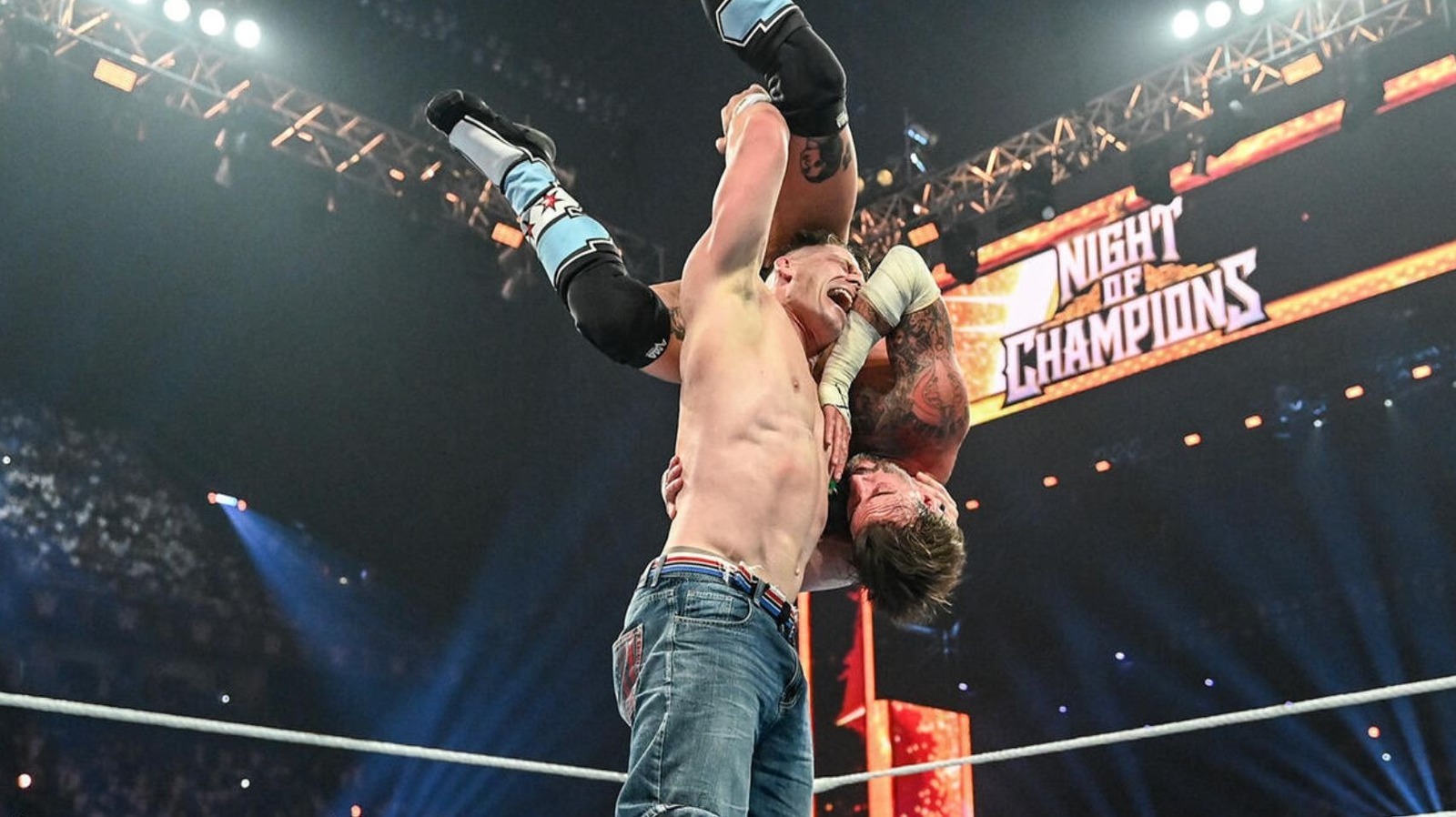
Eric Bischoff said he doesn't see WWE hosting Night of Champions 2026 in Saudi Arabia due to ongoing conflict in the Middle East.
Bischoff's comment is more than a geographical observation. It points to a massive potential gap in WWE's 2026 earnings reports. If that event is forced to move, the financial math of replacing it is brutally unforgiving.
To understand the scale of this money, you have to look at normal live event gates. A wildly successful international stadium show, like Clash at the Castle in Cardiff back in 2022, drew an announced attendance of over 62,000 fans. That translated to a live gate of roughly $8 million. That night was rightfully celebrated as a historic triumph for the company.
Meanwhile, a routine domestic PLE, like a Fastlane or a Payback, typically generates between $2 million and $3 million in ticket sales. Even with skyrocketing ticket prices and dynamic pricing under the TKO banner, a non-WrestleMania show simply cannot touch the Saudi money. You would have to sell out a major stadium at premium prices six times over to equal one single trip to Riyadh.
The raw math of TKO's live event business
To truly grasp the weight of Bischoff's warning, you have to break down the broader corporate balance sheet. In their final full year before the TKO merger, WWE reported a total annual revenue of roughly $1.3 billion. The two Saudi events generated an estimated $100 million of that total.
That means a staggering 7.6% of the promotion's entire annual revenue comes from just two afternoons of wrestling. When you isolate the live events sector, the numbers border on the absurd. A full year of domestic touring — encompassing over 100 house shows, television tapings, and B-level PLEs — might generate $140 million in ticket sales. The General Entertainment Authority essentially matches that entire year of grinding travel with two wire transfers.
Furthermore, a site fee is fundamentally different from a traditional gate. When WWE runs an arena in Chicago, they take on the operational costs. When they fly to the Middle East, the host government typically subsidizes the production, the stadium rental, and the private charter flights. The Saudi fee is almost pure profit. Losing that payment doesn't just lower total revenue; it takes a direct, unmitigated bite out of TKO's quarterly EBITDA.
The evolution of the desert spectacle
If Night of Champions 2026 does get moved, the in-ring product will survive. But that wasn't always the case. The early years of the Saudi partnership were characterized by an undeniable, often cynical booking pattern. WWE treated the events not as chapters in their ongoing television narrative, but as standalone nostalgia acts.
The era of aging legends
Look at the main event of Crown Jewel in 2018. D-Generation X wrestled The Brothers of Destruction. The combined age of the four men in the ring was 206 years. The match went 27 minutes and was widely panned as a sluggish, dangerous disaster.
Super ShowDown 2019 featured a main event of The Undertaker versus Goldberg. That bout lasted nine minutes, featured multiple dropped moves, and ended with both men looking physically compromised. During this era, regular roster members were often relegated to massive 50-man battle royals or secondary title matches that rarely changed hands.
Between 2018 and 2020, across five Saudi events, WWE booked only four major World Championship changes. Strikingly, half of those involved part-time legends stepping over full-time talent. The most infamous example occurred at Super ShowDown 2020, when a 53-year-old Goldberg defeated "The Fiend" Bray Wyatt in just under three minutes.
That single booking decision abruptly ended a 118-day title reign and derailed one of WWE's top merchandise sellers for a fleeting nostalgia pop. It remains one of the most heavily criticized finishes in modern wrestling history. The matches were disjointed, the pacing was awful, and the regular television storylines ground to a halt for a month.
The modern canonical shift
But the data shows a sharp pivot in how WWE treats these shows today. As the supply of active 1990s legends dried up, WWE was forced to rely on its full-time roster to carry the overseas events. The turning point was arguably late 2021, and by 2023, the transformation was complete.
When Night of Champions took place in Jeddah in May 2023, the card was indistinguishable from a major North American PLE. Seth Rollins defeated AJ Styles to crown a new World Heavyweight Champion. Sami Zayn and Kevin Owens main-evented the show, defending their tag team titles against Roman Reigns and Solo Sikoa.
The average match time at Night of Champions 2023 was 14 minutes and 32 seconds. Compare that to the 2018 Greatest Royal Rumble, where outside of the titular match, the standard bouts averaged just over 10 minutes, with many serving as quick squashes. The modern Saudi show features actual workrate, long-term storyline progression, and regular roster members wrestling at their peak.
The critical reception reflects this change. The average star rating for the main events of the first three Saudi shows hovered around 1.5 stars out of five. Fast forward to the TKO era, and the average main event rating for the last three Middle Eastern PLEs sits comfortably above 4.0 stars. At Night of Champions 2023, fans watched Asuka end Bianca Belair's record-setting 419-day reign as Women's Champion. These are no longer skippable events.
The logistical nightmare of a 2026 pivot
This shift in booking quality makes Bischoff's prediction fascinating. If WWE has to move Night of Champions 2026 to an alternate location, the creative plans don't have to be ripped up. The storylines are fully integrated into the television product. A Seth Rollins or Cody Rhodes match works just as well in Toronto as it does in Riyadh.
The challenge is purely logistical and financial. WWE typically schedules its PLE calendar six to eight months in advance. Stadiums are booked, travel is routed, and production trucks are secured. Moving a massive television production on short notice is a monumental task.
Historically, WWE has only canceled or moved major international events under extreme duress. A localized conflict disrupting a highly lucrative international date is a unique problem for TKO executives to solve. They would need to find a market willing to pay a substantial site fee to offset the lost Saudi money.
It is also worth noting how deeply TKO is entrenched in the region across both of its primary brands. While WWE runs Saudi Arabia, the UFC has a massive, long-standing site fee arrangement with Abu Dhabi in the United Arab Emirates. UFC 294 in October 2023 reportedly generated a massive site fee for the promotion, continuing a relationship that essentially saved the UFC's schedule during the pandemic via "Fight Island."
If regional conflicts begin to threaten travel to the broader Middle East, TKO isn't just looking at a single delayed WWE show. They are looking at a potential systemic disruption to their international site fee model. The operational model between WWE and UFC under the Endeavor umbrella relies heavily on securing these specific government partnerships.
To put the site fee in perspective, consider WrestleMania 40 in Philadelphia. That two-night event shattered company records, drawing a massive live gate that exceeded $38 million. It took the biggest wrestling event of the year, spanning two nights in a major NFL stadium with premium VIP packages, to approach what the Saudi government pays for a single, standard-length PLE.
We have seen WWE successfully extract government subsidies from places like Puerto Rico and Western Australia. However, those subsidies usually top out in the single-digit millions. The Western Australian government reportedly paid around $5 million for Elimination Chamber earlier this decade. That is exactly 10 percent of the standard Saudi fee.
If Bischoff is right, and Night of Champions 2026 cannot happen in the Middle East, it will be a defining stress test for TKO. Can they secure a massive site fee from an alternate host city on short notice? Or will they simply have to eat the loss and explain the revenue dip to Wall Street? The numbers tell the story. You can replace a venue, but you cannot easily replace a guaranteed 50 million dollar deposit.
Read Next
- Top 10: Wildest Combat Sports Departures and Jumps
- The Usos just exposed Roman Reigns' biggest weakness ahead of Las Vegas
- Rob Van Dam's retirement tour is inevitable, but where does he fit in 2026?
- Predicting the chaotic brilliance of Sid Vicious' Hall of Fame induction
- 👑 King and Queen of the Ring 2026 — Full Coverage Hub