Why Eric Bischoff got the Chris Jericho size equation completely wrong
Former WCW Executive Eric Bischoff made waves on his podcast, admitting he never expected Chris Jericho to succeed in WWE. According to a recent report by Wrestling Inc, Bischoff confessed that his skepticism was rooted entirely in physical size and corporate preferences. The former WCW chief was convinced that Vince McMahon's taste for massive, muscular powerhouses would block the smaller cruiserweight from ever reaching the top.
Bischoff was disappointed to lose Jericho when he left WCW. Yet, his doubts were not about Jericho's talent or microphone skills, but rather about the physical archetype favored by WWE management. Bischoff stated:
"I just didn't think that Vince would give Chris the level of push that Chris got, based on Chris' size and Vince's taste for larger-than-life characters."
To understand Bischoff's surprise, we must analyze the physical demands of WWE's main event scene in 1999. The top tier of the roster featured massive athletes like The Undertaker, Kane, Big Show, and Triple H. These performers typically carried weights well over 260 pounds, with several exceeding 300 pounds.
While these larger-than-life physiques created a visual spectacle, they came with an enormous medical cost. The human spine and joints are not designed to repeatedly absorb the impact of a 300-pound body hitting a canvas stretched over steel beams. This physical stress regularly resulted in severe orthopedic injuries, particularly spinal stenosis and herniated discs.
For instance, Stone Cold Steve Austin suffered a severe neck injury from a piledriver in 1997 that ultimately shortened his career. Triple H suffered multiple devastating quadriceps tears in 2001 and 2007. These heavy-set wrestlers faced prolonged recovery times and permanent mobility loss.
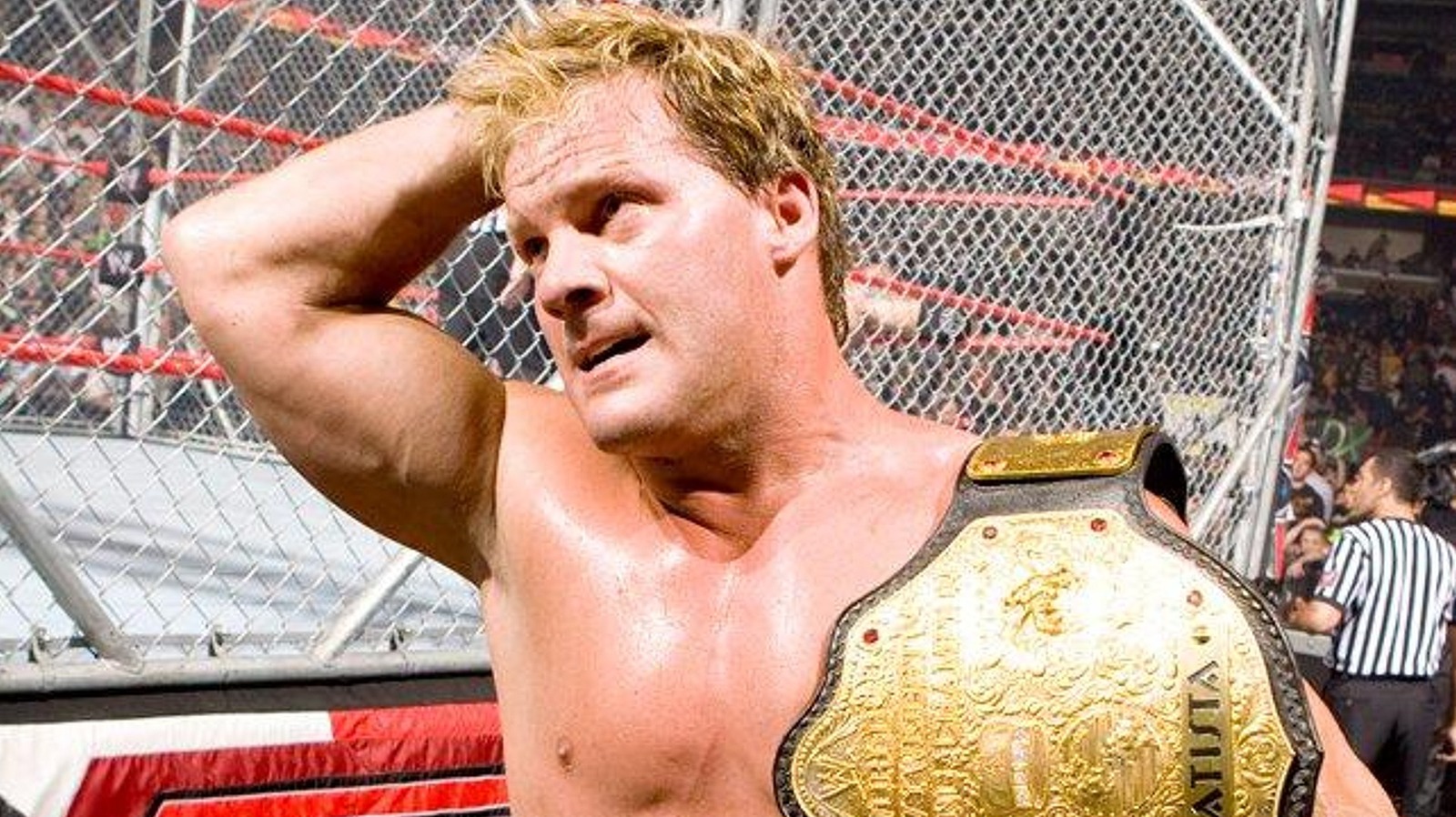
Jericho offered a starkly different physical profile, standing around six feet tall and weighing approximately 220 pounds. This lighter frame significantly reduced the wear and tear on his lower back, knees, and ankles. His body was built for speed, agility, and joint flexibility rather than raw powerlifting capacity.
By avoiding the extreme weight-lifting regimens required to maintain a giant physique, Jericho minimized the strain on his cardiovascular system. This physical adaptation is what allowed him to maintain a high-volume schedule year after year. It resolved the inherent size disadvantage by keeping him on the road while larger stars recovered in clinics.
Jericho's durability is not just a matter of genetics. It is the result of a conscious effort to adapt his in-ring style as his body aged. In his early WCW days, Jericho relied heavily on high-flying maneuvers, including springboard dropkicks and his signature Lionsault.
A Lionsault requires explosive hip extension and knee flexion to launch off the middle rope. The subsequent backflip puts immense pressure on the wrists and shoulders upon landing. As the years accumulated, Jericho systematically reduced the frequency of these high-risk moves.
He transitioned toward a ground-based submission style, leaning on the Walls of Jericho, an elevated Boston crab that utilizes body positioning and mechanical advantage rather than impact. In his current run with AEW, Jericho has adopted the Judas Effect, a spinning back elbow, as his primary finishing maneuver. This strike requires almost no impact on his own joints, protecting his skeletal structure.
This strategic shift in biomechanics explains how Jericho has sustained a career spanning over 30 years without undergoing major spinal fusion surgery. Many of his peers from the late 90s powerhouse era were forced into early retirement or required multiple surgeries to walk. Jericho's lighter weight and adaptive move-set allowed him to maintain a continuous, active schedule.
The success of Jericho forced major promotions to rethink their talent recruitment. For decades, scouts looked for bodybuilding champions and former football players who fit McMahon's favored physical mold. Jericho proved that crowd connection and in-ring workrate were far more valuable assets for a long-term television product.
This shift had major strategic implications for how wrestling companies managed their talent rosters. Smaller wrestlers like Daniel Bryan, CM Punk, and AJ Styles eventually received main-event pushes that would have been unthinkable in the mid-1990s. These athletes had spent years perfecting their craft, developing a level of technical skill that larger powerhouses rarely matched.
By signing these smaller, highly durable workers, promotions reduced the risk of sudden storyline disruptions caused by injuries. From a business perspective, a roster built around agile, 200-to-220-pound wrestlers is far more stable than one built on 300-pound powerhouses. Smaller athletes can work longer matches, perform more frequently, and recover faster from minor muscle strains.
However, no physical strategy is entirely flawless, and Jericho's preservation has come at a cost to the quality of his matches. While he remains active, his physical decline has become increasingly obvious to fans and analysts. In his recent AEW matches, his speed has visibly dropped, and his execution of complex moves can look sluggish.
His physical conditioning has drawn criticism, with detractors noting that he lacks the muscle definition and agility of his prime years. There is also a booking concern regarding his longevity. Because Jericho is highly durable and remains on television, he frequently occupies prominent slots that could otherwise go to rising stars.
His long-running feuds often dominate television time, leading to complaints that his presence is stalling the momentum of younger, faster talent. Longevity is a remarkable athletic achievement, but it can create a creative bottleneck when a veteran refuses to step aside. Jericho's career proved that in a grueling, year-round sport, durability and adaptability will always triumph over sheer physical mass.