
Why Dixie Carter's management style doomed TNA's home-grown stars
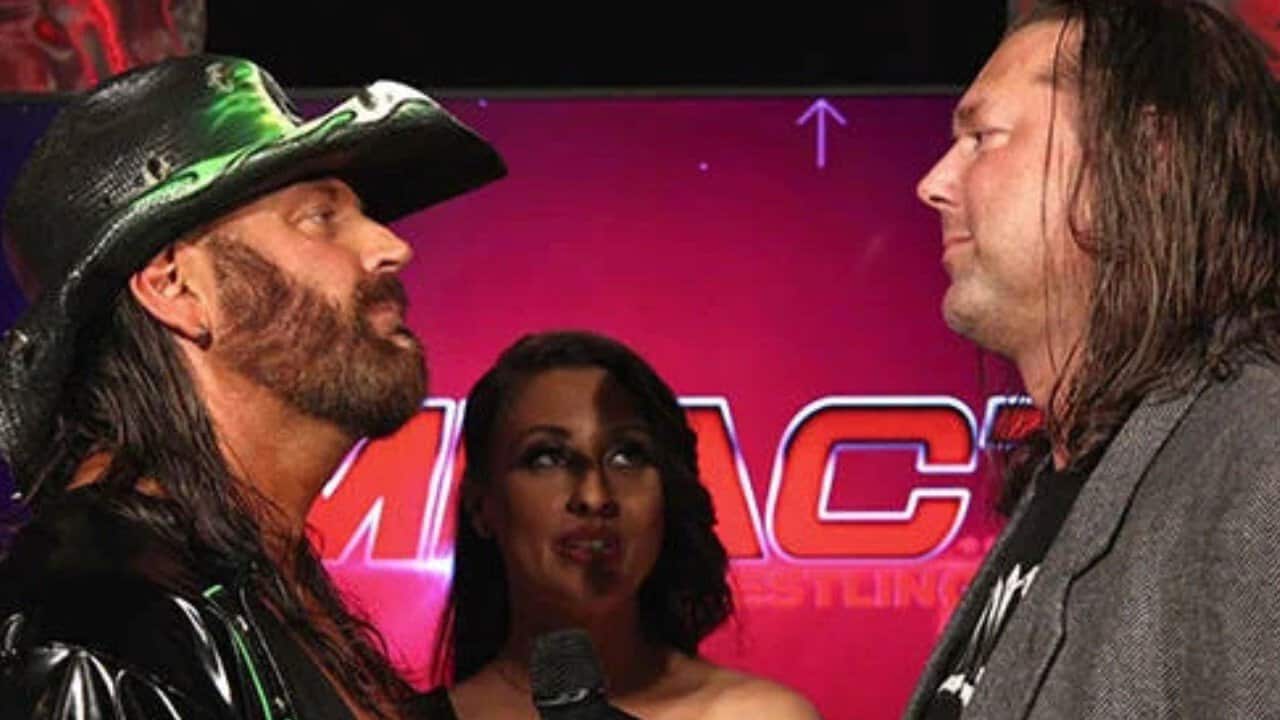
The Creative Paralysis of the Limbo Land
Professional wrestling booking is a game of asset management. In the mid-2000s, Total Nonstop Action (TNA) Wrestling possessed one of the most valuable tag team assets in North America. That asset was America's Most Wanted, a duo that defined the promotion's early identity.
The tag team of Chris Harris and James Storm was built on traditional southern tag psychology. They operated with a distinct division of labor, combining Harris's powerhouse babyface hot-tags with Storm's sneaky heel cut-offs. Together, they captured the NWA World Tag Team Championships six times.
Their tag team excellence culminated on December 5, 2004, in a Six Sides of Steel cage match at Turning Point. The match ran for 21 minutes and 1 second and carried a high-stakes stipulation forcing the losers to disband. AMW defeated Triple X in a match defined by Elix Skipper walking the top of the cage.
To understand the gravity of Harris's loss, one must analyze the role tag team wrestling played in TNA's early survival. In 2002, the company could not compete with WWE's production values or roster depth. They had to rely on high-workrate, high-risk match styles that differentiated them from the market leader.
The tag division, alongside the X-Division, became the promotion's calling card. Teams like Triple X, America's Most Wanted, and The Naturals traded the titles in fast-paced matches that drew critical acclaim. AMW was the steady hand, the team that could work with anyone and deliver a high-quality main event.
Harris was the breakout physical star of the team, possessing the look and build of a traditional heavyweight champion. He had a great spear, a solid powerbomb, and could sell effectively for smaller opponents. Fans saw him as a homegrown champion in waiting.
By late 2006, however, the team had reached its natural ceiling. TNA creative decided to split the duo, launching a bitter singles feud. This rivalry culminated at Sacrifice on May 13, 2007, in a brutal Texas Death Match.
Harris won the bloody encounter in 17 minutes and 14 seconds. The match was widely praised for its intensity, featuring heavy bleeding and table spots. It seemed to establish Harris as a legitimate main-event singles babyface.
Yet, within nine months, Harris would leave the company. He did not leave for a massive WWE contract or because he wanted a change. He left because TNA simply stopped talking to him.
Dixie Carter's Good-Cop Leadership Deficit
The mechanics of this exit were recently discussed on the My World podcast. On the episode, host Jeff Jarrett and guest Chris Harris dissected the 2008 departure. The discussion revealed a corporate structure that was fundamentally broken at the top.
According to the WrestlingNews.co report of the podcast, Harris spent his final months in creative limbo. He received a contract renewal offer that was significantly lower than his previous rate. When he tried to negotiate or seek clarity, he met a wall of silence.
Jeff Jarrett pointed the finger directly at then-president Dixie Carter. Carter, whose family funded TNA through Panda Energy, had taken over the presidency. She wanted the prestige of being the point person for talent relations.
“She wants to be the boss, but not really be the boss,” Jarrett said.
Jarrett explained that Carter wanted the authority of leadership but refused to do the hard work of managing people. Specifically, she avoided any conversation that involved conflict or negative news. She preferred to let these situations sit in limbo.
Jarrett recalled multiple instances where he asked Carter to handle contract negotiations with wrestlers like Harris. She would agree to do it during the weekly TV tapings. However, by the end of the week, the meeting had never taken place.
“Dixie wanted to be that point person, but when it really got down to it, she wouldn't have a negative conversation to save her life.”
Jarrett recalled asking Carter for updates after assigning her to talk to Harris. When he asked what her conversation with Chris was, she admitted she had not done it. This pattern left talent feeling neglected and paranoid about their positions in the company.
This was not an isolated incident involving a single wrestler. Jarrett noted that multiple wrestlers became deeply frustrated by the lack of direct communication from the office. In a business built on physical risk and short career windows, communication is currency.
Wrestlers need to know where they stand to plan their futures. When the front office goes silent, it breeds resentment and pushes talent out the door. Harris's departure is a classic case study in how bad administration destroys creative momentum.
The Braden Walker Fallout
The lack of a clear plan was mirrored by the front office's refusal to talk money. Harris was left waiting for phone calls that never came. Facing a lower contract offer and complete silence, he felt he had no choice but to explore other options.
That search led him to WWE, where he signed in early 2008. At the time, WWE was expanding its ECW brand as a third touring show. Unlike the modern partnership highlighted in the WrestleTalk bracket reveal where WWE talent competes openly on TNA television, the 2008 migration was a hostile raid.
Harris's run in WWE is now remembered as one of the most disastrous in modern wrestling history. He was repackaged under the generic name of Braden Walker. He made his televised debut on the July 8, 2008, episode of ECW.
His debut segment set the tone for the entire run. In a backstage skit, ECW General Manager Teddy Long introduced him as the newest signing. Walker then confronted heel manager Armando Estrada.
Walker delivered a stiff, awkward “knock-knock” joke that immediately killed his credibility. He introduced himself to Estrada with a threat that became a notorious punchline. The line became an instant internet meme and a symbol of lazy WWE writing.
Walker won his debut match against Estrada later that night. However, his physical conditioning became the main talking point among fans and officials. He appeared carrying significant extra weight and lacked the quickness he displayed in TNA.
His second and final televised WWE match occurred on August 5, 2008. He defeated James Curtis in a brief, unremarkable contest. Two days later, on August 7, 2008, WWE released him from his contract.
The rapid collapse of Harris's WWE career highlights the danger of leaving a structured environment. In TNA, Harris was a foundational player who had earned goodwill over six years. In WWE, he was just another body on the roster.
Without the protection of his established character, he was judged solely on his immediate presentation. His poor physical shape and the terrible “knock-knock” gimmick doomed him before he could show his true in-ring capabilities. It was a tragic waste of a prime athletic career.
Failures on All Sides: The Booking Critique
Yet, the blame for this failure does not rest solely on WWE's poor booking or Harris's conditioning. The root cause was the administrative failure in Orlando. TNA allowed a top home-grown star to drift away because their president could not face a difficult negotiation.
This administrative paralysis had severe financial consequences for TNA. During this period, the company was trying to break out of its Orlando studio home. They wanted to draw house show crowds and increase their buyrates.
To do that, they needed recognizable stars that the fans had watched grow. Building new talent is expensive and time-consuming. Letting established stars walk away over communication breakdowns is bad business.
Furthermore, the company was consistently drawing a stable but stagnant 1.0 rating on Spike TV. To push past that barrier, they needed compelling singles storylines. The AMW split was supposed to provide two fresh singles stars for the upper mid-card.
While James Storm eventually found success in Beer Money and later as a singles champion, Harris's potential was completely lost. This was a direct failure of the creative committee, which was headed by Jeff Jarrett.
Jarrett's podcast comments paint him as a frustrated manager caught between a stubborn owner and a confused roster. However, Jarrett was also the primary booker. He cannot entirely distance himself from the creative failure that preceded Harris's exit.
The booking of Harris in late 2007 was directionless. He was placed in a repetitive feud with Dustin Rhodes's Black Reign character, which featured bizarre gimmicks and poor match quality. This booking did nothing to capitalize on his Sacrifice 2007 victory.
It is also worth noting that Jarrett's creative vision often favored established ex-WWE stars over TNA originals. During this era, TNA began heavily investing in older talent like Kurt Angle, Booker T, and Scott Steiner. This strategy systematically pushed younger talent down the card.
Harris saw the writing on the wall. He saw his pay offers shrinking while resources were funneled to incoming veterans. The corporate office was telling him he was replaceable, even if they were too cowardly to say it to his face.
This avoidance tactic is a classic corporate dysfunction. In any business, stalling and avoiding hard conversations does not make the problems go away. It simply causes them to fester until key personnel choose to leave.
For TNA, this cost them more than just Chris Harris. The company developed a reputation as a place where talent relations were chaotic and disorganized. Other stars would eventually leave under similar circumstances of communication breakdown.
The inability to manage talent professionally prevented TNA from ever truly challenging WWE's market dominance. They had the talent, the television deal, and the backing of Panda Energy. They lacked the administrative discipline to execute.
Looking back at the 2008 era, the Chris Harris exit is a perfect microcosm of TNA's ceiling. The company could produce incredible matches like the Sacrifice 2007 death match. They could build home-grown talent that fans deeply cared about.
But they could not manage that talent once the cameras stopped rolling. The corporate office operated like an amateur promotion, relying on backroom promises and avoiding formal business discussions. This amateur hour approach eventually cost them their core fans and their best assets.
For Harris, the move to WWE was a career-ending mistake, but it was a mistake born of frustration. He was a loyal soldier who had been with TNA since the weekly pay-per-view era in Huntsville, Alabama. He deserved a professional front office.
Instead, he got a president who hid from contract negotiations. The story of Braden Walker is not just a joke about a bad knock-knock promo. It is the story of how corporate cowardice in Orlando ruined a top wrestler's career.
Wrestling promotions live and die by their structures. When the structure at the top is hollow, even the best talent cannot save the show. The tragedy of TNA is that the hollow structure was hidden behind a smiling face.
WWE Men's Graphic T-Shirt
Classic wrestling aesthetic that lets you represent the brands daily.
Frequently Asked Questions
Why did Chris Harris leave TNA in 2008?
Who was in the tag team America's Most Wanted?
What happened at the Turning Point 2004 steel cage match?
How did the singles feud between Chris Harris and James Storm end?
What podcast detailed Chris Harris's 2008 departure from TNA?
More Coverage
WWE is reuniting Enzo and Cass and I actually don't hate it
2 hours ago
Apollo Crews is rumored to answer Mustafa Ali's Slammiversary open challenge
3 hours ago
Mick Foley is choosing principles over WWE's easy money
3 hours ago
Kevin Nash contract dispute sparks rumors of a shock wrestling departure
3 hours ago
Inside WWE's failed pursuit of Brian Cage and his Hollywood future
3 hours agoBishop Dyer's MLW contract dispute points to a major WWE return
3 hours agoMore Analysis
WWE is reuniting Enzo and Cass and I actually don't hate it
2 hours ago
AEW wants Gabe Kidd but visa issues stall a massive debut
2 hours ago
TNA ratings swing exposes backstage turbulence after creative purge
2 hours ago
TNA's new Knockouts TV title tournament has some wild NXT surprises
2 hours ago
TNA's new Knockouts TV title tournament is splitting the internet in half
2 hours ago