The reality of the small hall
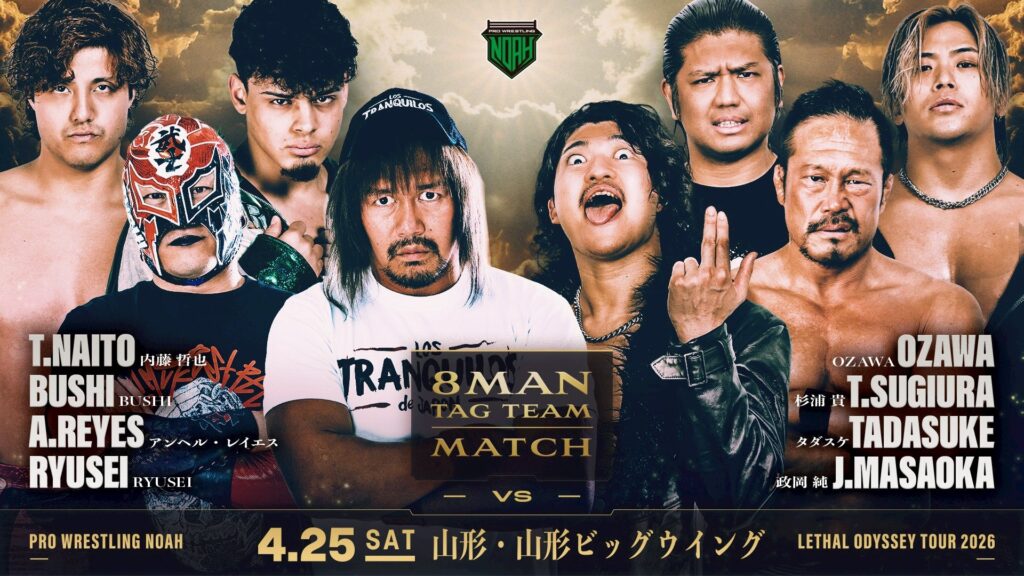
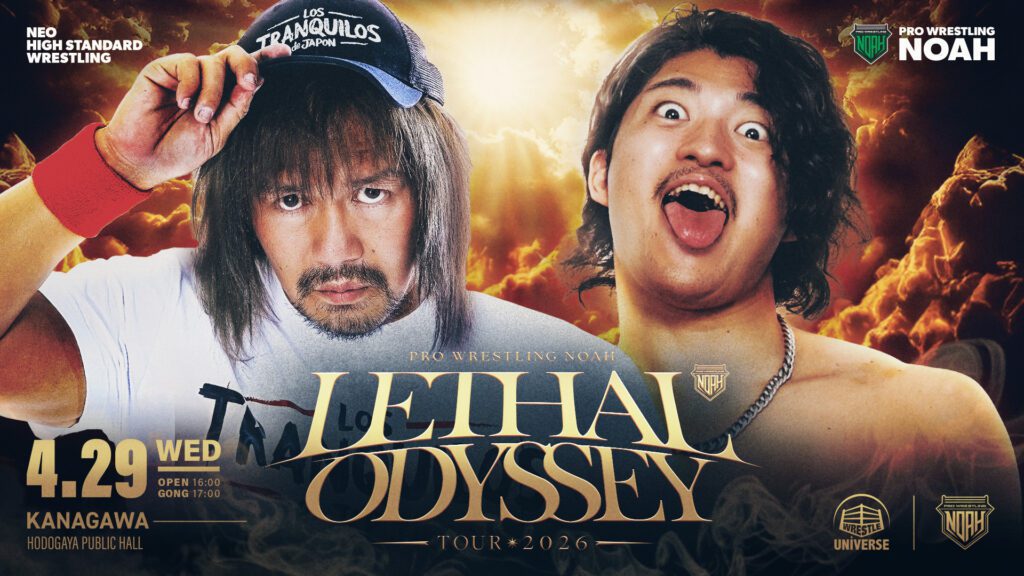
Wrestling is often romanticized in the polished highlight packages. The elaborate entrances, the sweeping camera angles, the sold-out arenas roaring in unison as a championship changes hands. But the actual, grueling daily business of professional wrestling happens on nights exactly like Wednesday in Kanagawa. Hodogaya Public Hall is not a glamorous venue. It is a functional space. The lighting is harsh, the air conditioning struggles against the body heat, and the canvas sounds like a gunshot when someone takes a high-angle suplex. A modest crowd of 439 fans gathered inside this building for Night 23 of Pro Wrestling Noah’s Lethal Odyssey tour. Think about that number for a second. Twenty-three nights of physical punishment.
The human body simply is not designed to take flat back bumps on stiff Japanese canvas for three weeks straight with minimal recovery time. By this stage of any professional wrestling tour, the locker room resembles a walking triage center. Ankles are heavily taped beneath the boots. Necks are stiff and require constant massage. The pure adrenaline that carries a performer through the opening weekend of a tour is long gone. Now, it is just muscle memory, professional pride, and an incredible amount of grit keeping these men upright.
This is exactly where I have a serious problem with Noah's current scheduling philosophy. A twenty-three night tour in April 2026 feels entirely excessive and unnecessary. The financial returns on these smaller, mid-week shows in places like Kanagawa rarely justify the massive physical toll placed on the roster. You risk losing key main event talent to torn ligaments or blown-out knees right before the major summer events, all just to draw four hundred people on a Wednesday evening. It is an archaic business model that refuses to die. But the wrestlers themselves do not book the buildings. They just lace up their boots, walk through the curtain, and work through the pain.
Gatekeepers of the midcard
Fans tuning in on Wrestle Universe get a fundamentally different presentation during these tour stops than they do on the major pay-per-views. The production is completely stripped down. There is a hard camera, a couple of ringside operators, and ambient noise. You hear the referee's instructions clearly. You hear the sickening impact of the strikes. It is raw, unvarnished, and incredibly violent up close.
Which brings us to the actual in-ring product from yesterday. On the undercard, we witnessed a classic generational clash. Team Noah stalwarts Hajime Ohara and Hi69 stepped in against Daiki Odashima and Yuto Koyonagi. If you do not watch Noah regularly, you might gloss over a tag team match like this when scanning the morning results. You absolutely shouldn't. This particular match is the Japanese dojo system operating exactly as intended.
Ohara and Hi69 are the established gatekeepers of the midcard. They are the seasoned veterans whose primary job on these small shows is to brutally evaluate the young talent in real-time. Ohara, in particular, is a fascinating worker to analyze on tape. He operates with a quiet, terrifying malice. There is no wasted movement in his grappling exchanges. When he ties up with an opponent, he is actively looking for structural weaknesses in their base. He targets joints with precision. He slows the pace of the match to an agonizing crawl just to make the younger guys sweat, forcing them to think through their escapes rather than just reacting on pure instinct.
Hi69 brings a completely different dynamic to the tag team. He is the erratic wild card of the duo. He will throw a surprisingly stiff elbow or hit a high-impact maneuver right when the pace lulls, keeping Odashima and Koyonagi constantly guessing about the timing and angle of the attack. Together, they form a defensive wall that young wrestlers must figure out how to climb, brick by brick.
The brutal education of youth
For Odashima and Koyonagi, matches like this are entirely about survival and education. They are not booked to win. Nobody in that building expects them to win. They are expected to show fire, to hit their spots with precision, and to take their beating like professionals. The Japanese dojo system demands respect, and that respect is earned by taking punishment without complaint.
Odashima showed flashes of genuine aggression early in the contest, attempting to isolate Hi69 in the corner with a series of frantic strikes. But the veteran instinct immediately kicked in. A simple, hidden eye rake out of the referee's direct sightline completely neutralized the younger man's momentum. It is those small, dark arts tricks that veterans use to maintain absolute control of the narrative in the ring.
Koyonagi visibly struggled with the pacing of the contest. You could clearly see him rushing his sequences, trying to fit far too much offense into too small a window. Consider a sequence near the middle of the bout. Koyonagi managed to hit a solid forearm that finally staggered Ohara. Most young wrestlers would immediately press the advantage. Koyonagi hesitated. He looked toward his partner for a split second. By the time he turned back, Ohara had already shifted his hips, protecting his core and preparing a counter-hook.
That hesitation is what separates the main eventers from the opening match rookies. The veterans process information instantly; the rookies are still translating the textbook in their heads. When you face a technician like Ohara, rushing or hesitating is fatal. You leave a limb extended for half a second too long, and he will trap it before you realize your error.
The lesson of the Muy Bien
The conclusion of the bout was exactly what it needed to be. After a brief flurry of desperate offense from the rookies, Ohara found his opening. He slipped behind a lunging strike, took his opponent down to the mat with a swift trip, and methodically locked in the Muy Bien.
The Muy Bien is a highly effective, modified single leg Boston crab that simultaneously traps the arms. Ohara's extensive time training in Mexico heavily influenced his submission game, and this hold is the perfect example of that hybrid style. It leaves the victim with absolutely zero mechanical advantage to push up or crawl toward the bottom rope. The tap out came quickly and inevitably at the end.
The Muy Bien isn't just a submission hold. It is a definitive statement from a veteran that the match is over on his exact terms.
It wasn't a dramatic, hard-fought near-fall sequence designed to make the crowd bite on a false finish. It was a clean, decisive, almost clinical tap out. Ohara wanted to send a clear message. You are not at our level yet. You made a mechanical mistake, and I ended the match because of it.
Looking ahead to the finale
As the Lethal Odyssey tour mercifully nears its end, the broader focus of the promotion shifts. The results from Hodogaya on April 29 do not alter the main event championship picture, but they firmly confirm the hierarchy of the midcard. Team Noah remains a formidable, highly competent hurdle in the junior tag ranks.
Odashima and Koyonagi clearly have a long way to go, but the brutal lessons learned on this tour will serve their long-term development far better than a meaningless squash victory against local enhancement talent. They are receiving a masterclass in ring positioning every time they step through the ropes against these men.
My prediction for the weeks following this tour is straightforward. When Noah finally wraps this grueling schedule and moves toward their next major event in May, expect Ohara and Hi69 to aggressively demand a shot at the GHC Junior Heavyweight Tag Team Championship. They look far too sharp right now to be kept off the main card. The sheer volume of matches they have worked over the last three weeks has tuned them up perfectly. They will win gold before the summer is over.
As for the young guys? They are heading straight back to the dojo to ice their battered limbs, study the tape of this exact match, and figure out exactly how Ohara trapped them so easily. They have a massive amount of work to do, but nights like this are exactly how you build the stars of tomorrow.