The Big Picture
Professional wrestling is defined by the intersection of high-risk physical execution and long-term narrative payoff. These ten moments represent the apex of that marriage, separating organic crowd reactions from manufactured corporate beats.
The Rankings
1. The Streak Ends at WrestleMania XXX. The silence in the Superdome when the referee counted three off Brock Lesnar’s third F-5 was the death of an era. It remains the most jarring technical shift in wrestling history because it violated the fundamental laws of long-term booking.
2. Daniel Bryan Occupies Raw. Bryan’s refusal to leave the squared circle in March 2014 forced the company to pivot their main event plans. It proved that crowd sentiment could actually override rigid corporate creative strategies. The image of the Yes Movement swarming the ring is the gold standard for fan-driven booking.
3. CM Punk’s Pipebomb. June 2011 changed how fans perceived the fourth wall. Punk sitting on the ramp, microphone in hand, blurting out reality-based grievances regarding his contract status and the promotion’s favoritism, broke the script. It moved the needle on product credibility for the next three years.
4. The Hardy Boyz Return at WrestleMania 33. The arena response when the music hit remains the loudest ceiling-rattling reaction of the decade. Seeing them return as a surprise entry to capture the titles proved that nostalgia still pays higher dividends than new talent development. It was the perfect execution of a surprise return.
5. Becky Lynch’s Bloody Breakthrough. When Nia Jax broke Lynch’s nose in November 2018, the outcome was an accidental visual that solidified Lynch as the biggest star in the industry. The shot of her standing in the crowd with a crimson-stained face launched the path to her victory at WrestleMania 35. It was a failure in safety that resulted in a masterclass in organic promotion.
6. Edge’s 2020 Royal Rumble Return. Nine years after his forced retirement due to spinal stenosis, the man walked onto the ramp in Houston. The quality of the pop was measured by the genuine disbelief of onlookers who thought his career was finished. It sits high because it offered a narrative closure that rarely occurs in this industry.
7. Mankind Wins the World Title on Raw. In January 1999, the crowd exploded, shifting the entire Monday Night War in a single broadcast. The sight of Stone Cold Steve Austin interfering with a chair shot to the corporate champion, The Rock, changed the tone of the decade. It served as a reminder that chaos is often the most effective engine for growth.
8. Kofi Kingston wins at WrestleMania 35. After eleven years of mid-card grinding, the crowd’s sustained effort to elevate Kingston forced a legitimate main event push. It ranks here because it represents the rare triumph of a fan-favorite performer getting a clean win over a legacy character like Daniel Bryan. The quality of the match itself validated the entire year-long build.
9. The Shield Debuts at Survivor Series. When the trio sprinted through the crowd in 2012 to powerbomb Ryback through a table, it signaled the end of the post-Cena stagnation. They were the most efficient introduction of a faction in twenty years. Every member went on to define the following decade of world title pictures.
10. Stone Cold’s Double Turn. At WrestleMania 13, Austin refused to quit in the Sharpshooter, bleeding out in the ring as Bret Hart was slowly positioned as the villain. It is the most technically important double turn ever executed. It cemented Austin as the top earner for the next five years despite ending the match on his back.
The Reality of Retirement
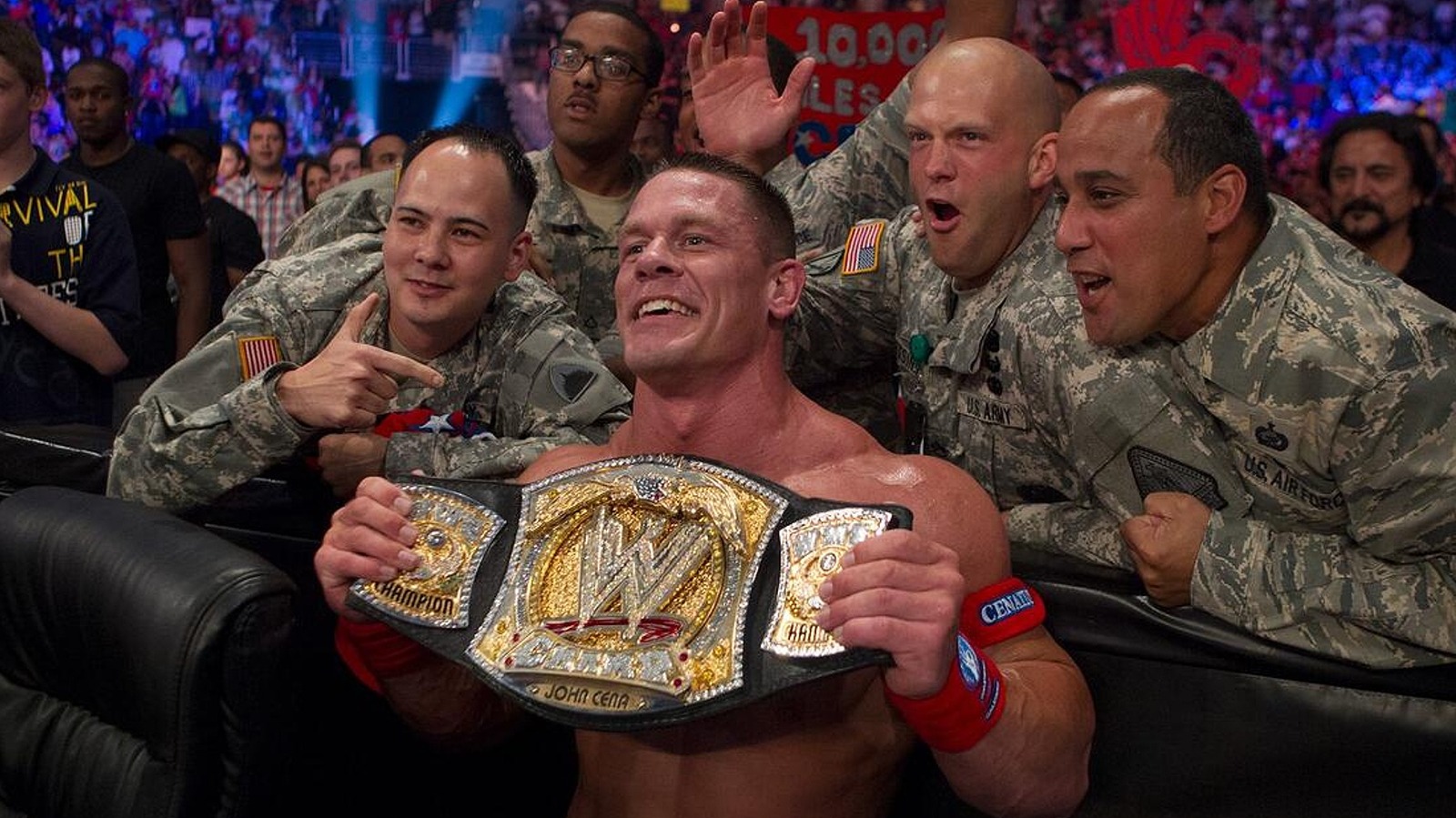
Reflecting on these moments underlines why the departure of figures like John Cena remains a difficult adjustment for the product. As Wrestling Inc reported via his recent comments, the transition away from the squared circle is physically easier, but the loss of that unique fan feedback loop leaves a void in the performers. Wrestling is not just a job; it is a cycle of immediate validation that few other professions can replicate. The absence of these veterans is a critical gap that new talent has struggled to fill in the post-Cena era.
Honorable Mentions
The Money in the Bank cash-in on Edge in 2006 marked the moment the briefcase became a viable main event tool. Additionally, the formation of the nWo in 1996 remains a top-tier visual, even if the subsequent booking decisions eventually eroded the surprise. These moments missed the list due to diminishing returns, proving that even the best ideas have an expiration date if overused by booking teams.