The Big Picture
Modern professional wrestling remains a game of inches where physical risk scales with market share. These ten moments forced the industry to evolve, proving that high-stakes booking and in-ring execution dictate long-term creative health.
10. CM Punk Returns to Chicago (2021)
August 20, 2021, changed the landscape of late-era AEW. Punk’s silence for seven years ended in the United Center, shifting the company's financial ceiling overnight.
The return set a dangerous precedent for nostalgia-based booking. While the immediate excitement pushed merchandise, it also created a fragmented locker room that eventually boiled over at All Out in 2022.
9. WWE and UFC Merge (2023)
The TKO Group Holdings formation signaled the end of wrestling as a standalone entity. Corporate efficiency became the primary metric for success, often at the cost of creative soul.
This shift prioritize quarterly earnings reports over character development. It is the most significant business move of the decade, even if the transition has led to reduced roster depth.
8. The Shield Triple Threat (2016)
Battleground 2016 was the peak iteration of the NXT-to-main-roster pipeline. Dean Ambrose, Seth Rollins, and Roman Reigns delivered a match that justified three years of obsessive build.
It was a technical showcase that rarely happens on free television. Every performer moved at a frantic pace, culminating in a Dirty Deeds that effectively closed the book on their initial alliance.
7. The Montreal Screwjob (1997)
The incident remains the gold standard for blending reality with fiction. Bret Hart’s forced departure from WWE altered the course of the Attitude Era forever.
Vince McMahon positioned himself as the ultimate heel because of this match. It proved that in the right context, a backstage betrayal is more compelling than any scripted championship change.
6. Mankind Falls off the Cell (1998)
King of the Ring 1998 redefined the physical limits of professional wrestling. Mick Foley’s descent through the announce table remains the most replayed visual in company history.
This moment validated the extreme-adjacent style of the era. However, viewed today, the callous medical management of Foley immediately following the fall stands out as a colossal failure in talent protection.
5. Becky Lynch at Survivor Series (2018)
The image of Lynch standing in the crowd, face bloodied after a stiff shot from Nia Jax, propelled her to the main event of WrestleMania 35. It was an organic surge of fan support that management couldn’t ignore.
Lynch outperformed the scripted plans, making the booking look intentionally sluggish by comparison. It proved that authenticity is the most marketable resource a performer possesses.
4. The Evolution of IYO SKY
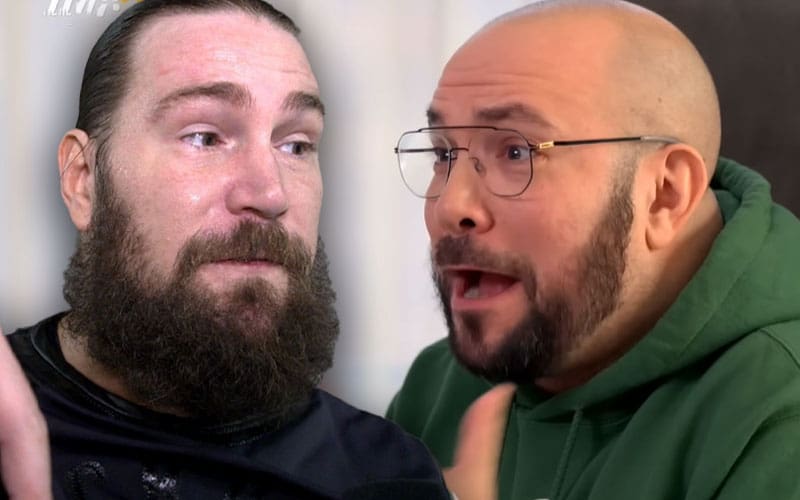
Recent incidents involving IYO SKY highlight the friction between styles. Her high-risk approach generates viral clips, yet as Chris Hero noted, the reliance on unnecessary dives creates significant injury windows.
When a botch happens, the entire focus shifts away from the narrative. These moments demonstrate that aesthetic thrill can undermine the safety of the product itself.
3. Hogan Turns Heel (1996)
Bash at the Beach 1996 provided the single greatest character pivot in history. Seeing Hulk Hogan join The Outsiders was a legitimate shock that cratered the morale of his youngest fans.
It fueled the Monday Night Wars and forced WWF to adopt a darker aesthetic. The move was a masterclass in exploiting viewer loyalty for maximum shock value.
2. Daniel Bryan at WrestleMania XXX (2014)
The Yes Movement was a victory of the fans over the machine. When Triple H and Randy Orton were relegated to the sides, the crowd confirmed that Bryan was the legitimate franchise player.
Winning the title in the Superdome remains the emotional high point of the 2010s. It stands as a reminder that fans possess the power to override mediocre long-term creative plans.
1. The Streak Ends (2014)
Brock Lesnar downing The Undertaker at WrestleMania 30 is the most jarring result in history. The stadium went dead silent, an anomaly in a sport that usually demands raucous noise.
It effectively transitioned the Undertaker into a part-time attraction. While historically necessary, the decision to end it at 21-1 remains as polarizing today as it was twelve years ago.
Honorable Mentions
The debut of Chris Jericho in 1999 narrowly missed the list for its sheer pacing, and the rise of the Four Horsewomen changed the perception of technical female wrestling globally. Both moments represent tectonic shifts in talent utilization that paved the way for current broadcast standards.