The All In flashpoint
It has been exactly 991 days since August 27, 2023. That date split Jack Perry's career down the middle.
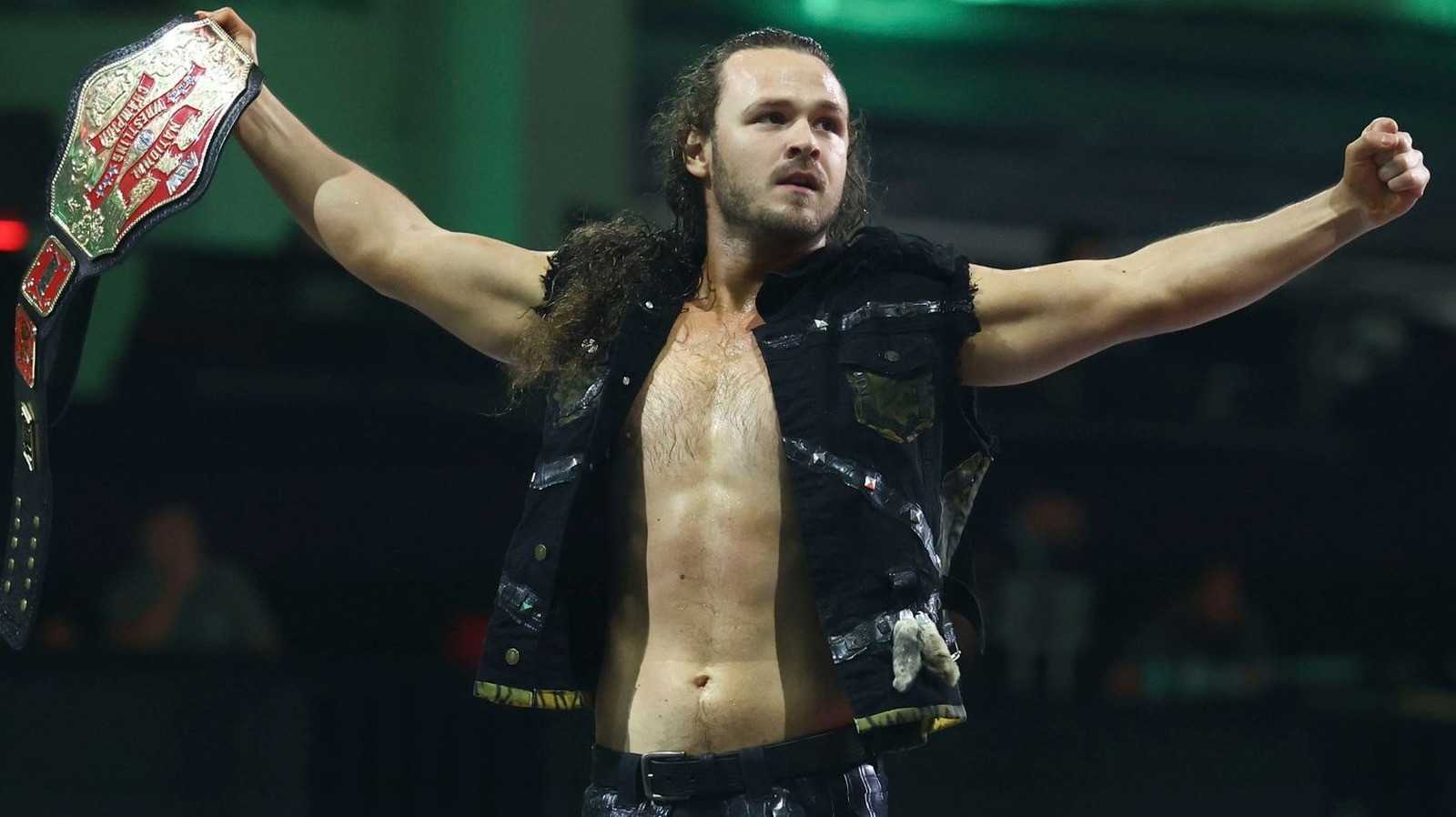
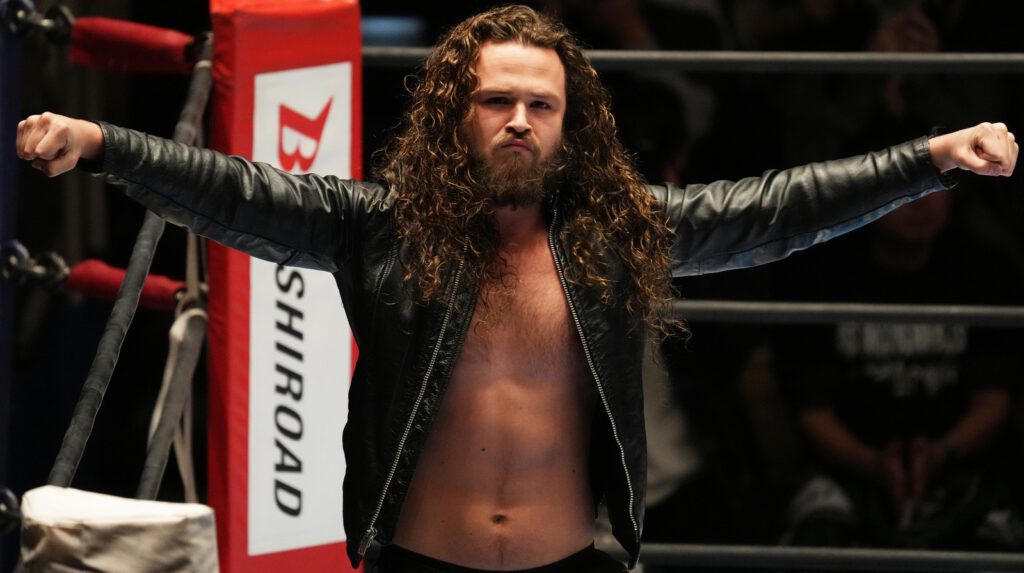
Before Wembley, he was a high-volume offensive wrestler reliant on athletic sequences. After his backstage altercation with CM Punk, he vanished, relocated to Japan, and rebuilt his entire physical vocabulary. The Jungle Boy died. The Scapegoat took his place.
We rarely see a wrestler completely scrap their foundational pacing mid-career. You might see a heel turn, a new finisher, or a wardrobe change. But Perry ripped out the wiring.
He recently noted that the fallout changed him completely. The tape backs that up. If you track his match data from early 2023 against his recent outings, the shift isn't just stylistic. It is mathematical.
The offensive inversion
Let's look at his transition periods. In 2022, Perry averaged roughly four springboard or top-rope maneuvers per match. He built his crowd reactions on aerial risk.
He was the classic babyface in peril who used gravity to equalize a size disadvantage. By the time he returned from his New Japan Pro-Wrestling excursion in early 2024, that number plummeted.
His aerial usage dropped by roughly 45%. Instead of flying, he started crowding.
He replaced high-risk dives with closed fists, grounded headlocks, and spiteful corner work. The average distance between him and his opponent decreased significantly. He stopped giving his opponents space to breathe.
This isn't an accident. It is a calculated tactical adjustment. Brawlers dictate pace differently than high-flyers. By dragging matches to the mat or into the corners, Perry limits the variance in his bouts. He controls the tempo.
The martyr complex
His recent comments to BodySlam shed light on the psychological shift behind this in-ring change.
"People thought I tried to be Raven with the Scapegoat, I was trying to be Jesus," Perry claimed.
That martyr complex translates directly to how he takes punishment.
In his Jungle Boy era, Perry sold damage frantically. He scrambled. He reached for the ropes. He played the undersized victim desperate to survive the onslaught.
The Scapegoat absorbs offense entirely differently. He takes a beating with a bizarre, almost lethargic acceptance. He eats heavy strikes, smiles through the blood, and walks forward. It is a psychological tactic designed to unnerve his opponents.
He invites violence because it justifies his entire character arc. He wants the audience to see him suffer, because suffering proves his point.
The regression flaw
However, this new approach has flaws. His early Scapegoat matches leaned entirely on cheap heat and crowd brawling.
He spent too much time wandering the floor, masking a temporary regression in his actual mat wrestling. He traded crisp transitions for aimless walk-and-brawls through the audience.
When he faced Shota Umino in Chicago, the pacing dragged horribly. It took him months to find the right balance between violence and actual technical wrestling.
He was so desperate to prove he wasn't Jungle Boy anymore that he forgot how to string together a compelling ten-minute television match. He eventually corrected the course, but that awkward three-month transitional phase is still glaring on tape.
Operating without a safety net
Part of Perry's necessary evolution stems from isolation. For years, he had a massive physical insurance policy standing in his corner.
Luchasaurus provided a structural advantage. If Perry was isolated in a tag match, or overwhelmed outside the ring, the dinosaur was his cheat code. That safety net is gone.
The reality of Luchasaurus' recent absence is grim. The big man recently opened up to WrestlingNews about his severe battle with pneumonia. The situation was dire.
"They said 'We can give you these meds and just pray.'"
That kind of terrifying real-life situation puts everything in perspective. But strictly from an on-screen tactical standpoint, his prolonged absence forced Perry to learn how to manipulate a match alone.
He no longer has a seven-foot distraction to bait the referee. He cannot rely on a massive tag partner to absorb the heat segment. He has to eat the damage himself. He had to learn how to cut the ring in half without an accomplice.
The possession metric
If we borrow a concept from football—possession—we can see how Perry dictates a match today.
Wrestling possession is about who controls the flow of movement. Who determines when the sequence stops? Who forces the referee break?
In 2021, Perry played almost entirely off the counter. He waited for a mistake, hit a fast-paced sequence, and reset. His opponents dictated the broader narrative of the bout.
Today, Perry initiates the clinch. He holds onto submission holds past the four-count. He drags his opponents into the ropes to force an ugly break. He dominates the transition moments.
Look at his recent pay-per-view outings. He routinely slows the pace down to a crawl at the 14-minute mark, right when the crowd expects the tempo to increase. He intentionally frustrates the audience.
It is brilliant heel work grounded in match psychology, rather than just cheap insults on a microphone.
The geometry of the ring
Let's talk about the actual geometry of his matches. If you map out where his offensive maneuvers took place in 2022, you see a massive cluster of data points on the apron and the middle ropes.
He used the edges of the ring to generate momentum. He needed a running start to hurt anyone.
Today, his heat maps look entirely different. The vast majority of his damage is inflicted in the dead center of the canvas. He anchors his weight. He forces the opponent to come to him.
When you stand in the middle of the ring, you reduce the distance you have to travel to cut off an escape route. It is a fundamental defensive strategy used by elite grapplers, and Perry adopted it out of necessity. He doesn't want to run the ropes unless he absolutely has to.
The NJPW excursion
We also have to examine the raw reps he gathered in Japan. During his New Japan stint, he wrestled in the New Japan Cup. Japanese crowds respond to a completely different set of triggers than American audiences.
You cannot survive in a Korakuen Hall main event by just running the ropes and shouting. You have to lay your stuff in.
Perry was forced to throw harder, stiffer strikes. He incorporated heavy elbows and forearms into his base repertoire.
When he walked out in front of 81,035 fans at Wembley for All In 2023, he was a boy playing a character. When he returned to AEW programming in 2024, the physical transformation was undeniable. He had added mass, but more importantly, he added intent to his strikes.
The Snare Trap evolution
Consider his finishing sequence. The Snare Trap submission was once a desperation move. He would lock it in after a frantic flurry of reversals, pulling back with everything he had while the crowd rallied behind him.
Now, he applies the hold with cruel deliberation. The setup is slower. He punishes the opponent's joints before ever applying the torque.
The number of times he rushes the setup is exactly 0. He stalks his prey. He waits for the perfect angle.
He makes the viewer sit in the uncomfortable reality that the match is over long before the tap out happens.
The final calculus
The transformation of Jack Perry is an incredible case study in taking a real-life disaster and weaponizing it.
The Wembley incident could have been a career-ending humiliation. He could have faded into the background. Instead, he used the exile to tear his in-ring identity down to the studs.
He isn't trying to be an acrobatic underdog anymore. He has zero interest in wrestling a fast, athletic style. He wants to drag his opponents into the mud and keep them there.
The stats don't lie. The high-flying Jungle Boy is dead. The wrestler who replaced him is slower, meaner, and far more dangerous.