The Cost of the Silent Treatment
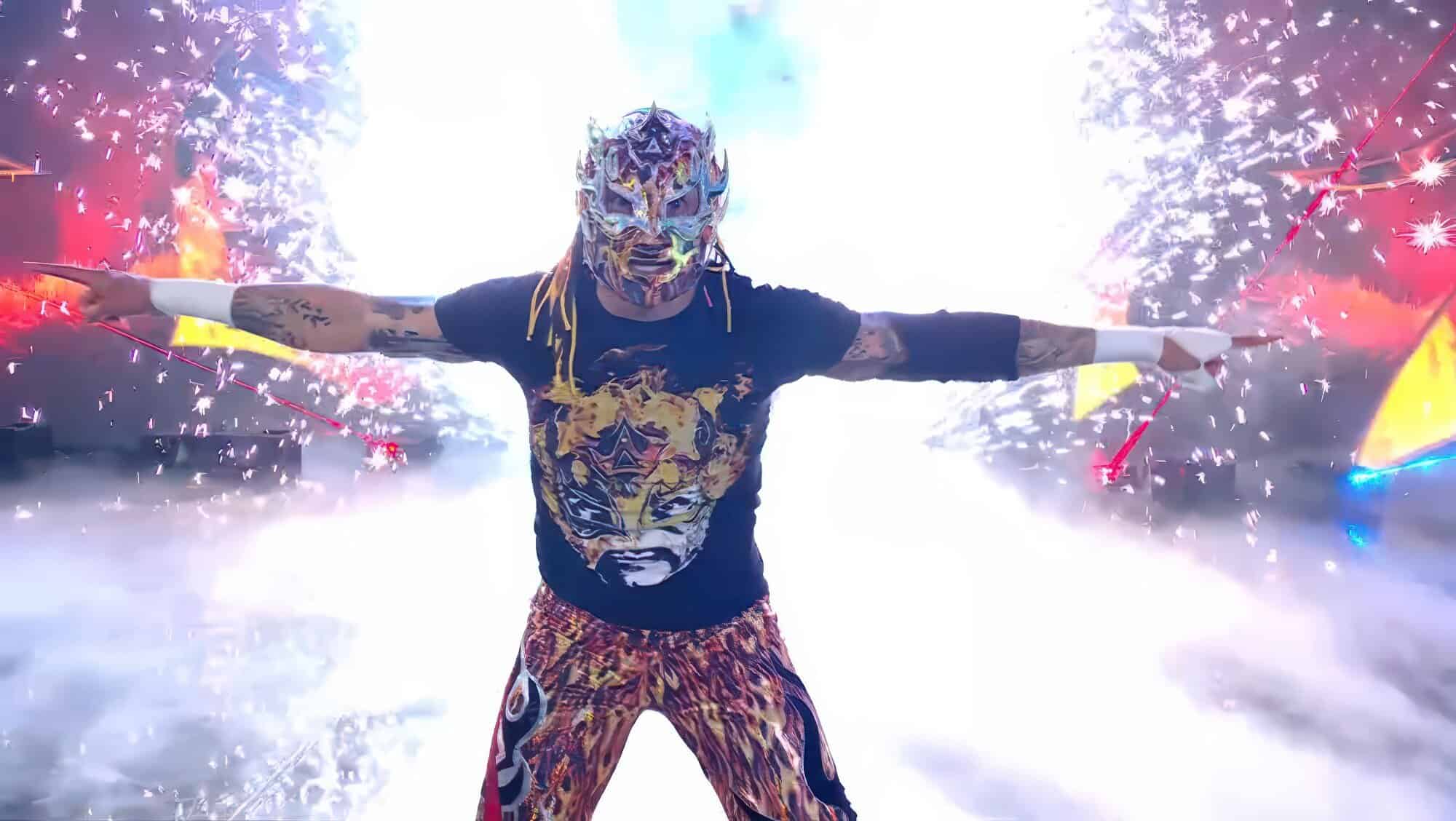
One hundred and eighty-two days. That is the length of the current drought for Rey Fenix. Since November 12, 2025, one of the most physically gifted performers of his generation has not appeared in a televised singles match for World Wrestling Entertainment. In a roster that churns through content across Raw, SmackDown, and NXT at a rate of nearly 7 hours per week, Fenix has become a statistical anomaly: the high-priced free agent who simply ceased to exist on the screen.
When the Lucha Brothers signed their WWE contracts in early 2025, the narrative was one of a shifting power balance. They were the crown jewels of the AEW tag division, multi-time champions who had defined the 'spot-fest' era of modern wrestling. But while his brother, Penta El Zero Miedo, has managed to carve out a niche—defending the Intercontinental Championship in high-profile Raw segments as recently as March—Fenix has been relegated to the 'Main Event' Hulu tapings and untelevised house shows. The numbers suggest this isn't just a cooling-off period; it’s a systemic failure to integrate a specialist into a generalist system.
In 2024, Fenix averaged 3.4 televised matches per month across AEW and ROH. In 2026, that number has plummeted to 0.4. When he does appear, the context is almost exclusively multi-man tags where his involvement is limited to a single 'high-spot' sequence before a predictable finish. He is currently carrying a 14% win rate on television for the calendar year, a staggering decline for a man who entered the company with a career winning percentage north of 70%.
The Penta Divergence
The most damning indictment of Fenix’s current booking is the success of his own brother. Statistical analysis of their 2026 trajectories reveals a widening chasm. Penta has logged 247 minutes of televised ring time this year; Fenix has logged just 32. While Penta has been involved in 12 segments that exceeded the ten-minute mark, Fenix hasn't touched the eight-minute threshold in a singles capacity since the previous autumn.
The Stylistic Straitjacket
WWE’s production style is notoriously rigid, focusing on 'television framing' and camera-side psychology over the breakneck, non-linear sequences that made Fenix a global star. A review of his 2026 match footage shows a dramatic reduction in his offensive diversity. In his final year in AEW, Fenix utilized an average of 9.2 distinct high-risk maneuvers per match. In WWE, that figure has been throttled to 2.4. The 'Spanish Fly' and the 'Muscle Buster' have been replaced by standard dropkicks and rolling cutters, sanitizing the very attributes that made him a million-dollar asset.
The efficiency of his movement has also suffered. In a 2023 match against Nick Jackson, Fenix maintained a 'high-intensity' output—defined as maneuvers involving verticality or springboards—for 68% of the match duration. In his most recent televised tag appearance, that output dropped to 12%. He is being asked to wrestle like a cruiserweight from 2005, rather than the boundary-pushing innovator of 2026. The result is a performer who looks hesitant, his timing slightly off as he waits for the 'hard cam' cues that never felt necessary in the more chaotic environments of AAA or Lucha Underground.
The Demographic Ceiling
There is a recurring pattern in WWE booking that analysts often call the 'Lucha Slot.' Historically, the company has struggled to maintain more than two masked performers in prominent positions simultaneously. With Rey Mysterio still occupying a legacy slot and Penta currently established in the mid-card title picture, Fenix finds himself as the third man in a two-man room. The arrival of Dragon Lee and the recent push of Je’Von Evans (as Ringside News reported) has only deepened the logjam.
The data on roster utility supports this 'ceiling' theory. Since January, WWE has booked 15 different 'High Flyer' archetypes across its three brands. Fenix currently ranks 15th in segment priority, trailing even developmental talents who are being fast-tracked through the NXT system. For a performer earning an estimated seven-figure downside, the return on investment for WWE is currently $0.00 in PLE revenue. He was notably absent from the WrestleMania 41 card in Las Vegas, a show that featured 14 matches but found no room for a man who has historically been a lock for 'Match of the Year' honors.
The Injury Tax vs. The Booking Reality
Critics often point to Fenix’s injury history as the primary driver for his lack of usage. It is true that between 2022 and 2024, Fenix missed a cumulative 214 days due to various ailments, mostly involving his ankles and shoulders. However, internal reports suggest he has been medically cleared for full-contact competition since the first week of January 2026. If health were the only factor, we would see a slow integration; instead, we see a complete blackout.
The 'fragile' label has become a convenient excuse for creative lethargy. While Dominik Mysterio deals with real-time injuries (recently entering concussion protocol), the company has shown they can pivot and keep performers on screen in non-wrestling roles. Fenix, despite his limited English, possesses a kinetic charisma that could be utilized in a managerial or 'enforcer' capacity for Penta. By keeping him entirely off-camera, WWE is allowing his value to decay through irrelevance—a fate far worse for a 35-year-old athlete than a clean loss in the ring.
Conclusion: The Ghost in the Machine
As AEW prepares for Double or Nothing 2026 in Kansas City, the contrast is impossible to ignore. Two years ago, Fenix was the centerpiece of that event’s most talked-about match. Today, he is venting his frustration on social media, a move that rarely ends well in the TKO era of WWE management. The statistical trajectory for Rey Fenix is currently a flatline. Without a radical shift in philosophy—or a move to a brand like NXT where 'work-rate' is more than a dirty word—Fenix risks becoming the most expensive ghost in wrestling history.
The numbers don't lie, and they don't care about 'potential.' A 182-day absence isn't a sabbatical; it's a statement. WWE bought the Lucha Brothers to weaken a rival, but they only seem interested in using half of the investment. For Fenix, the countdown isn't to his next title shot—it's to the expiration date on his relevance.