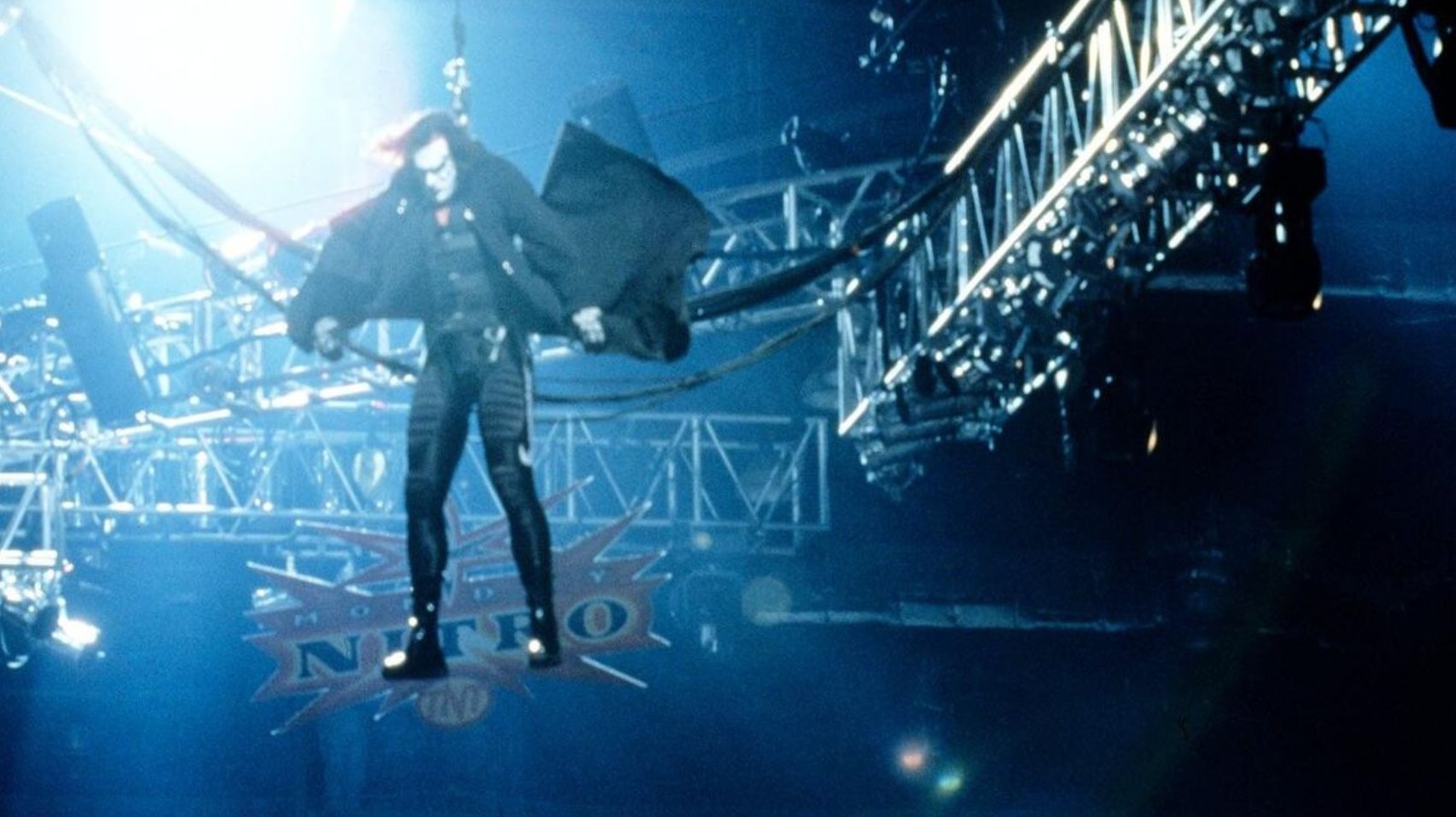
The 0.5-second release trigger vs industrial safety specs
In 1999, the difference between a routine aerial entrance and a fatal tragedy came down to a single release mechanism. On a recent episode of Kliq This, WWE Hall of Famer Kevin Nash broke down the critical structural distinctions between the harnesses used for Sting in WCW and Owen Hart at Over the Edge 1999.
Sting's iconic rafter entrances in WCW during 1997 required a slow, multi-step disengagement process taking roughly 15 to 20 seconds once his feet touched the mat. The rigging used for Sting featured a heavy-duty, dual-carabiner industrial system with secondary safety backups designed to prevent unintentional release under load.
By contrast, the quick-release clip selected for Owen Hart's Blue Blazer entrance was engineered for rapid detachment in under 0.5 seconds. That decision was made to allow Hart to instantly step out of the harness upon landing, eliminating broadcast downtime during a live pay-per-view transmission.
Load capacities and structural redundancy metrics
Industrial rigging standards for stunt work typically demand a safety factor ratio of 10:1, meaning a system rated for a 200-pound performer must withstand 2,000 pounds of dynamic force. Sting's harness setup used full-body harness webbing rated to support over 5,000 pounds of tensile stress, featuring redundant leg loops and chest straps that locked the performer in place.
Hart's setup utilized a single quick-release nautical clip designed for rapid sail release. That mechanism had a trip line requiring just 6 pounds of pressure to trigger the latch. Under dynamic swing loads during descent, tension on the release trigger increases dramatically, reducing the safety margin to virtually zero if bumped or shifted.
As detailed by Kevin Nash on Kliq This, Nash recalled watching Sting spend extended periods unbuckling after descending from the rafters, noting that the harness was physically impossible to disconnect without manual double-action unlatching. The trade-off was clear: WCW sacrificed visual flow for strict fail-safe redundancy.
Comparing the rigging profiles
- Sting (WCW 1997): Dual-carabiner lock, 15-20 second manual release, 5,000 lb load rating, full-body harness.
- Owen Hart (WWE 1999): Quick-release nautical shackle, <0.5 second release, single-point attachment, 6 lb trigger sensitivity.
The mechanical cost of TV pacing
The priority placed on live television timing created a catastrophic point of failure. WWE sought a seamless transition where Hart could hit the ring, release the clip instantly, and cut a promo without wrestling with complex latches on camera.
Sting made over 30 rafter entrances between late 1996 and 1998 in WCW, every single one utilizing the slower, industrial-grade harness rig. The extra 15 seconds spent unbuckling on camera was a tiny operational delay, but it guaranteed that a mechanical failure could not occur mid-descent.
The data from stunt safety evaluations is unambiguous: quick-release shackles designed for low-load marine environments should never be used as primary load-bearing connectors for human transport. The decision to prioritize broadcast speed over mechanical redundancy remains one of the most tragic miscalculations in pro wrestling history.