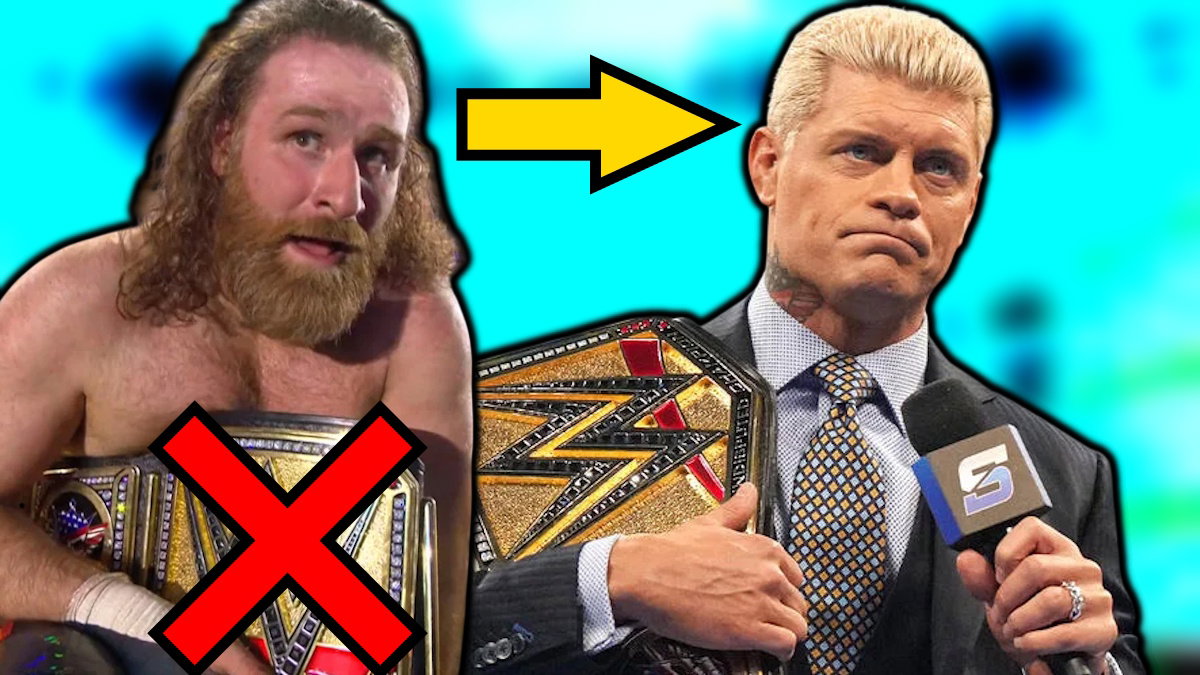
Steve Maclin is betting his future on a chaotic free agency
The Sacramento Tapings and the Quiet Release
Steve Maclin is a professional. He makes the loops, does the media, and avoids TMZ. Yet, on May 15, 2026, he wrestled Mike Santana in Sacramento, asked for his release, and walked away.
It was a shocking end to a solid five-year run. Today, on July 7, 2026, Maclin is navigating the chaotic waters of free agency. He calls it a new territory era, but it looks like a massive career gamble.
Maclin's final TNA appearance was a quiet affair. He faced Mike Santana at the Sacramento television tapings. Santana won with a heavy, physical offense, pinning Maclin after an explosive sequence. Behind the scenes, Maclin's creative frustrations had been building for months.
He quietly asked for his release. Management granted it, allowing him to step away from the company where he had spent five years building his name. Maclin wanted to keep the departure quiet, but news travels fast in pro wrestling.
The Sacramento match itself was telling. Santana, returning to TNA with significant momentum, dominated the final minutes. Maclin worked his usual physical style, targeting Santana's shoulder. But Santana rallied, hitting a spin-out powerbomb and a heavy lariat to secure the pinfall at the 14-minute mark.
During his TNA run, Maclin survived three distinct management regimes. He worked under Scott D’Amore, Ariel Shnerer, and Carlos Silva. He admits he was taken very well care of. Under D’Amore, Maclin climbed to the top, winning the Impact World Championship.
He was the reliable workhorse. He anchored two-hour television shows. He did the radio spots and the local television interviews. He was the safe bet for a promotion that needed stability after years of corporate turnover.
But the transition from D'Amore to Carlos Silva shifted the corporate priorities. TNA began focusing on external partnerships and legacy acts. Maclin found himself sliding down the card, his creative input increasingly ignored.
Leaving that guaranteed structure is a significant risk. His first match after leaving TNA was at a Pro Wrestling Revolver show in Dayton, Ohio. He lost to Joe Alonso. Losing your debut indie match to a regional worker is a questionable tactical decision.
The match in Dayton exposed the lack of protection for an unsigned free agent. Alonso targeted Maclin's knee, utilizing the ring post. Maclin attempted his signature corner spear but crashed shoulder-first into the turnbuckle. Alonso capitalized with a quick roll-up for the win.
If Maclin is trying to show the world his true worth, getting pinned by Alonso immediately hurts his drawing power. It positions him as just another ex-television guy doing the indie rounds. It was a booking mistake that chipped away at his main-event aura.
He followed that loss with an appearance at Scott D’Amore's Maple Leaf Pro tapings in Windsor, Ontario. The promotion is run by the man who built Maclin. While Maple Leaf Pro has nostalgia behind it, it is a start-up. It lacks the television distribution and budget of TNA.
The Tactical Clash at Monster Factory
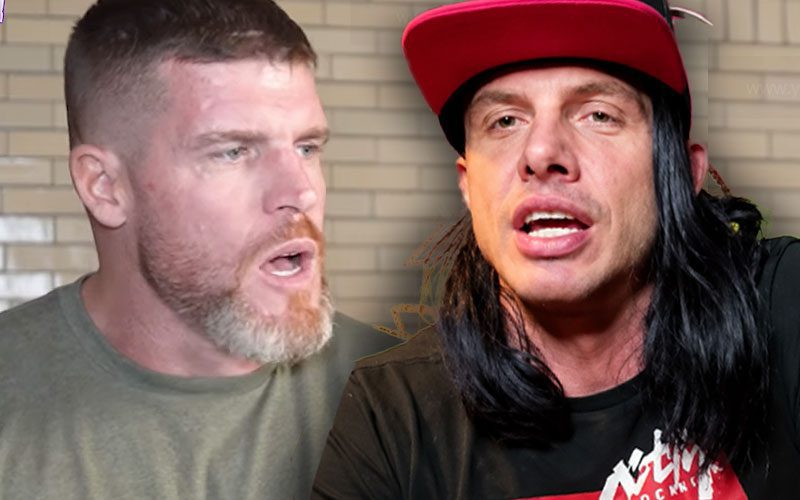
Now, Maclin is set to defend the BRCW Championship against Matt Riddle at BRCW Summer Smash. This is not a random indie matchup thrown together for a poster. The two men share a deep history.
Both started their training at the Monster Factory in Paulsboro, New Jersey. They learned the fundamentals in the same ring. They ran the same ropes and took the same bumps under Danny Cage.
Cage's training focuses on clean footwork, spatial awareness, and ring psychology. Yet, the two trainees developed vastly different styles. Riddle went to UFC, building a foundation of double-leg takedowns, heavy kicks, and submissions. Maclin went from the military to the ring, developing a bruising, physical style.
Maclin relies on positioning, targeting the ribs, and hitting the KIA double-underhook DDT. Riddle works barefoot, using his speed to transition from strikes to submissions. He relies on the Bromission, a modified sleeper hold, to ground opponents.
The buildup has taken a personal turn. In a recent interview on The Zaslow Show, Maclin took aim at Riddle’s reliability. He questioned whether any major promotion could trust Riddle with a championship.
“And for him, he’s a guy that I uh I don’t feel can hold something like this or even a brand or a name because he’s been places and he’s kind of burned those bridges in other places where he just he’s not somebody you want to put all your faith into as a company.”
This is a direct shot at Riddle's reputation. Riddle has undeniable talent, but his runs in WWE and New Japan were cut short by outside issues. Maclin positions himself as the antithesis of Riddle.
“And for me, being who I am and bulletproof Mr. Mayhem, Steve Maclin, that’s somebody you want to get behind. I go out there, I do media, I come on here to promote shows. I’m not there to cause trouble on the headlines or TMZ and all that and that’s just how I kind of go about it.”
It is a smart promo, but it exposes the limits of Maclin’s position. Reliability is great for a champion. It is rarely the quality that draws a million-dollar gate. Fans do not buy tickets to see a wrestler who avoids TMZ.
In the ring, the matchup is intriguing. Riddle wants to speed up the pace, using his MMA background to transition from strikes to submissions. Maclin wants to slow it down, using backbreakers and corner spears to wear Riddle down.
Riddle's barefoot stance gives him speed and balance, but leaves his feet vulnerable to Maclin's heavy boots. Maclin will try to ground Riddle, targeting his ribs to prevent him from hitting the Floating Bro corkscrew senton.
If Riddle can secure the Bromission early, Maclin will be in trouble. But if Maclin can target Riddle’s ribs and set up the tree of woe, he can dictate the pace. It is a classic clash of explosive offense versus methodical defense.
The Illusion of the Global Territory
Maclin defends his TNA departure by framing it as a choice to join a new wrestling movement. In his interview with F4WOnline, he explained that the industry has entered a decentralized phase.
“I know a lot of people were kind of shocked that I asked for my release, but five years is a long time in a company especially like we’re in the territory era again where it’s like a global territory with pro wrestling.”
This is a romantic view of a harsh reality. The original territory era was built on exclusive local television and sold-out arenas. The modern territory era is a network of indie groups streaming on TrillerTV for a few hundred viewers. It is a fragmented market where paydays are volatile.
In the NWA territory system, a wrestler could work five nights a week in a single region, drawing consistent money. Today's indie scene requires constant travel. Maclin must jump from Ohio to Ontario to Florida to piecemeal an income.
Maclin admitted that leaving TNA hurt because of the locker room. In his interview with Ringside News, he described the backstage environment as a close-knit family that hangs out at hotels after shows. Telling them he asked for his release was the hardest part of his exit.
“And it just it it hurt to kind of feel like I let some guys down and some of the girls, but at the same time I think everybody understood why.”
But understanding his decision does not pay his bills. At 39 years old, Maclin is entering the final years of his athletic peak. He is trading the stability of Carlos Silva's TNA for the uncertainty of the indies.
TNA was a place where Maclin had security. He worked through the transition from Scott D’Amore to Carlos Silva. He was a featured player on national television. Now, he is chasing bookings in Windsor and Dayton, working in front of a fraction of the audience.
His creative frustrations in TNA are understandable. The company has shifted focus, pushing Mike Santana and legacy tag teams. Maclin felt the writing on the wall. He chose to jump before he was pushed down the card.
But free agency is a brutal place. Without a contract from WWE or AEW, an indie wrestler must work constantly to maintain their income. Maclin is betting that his reputation as a reliable professional will keep him in demand.
The match with Riddle at BRCW Summer Smash is a test. If Maclin can deliver a main-event performance, he keeps his value high. If the match falls flat, he becomes just another former champion working the indies.
Wrestling fans love the idea of the lone wolf. They cheer for the guy who bets on himself. But the math of the modern indie scene is unforgiving. Steve Maclin is about to find out if his reliability is worth the risk.
WWE Elite Collection Series 125 Joe Hendry Action Figure
Say his name and he appears—now in action figure form.
Frequently Asked Questions
Why did Steve Maclin leave TNA Wrestling?
Who was Steve Maclin's final opponent in TNA?
What TNA management regimes did Steve Maclin work under?
Who did Steve Maclin face in his first post-TNA match?
What promotion did Steve Maclin join after his loss in Dayton?
More Coverage
Can a declining Hardy Boyz survive their first TNA title defense?
2 hours ago
Jeff Jarrett says he's happy in AEW, but the TNA sale rumors won't die
7 hours ago
Rohit Raju could be the veteran spark Maple Leaf Pro Wrestling needs
9 hours agoWhy the NWA 78th Anniversary card is causing a massive fight online
14 hours ago
Why Matt Hardy's confusion over Sami Callihan should worry TNA fans
14 hours ago
Steve Maclin is leaving TNA and he has a lot to say about Matt Riddle
1 day, 2 hours agoMore Analysis
Why TNA's championship experiments are already in danger
2 hours ago
Charlotte Flair faces a major emotional test ahead of SummerSlam
2 hours ago
Can a declining Hardy Boyz survive their first TNA title defense?
2 hours ago
El Hijo del Vikingo's ACL tear shows the math of high-flying is broken
4 hours agoStephen Farrelly rejects WWE injury pay cut as free agency looms
4 hours ago