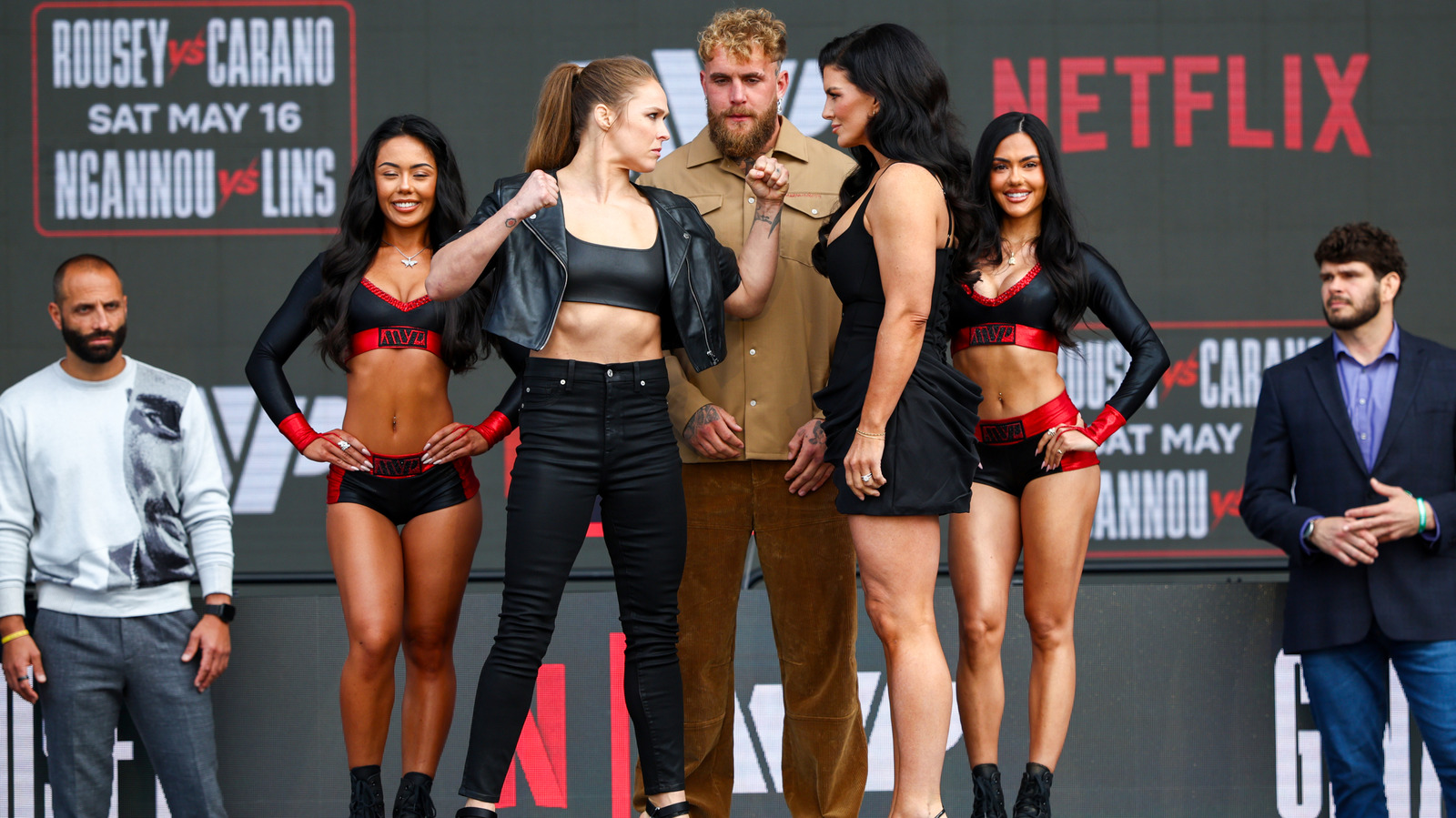
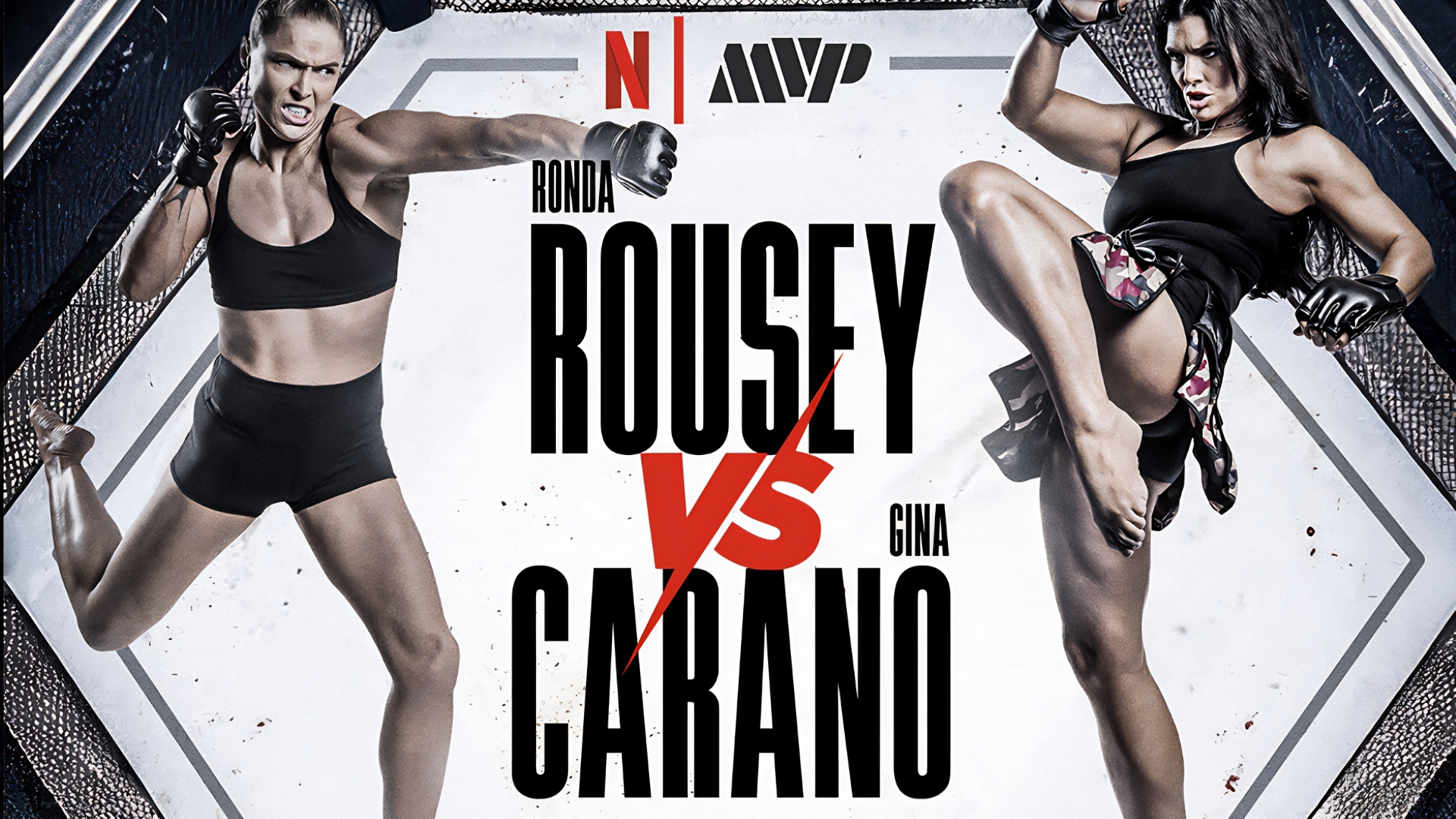
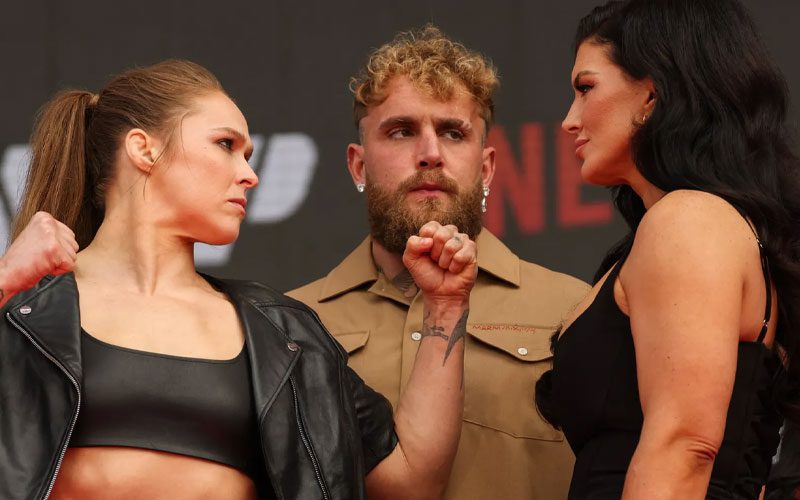
The stare down that broke the timeline
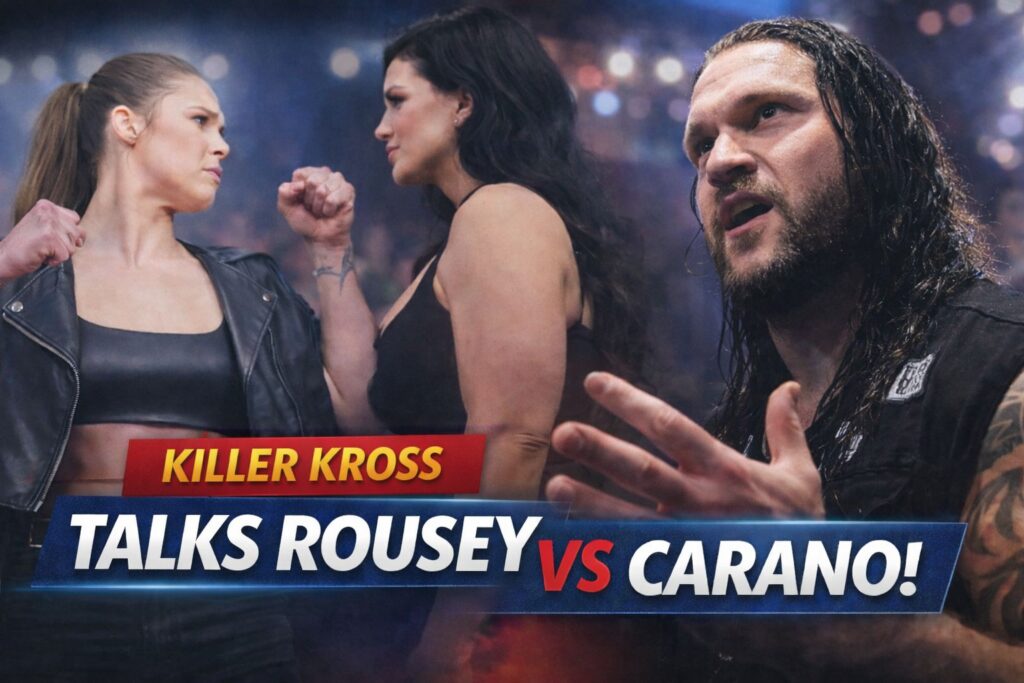
The weigh-in feed flickered live on PWInsider, and suddenly it hit me. We are actually getting Ronda Rousey versus Gina Carano. The visual alone is a glitch in the matrix.
If you told a combat sports fan in 2013 that these two would finally stand face-to-face, they would have assumed Dana White backed up a Brinks truck to make it happen at UFC 170. Instead, we are here in 2026, watching them step on a scale for a worked match.
There is a bizarre gravity to this. Carano was the original blueprint for the female crossover star. Rousey took that blueprint, lit it on fire, and built an empire from the ashes.
They never crossed paths. The timing never lined up. Carano walked away after the Cris Cyborg loss in 2009, right as Rousey was beginning her amateur judo transition into MMA.
Now, they are crossing the streams in a professional wrestling context. It is weird. It is fascinating. It might be a total trainwreck. But you are lying if you say you are not going to watch.
The stylistic clash in a worked environment
Breaking down a match like this requires throwing out the standard pro wrestling rulebook. We are not going to see Canadian Destroyers or springboard moonsaults.
This is going to be a heavy, grappling-centric bout built around strikes, throws, and submissions. It will look more like a UWFi match from the 1990s than a standard television main event.
Rousey has the distinct advantage when it comes to ring time. She understands how to run the ropes. She knows how to structure a match for a crowd.
More importantly, her judo base translates beautifully to professional wrestling. Her hip tosses are crisp. Her rolling armbar transitions still pop the crowd. When she gets aggressive and stops thinking about her footwork, she looks like a killer.
Carano is the massive wild card. She has spent the last 15 years on movie sets, not taking flat back bumps. Her background is Muay Thai.
Striking in a real fight is about distance management and speed. Striking in professional wrestling is about creating noise, throwing wide, and pausing for the camera.
The transition from legitimate kickboxing to worked punches is notoriously difficult. Strikers tend to pull their shots too much, making the offense look weak, or they accidentally potato their opponent because they lack the muscle memory for a worked strike.
I expect Carano to rely heavily on clinch work. She can use her physicality to trap Rousey in the corner and deliver worked knees to the midsection. It is a safe, effective way to simulate violence without requiring complex bump sequences.
If Carano tries to chain wrestle with Rousey, this match will fall apart immediately.
The red flags are massive
Let’s be brutally honest for a second. This match has "disaster" written all over it if it goes past the 10-minute mark.
Rousey has always struggled with match pacing. When she is in there with a veteran ring general like Charlotte Flair or Sasha Banks, they can guide her through the quiet moments. They know when to call a rest hold.
Carano does not have that skillset. She has never called a match in the ring. She does not know how to audible if a spot gets botched. If they get lost out there, it is going to get awkward fast.
I am genuinely worried about the cardio dynamic. Working a match requires a completely different energy system than shooting an action sequence. You are performing continuously in front of a live crowd with no director yelling cut.
Carano has not been in a high-intensity athletic competition since the Obama administration.
There is also the issue of Rousey's striking defense. Even in her WWE run, Rousey’s reaction to getting hit often looked unnatural. She tends to turn her head and close her eyes, a leftover reflex from her MMA days.
If Carano throws a stiff working punch and Rousey flinches badly, the illusion is broken. The crowd will instantly recognize that they are watching two people play-fight, rather than watching a blood feud.
The psychology of the weigh-in
The weigh-in broadcast was a masterclass in minimalist promotion. No screaming, no contrived pull-aparts. Just two women who understand their own mythologies staring a hole through each other.
The scale read 145 pounds for Carano and 135 for Rousey. A minor size discrepancy, but one that plays perfectly into the booking. Carano can play the slightly larger, heavier-hitting striker against the faster, submission-hunting grappler.
The body language told the whole story. Rousey had that familiar scowl, the one she used to wear marching down the aisle to Joan Jett. Carano looked relaxed, offering a slight smirk.
It is the classic dynamic. The intense technician versus the confident brawler. They do not need to cut 15-minute promos to sell this. The video packages doing side-by-side comparisons of their armbars and knockouts will do the heavy lifting.
The promoter knows exactly what they are doing by leaning into the shoot-style presentation. By holding a formal weigh-in, they are conditioning the audience to expect a fight, not a wrestling match. This lowers the expectation for high-spots and raises the tolerance for mat wrestling.
How the bout will unfold
I see this starting hot. They cannot afford a slow lock-up. If they lock up in a standard collar-and-elbow tie-up, the crowd will instantly remember this is a wrestling match. They need to start with strikes.
Expect Carano to throw a flurry of kicks early, forcing Rousey to back up. Rousey will sell the striking power, grabbing her ribs and looking shocked. This establishes Carano as a legitimate threat.
Rousey will then shoot for a takedown, perhaps a desperation double-leg, transitioning into a scramble. Here is where Rousey needs to carry the load. She has to guide Carano through the mat work, calling the transitions loudly enough for Carano to hear, but quietly enough to hide it from the front row.
The middle stretch will likely feature Carano working over Rousey’s arm or leg with basic holds. A Kimura attempt. A kneebar. Things that look painful but require minimal bumping. Rousey will sell the limb, building sympathy.
The comeback sequence will be classic Rousey. A sudden burst of speed, a massive judo throw—probably a Harai Goshi—that spikes Carano onto the mat.
The finish needs to be definitive. No dusty finishes. No run-ins. If you are booking Ronda Rousey versus Gina Carano, you need a clean tap or a clean pinfall.
The Final Verdict
The novelty factor is off the charts. It is going to draw eyes from people who have not watched professional wrestling in years. The crossover appeal is undeniable.
But as an in-ring product, I am keeping my expectations firmly grounded. I expect a clunky, intense, heavily-scripted 12-minute match. There will be at least two miscommunications.
Carano will likely blow up around the 7-minute mark, and Rousey will have to work overtime to keep the pace moving. But when they hit the signature spots, the crowd will erupt.
When Carano throws that overhand right, the building will shake. When Rousey locks in the armbar, the flashbulbs will go off.
Rousey is the active wrestler. She is the one who has put the time in between the ropes. Carano is the special attraction.
You do not bring in the special attraction to beat your established star unless you are building to a multi-match program. I doubt Carano is signing up for a full-time schedule.
Rousey takes it. She survives an early striking onslaught, hits a desperate O Goshi judo throw, and transitions directly into the rolling armbar.
Carano taps at the 11-minute mark. It will be ugly, it will be fascinating, and we will probably never see it again.