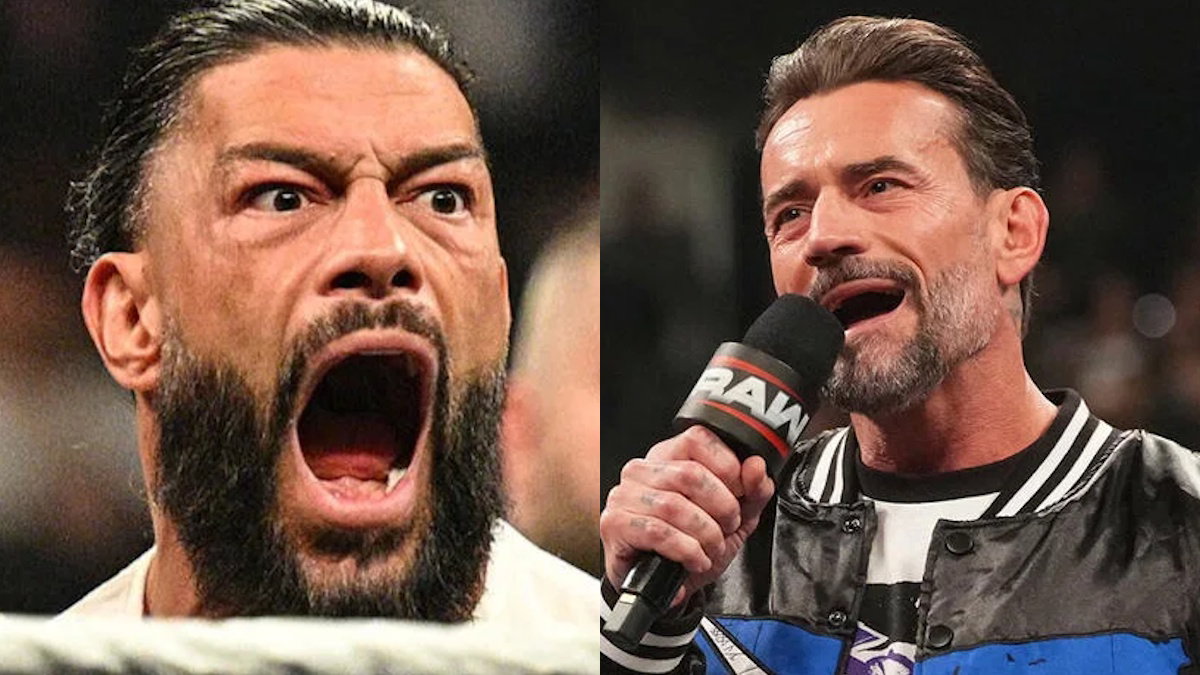
Roman Reigns meeting CM Punk on Raw is WWE's ultimate heat check
The ghosts of Survivor Series 2012 finally meet
Twelve years is a lifetime in professional wrestling. It's enough time for an indie darling to become a mainstream pariah, leave the industry, and return as its elder statesman. It's also enough time for a silent enforcer to become the most dominant champion of the modern era. When WrestlingNews.co confirmed the news that Roman Reigns and CM Punk will share a ring on Monday Night Raw, the immediate reaction was base-level excitement. But beneath the surface, this is a fascinating collision of booking philosophies and character architecture.
Think back to November 18, 2012. Bankers Life Fieldhouse in Indianapolis. CM Punk is defending the WWE Championship against John Cena and Ryback. Late in the match, three men in tactical gear hop the barricade. They isolate Ryback, drag him outside, and execute a triple powerbomb through the Spanish announce table. Punk crawls into the ring, pins Cena, and retains.
That was the debut of The Shield. It was the moment Roman Reigns was introduced to the main roster. He was brought in, canonically, as a mercenary to protect Punk’s title reign. The layers of history between these two characters are staggeringly deep, yet completely unmined.
WWE has largely ignored this connective tissue since Punk's return. That makes sense. The company prefers to keep its current storylines siloed to avoid confusing casual viewers. But you cannot put Roman Reigns and CM Punk face-to-face with microphones and expect them to ignore the foundation of their relationship. They are both too smart for that.
The Paul Heyman connection
You cannot analyze this upcoming segment without addressing the elephant in the room. His name is Paul Heyman. He is the narrative bridge between the 434-day reign of CM Punk and the 1,316-day reign of Roman Reigns.
Heyman was the architect behind Punk's historic run. He carried the title, spoke for Punk when Punk wanted to brood, and served as the ultimate heat magnet. Eight years later, Heyman transitioned into the role of Special Counsel for Reigns. He legitimized the "Tribal Chief" persona immediately. Without Heyman sitting at the head of the table in those empty-arena ThunderDome shows, the Reigns character might never have found its footing.
This segment on Raw has to address that shared history. Punk views Heyman as a mentor who eventually betrayed him. Reigns views Heyman as a loyal servant who was essentially a hostage during the Solo Sikoa regime. The differing perspectives on the man who shaped both of their careers offer an absolute goldmine for promo material.
If WWE ignores the Heyman connection, the segment will feel completely hollow. It would be a catastrophic booking failure to have these two trade generic insults about who is the "best in the world" when there is deeply personal, heavily documented history sitting right there.
A stylistic nightmare for television producers
This is where the tactical analysis gets interesting. How do you format a segment between two men with completely opposite communication styles?
Roman Reigns works at a glacial pace. He weaponizes silence better than anyone since Jake Roberts. When his music hits, it takes him three minutes just to reach the ring steps. When he gets a microphone, he waits. He looks at the crowd, looks at the camera, and forces the audience to adjust to his internal metronome. It is cinematic gaslighting.
CM Punk is a machine gun. He works off nervous energy, pacing the ring, constantly shifting his weight. His promos are dense, referencing backstage politics, historical grievances, and fourth-wall-breaking realities. He doesn't wait for the audience to catch up; he drags them along.
Putting these two in a ring together creates a massive pacing clash. If Reigns tries to slow things down, Punk will verbally run circles around him. If Punk talks too much, Reigns will hit him with a dismissive, single-sentence kill shot. The producer assigned to time this segment is going to have a panic attack in the Gorilla Position.
The structural flaw in modern WWE television is the insistence on the 15-minute promo block at the top of the hour. They over-script the interaction to hit specific commercial break cues. That simply will not work here. Reigns and Punk need a loose framework, not a script. If they are forced to trade sterile, focus-group-tested barbs, the crowd will turn on the segment instantly.
The danger of the premature physical confrontation
Here is my primary concern with this booking decision. WWE struggles with restraint. They love the visual of a chaotic brawl to close out a show or send the crowd into a commercial break.
There is an overwhelming temptation to have this segment end with a Spear or a Go To Sleep. They must resist that urge at all costs.
Physicality between Reigns and Punk needs to be protected like a state secret. The money is in the match, not the build. The moment they touch, the mystique of the encounter instantly drops. You are burning a WrestleMania-caliber physical exchange on a random episode of Monday Night Raw.
Look at how AEW mishandled the initial interactions between MJF and CM Punk. They let them talk, which was brilliant, but they allowed the physical altercations to happen too frequently on free television. By the time the pay-per-view arrived, the physical heat had somewhat dissipated.
WWE must learn from that. The ideal structure for this segment is purely psychological warfare. Reigns dismissing Punk as a relic of a bygone era. Punk reminding Reigns that he had to pave the way so Reigns could walk. The tension should come from the fact that they *want* to fight, but the setting isn't right. Let the audience beg for the bell to ring.
Analyzing the underlying metrics
Why is this happening now? You have to look at the scheduling. WWE is navigating a massive television rights transition. Bringing Punk and Reigns together on Raw is not just a creative decision; it is a calculated business maneuver designed to spike the quarter-hour ratings.
Reigns operates on a limited schedule. Every television appearance is mapped out months in advance to maximize viewership metrics. Putting him in the ring with Punk guarantees a massive social media clip. It will trend globally. But does it actually advance a narrative?
That is the critical question. If this is just a one-off segment to pop a rating, it is a waste of a generational matchup. If it is the seed-planting for Survivor Series or the Royal Rumble, then it becomes a masterclass in long-term booking.
Punk has openly discussed his physical limitations since his triceps injury. He is working a heavily modified, safer style. Reigns, meanwhile, works a main-event main-event style—heavy on slow, dramatic spots, low on complex chain wrestling. Tactically, their eventual match will have to rely almost entirely on crowd psychology and near-falls rather than athletic sequences.
They know this. That’s why the promo battle is actually more important than the eventual match. They have to sell the animosity so deeply that the audience doesn't care if the match itself is relatively slow-paced. The story has to carry the work.
The shadow of 1,316 days
Punk's entire modern identity was built around the number 434. For years, that was the gold standard for a modern WWE Championship reign. He brought prestige back to a title that had been hot-potatoed for a decade. He legitimately changed the way the company viewed long-term champions.
Roman Reigns completely obliterated that metric. He held the Universal Championship for 1,316 days.
That discrepancy is the ultimate trump card in any verbal exchange. Punk can claim he started the revolution, but Reigns finished it. Reigns was the box office draw Punk always claimed to be. That stings. It has to sting. Punk is a deeply proud performer who views himself as the focal point of the industry.
This segment only works if Punk is willing to acknowledge that he has been surpassed in the history books. If he tries to play the role of the undisputed kingmaker, it will feel inauthentic. The best CM Punk is the aggrieved, paranoid CM Punk with a chip on his shoulder. He needs to feel threatened by Reigns' legacy.
The verdict on the booking
Booking this segment is a high-wire act without a net. The upside is a generational television moment that gets replayed in video packages for the next ten years. The downside is a clunky, over-produced segment that exposes the stylistic differences between two very different eras of wrestling.
WWE has earned a degree of trust over the past two years under Triple H's creative direction. They have shown a willingness to let their top stars cook. But this is the ultimate test of that philosophy.
You have two massive egos, a convoluted shared history, and the shadow of Paul Heyman hanging over the entire ring. The referee for this promo battle isn't a man in a striped shirt; it's the live crowd. They will dictate who wins the exchange.
WWE needs to clear the runway, disable the teleprompter, and let Roman Reigns and CM Punk figure it out in real-time. Do not send Solo Sikoa down the ramp. Do not have Drew McIntyre cause a distraction. Just let them talk. We have waited twelve years for this conversation. Do not ruin it with a cheap finish.
Read Next
- Punk and Reigns face off on Raw and the timing is completely deliberate
- Roman Reigns vs CM Punk is the collision course WWE needs right now
- WrestleMania 42 is shaping up as WWE's biggest gamble in years
- Stone Cold Steve Austin and the reality of one last match
- 🏆 WrestleMania 41 — Full Coverage Hub
- 💥 WWE Backlash 2026 — Full Coverage Hub
- 💊 CM Punk WWE 2026 — Best in the World
- 👑 Roman Reigns Return 2026 — The Tribal Chief
Cody Rhodes "American Nightmare" Adult Weight Belt
The ultimate signature accessory for the American Nightmare's biggest fans.
Frequently Asked Questions
When did Roman Reigns and CM Punk first interact on WWE television?
What is Paul Heyman's narrative role concerning these two superstars?
Why is the upcoming Raw segment being labeled as a potential risk?
How does CM Punk’s view of Paul Heyman differ from Roman Reigns’ perspective?
What historical context must the Raw segment address to succeed?
More Coverage
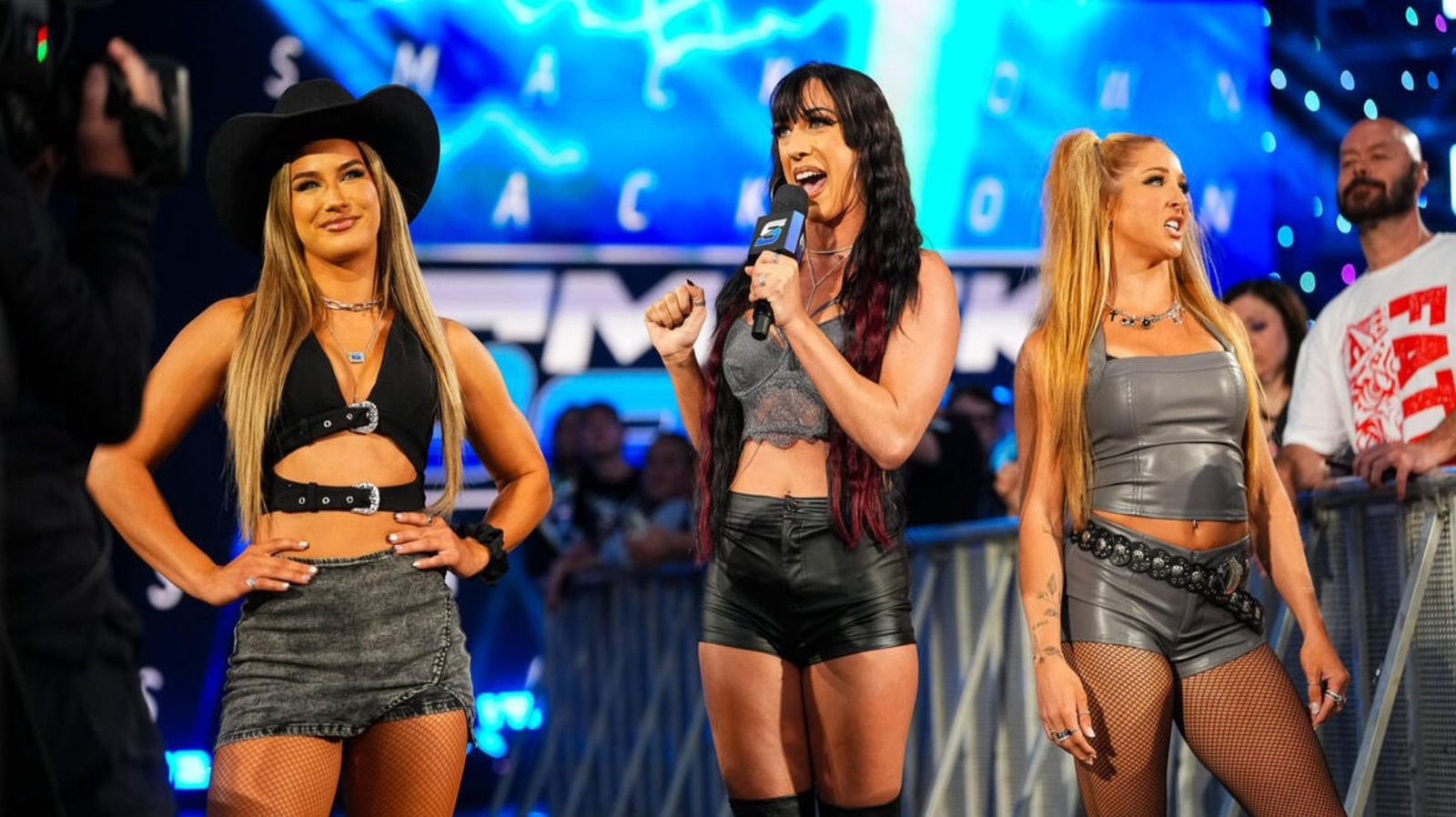
Fatal Influence are testing the durability of WWE's tag team division
3 minutes ago
Sami Zayn’s title reign remains the flashpoint of modern WWE booking
4 minutes ago
Why nostalgia-heavy podcasting is failing the current wrestling product
5 minutes ago
Cody Rhodes and CM Punk are drifting toward a collision course
5 minutes agoSummerSlam's new match has the internet split right down the middle
46 minutes ago
Nick Aldis is stepping back into the ring for SummerSlam
46 minutes agoMore Analysis
Punk and Reigns face off on Raw and the timing is completely deliberate
3 months, 3 weeks ago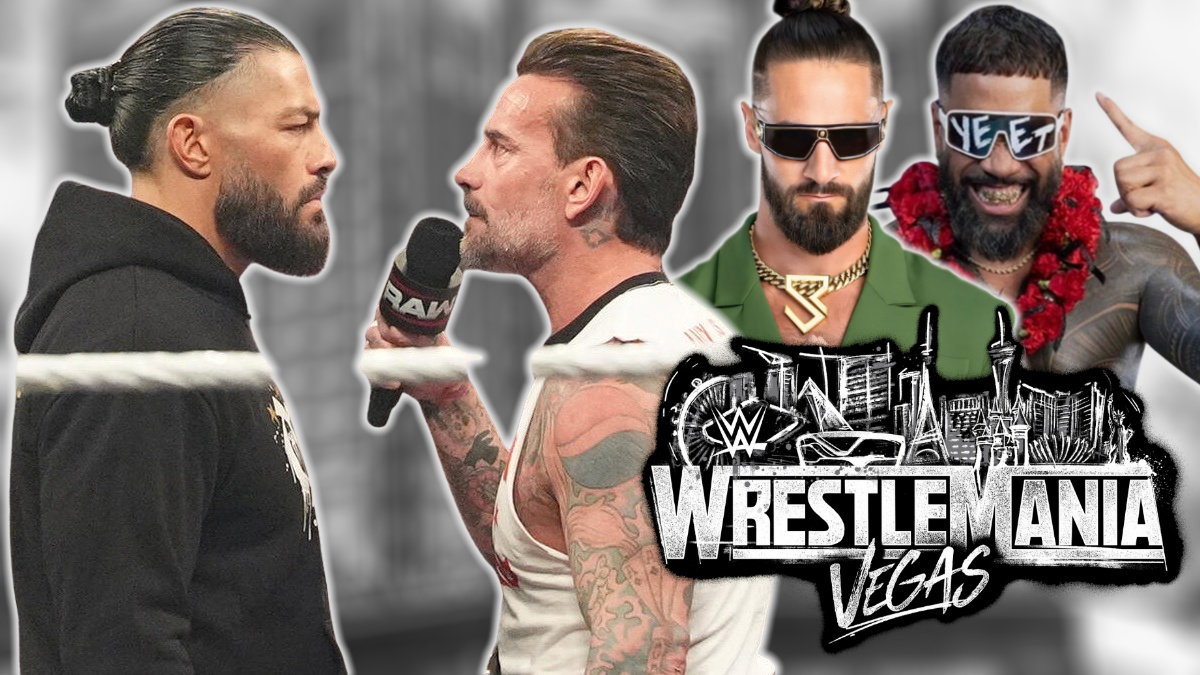
CM Punk and Roman Reigns are on a collision course that will tear Raw apart
3 months, 3 weeks ago
CM Punk and Roman Reigns are finally set to collide on Raw
3 months, 4 weeks ago
Roman Reigns vs CM Punk is the collision course WWE needs right now
3 months, 3 weeks ago
Roman Reigns and CM Punk are about to remind everyone who actually runs WWE
3 months, 4 weeks ago