The medical bill comes due
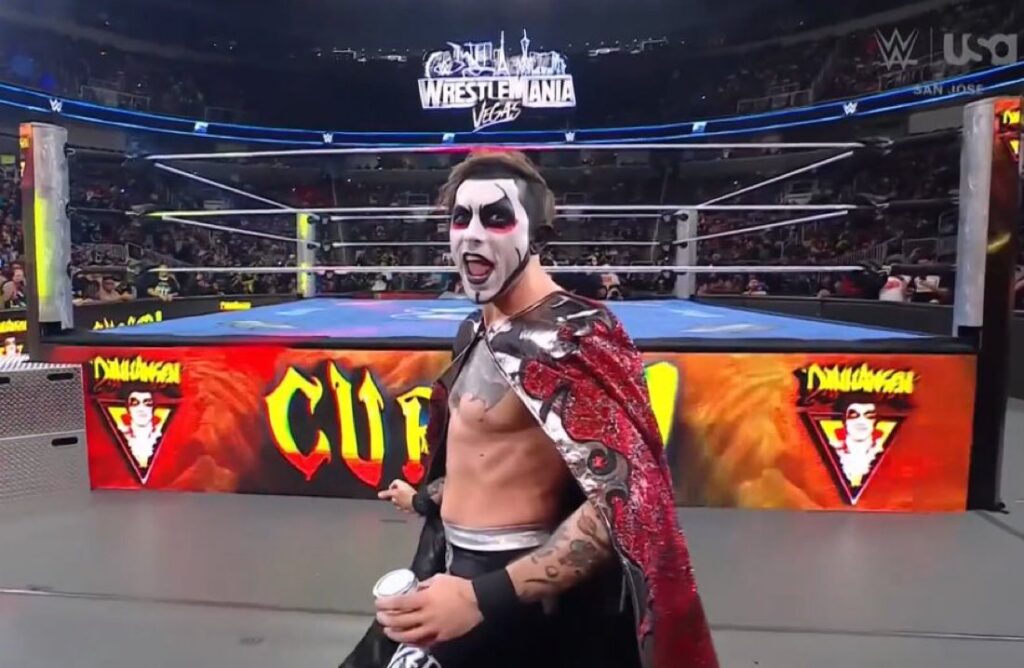
Danhausen is officially an active, medically cleared, in-ring competitor for WWE. It finally happened on SmackDown. He stepped through the ropes, faced Kit Wilson, and secured a pinfall victory in his long-awaited debut match.
But the actual story here is not the victory. The story is the timeline.
He made his high-profile WWE debut back in February at the Elimination Chamber premium live event. Today is April 11. That is a gap of nearly eight weeks between showing his face on camera and actually taking a flat-back bump on a blue canvas. In modern professional wrestling, a delay of that magnitude points directly to the medical clearance protocol.
WWE does not mess around with physical evaluations anymore. You can have a viral character. You can move merchandise. You can pop a stadium crowd in February. But you are not stepping into a sanctioned match until the medical staff in Pittsburgh signs off on your structural integrity.
The Performance Center rebuilding phase
This two-month lag time tells us exactly how WWE treats outside talent transitioning into their locker room. They tear down your medical history. They evaluate everything before allowing a televised match.
A standard WWE clearance protocol focuses on several key stress points:
- Spinal compression and neck stability
- Cardiovascular baseline metrics
- Joint mobility, specifically knees and shoulders
If there is even a hint of structural weakness, you get sidelined until your baseline numbers improve. The medical team clearly put Danhausen through an exhaustive conditioning camp at the Performance Center before allowing him to wrestle on live television.
We have seen this exact cautious onboarding before. Jade Cargill spent months training in Orlando before taking a meaningful bump on television. The company uses that time to strip down a wrestler's biomechanics and rebuild them for the specific rigors of a WWE ring.
A WWE ring is notoriously unforgiving. It is an 18-by-18 foot structure built for durability, not comfort. The turnbuckles are incredibly stiff. The ropes are elevator cables wrapped in tape, not the soft wire used in other promotions. Taking a bump in a WWE ring requires a very specific neck and spinal bracing technique to prevent whiplash.
Pacing issues and physical realities
You could see the physical realities of that transition during the match on SmackDown.
Kit Wilson was the ideal test dummy for this clearance exam. Wilson works a highly controlled, incredibly safe style. He knows how to protect an opponent who might be dealing with ring rust. He bumps flat, he feeds into offense predictably, and he does not force a frantic pace.
When a talent has not worked a full-speed televised match in months, you do not throw them in there with a chaotic high-flyer. You pair them with a grounded worker who can control the heart rate of the match. Wilson executed that job perfectly.
Yet, the match still exposed some glaring pacing issues.
Danhausen looked a half-step behind the standard WWE television speed. His cardiovascular conditioning simply did not look ready for a high-intensity sprint. The heavy breathing after a basic corner sequence was obvious. The character work and the crowd connection masked the gaps, but the ring rust was entirely visible to anyone watching his footwork.
This is the reality of ring fitness. It is a completely different beast than gym fitness. You can run on a treadmill for hours. You can squat heavy weights. None of that prepares your lungs for the violent deceleration of a professional wrestling bump.
The anaerobic threshold required for a televised match is staggering. Your muscles are completely starved for oxygen, yet you are still expected to safely lift and base for a 200-pound opponent. If you lose your breath, you lose your base. If you lose your base, somebody gets dropped on their neck.
Booking failures and the road ahead
The eight-week delay between Elimination Chamber and SmackDown absolutely hurt his momentum. Arriving at a massive February event only to wait until April to wrestle is terrible television pacing.
The booking team actively sacrificed narrative heat for medical certainty. It cooled off his character significantly, turning a white-hot debut into a slow, meandering mid-card introduction. Nobody benefits from waiting two months for a five-minute television match.
Furthermore, feeding Kit Wilson to him does Pretty Deadly zero favors. Wilson took a clean loss just to serve as a physical clearance test for a new signing. It is a frustrating spot for a talented tag team to occupy. They are better than being used as a high-priced medical exam.
Now, the focus shifts to how Danhausen's body recovers over the next 48 hours.
A debut match spikes the heart rate and floods the nervous system with adrenaline. That adrenaline masks micro-tears in the muscle fibers and dulls joint pain. How his body responds to the delayed onset muscle soreness will dictate his schedule heading into the summer.
Do his knees swell? Does his lower back lock up? The medical trainers will be monitoring his mobility backstage closely.
WWE will likely keep his match volume extremely low in the short term. Expect to see him booked in heavily protected tag team matches or brief squashes. They are not going to risk a soft tissue injury with WWE Backlash just 28 days away on May 9. If they want him on that premium live event, his physical conditioning needs to improve rapidly.
The real test of his physical durability will not happen on Friday nights. The real test comes on the untelevised live event loop. Working a match on Friday, driving 300 miles, working again on Saturday, and doing it all over again on Sunday.
That weekend loop is what breaks down cartilage. That is what frays ligaments. That is where the reality of the WWE schedule destroys talent who are not properly conditioned. You sleep in bad hotel beds. You sit in rental cars for four hours with a bruised lower back. Then you have to lace up your boots and take twenty bumps for a crowd in a minor league hockey arena.
For now, he has survived the first hurdle. He took the bumps. He secured the win. But the physical toll of this job has only just begun. The wait is over, and the real physical grind starts today.