The Best Wrestler You've Never Heard Of
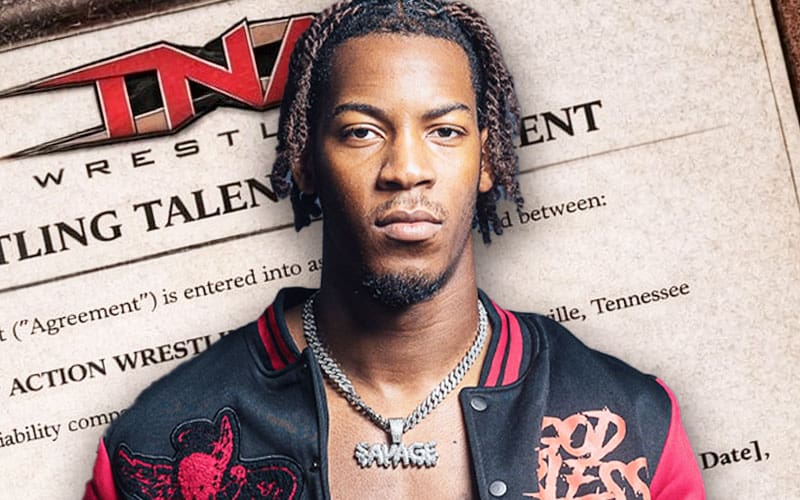
Let's get this out of the way. The news that TNA Wrestling has reportedly signed Ricky Sosa is either the most galaxy-brained, 5D chess move Scott D'Amore has ever made, or it's the beginning of a beautiful, slow-motion train wreck. There is no in-between. The wrestling internet is doing what it does best: furiously googling a name that has, until now, only been whispered in reverent tones in the dankest European gyms and by the most dedicated tape-trading smarks.
For the uninitiated, Ricky Sosa is a ghost story told by wrestlers. He's the guy who had a 60-minute iron man match with a future NXT UK champion in a half-empty civic center in Hamburg and got a standing ovation from the thirty people who saw it. He is, by all accounts, a wrestling savant. A technical wizard who can transition from a wristlock to a devastating brainbuster so smoothly it looks like a glitch in the matrix. They call him the "Vienna Violator," and he's left a trail of five-star classics and burned bridges all across the European indie scene.
A History of Headcases and Heartbreak
Here's the rub. Sosa is also, reportedly, a world-class headache. He's the modern embodiment of the brilliant, tortured artist who is fundamentally allergic to playing the game. Stories abound of him walking out of promotions over creative disputes, arguing with bookers about the psychological realism of a high-spot, or just generally being a nightmare to work with. He is the ghost of CM Punk's ROH run, the specter of Low Ki's entire career. He's a guy who loves pro wrestling so much he might just hate everyone who's a part of it.
And TNA, bless their hearts, just strapped a rocket to him. This is so TNA it hurts. This is the company that signed Pacman Jones. This is the company that had a prime Desmond Wolfe (the legendary Nigel McGuinness) and somehow failed to make him the face of the promotion. Their history is littered with high-concept gambles that exploded on the launchpad. For every success story like the X-Division, there's a cautionary tale of a can't-miss prospect who, well, missed. Spectacularly.
This signing feels different from grabbing ex-WWE talent like Nic Nemeth or Mustafa Ali. Those are known quantities. They are professionals who understand the North American television system. Sosa is a wild card pulled from the very bottom of the deck. It's a bet on pure, unadulterated workrate. It's a statement that TNA wants to be the home of the best in-ring action, no matter the baggage that comes with it.
The Two Timelines: A New Kurt Angle or Another Low Ki?
We are standing at a fork in the timeline, and the fate of the TNA midcard hangs in the balance. In one reality, the Kurt Angle timeline, this is a masterstroke. Sosa arrives, humbled by the big-money contract and the national stage. He realizes this is his last, best chance to not be a trivia question. He puts his head down, tears the house down every single week, and has the TNA run everyone wishes Nigel McGuinness had. Imagine Ricky Sosa vs. Josh Alexander in a pure wrestling clinic at Slammiversary. Picture him against Speedball Mike Bailey in a match that breaks the star-rating system. Think of him and Mustafa Ali crafting a story so intricate it makes you weep. This is the dream. This is the timeline where TNA looks like a promotion run by geniuses.
Then there's the other timeline. The Low Ki timeline. It's darker. It's funnier for the memes, but tragic for the wrestling. Sosa comes in hot, has a few bangers, and then the friction starts. He doesn't like the travel schedule. He doesn't like his opponent's finish. He sends a series of cryptic, passive-aggressive tweets that sends the locker room into a frenzy. He gets into a legitimate backstage shouting match with a veteran like Frankie Kazarian. The pressure of American TV and the TNA schedule grinds him down. He no-shows a pay-per-view, citing a dubious injury. Within a year, he's released, and becomes another punchline, another "LOLTNA" moment that the company has fought so hard to escape.
So, You're Saying There's a Chance?
Here's the critical flaw in the plan: TNA is betting that its much-improved culture can fix a guy who has resisted fixing at every turn. They're betting that the promise of a steady paycheck and a shot at glory in America will tame a guy who has spent his career proving he values his own artistic integrity—or stubbornness, depending on your view—above all else. That's a hell of a risk. You could sign two younger, hungrier, less problematic wrestlers for the price of one Ricky Sosa and the antacids required to manage him.
But you don't get credit for playing it safe. In a world where WrestleMania 41 is just weeks away from dominating the entire discourse, TNA needed to make a move that got people talking. And boy, are we talking. The question isn't whether Ricky Sosa can wrestle. We know he can, probably better than almost anyone on that roster. The question is whether a guy who has treated his own career like a piece of performance art can finally become a professional wrestler. It's the ultimate risk, and for a company that's finally clawing its way back to relevance, it's a fascinating, terrifying, and utterly compelling gamble. Place your bets now. It's either going to be legendary, or it's going to be a dumpster fire. There is no other way.