The Anatomy of Friday Night Chaos
There are exactly 23 days left until WrestleMania 41 Night 2. In exactly 23 days, Cody Rhodes will walk into Allegiant Stadium in Las Vegas to defend the WWE Championship.
His opponent is a ghost from his past. But on Friday night, the narrative took a bizarre detour.
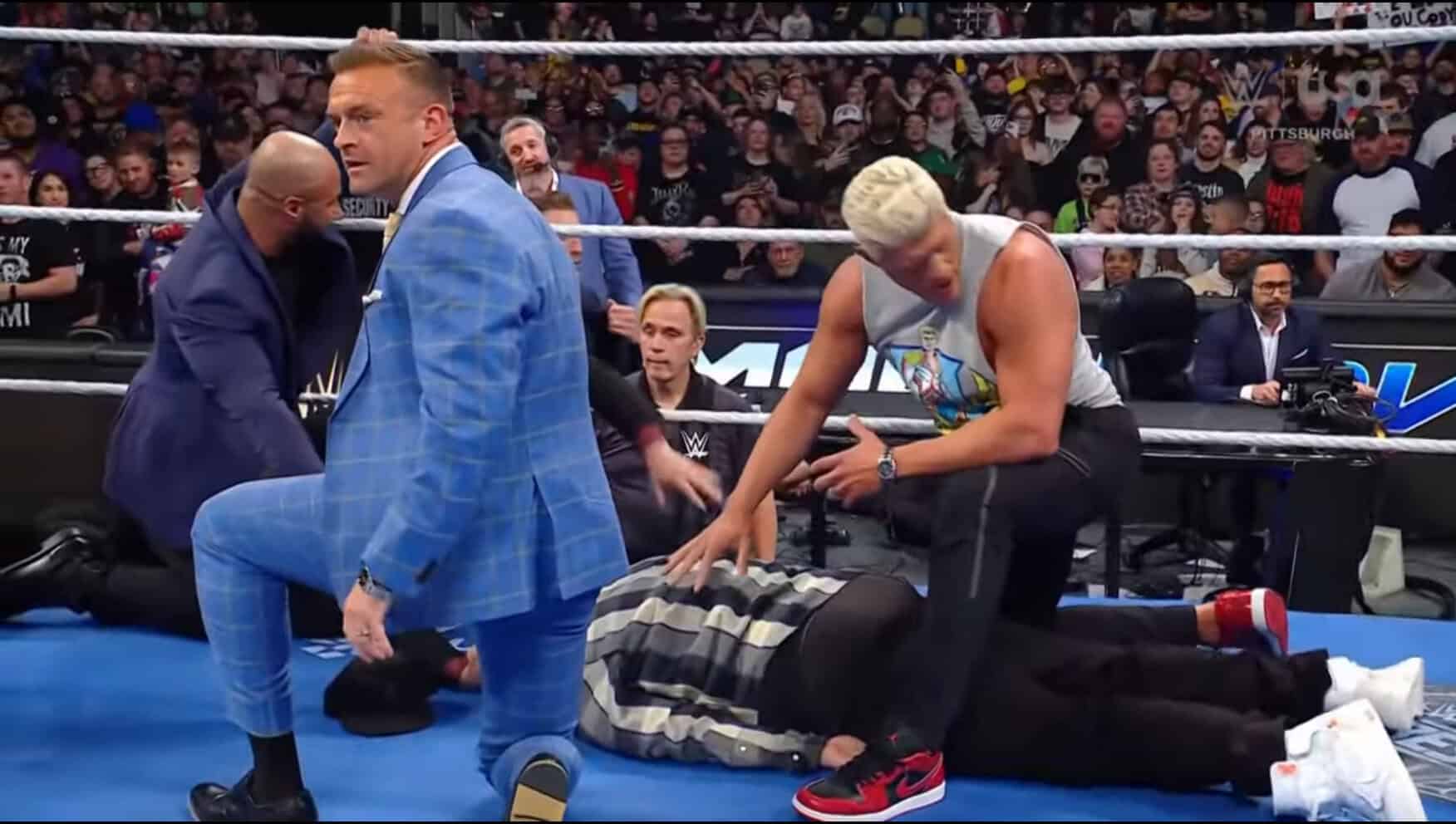
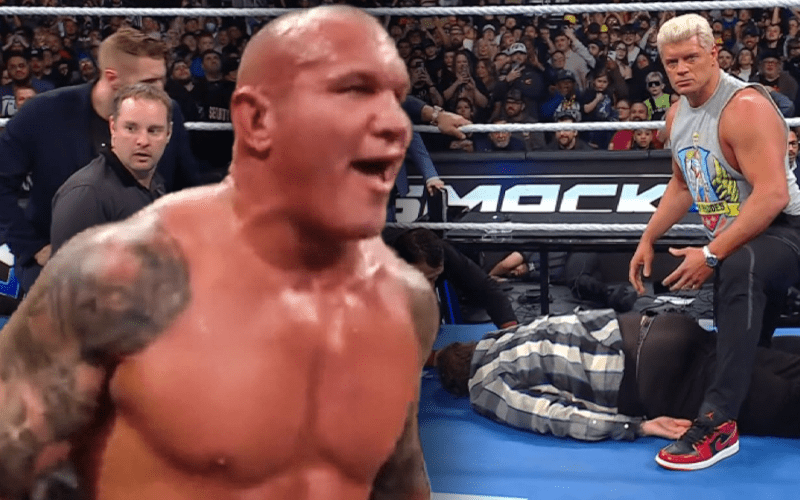
SmackDown went off the rails on March 27. As Ringside News reported, it wasn't just a chaotic brawl between the champion and his former mentor. It ended with Randy Orton delivering an RKO to Jelly Roll.
Yes, the Grammy-nominated artist took the bump. It was a chaotic visual.
But let's look past the viral clip. Let's look at the numbers and the underlying structure of this feud.
A Shift in the Power Dynamic
When you strip away the celebrity involvement, you are left with 18 years of history. Randy Orton and Cody Rhodes first aligned in 2008.
The Legacy faction was built around Orton's status as a top-tier main eventer and Rhodes as the hungry prospect.
At that time, Orton had already cemented himself. He won his first World Heavyweight Championship at SummerSlam in 2004.
Today, he holds exactly 14 World Championships. He is 45 years old. Rhodes is 40.
The dynamic has completely flipped over the last two decades. The master is now the challenger. The protege is the champion.
The Legacy Data
To truly understand the weight of this upcoming match, we must wind the clock back to the late 2000s.
When Legacy formed, Rhodes was just a 23-year-old rookie. He was a second-generation wrestler burdened by the massive shadow of his father's name.
Orton was 28, already a made man in the industry. For two years, Orton subjected Rhodes to intense psychological pressure under the guise of mentorship.
The statistics of their partnership are incredibly telling. During their time together, Orton captured the WWE Championship multiple times.
Rhodes, meanwhile, was relegated to tag team duty and taking punishment on Orton's behalf.
It was an entirely parasitic relationship. Orton extracted all the value from Rhodes to protect his own championship reign.
Now, 16 years after the group dissolved, the roles are entirely reversed. Rhodes holds the ultimate prize.
Orton is the aging predator looking for one last major kill before his career ends.
The narrative symmetry is perfect. The timeline aligns perfectly.
The Metrics of Violence
Let's break down Orton's physical metrics. At 45, his pacing has slowed, but his efficiency remains untouched. He doesn't waste motion.
Every strike, every stomp is calculated. He has been using the RKO as his primary weapon since 2003.
That is 23 straight years of refining a single maneuver. The geometry of the move is what makes it so dangerous.
Orton drops his center of gravity in a fraction of a second. The impact is driven into the mat by Orton's 250-pound frame.
Most finishers require a setup phase. A grapple, a lift, a corner charge. The RKO requires nothing but proximity.
If you are within a three-foot radius of Orton, you are in the danger zone. The suddenness is a statistical anomaly in professional wrestling.
Tactical Spatial Awareness
Let's look at the spatial awareness during the brawl itself. Before the celebrity interference, Rhodes had successfully pinned Orton against the barricade.
Rhodes was controlling the tie-up, utilizing a heavy collar-and-elbow grip to restrict Orton's right arm.
It was smart, fundamental wrestling applied to a chaotic street fight scenario. You neutralize the dominant limb, you neutralize the offense.
Orton was losing the tactical exchange. He needed a circuit breaker to reset the momentum.
That is the analytical reality of what Jelly Roll provided. He wasn't just a guest star. He was a human shield that altered the spatial dynamics of the fight.
By the time Orton delivered the RKO to the singer, he had bought himself the three seconds of separation he needed to escape.
The Television Draw
Cody Rhodes is currently in the absolute prime of his drawing power. He captured his first WWE Championship at WrestleMania 40, and the momentum has barely dipped.
Averages suggest SmackDown draws massive viewership when these two share the screen.
The historical weight of their 18-year relationship translates directly into television ratings. It is a proven draw.
But the creative execution must match the statistical drawing power.
Friday's decision to insert a musician into the physical climax of the segment is deeply frustrating for anyone analyzing the actual wrestling product.
If you trace the lineage of great WrestleMania main events, they rarely rely on this kind of stunt booking in the final month.
Think back to the great builds. The focus narrows. The animosity sharpens. The peripheral distractions fall away.
Instead, we got a viral pop. It works for the algorithm, but it arguably damages the suspension of disbelief required for a blood feud.
Looking Ahead to Las Vegas
Looking ahead to April 20, the tactical matchup is compelling. Rhodes will likely target Orton's historically fragile shoulders.
Orton has suffered multiple shoulder subluxations throughout his long career. It is the one glaring weak point in an otherwise pristine physical profile.
If Rhodes can isolate the left arm, he neutralizes the RKO. The strategy is entirely logical.
Conversely, Orton will look to ground Rhodes. He will use side headlocks, heavy strikes, and slow, deliberate pacing.
He wants to drag Rhodes into deep waters. The 20-minute mark is where Orton historically thrives.
Rhodes needs a high-tempo sprint. Orton needs a grinding marathon.
WrestleMania Pedigree
Let's look at their respective histories on the biggest stage. Orton has been a fixture at WrestleMania for two decades.
He knows the unique pressure of the event. He understands the unique acoustics and pacing required for a massive stadium show.
Rhodes is no stranger to the main event either, having completely redefined his career trajectory since returning to the company.
But facing Orton at WrestleMania is a different psychological test entirely.
Orton's 14 World Championships were not won by accident. They were won through ruthless, cold calculation in high-pressure situations.
He does not panic. He does not rush. He waits for a single mistake.
The RKO on Jelly Roll was a chaotic preview of that ruthlessness. It was a message sent directly to the champion.
The Danger of Distraction
This brings us back to the core issue with Friday's broadcast. When you have a story this rich in data and history, distractions are actively harmful.
The inclusion of a celebrity bump actively works against the serious tone required for a World Championship blood feud.
It reduces a 23-year career of violence into a cheap social media clip.
Wrestling relies on the illusion of danger. Orton has spent his entire adult life building an aura of unpredictable malice.
Hitting his finish on a country singer diminishes that aura. It turns a lethal maneuver into a party trick.
Rhodes deserves better. Orton deserves better. The audience paying premium prices for Allegiant Stadium tickets deserves better.
There are exactly 23 days left to course-correct. The formula is right there in the history books.
Keep the focus strictly on the two men in the ring. Let the 18 years of shared history carry the weight of the promotion.
If WWE can strip away the circus elements, they have a tactical masterpiece waiting to happen in front of 65,000 fans.
Read Next
- Is Jelly Roll Signing With WWE For A WrestleMania 41 Match?
- SmackDown in Pittsburgh proved WWE is completely coasting to WrestleMania 41
- WrestleMania 41 pressure mounts: What to expect from SmackDown tonight
- Roman Reigns will take back the WWE Championship in Vegas
- 🏆 WrestleMania 41 — Full Coverage Hub