The cost of a mid-card education
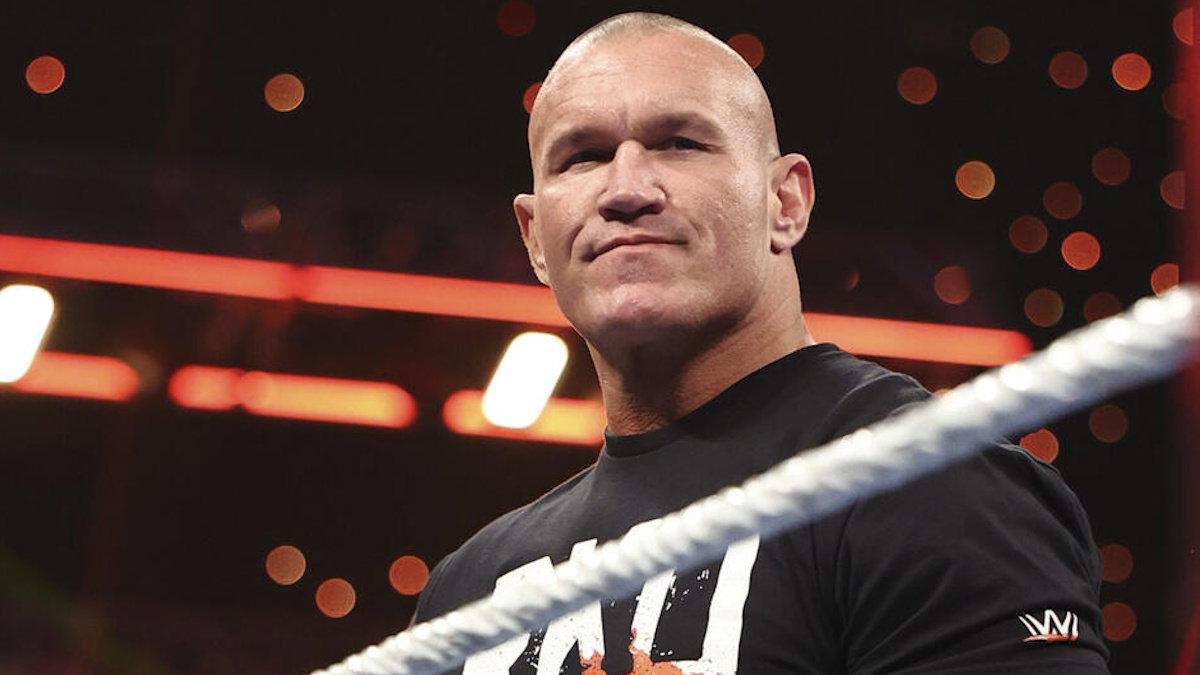
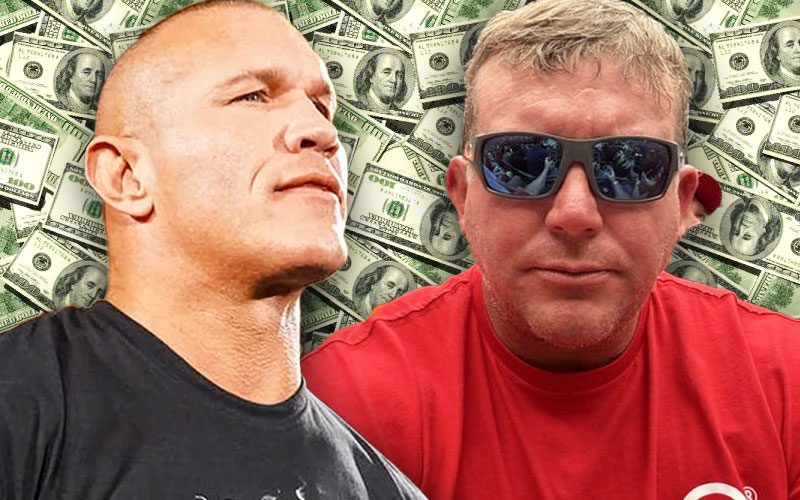
In the high-stakes economy of professional wrestling, $25,000 is an oddly specific number. It is not quite enough to buy a luxury tour bus, but it is significantly more than the average rookie downside guarantee in 2009. When Randy Orton revealed this week that Ted DiBiase Jr. still owes him that exact figure from their time together in Legacy, he wasn't just airing a grievance; he was providing a statistical anchor for one of the most lopsided developmental experiments in WWE history.
We are currently sitting in the shadow of WrestleMania 41, an event where Cody Rhodes headlined both nights and Randy Orton continued his run as the most efficient veteran on the roster. Seeing DiBiase Jr. resurface in the peripheral orbit of the industry recently serves as a jarring reminder of the Legacy Power Law. In 2008, the faction was positioned as a trio of equals, three multi-generational stars with identical trajectories. Today, two of them are the pillars of a $10 billion global media empire, and the third is a statistical outlier of the worst kind.
The $25,000 debt is likely a relic of the 'paying dues' era, a period where veterans often fronted costs for younger talent or expected 'taxes' for their mentorship. In Orton’s case, the ROI on his time was massive for Cody but clearly a total loss for Ted. Looking back at the data from 2009, DiBiase Jr. was involved in 146 matches across TV and house shows. He was being groomed for the top, yet he never managed to break the ceiling that his peers shattered with surgical precision.
The statistical divergence of Legacy
To understand why this debt matters in 2026, you have to look at the divergence in career longevity and output. Since the faction's dissolution in 2010, Randy Orton has added 10 world titles to his resume. Cody Rhodes left the company, rebuilt an entire industry in his image, and returned to finish a story that has now seen him main-eventing the last three WrestleManias. Meanwhile, DiBiase Jr.’s televised win percentage plummeted from a respectable 58% in 2009 to a vanishing point by 2013.
The math of their success is even more staggering when you calculate match-time value. At Allegiant Stadium last night, Cody Rhodes likely earned more in 20 minutes than Ted DiBiase Jr. earned in his entire final year with the company. Orton’s claim suggests that while he was teaching DiBiase the psychology of the RKO, he was also subsidizing a lifestyle that the younger star's talent couldn't eventually support. It is a classic case of betting on the wrong horse in a high-variance industry.
The Million Dollar Son’s negative equity
There is a cruel irony in the son of the Million Dollar Man being the one in financial arrears to his former mentor. DiBiase Jr.’s run with the Million Dollar Championship lasted 515 days in 2010, but the title was a gimmick that masked a fundamental lack of connection with the audience. While Cody was developing the 'Dashing' persona and Orton was refining the 'Viper' mechanics, Ted was static. He was a 235-pound placeholder who never found a second gear.
The debt also highlights the shift in locker room culture. In 2026, the idea of a veteran lending a rookie $25,000 seems archaic. Modern talent are corporate athletes with financial advisors and transparent pay scales. In 2009, the industry was still transitioning out of the Wild West. Orton’s reveal is a window into a time when the power dynamics were enforced by personal IOUs rather than HR departments. It suggests that Legacy wasn't just a faction; it was a hierarchy where the bill eventually came due.
A cautionary tale for the NIL era
Orton’s public call-out serves as a necessary reality check for the current crop of NXT talent and NIL recruits. Success in this business is not a linear progression from pedigree to profit. DiBiase Jr. had the look, the name, and the endorsement of the top star in the company, yet he ended up as a footnote. His career trajectory is a warning that being 'next' is a temporary status with a high burn rate. If you aren't evolving, you are just accumulating debt—both literal and professional.
The negative observation here is that the WWE developmental system of the late 2000s failed Ted DiBiase Jr. just as much as he failed it. Placing a second-generation talent in a high-pressure faction with a volatile Randy Orton was a sink-or-swim move that ignored the need for individual character growth. By the time Legacy ended, Ted was a shell of a performer, unable to stand on his own two feet once the protection of the group was removed. He was essentially wrestling in negative equity for the remainder of his contract.
The final audit
As we look at the landscape of the WWE in April 2026, the Legacy era feels like a lifetime ago. Cody is the king of the mountain, and Orton is the elder statesman who can still deliver a 4.5-star match whenever the mood strikes him. The $25,000 claim is the final audit of a project that yielded two of the greatest of all time and one of the most prominent 'what ifs' of the modern era.
Orton likely doesn't need the money. He has made tens of millions of dollars over a 24-year career. Bringing it up now is a tactical strike, a way to remind the world that while Legacy was a launching pad for some, it was a crash site for others. In a world of scripted outcomes, the financial reality of the business remains the most honest metric we have. Ted DiBiase Jr. might have been born into the Million Dollar Gimmick, but he’s currently twenty-five thousand dollars short of living up to it.