The death of the three-count is real
Go watch a random match on Raw or SmackDown tonight. You will see a dozen superkicks, three suicide dives, and at least one guy getting dropped on his head with a move that looks like it should end a career. The referee counts to two. The crowd pops, but nobody actually believes the match is over. We have entered the era of the transition finisher, where moves that used to be legendary are now just mid-match cardio.
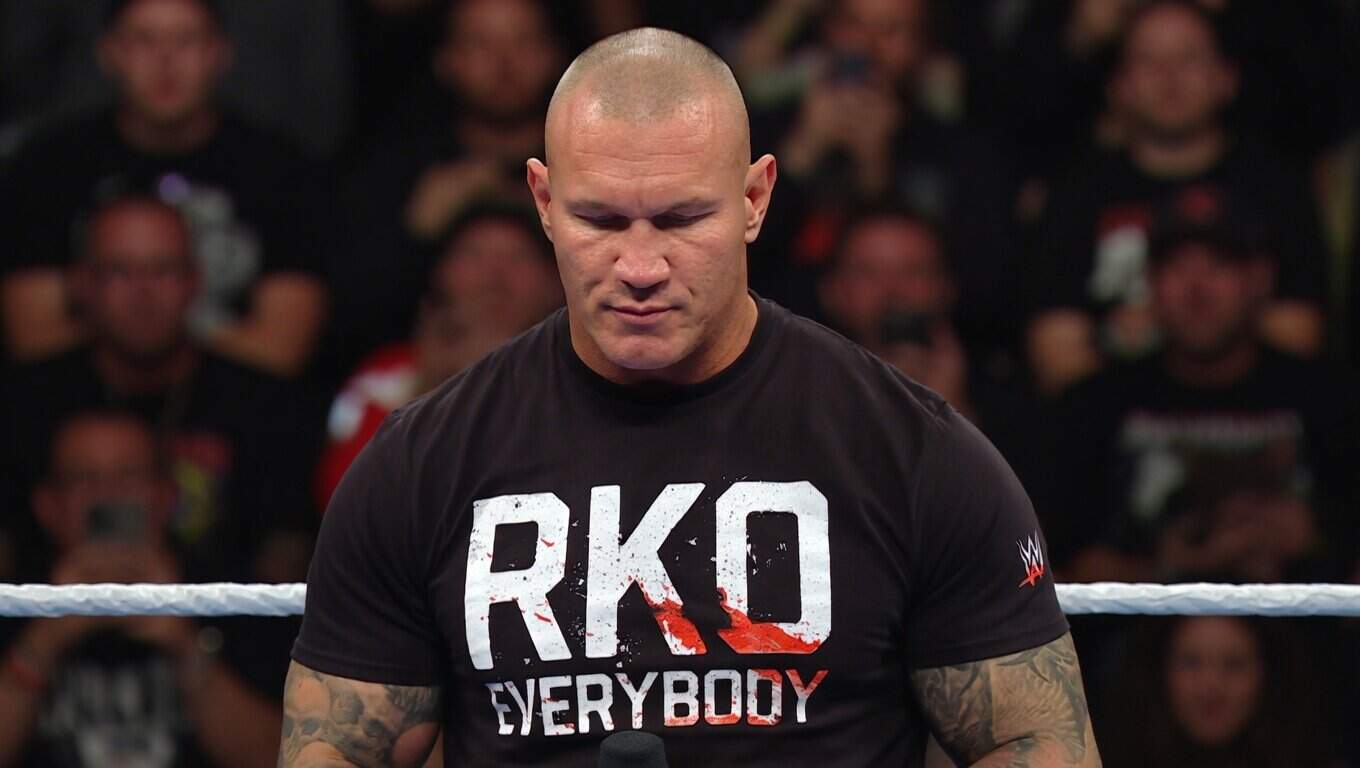
Randy Orton does not play that game. In a world where everyone is doing a 450-splash into a Canadian Destroyer for a long two-count, the RKO remains the most protected piece of property in the industry. It is the only move left that actually feels like a lights-out scenario. If the RKO hits, the bell is ringing. Period.
Orton recently sat down to talk about his legacy, and he dropped a truth bomb that makes perfect sense if you have followed his career for the last two decades. He credits Vince McMahon for the fact that his finisher still carries weight. According to Randy, Vince was obsessed with making sure that once that move landed, it was over. McMahon saw the RKO as a kill shot and he refused to let the writers or other wrestlers dilute it for a cheap pop.
The Vince McMahon protection program
It is fashionable to bury Vince McMahon in 2026, and for plenty of valid reasons, but you cannot deny his eye for a trademark. He knew exactly what he had with Randy. When Orton first started using the RKO, it was just a variation of the Diamond Cutter. It was fast, sure, but it had not yet become the cultural phenomenon that it is today. Vince saw the potential for a move that could happen at any second, from any angle.
That is always going to be a kill shot.
Orton made it clear that McMahon played a huge role in keeping that move sacred. In a recent interview with WrestlingNews.co, Randy explained that the protection of the RKO was not a happy accident. It was a conscious creative choice made at the highest level. Most wrestlers want their opponents to kick out of their finishers to create drama. Randy and Vince took the opposite approach: the drama comes from the *threat* of the move, not the escape from it.
Think back to WrestleMania 31. Seth Rollins is going for the Curb Stomp. Orton pops him up into the air and catches him on the way down. The stadium erupted because we knew it was over before Seth even hit the canvas. That is the power of a protected finish. You do not need twenty minutes of false finishes when you have one move that the audience actually respects. It is a level of psychological warfare that most of the current roster has completely forgotten how to use.
The RKO as a crutch for the Viper
Here is the part where I get critical, because even a legend like Randy Orton has flaws. While protecting the RKO has kept him relevant as he approaches his late 40s, it has also turned some of his matches into a waiting game. There is a certain segment of the audience that checked out of Randy’s work years ago because they know the formula. He sells the leg, he does the Garvin Stomp, he hits the hanging DDT, and then we wait for the RKO.
Sometimes it feels like Randy is wrestling for the GIF rather than the match. At WrestleMania 41 in Las Vegas, we saw a glimpse of this. While Cody Rhodes and Roman Reigns were putting on a clinic in the main event, Orton’s match felt like it was on autopilot. He is so good at the basics that he can sleepwalk through 14 minutes of a match and still get the biggest reaction of the night just by hitting his pose. It is efficient, but it can be boring for fans who want to see him actually push himself.
The protection of the RKO has allowed Randy to be lazy. He does not have to invent new sequences or take big risks because he has the ultimate trump card in his back pocket. Why bother taking a bump off the top rope when you can just stand in the middle of the ring and wait for your opponent to jump into your arms? It is brilliant business, but it is mediocre art. We are watching a guy who knows he can win with a single punch, so he has stopped learning how to box.
The legacy of the Outta Nowhere era
Despite the predictability, you cannot argue with the results. The RKO is one of the few things in wrestling that has truly transcended the bubble. Your grandmother knows what an RKO is. People who haven't watched a minute of WWE since the Attitude Era still know the meme. That does not happen without the discipline that Orton and McMahon showed for over twenty years.
Look at the numbers. Since his debut in 2002, Randy has been at the top of the card. He won his first world title in 2004 and he is still a threat to any champion in 2026. Very few people have kicked out of the RKO in a way that actually mattered. When it happens—like when John Cena did it during their endless series of matches—it feels like a legitimate earthquake. That is because the baseline expectation is a three seconds count and a trip to the back.
Orton is the last of a dying breed. He is a bridge to an era where the characters were bigger than the moves and the finishes actually meant something. With WWE Backlash 2026 coming up in a few weeks, everyone is wondering who is going to be the next victim of the Viper. It almost doesn't matter who he faces. The story is always the same: they try to build momentum, they get a little too confident, and then they disappear into the mat.
What happens when the Viper finally leaves?
We are looking at a WWE that is rapidly changing. The TKO era is much more focused on high-workrate athletes and international expansion. But as much as the product evolves, they are going to miss Randy Orton when he finally decides to hang up the boots. You cannot manufacture the kind of aura he has. You can teach a kid how to do a 630-splash, but you cannot teach them how to make a single move feel like the end of the world.
The RKO is Randy’s pension plan. It is his legacy. And as much as he might thank Vince McMahon for protecting it, Randy is the one who had the patience to keep it special. He didn't demand to use it five times a match. He didn't let every mid-carder kick out of it on a Tuesday night in Des Moines. He understood that in wrestling, the most powerful thing you can have is the ability to end a conversation whenever you want.
So next time you see some indie darling hitting three different finishers in a row for a 2.9 count, just remember the Viper. He only needs one move. He only needs one second. And thanks to a billionaire’s obsession with the kill shot, we all know exactly what happens next.