The Nick Khan ultimatum and the road to Lyon
The news cycle following WrestleMania 41 has been dominated by a single name that many assumed was a permanent fixture of the history books. Paige is returning to a WWE ring. After eight years of medical red tape, career-threatening neck injuries, and a high-profile stint elsewhere, the woman who once claimed to be the 'Anti-Diva' is back on the payroll. This isn't a legends contract or a brand ambassador role. It is a full-time wrestling return aimed directly at the May 9th clash at Backlash in Lyon.
The details emerging from her meeting with WWE CEO Nick Khan suggest a process that was far more corporate than cinematic. According to sources close to the situation, Khan was blunt about the requirements for her re-entry. The mandate was simple: her neck had to be medically cleared by WWE’s specific team of neurologists, and she had to pass a standard drug test. There was no room for negotiation or legacy favors. In a company now run with the cold efficiency of a talent agency, nostalgia is only valuable if the insurance policy is sound.
Paige reportedly met with Khan to discuss the chain of events that led to this moment. The conversation was stripped of the usual wrestling hyperbole. Khan told her there were two things required: her neck needed to be okay and the drug test had to be clean. It is a stark reminder of how much the internal culture has shifted since her departure in 2018. The wild-west days of the Divas era are dead. In their place is a professionalized system that views talent as high-performance assets rather than television characters.
The technical decay of a pioneer
Watching Paige’s work during her time away from WWE reveals a wrestler caught between her past and her physical limitations. The technical aggression that defined her 2014 debut against AJ Lee has often been replaced by a safer, more methodical pace. In 2026, the question isn't just whether her neck can hold up. It is whether her cardiovascular conditioning can match a roster that has spent the last five years training like Olympic athletes at the Performance Center. The 'Anti-Diva' gimmick worked when the competition was lacking; it may look antiquated against the current crop.
There is a legitimate concern that Paige’s move set has become a greatest-hits compilation rather than a functional offensive system. The Ram-Paige—that snapping cradle DDT—remains a visual treat, but it requires a level of neck-bridge strength that she might be hesitant to utilize. Her reliance on the PTO (Paige Tap Out) is also a strategic risk. Inverting an opponent into a cloverleaf puts significant strain on the practitioner's own cervical spine during the setup. If she can't execute the torque required to make the hold look devastating, the move loses its psychological edge.
Critics will point to her recent tape and note a decrease in explosive lateral movement. She has become a 'stationary' striker, favoring heavy forearms and headbutts over the high-speed transitions she was known for a decade ago. In a division where the average match pace has increased by nearly 20 percent since 2017, this lack of mobility is a glaring tactical weakness. If she cannot find a way to navigate the ring with her old fluidity, she risks being lapped by younger, faster opponents who don't have a decade of scar tissue to manage.
The Stratton problem
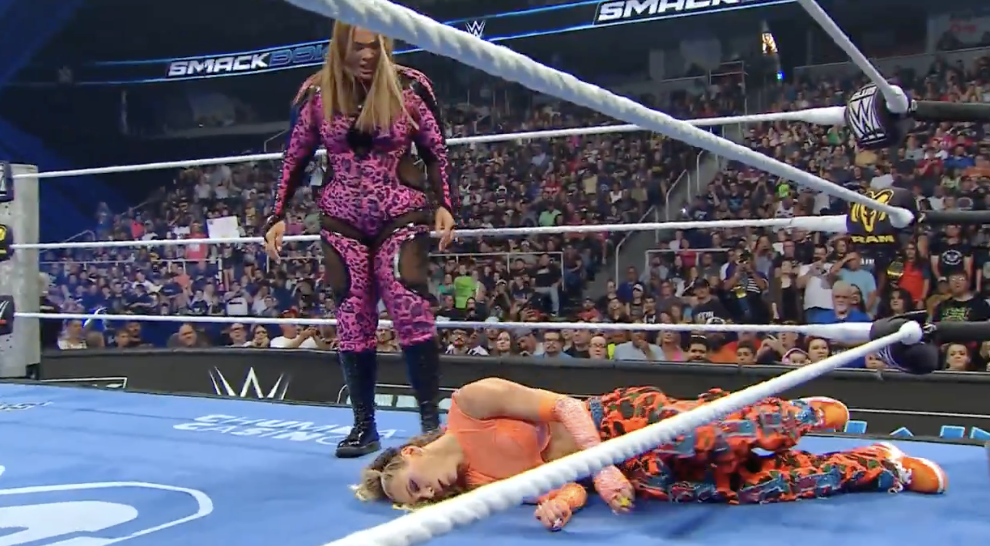
Tiffany Stratton is the nightmare match-up for a returning veteran with a fragile neck. Stratton isn't just a wrestler; she is a high-level gymnast with a strength-to-weight ratio that rivals most of the male roster. Her offense is built on sudden, violent bursts of athleticism. When Stratton hits a Prettiest Moonsault Ever, she isn't just landing a move; she is dropping 140 pounds of focused kinetic energy directly onto her opponent’s torso. For someone with Paige’s medical history, that is a terrifying prospect to manage in the 15th minute of a main-event match.
Stratton’s tactical approach is centered on the 'P-Y-T' (Prettiest Yank Theory), a high-angle powerbomb variation that targets the upper shoulders and neck. It is almost as if the match was booked to test Paige’s resolve. Stratton excels at finding an opponent’s structural weakness and hammering it until it fails. If Paige shows even a second of hesitation when taking a back bump, Stratton will smell blood. The young star has already hinted in promos that she isn't interested in being a 'welcoming committee' for a ghost of the past.
The stylistic clash here is fascinating. Paige wants a gritty, ground-based technical fight where she can use her veteran savvy to cut off the ring. Stratton wants a highlight reel. Stratton’s ability to transition from a standing moonsault into a rolling firemans carry is something Paige has never had to defend against. In 2014, Paige was the innovator. In 2026, she is the one who has to catch up to a new standard of 'Center of the Universe' excellence that Stratton has perfected.
The medical anxiety in the room
We have to talk about the elephant in the arena: the 2017 house show incident with Sasha Banks. That kick to the back was the moment the lights went out on Paige’s first act. Every time she takes a strike to the shoulder blades at Backlash, the audience in Lyon is going to hold its breath. That isn't 'good' heat. It is a legitimate anxiety that can kill the momentum of a match. If the fans are too scared for her safety to cheer for her offense, the comeback fails as a piece of storytelling.
WWE’s medical team is notoriously conservative, which makes this clearance even more intriguing. One has to wonder what changed in the data. Did she undergo a new fusion procedure, or is this a case of the company feeling the pressure to add star power post-Cena? Regardless of the 'why', the 'how' remains a mystery. A neck that was once described as 'bone-on-bone' doesn't usually heal itself with time. The physical reality of the sport doesn't care about a redemption arc or a Nick Khan handshake.
There is also the matter of the drug test Khan insisted upon. In an era where 'supplementation' is a constant shadow over professional sports, WWE’s strict adherence to their Wellness Policy is a hurdle many veterans find difficult. For Paige to be here, she has to be 100 percent clean and 100 percent functional. Any slip-up in her recovery or her preparation will be exposed under the bright lights of a premium live event. There are no shortcuts left for the girl from Norwich.
Final Prediction: A harsh homecoming
Nostalgia is a powerful drug, but it doesn't win matches against 20-somethings who have spent the last three years in a training camp. Paige will get the massive pop in Lyon. She will hit her signature poses, and she might even lock in the PTO for a heart-stopping near-submission. But the physical disparity is going to be too much to ignore once the match crosses the ten-minute mark. Stratton is too fast, too strong, and far too mean to let this be a fairytale return.
Expect a match that starts with Paige using her superior ring IQ to frustrate Stratton. She will use hair-pulls, corner traps, and those biting headbutts to keep the 'Barbie' of WWE off balance. But Stratton only needs one opening. Once Tiffany connects with a rolling cannonball in the corner, the tide will turn. The finish will be a brutal reminder of why Paige was gone for so long. Stratton will hit the Prettiest Moonsault Ever, and the referee will count to three while a silent arena realizes that the past belongs in the past.
Paige’s return is a win for her personal resilience, but it will be a tactical loss for her career standing. She is entering a shark tank with a drop of blood already in the water. Stratton wins via pinfall in 14 minutes, leaving Paige to wonder if the 'Anti-Diva' can survive in a world that moved on without her. It is a necessary reality check for a division that needs to stop looking in the rearview mirror.