The reality of the Venice rec center
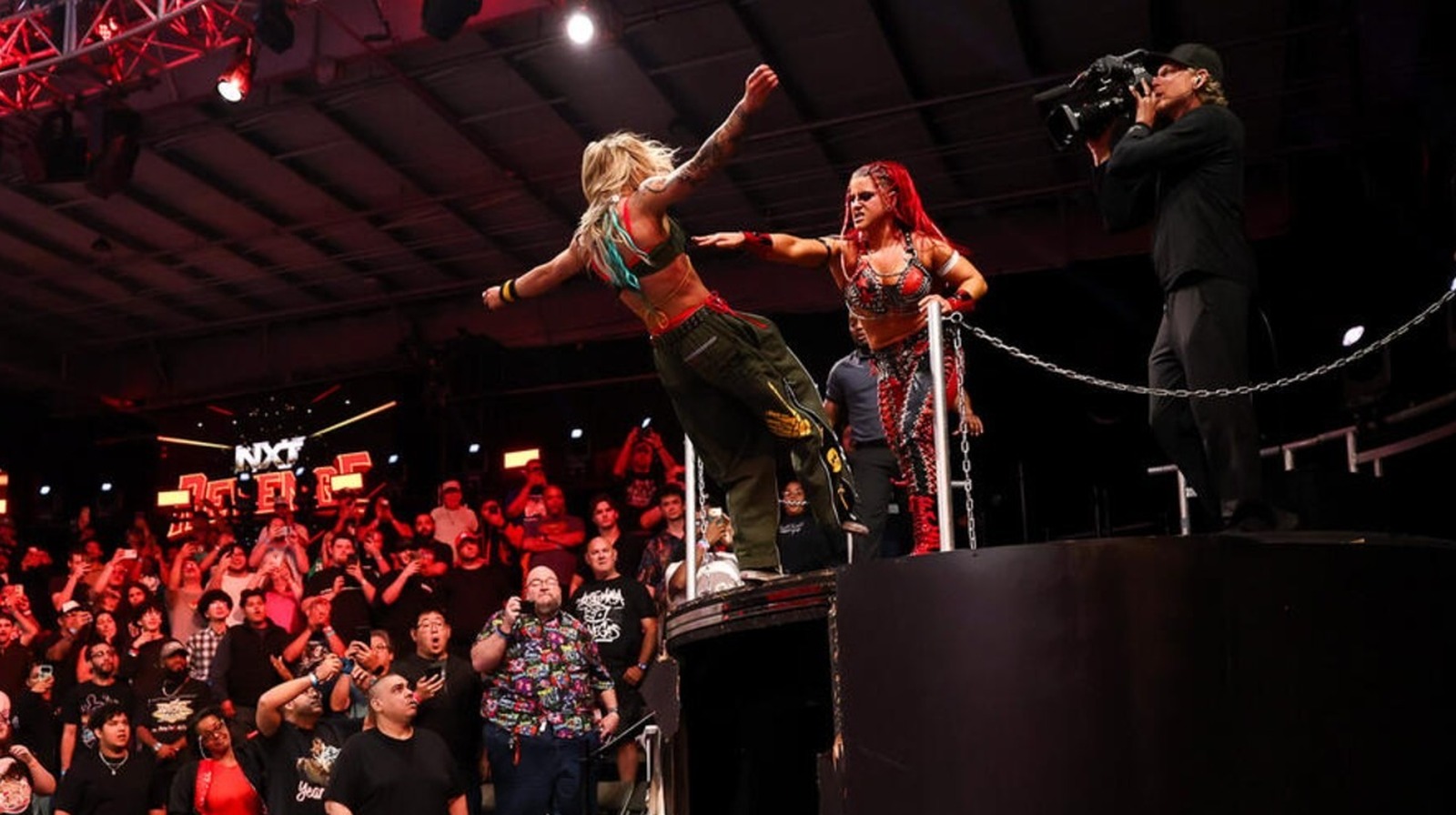
If you think arguing about star ratings online is exhausting, try tracking the NXT Florida house show loop in 2026. Yesterday, May 2, the WWE developmental machine rolled into Venice, Florida, as noted by the sparse results hitting dirt sheets. We are talking about a company that just pulled off a massive spectacle at Allegiant Stadium for WrestleMania 41 a few weeks ago, drawing 70,000-plus fans. Now, they are running a sweaty community center in front of maybe 200 fans sitting on plastic folding chairs.
This is the infamous coconut loop. It is the absolute bottom floor of the TKO corporate monolith. You don't get pyro here. You don't get the slick CW Network production values. You get a ring that sounds like a shotgun blast every time someone takes a flat back bump, and you get the humidity of a Florida swamp seeping through the walls.
There is nothing romantic about this. Fans love to glorify the developmental house show circuit as this pure, unadulterated form of professional wrestling. They act like it is the modern equivalent of the territories. It isn't. Most of the time, it is a glorified practice session featuring former defensive linemen who are still trying to figure out which leg to lead with when they hit the ropes.
At the Venice show, you strip away all the smoke and mirrors. On television, Shawn Michaels and his production team can hide a green worker with clever camera cuts, picture-in-picture commercial breaks, and heavily scripted backstage vignettes. In a rec center in Venice, there is nowhere to hide. If you blow a spot, the 150 people in the room see it. If you blow up three minutes into a basic headlock spot, everyone hears you gasping for air.
The NIL experiment is failing in slow motion
Let's talk about the roster makeup right now. We are currently watching the collision of two completely different philosophies. On one side, you have the indie veterans who spent six years driving 12 hours for a hot dog and a handshake. They know how to work. On the other side, you have the NIL recruits. Track stars, gymnasts, and college football washouts who were handed a performance center contract because they look good on a billboard.
When you put them together on a house show, the results are often completely terrifying. You have a seasoned indie guy trying to call a match in the ring, and he is looking at a 23-year-old former tight end who has absolutely no idea what "take it home" means. The veteran is calling for a half-hatch suplex, and the rookie looks like he is trying to solve a math problem in his head. The disconnect is massive.
This is my biggest criticism of the current NXT developmental structure. The reps just are not there anymore. Back in the day, a guy would work 250 nights a year before he even sniffed national television. Today, a college athlete signs an NIL deal, trains in a padded room in Orlando for six months, works maybe fifteen matches on the coconut loop, and suddenly they are wrestling on live TV.
It is genuinely unsafe. We are seeing more blown out knees and torn ligaments than ever because the fundamentals are being rushed. It is the physical equivalent of shipping an untested alpha build straight to production, except the bugs result in concussions instead of server crashes. You watch these kids try to hit a rolling elbow into a Code Red, and they look like they are moving underwater. They want to do the high-spot GIFs they saw on Twitter instead of learning how to throw a working punch.
The post-WrestleMania talent drain
Timing is everything here. We are in the immediate aftermath of WrestleMania 41. The annual talent drain has already happened. The top stars of NXT get called up to Raw or SmackDown to fill out the rosters for the upcoming year. That leaves the developmental system completely gutted for the summer.
When you look at a show like Venice right now, it is essentially the junior varsity squad. The main event scene is being patched together with duct tape and wishful thinking. With WWE Backlash 2026 just six days away, the main roster is focused on their own premium live event. NXT is left holding the bag.
Shawn Michaels gets an enormous amount of praise for his booking on Tuesday nights. A lot of it is deserved. He knows how to structure a soap opera. But his house show booking is incredibly lazy. You go to these Florida loops and it is just a parade of random six-person tag matches designed to get everyone on the card.
There is no psychology to a seven-minute six-man tag match where everyone just gets their stuff in and goes home. It does not teach the rookies how to build heat. It does not teach them how to pace a 15-minute singles match. It is just a chaotic sprint.
The unsung heroes and the frustrated veterans
If you really want to understand the dysfunction of the coconut loop, watch the referees. The referees on these Florida house shows are often doing twice the work of the wrestlers. They are literally talking the rookies through the match step-by-step. I have seen referees overtly grab a wrestler by the wrist and pull them into position for the next sequence.
It is comical, but it is also a massive red flag. If your referee is doing the heavy lifting for the match psychology, your developmental system is failing to teach the basics. You have trainers like Matt Bloom and Terry Taylor working with these kids all week, but the second the bell rings, the muscle memory vanishes. The adrenaline hits, and the rookies freeze.
Then you have the player-coaches. The veterans who are kept around NXT specifically to work these house shows. Think about how frustrating that role must be. You have a guy who has been wrestling for 15 years, whose knees are shot, and whose main roster dreams died a long time ago. His job is to go out to a rec center in Venice and let a 22-year-old former track star drop him on his head.
These veterans are the glue holding the entire Florida loop together. Without them, the shows would devolve into complete anarchy. But the company treats them as entirely disposable. They get released the second management thinks a new batch of indie hires can take their place. It is a ruthless gig, and the pay is notoriously terrible for the amount of physical punishment they absorb.
Driving the loop is its own punishment
You also have to consider the sheer physical toll of the travel. The Florida loop is not glamorous. These wrestlers are not hopping on chartered jets like the main roster. They are piling into rented sedans and driving three hours across the state after taking a beating in the ring.
Imagine finishing a match in Venice at 10:30 at night. You are covered in sweat, your back is covered in welts from a stiff ring canvas, and now you have to fold your six-foot-four frame into the back of a Honda Civic. You drive back to Orlando, grab maybe four hours of sleep in your own bed, and then you have to be at the performance center at 8:00 AM the next morning for mandatory film study.
It is a brutal grind designed to test your absolute breaking point. Management wants to see who is going to complain. They want to see who is going to fall asleep during the promo classes because they were up all night driving. It is a psychological filter as much as a physical one.
The problem is that this old-school hazing mentality does not actually produce better television characters. It just produces exhausted, burned-out athletes who are operating on fumes before their careers have even officially started. By the time they actually make it to SmackDown, half of them are already nursing chronic injuries from the car rides alone.
The bizarre economy of the coconut loop
Then you have to look at the financial absurdity of the whole operation. TKO is a massive, ruthless, publicly traded company. They do not do things out of the kindness of their hearts. The Florida house show loop loses money. It has always lost money. You cannot rent a building, pay a crew to set up a ring, pay the talent, and turn a profit on 200 tickets sold at $20 a pop.
Ari Emanuel is keeping this alive purely as a research and development expense. But you have to wonder if the executives in the boardroom are looking at the spreadsheets and asking why they are running shows in Venice, Florida. The answer, of course, is that you need a place for talent to mess up in front of a live crowd. You need a place where the stakes are zero.
The problem is the crowd itself. The fans who attend these Florida shows are not a normal audience. They are a deeply weird subculture. It is the same 50 hardcore fans in the front row every single week. They know all the wrestlers' real names. They bring weird, inside-joke signs. They try to get themselves over with obnoxious chants.
Wrestling in front of those people does not prepare a rookie for a sold-out arena in Chicago or New York. It trains them to pander to a handful of smarks in the front row. A trainee might get a massive pop for a Canadian Destroyer in Venice, but when they do it on Raw, the crowd sits on their hands because they don't care about the move. They care about the character.
The illusion of developmental
We need to stop pretending that the current system is flawless. The performance center in Orlando is an incredible facility. It has weight rooms that rival NFL complexes. It has medical staff, nutritionists, and promo classes. But none of that replaces the actual grit of working a hostile crowd.
When an indie darling signs with NXT, they usually spend the first six months being told to forget everything they learned on the independent scene. WWE wants to break them down and rebuild them in the corporate image. They want them to face the hard cam. They want them to pause for three seconds after a big move so the director can catch the reaction.
The Venice house show is the messy laboratory where this reprogramming happens. You are watching a person try to unlearn their instincts in real time. It makes for an incredibly disjointed viewing experience. You will see a perfectly executed snap suplex followed by 30 seconds of awkward stalling because someone forgot their spot.
This is why following the coconut loop results is mostly an exercise in reading the tea leaves. You see a name pop up in a main event in Venice, and you know management is testing them out. You see an established NXT TV star suddenly working the opening match, and you know they have heat backstage.
But the actual wrestling? The matches themselves? They are usually bad. They are supposed to be bad. That is the entire point of developmental. My issue is not that the matches are sloppy. My issue is that WWE is calling these kids up before they stop being sloppy. They are throwing them on television when they are still blowing spots in rec centers.
As we head toward the summer, and the main roster gears up for the build to SummerSlam, NXT is going to be tasked with producing the next wave of stars. Right now, looking at the crop of talent running the ropes in Venice, Florida, they are not ready. They need more time. Unfortunately, the TKO content machine does not do patience.