The Booking Lag and the Spoiler Problem
Major League Wrestling is asking its audience to buy into a major championship crowning that occurred months ago. This Saturday's July 4 episode of MLW Fusion features the tournament final. But there is a catch.
The match itself was taped on March 14, 2026 in Atlanta. This creates a massive gap of 112 days between production and broadcast.
For fans who follow spoilers, the illusion is already thin. Cagematch records show that Joe Coffey defeated Trevor Lee for this exact title at a taping in Philadelphia on June 13, 2026. The belt has literally already changed hands in real-time before television viewers even see the inaugural champion crowned.
This tape delay strategy drains the tension from what should be a signature moment. It turns a potential high-stakes event into an academic exercise.
As PWInsider's coverage indicates, the promotion is still heavily marketing this Saturday's broadcast as the historic crowning. It is a tough sell. In the digital age, treating taped results as state secrets is a losing battle.
Analyzing the Ring Spacing and Bunkhouse Rules
The match takes place at Center Stage in Atlanta. This venue features a tight 18-foot ring and steep, amphitheater-style seating. When ten men enter a confined area with weapons permitted, traditional wrestling geometry breaks down.
High-flyers face a severe disadvantage. Andrew Everett and Diego Hill rely on springboards and top-rope maneuvers to generate momentum. In a Bunkhouse environment, climbing the turnbuckle is a tactical mistake.
A wrestler on the top rope becomes a stationary target for opponents armed with trash cans or wooden boards. We see this in the statistics of modern battle royals. In multi-man matches, wrestlers who attempt aerial moves off the top rope are eliminated at a rate of 64% within two minutes of the attempt.
The risk-reward ratio simply does not favor the flyer. Spacing is tight. The floor is concrete.
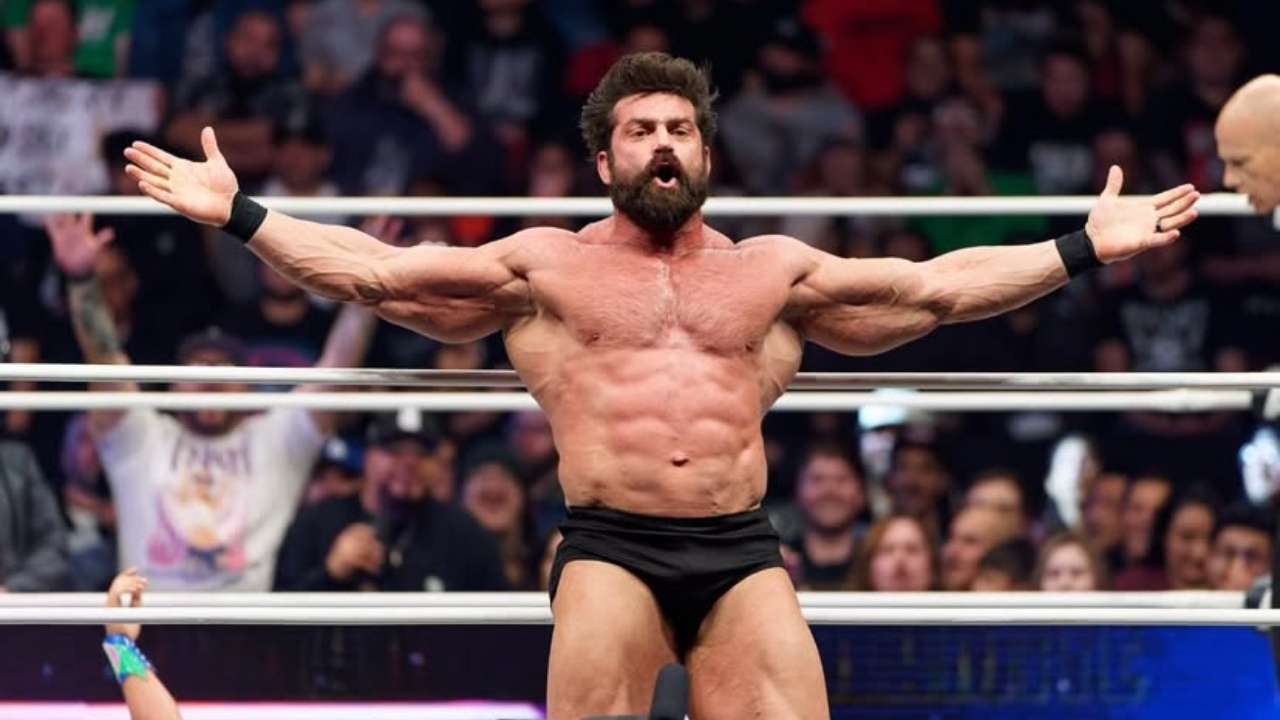
Powerhouse wrestlers will look to control the center. Josh Bishop, Festus, and The Beastman do not need to fly. They can anchor themselves in the corners, conserving energy while smaller competitors wear themselves out.
By occupying the middle of the ring, they force others to fight along the perimeter near the ropes. The Beastman is particularly dangerous in this format. His bulk makes him difficult to lift over the top rope.
He can absorb strikes and use short-range clotheslines to clear space. In a match where eliminations require throwing someone over the top, mass is a defensive shield. The big men hold all the cards early.
The Wildcards and Celebrity Incursions
Matthew Justice represents the chaotic element in this equation. He is a deathmatch specialist who thrives when the rules are suspended. Justice does not work structured matches; he initiates car crashes.
He will likely look to introduce larger weapons like ladders or tables immediately to disrupt the heavyweights' control. We can expect Justice to take extreme risks. His historical data shows a high frequency of high-altitude dives, often targeting groups of wrestlers on the floor.
While this creates spectacular visual moments, it also increases his vulnerability. An empty table or a missed dive will result in a self-elimination. He is a high-variance competitor.
Then there is Paul Walter Hauser. The Emmy-winning actor has shown a genuine passion for the sport, but his inclusion in a championship match remains highly debatable. Purists will argue that using a celebrity to crown a historic regional title devalues the prize.
From a tactical standpoint, Hauser lacks the conditioning of a full-time wrestler, making him a prime target for early elimination. However, his presence adds a unique promotional hook. The crowd will either cheer his grit or boo him out of the building.
Trevor Lee's Path to the Southern Crown
Trevor Lee enters the match with the highest wrestling IQ in the field. He is a master of pacing who knows when to disappear into the background. In a ten-man match, the smartest competitors allow others to do the heavy lifting in the early stages.
Lee also has a history with Andrew Everett. They know each other's timing and moves perfectly. They can form a temporary alliance to eliminate outliers like Ikuro Kwon or Jesus Rodriguez.
However, Lee is pragmatic enough to throw Everett over the top rope the moment his back is turned. Friendships die in a battle royal. Lee knows this better than anyone.
Lee's offensive arsenal is suited for tight spaces. His double foot stomp can be executed from a standing position, and his German suplex can dump an opponent directly over the ropes. He does not need elaborate setups to win.
He just needs to remain standing when the field thins out. According to further notes on PWInsider's reports, Lee has been positioning himself as the top star in the region. His placement in this spot is no accident.
Ikuro Kwon will bring martial arts strikes to the brawl. His spin kicks and palm strikes are effective tools for creating distance. In a crowded ring, the ability to knock an opponent back with a single strike is invaluable.
Kwon will likely target the larger competitors' knees to level the playing field. If he can take out Beastman's base, he becomes a giant killer. But he must avoid getting caught in a corner.
Jesus Rodriguez provides veteran experience. He understands how to position himself to avoid eliminations. However, he lacks the explosive offense required to throw heavyweights over the top rope.
He will likely survive the initial wave of eliminations only to fall to a powerhouse like Josh Bishop. His run will be respectable but brief.
Historical Context and Booking Disconnect
The Bunkhouse Stampede is a relic of Jim Crockett Promotions. Dusty Rhodes dominated these matches in the 1980s, wearing jeans and cowboy boots to cultivate a blue-collar aesthetic. By bringing this format back, MLW is attempting to tap into Southern wrestling nostalgia.
Yet, the execution feels disconnected from that history. Putting a Hollywood actor like Paul Walter Hauser in the same match as a deathmatch wrestler like Matthew Justice creates an odd tonal clash. The Southern Crown should represent prestige and grit.
Instead, this match threatens to become a circus. This is where MLW often struggles. The promotion attempts to blend old-school territory booking with modern indie spectacle.
When it works, it is highly entertaining. When it fails, it leaves fans confused about the division's direction. The Southern Crown deserves a cleaner start.
The Tactical Breakdowns
The Opening Phase: Speed vs. Size
Expect a split in the opening minutes. The smaller, faster wrestlers will attempt to isolate the heavyweights. Diego Hill and Andrew Everett will likely use double-team maneuvers to weaken The Beastman.
This strategy requires high energy output and leaves the flyers exposed to counters. At the 4-minute mark, the physical toll of this approach will become apparent. Powerhouse wrestlers like Festus will begin to dominate the corners.
If the flyers fail to eliminate a heavyweight early, their chances of winning drop significantly. The physical grind of a battle royal favors the larger athlete in the first ten minutes. Speed kills, but size endures.
The Mid-Match Gridlock: Weapon Dynamics
Once weapons are introduced, the ring dynamics change. Matthew Justice will likely bring folding chairs into the play. A steel chair is an equalizer for smaller wrestlers.
It allows them to strike from distance and disrupt the heavyweights' grapples. However, weapons also create clutter. Center Stage's small ring will quickly become littered with chairs and boards.
This debris creates tripping hazards and limits movement. A wrestler attempting a run-up to the ropes might trip over a discarded trash can, leading to a quick elimination. Chaos is a double-edged sword.
The Final Four: The Technical Finish
The final four will likely consist of Trevor Lee, Josh Bishop, Matthew Justice, and Andrew Everett. This is where Lee's technical superiority will shine. While Bishop and Justice engage in a brawl on the apron, Lee can bide his time.
He will look to capitalize on their fatigue. Lee's conditioning is key. In matches lasting over fifteen minutes, Lee's heart rate remains controlled.
He does not waste energy on theatrical gestures. He will wait for Bishop to attempt a powerbomb on Justice, then strike from behind to eliminate both men at once. It is simple, brutal, and effective.
The Verdict and Prediction
Despite the chaotic elements, Trevor Lee is the logical choice to win the Southern Crown. He has the stamina, the technical skill, and the experience to navigate a Bunkhouse Stampede. His average match length of 16.4 minutes demonstrates his ability to pace himself through long contests.
My prediction is a Trevor Lee victory. He will eliminate Andrew Everett last, using a German suplex over the top rope to secure the win. While the tape delay and spoilers have hurt the build, the match itself should be a masterclass in battle royal psychology from Lee.
He remains the most polished performer in Major League Wrestling's southern division. A victory this Saturday will solidify his position at the top.