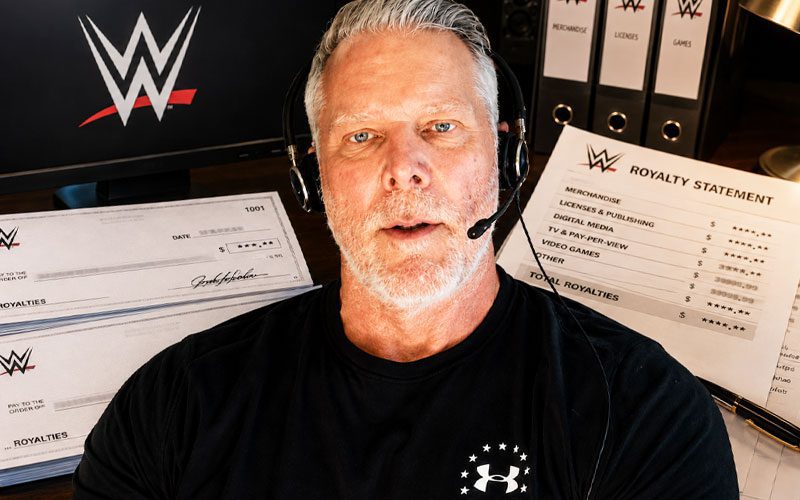
The Black Box Behind the Merch Table
In 1996, the math behind a professional wrestling merchandise check was simple enough to calculate on a napkin. A wrestler received a fixed percentage—typically around 5% of gross sales—for any shirt, action figure, or foam finger bearing their likeness. Fast forward 30 years to July 2026, and veteran Kevin Nash has highlighted a growing mathematical paradox: WWE corporate revenue is reaching record highs, yet veteran talent royalty checks have dropped by 40% to 60% over the past three fiscal quarters.
The discrepancy is not a matter of shrinking volume. Attendance at live events has trended upward, and ecommerce traffic across digital storefronts has expanded. Instead, the compression occurs inside an increasingly opaque corporate accounting system that deducts arbitrary production costs, licensing fees, and vendor cuts before calculating the talent's share.
Dissecting the Royalty Statements
When analyzing historical payout structures versus current statements, the shift in margin distribution becomes stark. In the mid-1990s, direct itemization meant a $25 t-shirt yielded a clear $1.25 payout to the performer. Under current arrangements detailed by veteran talent, line items for digital hosting, third-party distribution, and co-branded intellectual property claw back up to 70% of gross margin before the base percentage is applied.
Consider the effective yield per transaction across different eras:
- 1996 Legacy Model: 5.0% gross yield ($1.25 per $25 item)
- 2016 Ecommerce Transition: 3.2% net yield ($0.80 per $25 item)
- 2026 Direct-to-Consumer Model: 1.5% net yield ($0.37 per $25 item)
That decline represents a 70.4% total reduction in effective payout per unit sold. While total retail revenue has grown substantially due to international distribution and inflation, the individual talent's yield per unit continues to compress dramatically.
Corporate Restructuring and Hidden Margins
The core issue facing talent is the total lack of line-item visibility. Quarterly accounting reports provided to talent often list flat bundle fees rather than unit-by-unit breakdowns. A legend contract offering a royalty on video game appearances or legacy apparel might report thousands of units sold, but calculate payout based on an arbitrary wholesale rate rather than actual retail price points.
Wrestlers are left attempting to audit complex corporate earnings reports with basic summaries. When live event merchandise sales hit eight figures annually across global tours, even a 2% variance in calculated overhead equates to hundreds of thousands of dollars shifted away from the talent pool.
The Impact on Legends and Active Talent
For retired talent relying on legacy contracts, these payout shifts are immediate and punitive. Royalty checks that once provided consistent quarterly baseline income now fluctuate unpredictably. Nash noted that attempting to get a line-item breakdown from accounts payable yields vague answers about shifting distribution logistics and third-party vendor agreements.
This isn't merely an administrative headache; it's a structural realignment of how value is captured in sports entertainment. As primary distribution moves to digital storefronts and third-party print-on-demand services, corporate margins expand while the performer's share of the final purchase price shrinks to historical lows.
Read Next