Celebrity involvement in the ring requires a delicate touch
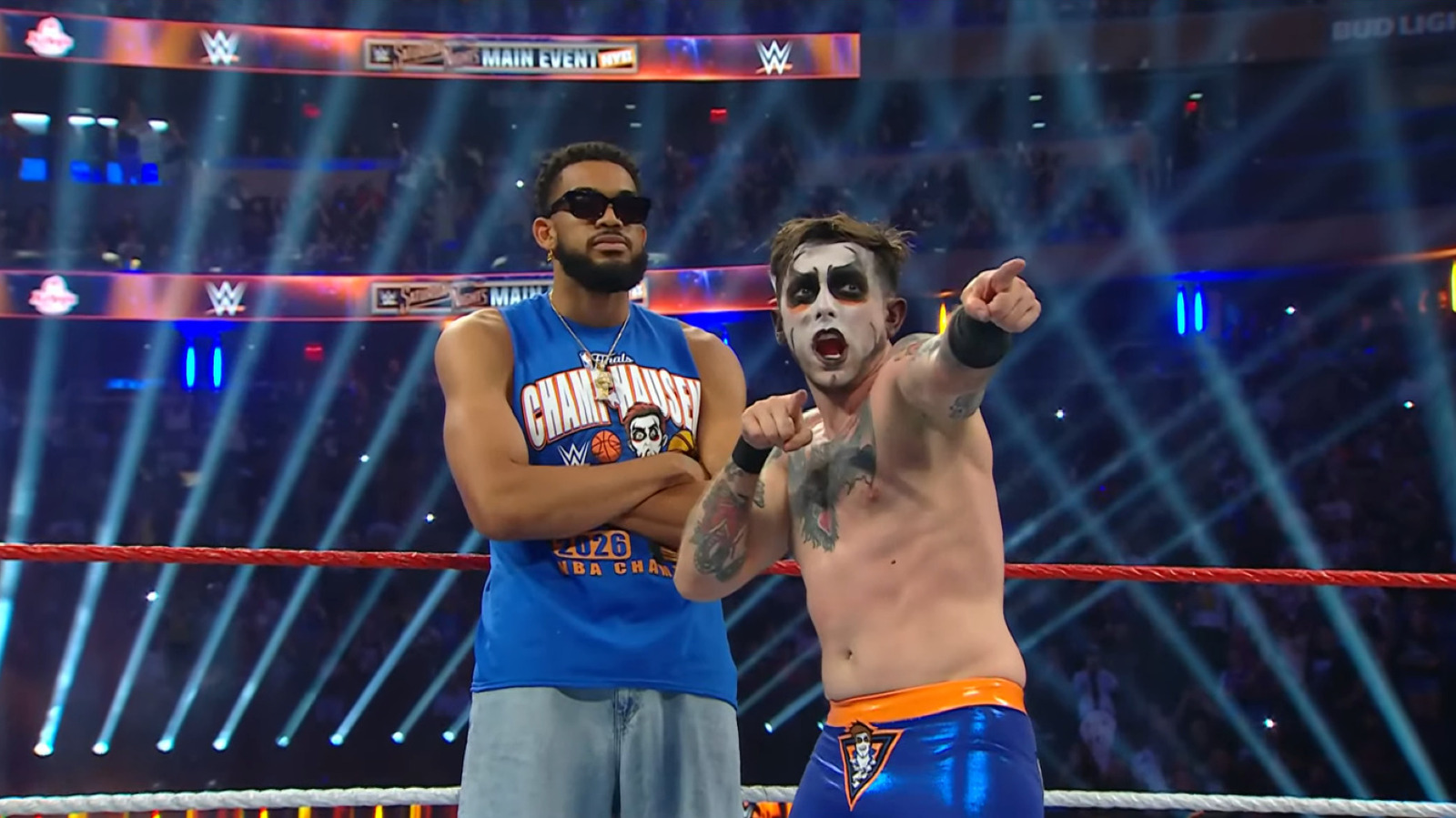
When Karl Anthony Towns stepped over the barricade to assist Danhausen at the latest WWE Saturday Night's Main Event, the reaction from the capacity crowd was immediate. It was loud, it was visceral, and it served as a jarring reminder of how the promotion balances athletic spectacle with mainstream crossover appeal. While the New York Knicks center made the save to bail out the fan-favorite, the booking decision raises questions about the long-term saturation of these moments.
We are currently witnessing a push toward integrated media appearances that often prioritizes viral clips over coherent storytelling. Towns is a legitimate athlete, and his physical presence in the ring carries a level of authenticity that many other guests fail to provide. However, intervention in active storylines creates a high barrier for entry for viewers who care primarily about the in-ring work rate.
The intersection of the NBA and the squared circle
This is not the first time high-profile basketball players have influenced the outcome of a match, but the execution here warrants scrutiny. A well-placed interference can propel a mid-card feud into a headline act, yet there is a fine line between a memorable spot and a complete disruption of the established kayfabe order. By inserting a marquee NBA name into a match involving someone as niche as Danhausen, the creative team is explicitly targeting a wider demographic at the expense of a traditional wrestling narrative.
The mechanics of the save itself were clean enough, lacking the clumsy execution that often plagues non-wrestler appearances. Yet, the question remains whether these cameos actually generate long-term retention or just fleeting social media engagement. When the dust settles and the celebrity departs, the underlying rivalry often feels stunted by the intrusion of someone who does not have a stake in the long-term win-loss record.
The booking risk of external interference
Looking at the broader pattern of recent event production, the reliance on external interference as a primary plot device is becoming a crutch. If the match cannot reach its climax naturally, the inclusion of a third party—celebrity or otherwise—tends to cheapen the preceding heat. A wrestling match should function like a well-structured match play golf tournament; every shot sets up the next, and outside influence should rarely be the deciding factor in who reaches the 18th hole first.
Criticism of this booking choice isn't anti-celebrity; it is pro-wrestling. When the spectacle overshadows the athleticism, the audience loses the connection to the talent who spent years honing their craft to perform under the lights. It is a gamble that risks alienating the core fanbase in exchange for a few minutes of mainstream buzz that likely dissipates before the next television cycle begins.
The path toward a coherent narrative arc
The upcoming events need to shift back toward talent-driven conflict. While the crossover appeal is acknowledged in boardrooms, the fans inside the arena want to see the resolution of long-standing in-ring heat. Future cards should prioritize the building of established character stakes over the injection of outside chaos. Relying purely on the 'big moment' appeal eventually numbs the audience to the shock factor, turning a genuine save into an expected procedural element that no longer garners a real emotional response.
Ultimately, the inclusion of outside talent should always serve the wrestlers in the ring, not the other way around. If the goal is to cultivate a consistent product that rewards long-term viewer loyalty, then every interference—regardless of the fame behind it—must possess a logical arc that justifies itself within the context of the match. For now, the integration of NBA talent is a short-term gain that leaves me skeptical about the commitment to pure narrative wrestling.
My final take
I predict that this reliance on stunt-booking will reach a breaking point by the end of the calendar year. Expect a significant pushback from the audience when the next major card arrives without a clear, athletic payoff. The creative team will eventually be forced to revert to grounded, sport-centric storytelling if they want to maintain credibility with the purists who anchor the ticket sales.