
JBL is right about Malakai Black and NOAH's Spring Mayhem proves why
The gimmick ceiling and the Malakai Black problem
John Bradshaw Layfield has never been one to mince words, but his recent assessment of Malakai Black hits on a fundamental truth that many modern fans are loath to admit. Speaking on the current state of the industry, JBL noted that while Black is undeniably a "main event guy," the presentation he has leaned into for years simply has not produced the results required to sit at the top of a major promotion. It is a harsh critique of the spooky, occult-heavy character work that has defined Black's run since his exit from the original NXT black-and-gold era.
The issue isn't the workrate. Black is a clinical striker whose spinning heel kick remains one of the most protected and visually impressive finishers in the business. The problem is the internal logic of the character. JBL’s point is that the over-produced vignettes and the House of Black mythology have created a barrier between the performer and the audience. When a wrestler becomes more focused on the lighting cues and the cryptic dialogue than the actual stakes of winning a championship, the momentum inevitably stalls.
We saw this exact stagnation in the mid-90s, a period recently revisited by the PWTorch 90s Pastcast. In April 1996, the industry was reeling from Brian Pillman’s catastrophic car accident, an event that blurred the lines between reality and fiction in a way that modern "supernatural" gimmicks fail to replicate. Pillman didn't need a smoke machine to be terrifying; he just needed a live microphone and a sense of unpredictability. Black has the talent to be that dangerous, but he is currently trapped in a self-imposed cage of high-concept lore that feels increasingly disconnected from the grit of 2026 wrestling.
NOAH Ryogoku and the return of the powerhouse
While Western wrestling often gets bogged down in character studies, Pro Wrestling NOAH is doubling down on raw physicality. Today’s Spring Mayhem Ryogoku 2026 event is a masterclass in how to build a main event around simple, violent stakes. Kaito Inamura defending the GHC Heavyweight Championship against Shane Haste is the antithesis of the "spooky" wrestling JBL criticized. This is a match defined by the 285-pound frame of Inamura colliding with the erratic, technical chaos of TMDK’s Haste.
Inamura is the prototypical success story of the current NOAH era. He didn't need a year of cinematic teasers to get over; he needed to hit people very hard with his signature splash and various powerbomb iterations. Facing Haste in the main event is a tactical test. Haste is a veteran who understands how to dissect a powerhouse, often using his experience in the Australian and American independent circuits to find angles that traditional Japanese heavyweights ignore. If Inamura wants to solidify this reign, he has to do more than just absorb punishment; he has to out-wrestle a man who thrives in the scramble.
The undercard offers a fascinating contrast in styles. Amakusa versus Bane is a high-speed collision that will likely set the tone for the night. Amakusa’s aerial fluidity is world-class, but Bane brings a level of impact that usually leaves smaller opponents gasping for air by the 10-minute mark. This isn't about lore or "houses"; it's about who can hit their finisher first. The Ryogoku crowd doesn't care about the darkness; they care about the snap of a lariat and the height of a moonsault.
The Naito factor and the Ozawa rub
Perhaps the most intriguing match on the NOAH card is Tetsuya Naito taking on Yasutaka Ozawa. Naito’s presence in a NOAH ring in 2026 remains a massive draw, even if his knees are held together by little more than tape and stubbornness. For Ozawa, this is the ultimate litmus test. Wrestling a legend like Naito isn't just about the moves; it's about the spacing and the psychology. Naito is a master of doing less to achieve more, a lesson that many younger wrestlers, including those in the House of Black, would do well to study.
Ozawa has the fire, but Naito has the tranquility. We have seen Naito dismantle younger, faster opponents simply by refusing to engage at their pace. He slows the match down, forces the opponent to make a mistake out of frustration, and then strikes with the Destino. If Ozawa can push Naito past the 15-minute mark, it will be a moral victory regardless of the final pinfall. It’s the kind of "main event guy" behavior JBL talked about—having the presence to command a room without needing a script to explain why you are there.
The Nick Aldis era of SmackDown booking
Turning our attention to the domestic scene, WWE SmackDown General Manager Nick Aldis is proving to be the most effective authority figure the blue brand has seen in years. His recent additions to the Backlash 2026 card show a keen understanding of both workrate and commercial appeal. Adding a United States Championship defense for Sami Zayn against Trick Williams is a stroke of genius. It pits the veteran technician against the most charismatic young star on the roster.
Zayn is currently in that "gatekeeper" phase of his career where he can make anyone look like a superstar, but Trick Williams doesn't need much help. The chemistry between them should be electric, specifically in how Williams uses his athleticism to counter Zayn’s more grounded, neurotic offense. However, the inclusion of Danhausen in a tag team bout on the same card is a risky move. While Danhausen is a merchandise juggernaut, his in-ring style often borders on the parodic. In a 2026 environment that is pivoting back toward sports-centric presentation, the "very nice, very evil" routine risks feeling like a relic of a different era.
This is where the critical eye must fall on WWE's current strategy. You cannot have the grit of a Trick Williams title hunt co-existing with the tongue-in-cheek comedy of Danhausen without one undermining the other. Aldis is walking a tightrope here. Backlash is just seven days away, and the card is starting to look a bit cluttered. Between the UCL Semi-Finals happening this Tuesday and the build to Double or Nothing later this month, WWE needs to ensure that their mid-card titles don't get lost in the shuffle of a busy May sports calendar.
TNA's survival and the impact of the title chase
Even TNA is getting in on the action, with two title matches announced for next week’s Impact. While TNA often feels like it's shouting into a void compared to the WWE and AEW machines, their commitment to weekly high-stakes matches is keeping their core audience engaged. The problem TNA faces is the same one JBL identified with Malakai Black: a lack of evolution. Putting titles on the line is great, but if the characters holding those titles haven't changed their act in three years, the prestige of the belt starts to fade.
The contrast between the NOAH approach and the TNA/Western approach is striking. In Japan, the title is the character. If you hold the GHC Heavyweight Championship, you are the apex predator. In the West, we often use titles as props to further a storyline about a "house" or a "cult" or a "betrayal." JBL’s point is that the championship should be the goal, not a secondary accessory to a performer’s personal aesthetic. When Malakai Black spends ten minutes talking about the sins of his father and zero minutes talking about the World Heavyweight Championship, the audience subconsciously demotes him to a mid-card attraction.
Final thoughts on a crowded May
As we head into the summer, the wrestling world feels like it is at a crossroads. Today's Ryogoku show will likely be the peak of pure in-ring quality for the month, but the narrative drama of Backlash is what will drive the headlines. The industry is currently trying to serve two masters: the fan who wants the 1996-style reality of a Brian Pillman and the fan who wants the 2026-style spectacle of a Nick Aldis production.
The real winner of the weekend will be whoever manages to bridge that gap. If Inamura can show some personality beyond just being "the strong guy," he becomes a global star. If Malakai Black listens to the veterans like JBL and strips away the theatrical fluff to return to the lethal striker we saw in NXT, he becomes a main eventer again. Right now, there is too much filler and not enough killer in the main event scene.
WWE's addition of Trick Williams to the US Title scene is the right move, but the Danhausen experiment needs to be handled with extreme caution. We are in a season-defining stretch. With the UCL Final and the World Cup looming in June, pro wrestling has a very narrow window to capture the general public’s attention. It won't happen with spooky lights and magic mist; it will happen with 45-minute clinics and believable, high-stakes competition. Let's hope the promoters realize that before the summer heat truly kicks in.
WWE Men's Roman Reigns Bloodline Acknowledge Me T-Shirt
Acknowledge your Tribal Chief in style.
More Coverage
Shelf Space Real Estate: Ranking the Latest Must-Haves for Your Wrestling Shrine
an hour agoTop 10: The Definitive Ranking of Mid-Summer WWE Moments
3 hours agoThis Week in Wrestling: MSG Stardust and Championship Shakeups (Jul 13–Jul 19, 2026)
4 hours agoKarl-Anthony Towns at Saturday Night’s Main Event was a fever dream gone wrong
4 hours agoKarl Anthony Towns just created the weirdest wrestling moment of 2026
4 hours ago
LA Knight turns viral frustration into a merchandise play
4 hours agoMore Analysis
Nick Aldis is turning Backlash into a chaotic tactical experiment
2 months, 2 weeks ago
JBL and the TNA trauma dump: Why we can't look away from the train wreck
2 days, 12 hours ago
Why the Global Tag League is testing Noah's booking limitations
1 month, 2 weeks ago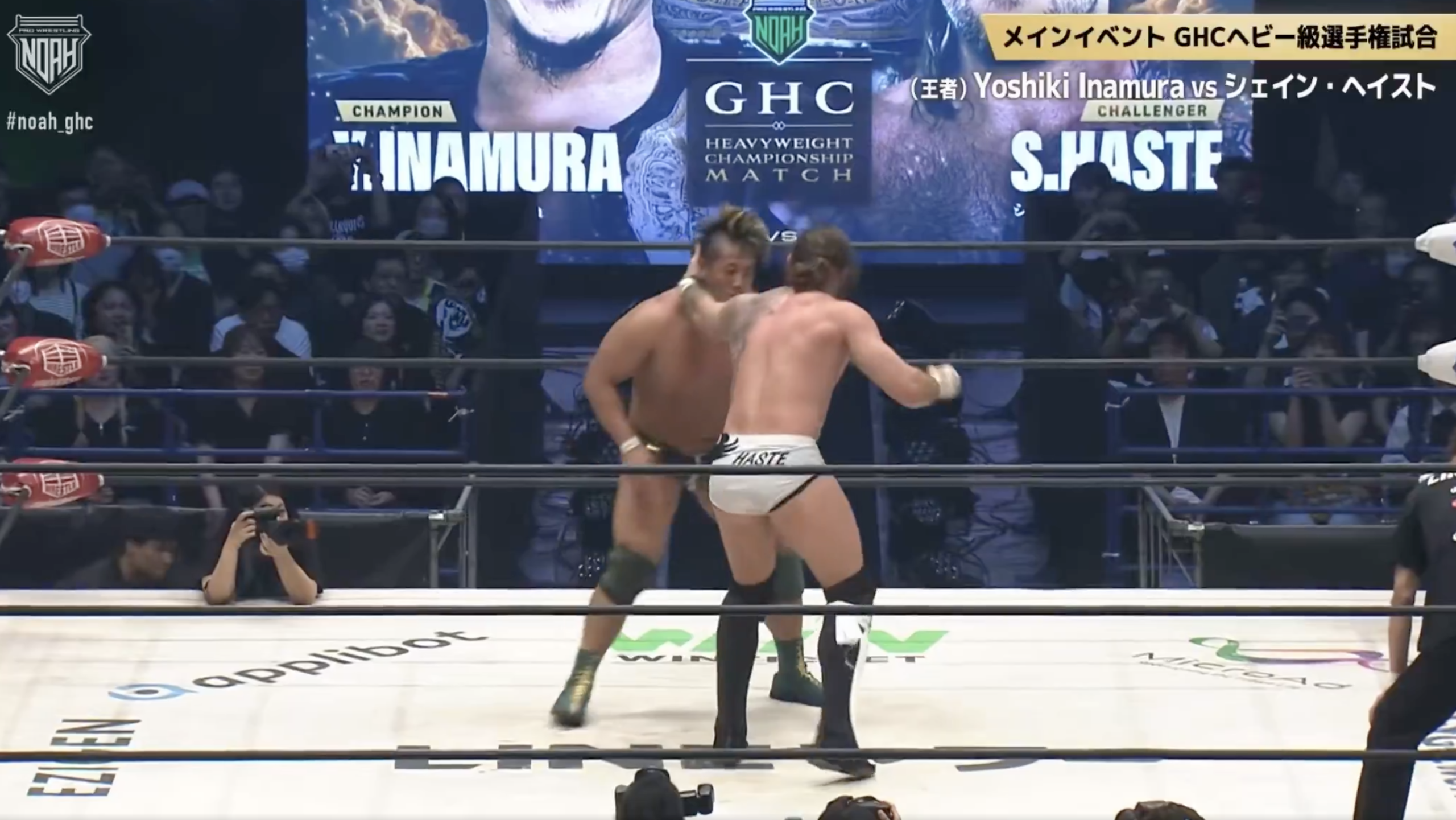
NOAH and MLW are trading belts like they are going out of style
2 months, 2 weeks ago
NOAH's tag league is a grind, and SmackDown might be losing the plot
1 month ago