Israel Adesanya is running out of octagons to hide in. At 36 years old, the former middleweight kingpin relies on a reactive striking game that demands fast-twitch reflexes he simply no longer possesses. The numbers tell a cold, unforgiving story. Back in 2020, during his untouchable title reign, Adesanya boasted an elite significant strike defense of 61.4%. Over his last three appearances, that number has quietly plummeted.
He is currently deflecting or evading just 53.2% of incoming fire. That is not a minor statistical blip. That is a glaring, structural leak in the armour of a man who built his entire legacy on not getting hit.
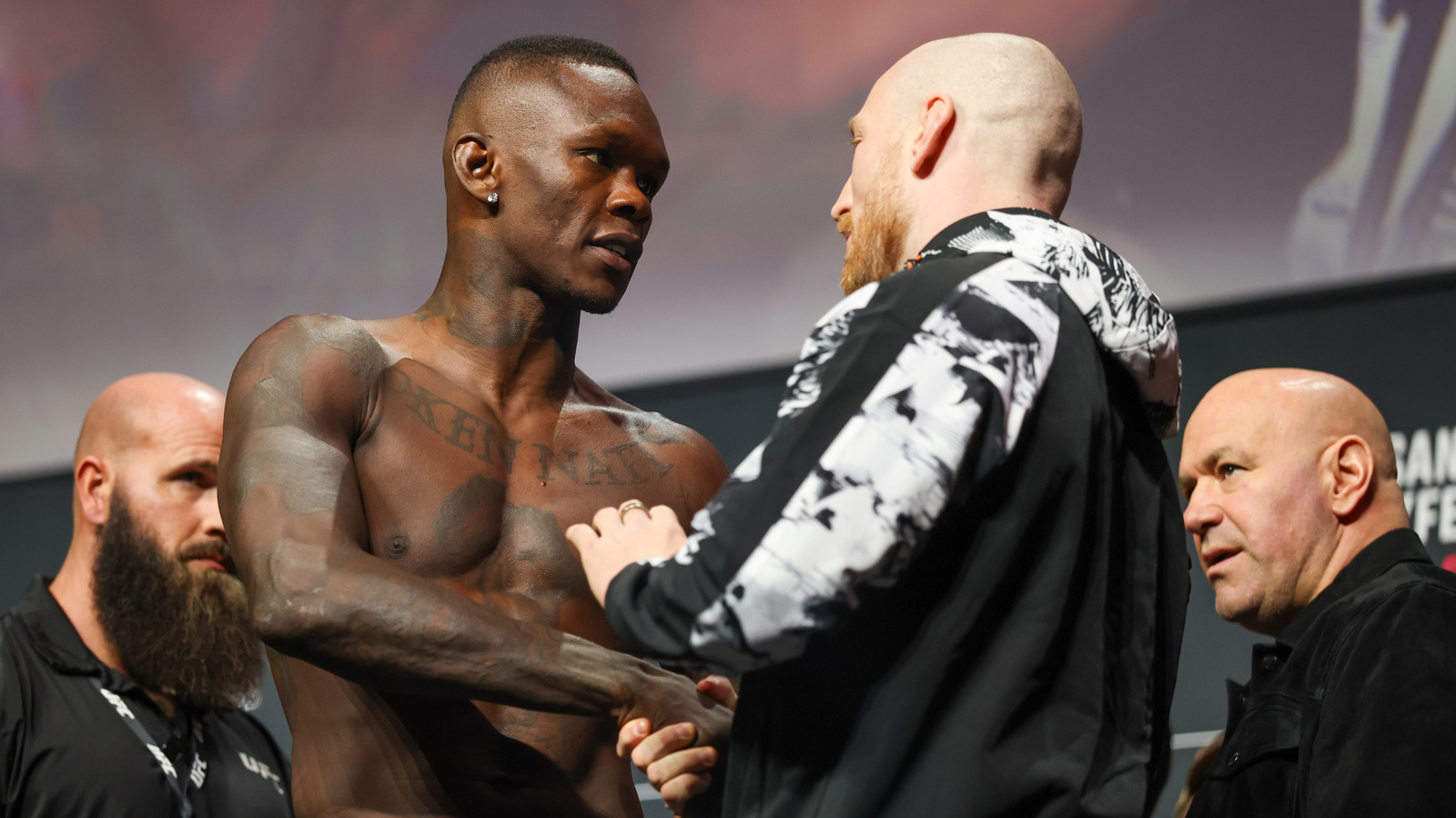
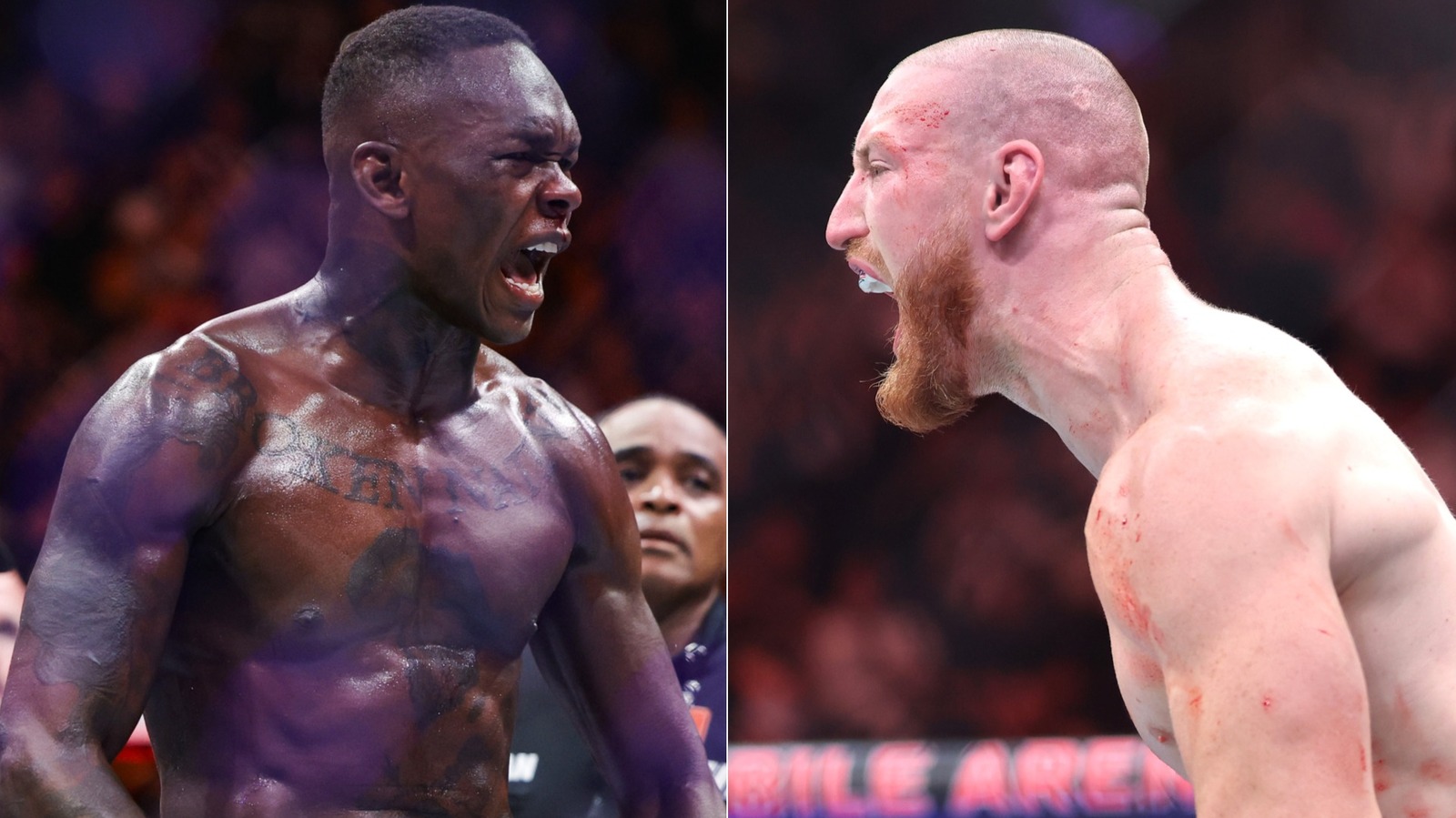
Tonight at the Climate Pledge Arena, as highlighted in the UFC Fight Night 271 preview, Adesanya faces Joe Pyfer. On paper, it looks like a classic striker versus brawler matchup. In reality, Pyfer is exactly the wrong stylistic opponent for a fading counter-sniper.
The Geographic Collapse
Adesanya's recent regression is entirely rooted in his footwork. He used to glide laterally off the cage with ease, pivoting away from danger before heavy hitters could set their feet. Now, he retreats in straight lines.
Opponents have figured out the geographic math of fighting him. If you cut the cage laterally rather than chasing him directly, Adesanya eventually backs himself onto the black perimeter line. Once his heels touch the fence, his offensive output drops dramatically. In his prime, he threw an average of 14 feints per minute to keep aggressive fighters frozen. By late 2025, that volume had dropped to just eight.
He is hesitating. You cannot afford to hesitate against a heavy-handed opponent who throws with malicious intent. The tape shows a fighter who is increasingly reluctant to pull the trigger when his back is against the chainlink. He relies on a high guard and head movement that is a fraction of a second slower than it used to be.
Sean Strickland provided the entire middleweight division with the blueprint on how to dismantle Adesanya. You do not rush him. You walk him down behind a high guard, parry his straight punches, and force him into the cage. Strickland exposed the reality that Adesanya is remarkably uncomfortable when he is not dictating the spatial terms of an engagement. Pyfer has spent his entire training camp studying that exact fight tape.
The Jab Differential
The most telling indicator of Adesanya's decline is the deterioration of his jab. Five years ago, his lead hand was an active, probing weapon. He used it to blind opponents, disrupt their rhythm, and mask the setup for his devastating head kicks.
Today, his jab has become entirely reactionary. He paws with it defensively rather than snapping it offensively. When you stop snapping the jab, aggressive fighters stop respecting your range. Pyfer is going to walk straight through a lazy, pawing lead hand.
Conversely, Pyfer has developed a highly functional, thudding jab of his own. It is not pretty, and it is certainly not fluid, but it serves a distinct tactical purpose. He uses it like a battering ram to establish his range before throwing the heavy right cross.
When Adesanya attempts to lean away from that battering ram, he exposes his lead leg to punishing calf kicks. Pyfer has quietly integrated a vicious low-chopping kick into his arsenal. If he compromises Adesanya's base early in the fight, the lateral movement required to survive the later rounds will completely evaporate.
Pyfer's Hidden Efficiency
Everyone talks about Pyfer's raw power. They completely ignore his defensive responsibility.
This is the counterintuitive truth of tonight's main event. Pyfer is not a reckless, swinging swarmer. He absorbs just 2.9 significant strikes per minute. He keeps his chin firmly tucked behind a high guard, steps heavily into the pocket, and throws short, compact hooks.
Adesanya historically relies on his opponents overextending. He desperately wants you to lunge so he can lean back, slip the shot, and fire his trademark counter right hand. Pyfer rarely lunges. He marches forward behind a tight guard, taking small, calculated steps.
This fundamental difference in pressure application is going to cause massive problems for the former champion. If Pyfer maintains his discipline and refuses to swing wildly, Adesanya will be forced to lead the dance.
Historically, when Adesanya is forced to initiate the offense, it results in low-output, tentative rounds. He cannot afford a tentative approach in a five-round fight against a younger, heavier-hitting opponent who is constantly marching forward.
The Threat of the Takedown
We have to address the grappling dynamics, even if neither man primarily wants to wrestle. Adesanya still holds an elite takedown defense rate of 84%. He remains incredibly difficult to drag to the mat in open space.
But Pyfer does not need to shoot in the centre of the octagon. He uses the looming threat of the takedown simply to freeze his opponent's hands. If Pyfer drops levels for a double leg against the fence, it is not always to complete the takedown. It is a tactical ruse to force Adesanya to drop his hips and lower his guard.
Once those hands drop to dig underhooks, the overhand right lands perfectly over the top. It is a basic, rudimentary sequence. Yet, it works repeatedly against older strikers who are terrified of being pinned to the canvas.
Pyfer averages a knockdown every 1.8 rounds. He does not need overwhelming volume to change the trajectory of a fight. He just needs one clean connection when his opponent makes a defensive miscalculation.
A Harsh Tactical Reality
There is a stubborn arrogance to Adesanya's recent performances. He continues to fight as if he still possesses a distinct speed advantage over the rest of the 185-pound division. He objectively does not.
The narrative coming out of the official weigh-ins focused heavily on Adesanya looking shredded and focused. Muscle mass does not fix declining reaction times. It certainly does not fix a psychological reluctance to engage first.
We are seeing a theme develop on this card. The preliminary bouts feature a double retirement fight, serving as a grim reminder of how unforgiving MMA is to aging veterans. Fighters rarely recognize their own physical decline until a younger, hungrier opponent exposes it violently in the cage.
Adesanya is standing on that exact precipice. The live dispatch will likely reflect a tense, slow-paced opening round tonight. Adesanya will attempt to establish his leg kick from the outside. Pyfer will methodically try to back him up.
The Path to Victory
If Adesanya wants to survive this, he has to rediscover his lateral movement. He must pivot off the fence the exact moment Pyfer steps into range. He cannot wait to slip a punch; he has to be gone before the punch is even loaded.
He also needs to target Pyfer's body early and often. If Pyfer is forced into the deep waters of the fourth and fifth rounds, his output historically drops. Slowing Pyfer's forward march with teep kicks to the midsection is Adesanya's most viable path to a decision victory.
However, relying on a flawless, 25-minute evasive performance is a massive gamble. One false step, one moment of hesitation on the cage, and Pyfer will close the distance.
Age eventually comes for everyone in this sport. It rarely announces itself politely. It usually arrives under the bright arena lights, disguised as a methodical, heavy-handed opponent you were supposed to comfortably outstrike.