
CM Punk is still chasing the ghost of a pinstripe suit
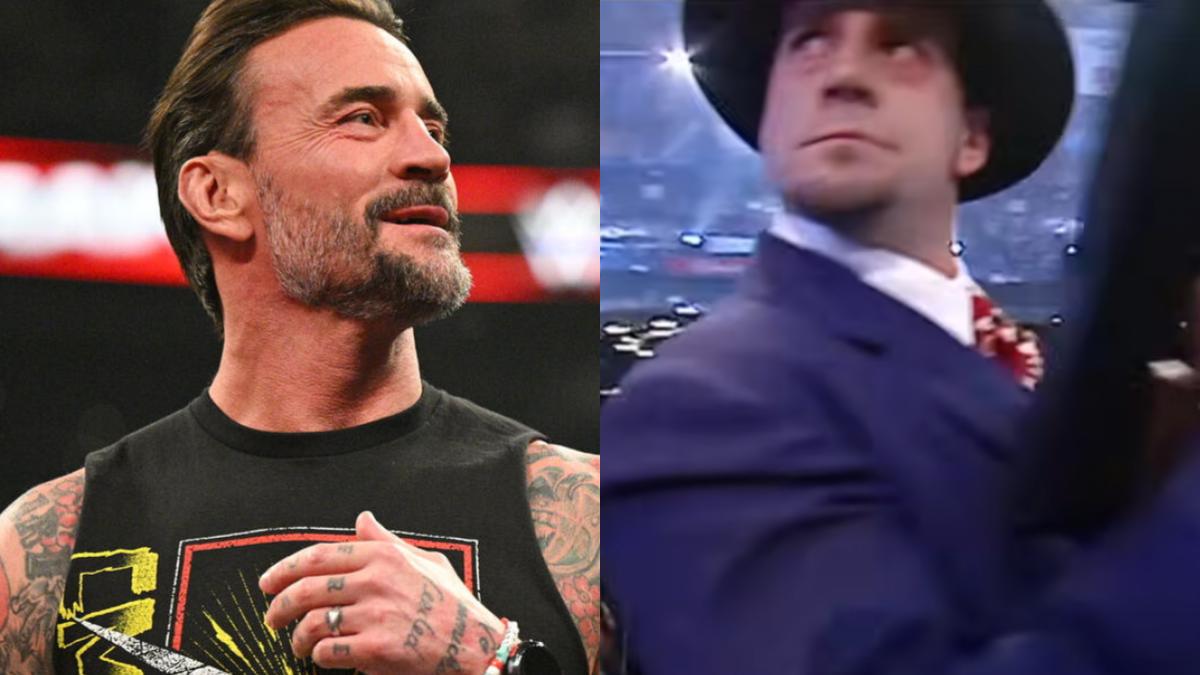
The 1920s Cadillac in the Rosemont cold
Rosemont, Illinois, on April 2, 2006, was not a place for the faint of heart or the poorly dressed. The Allstate Arena was vibrating with a specific, caustic energy that only a Chicago crowd can produce when they feel a corporate product is being shoved down their throats. John Cena was about to enter his first WrestleMania main event as the defending champion, facing off against the quintessential 'Cerebral Assassin' Triple H.
To sell the 'Gangster' vibe of the night, WWE hired a group of local extras to stand on the running boards of a vintage 1920s Cadillac. They wore pinstripe suits, fedoras, and held prop Thompson submachine guns with the stoic boredom of men earning a quick paycheck. One of those men was a skinny, tattooed kid from the Chicago indies named Phil Brooks.
At that moment, CM Punk was just a face in the crowd of hired hands, a mercenary with a gun he couldn't fire and a suit that probably didn't fit quite right. He was 27 years old, freshly signed to a developmental deal, and miles away from the spotlight he now occupies as the WWE World Heavyweight Champion heading into WrestleMania 41 in Las Vegas.
A champion haunted by his own shadow
Punk recently admitted that every single time he walks into a WWE building today, he thinks about that night in Rosemont. It isn't just a nostalgic quirk or a humblebrag about his humble beginnings. It is a tactical anchor for a man who has built an entire career on the friction between being an outsider and becoming the ultimate insider.
As WrestleTalk recently noted, Punk considers that entrance the one WrestleMania moment he will never forget. It represents the ultimate divide in his career: the moment he was closest to the sun without actually feeling the heat. He was literally guarding the man he would eventually spend a decade trying to dismantle both in the ring and on the microphone.
The irony of 2026 is that Punk has effectively become the John Cena of this era. He is the elder statesman, the reliable box-office draw, and the man holding the gold while the next generation looks for a weakness in his armor. When he walks through the curtain at Allegiant Stadium next week, he won't be on a running board; he'll be the one the extras are paid to look at.
The symmetry of the Las Vegas farewell
We are currently six days away from WrestleMania 41 Night 1, and the narrative threads are almost too clean. John Cena is in the midst of his farewell tour, preparing to take his final bow on the grandest stage of them all. Meanwhile, Punk sits atop the mountain, holding the World Heavyweight Championship with a grip that feels increasingly desperate as the years catch up to his joints.
There is a tactical shift in how Punk works now compared to the 2011 'Summer of Punk' version. The 2026 Punk is a master of economy. He doesn't waste steps. He understands that a well-timed rolling elbow or a stiff kick to the ribs carries more weight than a dozen high-flying spots. He is wrestling like a man who knows his expiration date is printed on the back of his neck.
In Las Vegas, he faces a locker room that is younger, faster, and arguably more athletic than the one he navigated 20 years ago. The question isn't whether Punk can still go—he proved that with his 30-minute clinic at Royal Rumble—but whether he can maintain the psychological edge when he is no longer the hungry extra looking for a way in.
The cracks in the straight-edge armor
For all the praise heaped upon Punk's current title reign, we have to acknowledge the growing stagnation in his creative output. Since winning the title back in October, his promos have pivoted away from the biting social commentary that made him a star. He has leaned heavily into the 'I'm just happy to be here' veteran trope, which often feels like a mask for a lack of genuine rivalry.
His recent feud with the younger talent has lacked the visceral hatred of his work with MJF or Samoa Joe. It feels safe. It feels like a champion who is more concerned with protecting his legacy than challenging the status quo. The fire that burned in that 1920s Cadillac has been replaced by the steady, controlled glow of a corporate fireplace.
At WrestleMania 41, safe won't cut it. Allegiant Stadium will house over 70,000 fans who expect the 'Best in the World' to deliver something more than a greatest hits compilation. If Punk spends too much time reminiscing about being an extra, he might find himself becoming an afterthought in his own main event.
The ghost of WrestleMania 22 returns
There is a specific cadence to a CM Punk match that involves a lot of mid-match storytelling and trash talk. He excels when he can slow the pace to a crawl and make his opponent second-guess their own strategy. But against a high-octane opponent on Night 1, that tactical slowing might be his downfall. If he gets caught in a cycle of nostalgia, he'll be hit with a finisher before he can finish his inner monologue.
We have seen this before. Veterans who get too caught up in the 'full circle' nature of their careers often lose the killer instinct required to stay at the top. Punk is obsessed with the history of this business, sometimes to his own detriment. He wants every match to be a poem, but sometimes you just need to win a fight.
The Allstate Arena crowd in 2006 didn't care about the extras on the car. They cared about the 60-minute battle for the soul of the company. In 2026, the Vegas crowd will be equally unforgiving if Punk delivers a performance that feels more like a hall-of-fame induction speech than a title defense.
The final transition from prop to protagonist
When the pyro goes off in Las Vegas, the pinstripe suit from 2006 will be exactly two decades in the rearview mirror. Punk has spent those 20 years clawing his way from the side of a car to the center of the ring. It is a journey that has involved walkouts, lawsuits, and a return that many thought was impossible.
But the most difficult part of the journey isn't getting to the top; it's realizing when the climb is over. Punk is currently at the summit, and the view is spectacular, but the air is thin. He is no longer the kid with the prop gun; he is the target. Every young wrestler in the back is currently looking at him the same way he looked at Cena in 2006—as a hurdle to be cleared.
If WrestleMania 41 is to be Punk's definitive statement as champion, he has to stop looking back at the Cadillac. He has to embrace the reality that he is now the establishment he once despised. He is the champion, he is the veteran, and he is the man with everything to lose.
The pinstripe suit was a disguise for a kid who didn't belong. The World Heavyweight Championship is the reality for a man who finally does. Whether he can handle the weight of that reality in front of a global audience remains the biggest gamble in a city built on them.
WrestleMania is not a place for extras. It is a place for icons. Punk has spent his entire life trying to prove he belongs in the latter category. In six days, the notebook will be closed, the props will be put away, and the only thing that will matter is whether the 'Best in the World' can still live up to the moniker he gave himself when he had nothing but a suit and a dream.
Read Next
- John Cena's final WrestleMania walk is the only thing that matters in Vegas
- WrestleMania 41 is the ultimate test of the Cody Rhodes era
- Las Vegas is about to host the most tactical week in wrestling history
- Jade Cargill is the most expensive weapon WWE still hasn't figured out how to use
- 🏆 WrestleMania 41 — Full Coverage Hub
- 👴 John Cena Retirement Tour 2026
- 💊 CM Punk WWE 2026 — Best in the World
WWE Cody Rhodes American Nightmare T-Shirt
Rep the American Nightmare with his iconic skull logo.
More Coverage
Top 10: The Definitive Ranking of Mid-Summer WWE Moments
an hour agoThis Week in Wrestling: MSG Stardust and Championship Shakeups (Jul 13–Jul 19, 2026)
2 hours agoKarl-Anthony Towns at Saturday Night’s Main Event was a fever dream gone wrong
2 hours agoKarl Anthony Towns just created the weirdest wrestling moment of 2026
2 hours ago
LA Knight turns viral frustration into a merchandise play
2 hours ago
WWE roster health check: The mid-summer injury grind hits home
2 hours agoMore Analysis

CM Punk and the burden of his own expectations
3 months, 1 week agoCM Punk is finally doing the job he was meant for
3 months, 1 week ago
CM Punk’s WrestleMania ego check is coming this weekend
3 months agoCM Punk's road to WrestleMania 41 is a miracle of spite and fragile knees
3 months, 3 weeks agoCM Punk's decade of chaos is exactly what WrestleMania 41 needs
3 months, 3 weeks ago