The Post-Mania Fallout and the Art of the Pivot
The week following WrestleMania 41 has been a whirlwind of corporate synergy and retirement speeches, but the most interesting conversation in the industry isn't about John Cena’s farewell or Cody Rhodes’ title defense. It’s about the blueprint for survival in a business that treats talent like depreciating assets. Chelsea Green just wrapped a series of media appearances that served as a masterclass in professional wrestling self-preservation. While the April 2026 roster shifts have everyone on edge, Green remains the singular example of how to turn a pink slip into a gold mine.
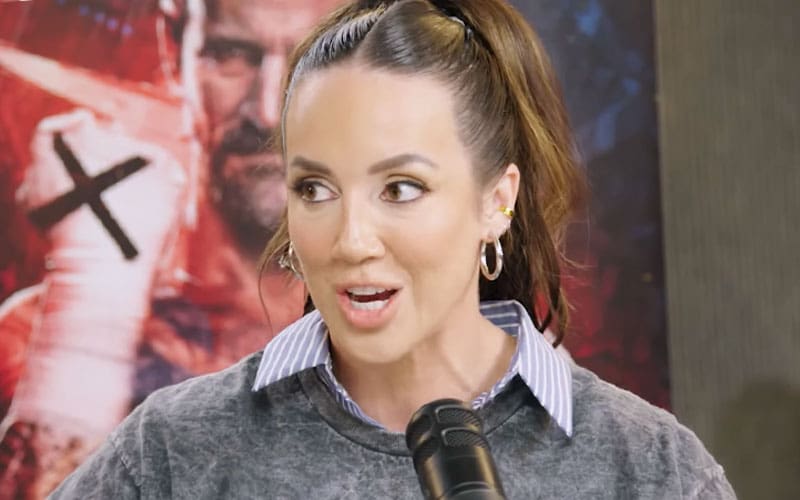
Looking back at the mass releases that defined her earlier career, Green has become the patron saint of the 'independent reinvention.' She didn't just survive being cut; she leveraged the rejection to build a character that was more valuable than anything the writers had originally scripted for her. In her recent sit-down, she reflected on the days when her name was just another line on a spreadsheet, and how she decided to make sure that spreadsheet never got closed again.
The industry has changed since the days of simple territory jumps. Now, a release is a public branding exercise. Green understood this better than most, recognizing that the 90-day non-compete window was actually a 90-day marketing window. She didn't spend that time bitter; she spent it in the gym and on the phone with every promoter who had a ring and a camera. It was a calculated, cold-blooded approach to a business that often relies too heavily on sentimentality.
The GCW Invasion and the Cardona Blueprint
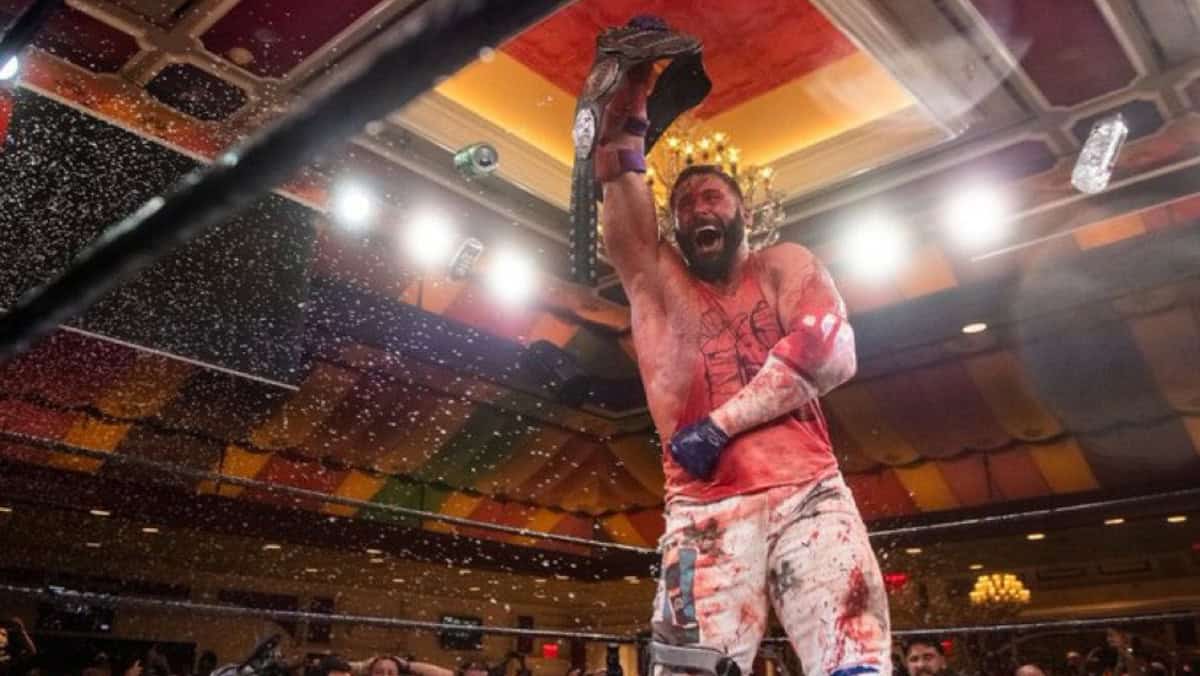
The turning point for Green’s career wasn't a match in a stadium, but her appearance at GCW’s Joey Janela’s Spring Break X. That event, more than any other, signaled her arrival as a legitimate independent power player. Alongside Matt Cardona, she embraced a role that was essentially 'corporate toxicity' personified. They showed up to the gritty, blood-soaked rings of GCW looking like they just stepped off a private jet from Connecticut, and the heat was instantaneous. It wasn't just noise; it was a visceral rejection of their characters by the fans, which they converted into pure currency.
Working the indies wasn't just about keeping the rust off. It was about proving that she could command a room without a billion-dollar production team behind her. The source material highlights her time in GCW as the moment the 'WWE castoff' label died. She became a 'Deathmatch Royalty' figure, a jarring contrast to the aesthetic of the promotion. That contrast was the hook. She knew that in a room full of people wearing black t-shirts and jeans, the person in the sparkling sequence gown is the only one anyone is going to remember.
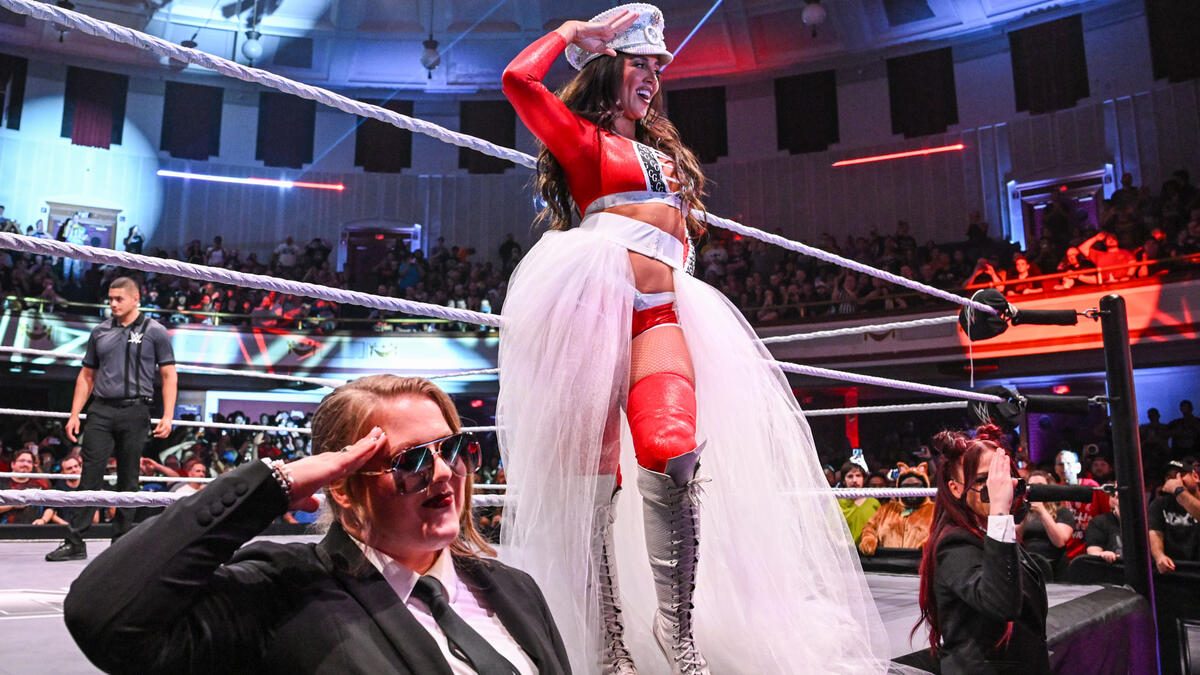
Her partnership with Cardona was a stroke of genius that redefined the 'power couple' trope in wrestling. They weren't just two people dating; they were a traveling circus of entitlement. They understood that the modern wrestling fan hates nothing more than being reminded of the corporate machine, so they leaned into that machine. They became the ultimate heels by being exactly what the indie fans feared: the polished, arrogant, and untouchable stars who thought they were better than the building they were standing in.
The Comedy Ceiling and the Critical Reality
However, we have to look at the current state of her run with a critical eye. While her 'Karen' persona is undeniably effective at generating television minutes, it raises questions about her long-term ceiling as a main event player. At WrestleMania 41, Green was once again the highlight of the mid-card comedy segments, but she was nowhere near the championship picture. There is a very real danger that she has become too good at being funny. In a business that still prioritizes 'work-rate' epics for its top prizes, Green's focus on character work might be her own glass ceiling.
Watching her in the ring, the athleticism is there, but it’s often overshadowed by the theatrics. Her signature Unprettier is a great move, but we rarely see her in a position where the match itself is the draw rather than her pre-match tantrum. If she wants to be seen as more than a high-level character actor, she needs to have that 20-minute grueling technical showcase that proves she can hang with the likes of Rhea Ripley or Charlotte Flair on a purely physical level. Right now, she’s a great TV character, but is she a Tier 1 champion?
The skeptics will point out that her current trajectory is safe. It’s profitable, it’s repeatable, and it keeps her on the screen. But safe doesn't win the big one. There was a missed spot during a recent tag match where the comedy bit took so long to set up that the crowd started to lose the thread of the actual competition. That’s the risk you run when the gimmick eats the match. Real journalism requires acknowledging that while she is a marketing genius, her in-ring legacy is currently secondary to her social media metrics.
The 2026 Outlook and the Survivor's Mentality
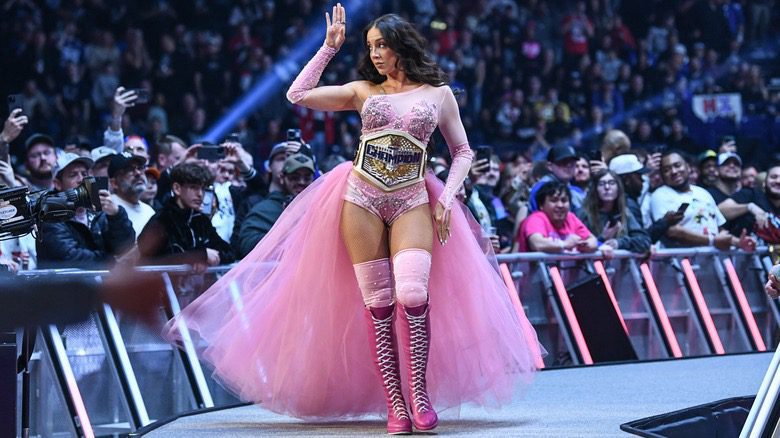
As we head toward WWE Backlash on May 9, Green finds herself in a familiar position: the most talked-about person on the show who isn't in a title match. She has mastered the art of being 'essential' without being 'the lead.' That is a rare skill in a locker room full of people fighting for the same three spots at the top of the card. She has carved out a niche that belongs entirely to her, making her release-proof in a way that pure technical wrestlers rarely are.
The lesson of Chelsea Green is that the wrestler is now a media company. You cannot just be good at the 'rolling elbow' or the '450 splash.' You have to be good at the 15-second TikTok clip and the 280-character tweet. Green isn't just a wrestler; she is a content creator who happens to work in a ring. It’s a cynical view of the sport, perhaps, but it is the only one that guarantees a paycheck in the 2026 economy. She survived the cuts because she made herself more expensive to lose than to keep.
Ultimately, the industry needs people like Green to remind it that personality still moves the needle more than a clean bridge on a suplex. Her journey from a 'mass release' statistic to a focal point of the post-Mania media blitz is the definitive story of modern wrestling. She didn't wait for a door to open; she filed a lawsuit against the door for being the wrong shade of white and then charged admission for people to watch her break it down. Whether or not she ever holds the big gold belt, she has already won the most important match in the business: the one against irrelevance.
Read Next