The long road back from a mid-2025 setback
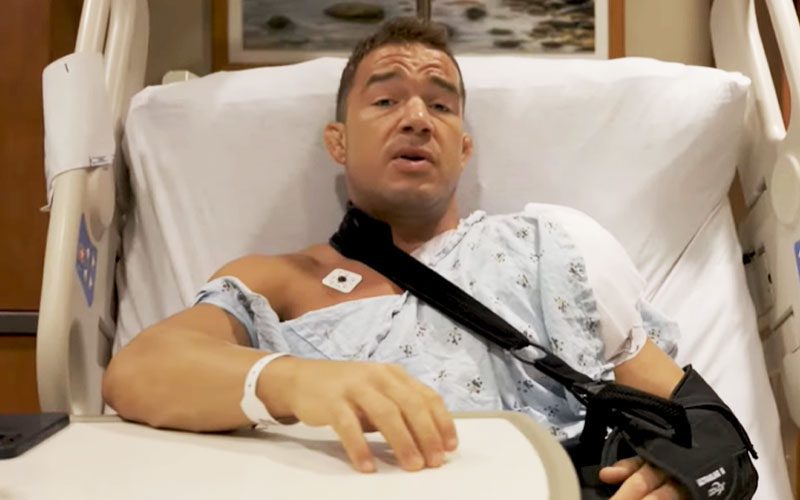
Chad Gable has finally pulled back the curtain on the medical issues that derailed his trajectory in 2025. In a newly released recovery video, the technical specialist walked fans through the timeline of an injury that initially seemed like a standard bump but masked a far more taxing reality. As Wrestling Inc recently detailed, Gable was blindsided by the official medical assessment after attempting to work through what he suspected was minor muscle irritation.
Gable noted that he felt the initial snap during a high-leverage sequence earlier that year. He attempted to manage the inflammation with standard ice protocols and basic range-of-motion drills, mistakenly believing that his conditioning would keep him in the rotation. It was a tactical error. Professional wrestling bodies at that level are built to mask fatigue, but internal structural shifts cannot be pushed aside through sheer intensity or training discipline.
The medical disconnect in modern booking
The core issue here is the gap between in-ring sensation and imaging accuracy. Gable admitted he was surprised by the prognosis when the MRI results finally landed. Athletes often operate on a feedback loop where they trust their joints to hold up under the stress of an Olympic-style suplex or a rolling chaos theory, only to find the underlying tissue had already hit its breaking point weeks prior.
This is a recurring theme. We have seen similar cases across the industry where performers ignore micro-tears in the labrum or meniscus, only to watch a four-week recovery turn into a six-month hiatus. Gable’s delay in seeking advanced imaging likely exacerbated the timeline. It serves as a reminder that even the most elite shooters in the business are not exempt from basic human physiology.
Impact on the mid-card mechanics
Gable’s absence created a noticeable void in the technical presentation of the mid-card. WWE leans heavily on his ability to elevate younger talent through mat-based exchanges, and his extended recovery forced a pivot in booking that lacked his specific brand of competitive friction. Without his presence, several scheduled programs had to be compressed or scrapped entirely.
His return to form is vital, but the strategic fallout remains clear. WWE spent the better part of 2025 shuffling personnel to cover his spots, often resulting in lower-quality strike exchanges in marquee bouts. The reliance on one specialist to anchor the technical side of the show is a risk that the medical team and the front office need to manage with more oversight. Waiting until a performer is compromised to check them for structural damage is a flawed operating procedure.
Looking toward the late 2026 calendar
With the 2026 major event cycle now shifting into high gear—especially with the massive distraction of the upcoming FIFA World Cup—Gable’s return needs to be calculated. The physical demands of the ring haven’t changed, even if the medical facilities in Stamford have improved significantly. He is currently navigating a return to full-speed drills, but the risk of recurring trauma is statistically high for his style of engagement.
Analysts suggest his transition back into the rotation should be strictly monitored to prevent a relapse. If he jumps back into 20-minute grapple-heavy matches immediately, the historical data on these types of soft-tissue setbacks suggests he could be back on the shelf by the end of the year. The recovery timeline for his specific injury is officially estimated at 9 months, putting his sustained physical viability under the spotlight moving forward.
A pattern of ignoring threshold limits
Gable is not the first, nor will he be the last, to play down injury markers. The culture of “working through it” is baked into the DNA of the performance center, but the 2025 season showed that such logic is increasingly outdated. Organizations are now shifting toward a more data-driven approach, utilizing motion-capture analysis to spot fatigue cycles before the snap happens.
Whether Gable fully integrates these preventative measures into his late-career strategy will determine his longevity. The gap between a main-event player and a talent left on the sidelines is often just one missed MRI scan. It is a harsh game of attrition where the smartest wrestlers are the ones who learn when to stop, rather than how much more they can endure.