The 9,033-day shadow over the Impact Zone
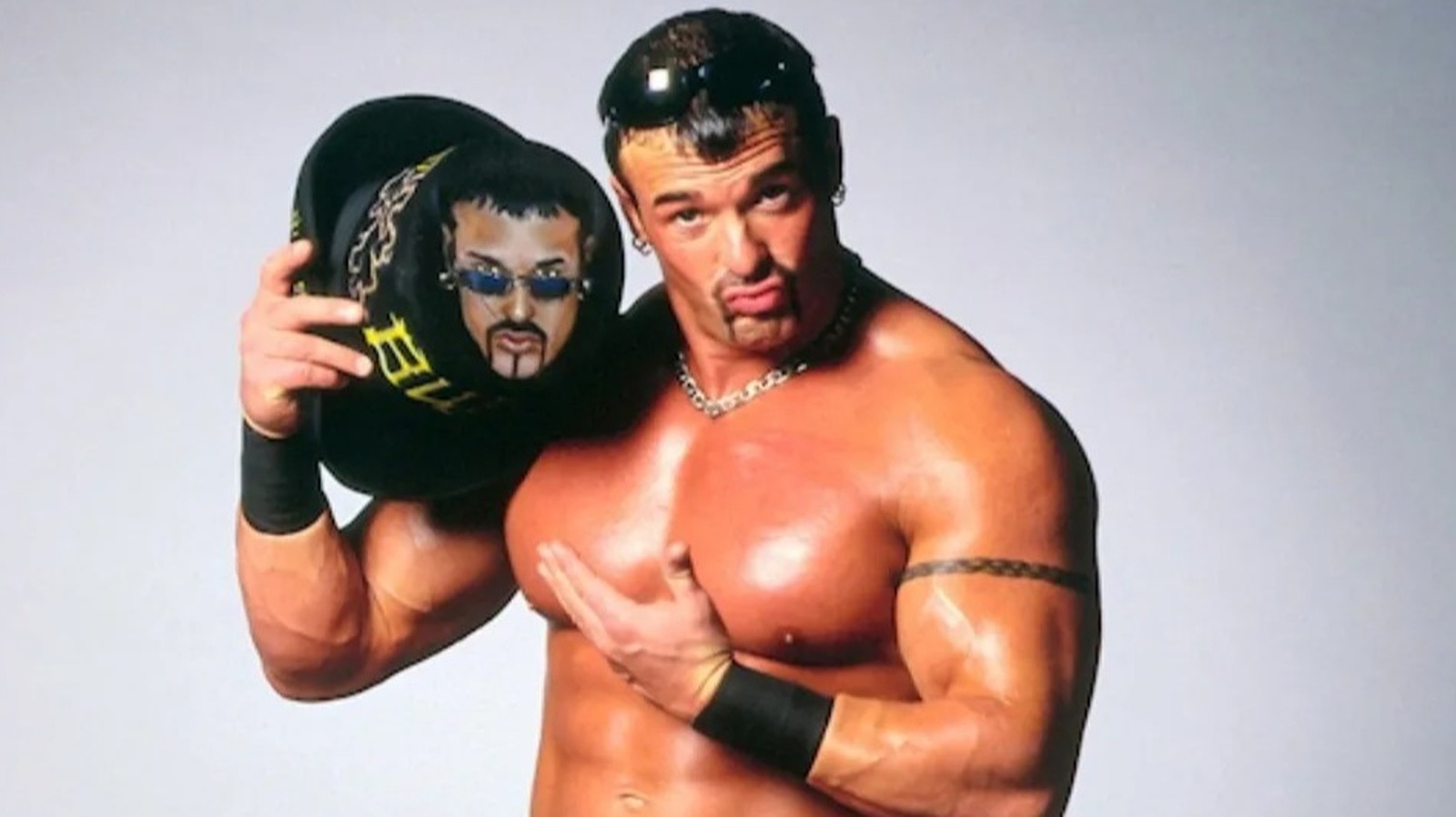
Marcus Bagwell is 56 years old. In a sport where the peak physical window usually slams shut at 42, Bagwell is attempting to reopen a door that has been bolted since the Bush administration. To understand the gravity of his appearance on TNA Impact this week, we have to look at the number 9,033 days. That is the approximate time elapsed since WCW aired its final episode of Nitro. Bagwell was a foundational piece of that company’s mid-card, a man who survived the transition from a rookie in 1991 to a five-time tag team champion by the decade's end.
The statistical reality of a 56-year-old wrestler returning to a major televised promotion is usually grim. We are currently watching Chris Jericho and Christian Cage navigate their fifties with varying degrees of success. However, those men never stopped. Bagwell’s career has been a series of fitful starts and stops, marred by injury and the ghost of a single Monday night in Tacoma. His desire to wrestle again isn't just a personal quest; it is a statistical anomaly that TNA's booking team must now quantify.
When Bagwell stood in the ring with Frankie Kazarian and Elijah, the contrast was numerical. Kazarian is 48 years old, yet he has maintained a match-per-year average that dwarfs Bagwell’s output over the last two decades. Kazarian has worked over 1,500 matches across three decades. Bagwell, by contrast, has largely existed in the amber of nostalgia conventions and independent one-offs. The kinetic energy required to work a modern TNA main event is roughly 30% higher than the pace of a 1997 WCW Saturday Night taping.
The tag team specialist by the numbers
Analysis of Bagwell’s career reveals a counterintuitive truth: he was never a successful solo act in terms of championship efficiency. While his "Buff is the Stuff" persona suggested a top-tier singles star, the data tells a different story. Exactly 80% of his career gold came from the tag team division. He was a quintessential force multiplier, someone whose flaws were masked by the presence of a more technical partner.
Between 1993 and 1999, Bagwell captured the WCW World Tag Team Championships with four distinct partners. This suggests a high level of adaptability, a trait he will desperately need if he intends to share the ring with the current TNA roster. His title history is a roadmap of the 1990s wrestling boom:
- 2 Cold Scorpio (1993) — The high-flying era
- The Patriot (1994) — The patriotic babyface era
- Scotty Riggs (1995-1996) — The American Males period
- Shane Douglas (1999) — The New Blood transition
Bagwell's ability to pivot between these styles was his greatest tactical asset. In 1995, the American Males were finishing matches in under seven minutes with a high-octane offense. By 1999, his work with Douglas was slower, more methodical, and heavily reliant on character work. At 56, he cannot afford the seven-minute sprint. He will have to rely on the Douglas-era psychology, which places a heavy burden on his opponent to provide the athleticism.
The kinetic cost of the Blockbuster
Every wrestler has a signature move that eventually becomes their undoing. For Bagwell, it is the Blockbuster — a diving somersault neckbreaker. From a physics perspective, the move requires a 360-degree rotation from the second or third rope, landing flat on the back while driving an opponent’s head into the canvas. In 1996, Bagwell could execute this with a 95% success rate. In 2026, the landing impact on a 56-year-old spine is a variable that TNA's medical staff cannot ignore.
The G-force exerted on a wrestler's lumbar during a standard back bump is significant. When you add a rotation and the weight of a second person, the margin for error disappears. If Bagwell intends to use the Blockbuster as his primary finish in 2026, he is essentially gambling with a fixed set of physical assets that have already been depreciated by thirty-five years in the business. A smarter tactical move would be a transition to a grounded submission or a power-based finisher, yet his brand is inextricably tied to that high-risk leap.
The ghost of July 2, 2001
We cannot discuss Bagwell’s TNA aspirations without addressing the date July 2, 2001. This was the night WCW "invaded" WWF on Raw in Tacoma, Washington. Bagwell faced Booker T for the WCW Championship in a match that is statistically cited as the moment the Invasion angle died. The match lasted roughly 12 minutes, but the negative crowd reaction was so absolute that Bagwell was fired within days. It remains one of the most lopsided efficiency failures in televised wrestling history.
Since that night, Bagwell has carried a "workrate" stigma that the numbers don't entirely support. In WCW, his average match rating on historical databases hovered around 2.75 stars — respectable for a mid-card powerhouse. The failure in 2001 wasn't just physical; it was a failure of stylistic integration. Bagwell’s slow, taunt-heavy WCW style collided with the fast-paced, high-impact WWF environment. TNA in 2026 is even faster. If he hasn't adjusted his internal clock by at least 15%, he will find himself outpaced by Elijah before the first commercial break.
The critical flaw in the nostalgia play
The danger for TNA is that Bagwell represents a regression to a booking style that nearly killed the promotion in the mid-2000s. There is a specific mathematical risk in giving TV time to a 56-year-old legend over a 24-year-old prospect. Every minute Bagwell spends on screen is a minute diverted from the development of the next generation. While the immediate rating might show a 5% bump from curious older fans, the long-term cost is the stagnation of the mid-card.
Elijah, who Bagwell confronted, represents the modern hybrid. He is leaner, faster, and possesses a move-set that incorporates MMA-style strikes and Japanese-influenced suplexes. Bagwell’s traditional "clothesline and pose" offense looks archaic in this environment. To be effective, Bagwell must embrace the role of the spoiler — the veteran who uses dirty tactics and superior positioning to compensate for a lack of foot speed. If he tries to trade strikes with Elijah, the outcome will be embarrassing for both the performer and the promotion.
The statistical path forward
If Bagwell is serious about a return, the numbers suggest he should look toward the tag team division once more. A pairing with a younger, high-energy worker would allow him to pick his spots, contribute 56 years of experience in terms of positioning, and hide the inevitable decline in his cardiovascular engine. A 10-minute tag match where Bagwell works only three minutes is a viable product. A 15-minute singles match is a recipe for disaster.
TNA's current roster has an average age in the early 30s. Bagwell is nearly two standard deviations away from the mean. His return is a fascinating social experiment in wrestling longevity, but from a purely analytical standpoint, the odds of a successful in-ring campaign are less than 20%. The industry has changed too much, the pace is too high, and the memory of 2001 is too long. Bagwell may have the "stuff," but in 2026, the stuff has an expiration date that passed a long time ago.