The silent death of an era
You woke up today and the quietest, most significant shift in modern wrestling broadcasting had already happened. As PWInsider reported, TrillerTV quietly removed the ability to purchase new subscriptions to AEW Plus. No press release. No grand announcement on Dynamite. Just a dead link on a Thursday.
If you know, you know. For international fans, and a massive chunk of domestic viewers armed with a halfway decent VPN, TrillerTV was the lifeblood of the weekly experience. It was the uncut feed. The uninterrupted picture-in-picture segments where you could actually hear the chops instead of a fast-food commercial.
The occasional hot mic from Excalibur and Taz during commercial breaks felt like you were eavesdropping on two friends at a bar. That era is dead. Its sudden demise, exactly four days out from AEW Dynasty 2026, is the loudest signal yet that the Warner Bros. Discovery streaming transition is finally crossing the finish line.
The true cost of streaming
Let's be honest about what AEW Plus actually was. Yes, it was an international broadcast deal meant for the UK, Australia, and parts of Europe. In reality, it was the worst-kept secret in American wrestling.
For a low monthly fee, you bypassed the outdated cable television model entirely. You avoided the bloated TNT and TBS app restrictions. You secured a clean, high-definition feed of Dynamite, Rampage, and Collision.
More importantly, you bought the pay-per-views at a fraction of the domestic price. While stateside fans dropped fifty dollars on Bleacher Report—a platform notorious for crashing right as the main event entrances started—the TrillerTV crowd paid twenty dollars and enjoyed a flawless stream.
Tony Khan knew this. WBD executives definitely knew this. You cannot secure a massive media rights renewal while tens of thousands of your most dedicated viewers actively circumvent your domestic broadcast partner.
The loophole had to close eventually. We always knew the hammer was coming down. We just didn't expect it to drop in late March, right before a major premium live event at the T-Mobile Center.
The Max gamble
This shutdown points in one inevitable direction. The integration of the wrestling library and live events onto the Max streaming platform has been the white whale of wrestling media for three years. Every media scrum featured the same question. Every quarter, fans expected an announcement that never materialized.
Now, the corporate machinery is shifting. You don't freeze new revenue on a reliable platform unless you are contractually obligated to funnel those prospective subscribers somewhere else. The timing is completely deliberate.
AEW Dynasty takes place on March 30 in Kansas City. It is highly likely we are about to see the first major test of a simultaneous Max broadcast.
Here is the critical problem. AEW has a historically spotty track record with live broadcasting technicalities. We have seen audio mixing issues plague Dynamite for years. Entrance themes regularly get drowned out by crowd noise, or vice versa.
Bleacher Report was a disaster for PPV delivery. It routinely locked users out of events they had just purchased. TrillerTV, for all its niche status, actually worked. It rarely buffered. It rarely crashed.
Moving the entire streaming operation to Max—a platform that has experienced its own growing pains with live sports—is a terrifying proposition. If the stream buffers during a near-fall on March 30, the narrative will instantly shift from the quality of the matches to the incompetence of the delivery.
The pressure on Kansas City
The stakes for Dynasty just magnified tenfold. Delivering a great wrestling show is no longer enough. The entire event serves as a corporate proof of concept.
If the WBD executives are watching, the product has to be flawless from minute one. If the casual Max subscriber who happens to click on the live banner is watching, the hook has to be immediate.
Tactically, the roster has to know the stakes. The pacing of the card needs to be relentless. There is zero room for the sloppy, overbooked multi-man matches that sometimes drag down the middle hours of a pay-per-view.
The transition to a mainstream streaming platform means capturing a different kind of audience. An audience that will absolutely change the channel if a match devolves into an incoherent spotfest with blown assignments and obvious cooperation.
We are looking at a card that has to justify the new era. It means the top of the card has to wrestle with a sense of urgency. When you strip away the hardcore fans who will watch regardless of the platform, you are left with a viewer who demands top-tier athletic competition and logical storytelling.
Swerve and Ospreay clash
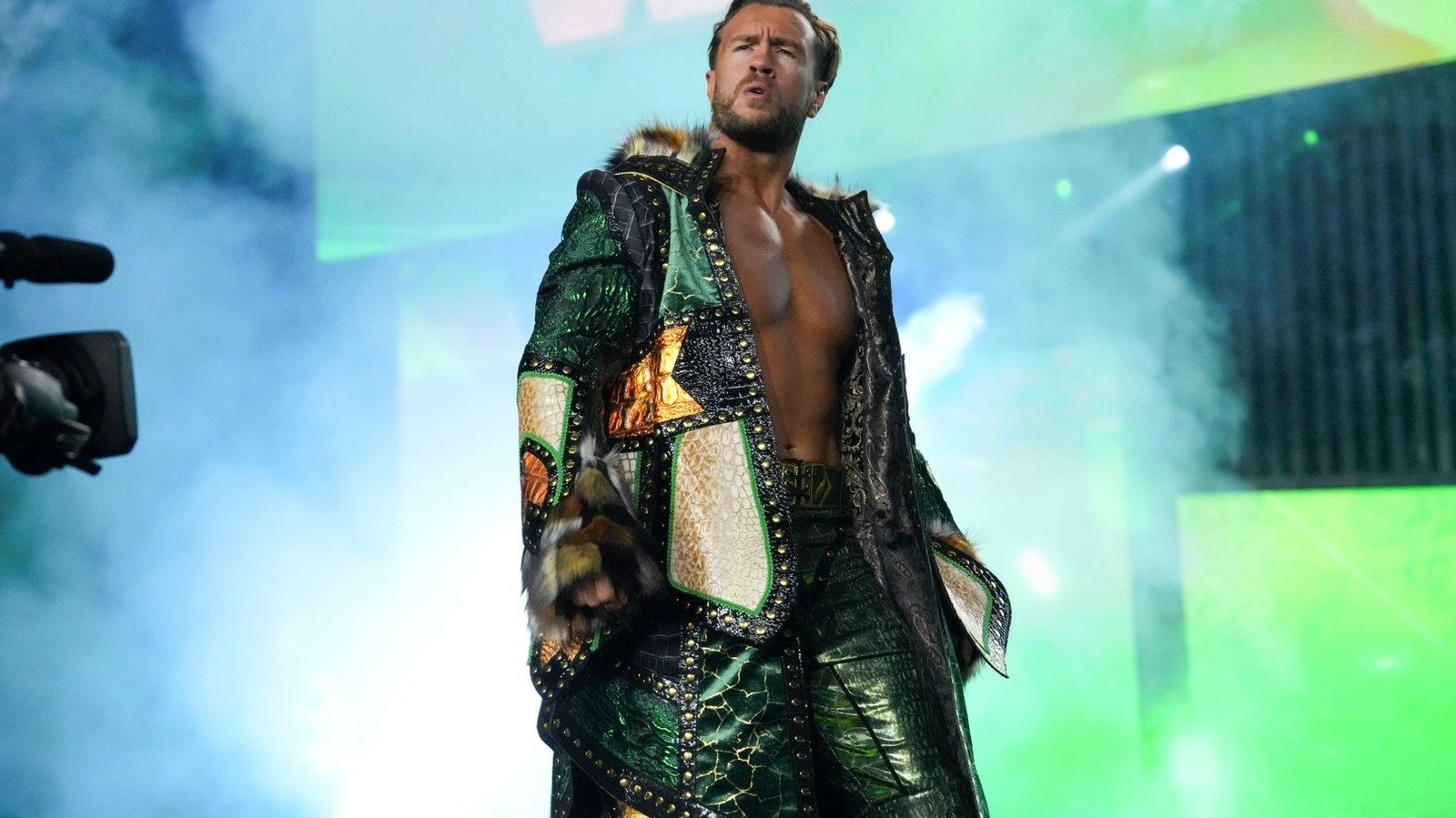
With the broadcast situation in flux, the actual in-ring product on March 30 has to be bulletproof. Let's look at the top of the card. The main event is the inevitable collision between Will Ospreay and Swerve Strickland.
This isn't just a title match. It's a clash of two entirely different offensive philosophies. Ospreay has spent the last year refining his pacing. He no longer relies on the breathless sprints that defined his early New Japan run.
He picks his spots. He uses the Hidden Blade as a sudden, terrifying counter rather than a predictable setup move. Strickland, on the other hand, is a master of deceleration.
Swerve slows the match down. He forces his opponent into grappling exchanges they don't want, and then explodes with the House Call kick.
The tactical battle here is about ring positioning. If Swerve can keep Ospreay pinned against the ropes or locked in the corners, he neutralizes Ospreay's aerial explosive power.
If Ospreay finds space in the center of the ring, Swerve's methodical pacing will get blown up in seconds. I predict Swerve tries to ground him early, targeting a limb. Ospreay's sheer cardiovascular endurance will drag it into deep waters.
My prediction: Ospreay wins at the 25-minute mark, but it will be a brutal, ugly victory.
Hayter returns to form
Then there is Mercedes Moné versus Jamie Hayter. This is the match the division desperately needed. For months, the booking of the women's division has felt aimless.
It has relied on repetitive interference finishes and clunky multi-woman tags. It has been the glaring weakness on Dynamite.
Hayter brings a bruising, unapologetic physicality that Moné hasn't faced since her STARDOM excursion. The key to this match is the initial lock-up. Moné is brilliant at working the arm, setting up the Bank Statement.
Hayter throws lariats that look like they could decapitate a heavyweight. If Moné tries to trade strikes with Hayter, she loses. Her only path to victory is evasive maneuvering and forcing Hayter to overextend.
My concern here is the refereeing. AEW officials have a terrible habit of losing control of high-stakes matches. They allow brawls to spill to the outside for far too long without a count.
If this turns into a walk-and-brawl around the barricades, it ruins the story of an in-ring technical masterclass. They need to keep it between the ropes.
Okada versus Page
The wild card of the night is Kazuchika Okada against Hangman Adam Page. Okada's adaptation to American television wrestling has been fascinating.
He relies less on the epic 40-minute NJPW main event formula and more on character work, arrogance, and the Rainmaker as a sudden execution.
Page is the emotional core of the roster, but his recent in-ring form has been erratic. He wrestles like a man constantly trying to prove something, rushing his setups and taking unnecessary risks.
Okada will exploit that impatience. Look for Okada to use his signature dropkick to intercept Page out of mid-air during a Buckshot Lariat attempt.
That is the exact kind of counter Okada excels at. He waits for the opponent to make a high-risk mistake.
The financial reality
There is a harsh financial reality approaching for the fanbase. The TrillerTV era was subsidized by favorable exchange rates and the sheer volume of content provided for a minimal monthly fee.
If the pay-per-views move to Max, the pricing model will inevitably change. Will it be included in a premium Max tier? Will it be an add-on package similar to the UFC on ESPN Plus?
Whatever the structure, the days of the cheap pay-per-view are likely over for the international and VPN-savvy audience. The cost of convenience is going up.
This is the price of playing in the big leagues. You cannot demand to be treated as a peer to the WWE while simultaneously demanding the pricing structure of an independent promotion.
The WBD deal is the financial bedrock that ensures the company's survival for the next five years. It guarantees they can continue to offer massive contracts to top free agents. But it also means the product has to be monetized aggressively.
The final verdict
Alongside the TrillerTV shutdown, there is also news of an official AEW book going on sale. It seems like a minor detail, but it speaks to a broader strategy of brand solidification.
You release a historical book when you feel you have established a permanent footprint in the industry. It is an assertion of legacy.
But legacy doesn't pay the talent. Broadcasting revenue does. The book is a nice piece of merchandise, but the real story is the tectonic shift in how fans will actually watch the product.
I predict we will get an official announcement regarding Max either on Rampage tomorrow night or during the Dynasty pre-show. The timing is too tight, the TrillerTV move too sudden, for there not to be a coordinated rollout plan in place.
For the matches themselves, expect a grueling, physical main event on March 30. The roster knows the eyes on them are different now. The corporate reality dictates that they deliver a spectacle.
They have the talent. They have the ring generals capable of laying out masterpieces. The only question is whether the streaming delivery will hold up long enough for the world to see it.
Read Next