AEW Collision's Thursday detour proves pre-emptions are still a killer
The brutal math of the TV guide
Wrestling fans are creatures of habit. You condition an audience for years to tune in on a specific night, at a specific time, and they reward you with loyalty. But the moment you start messing with the formula, that loyalty gets tested. Often, it snaps entirely.
That was the harsh reality for AEW this past week. The numbers are in for the April 2 broadcast of AEW Collision, and they reflect a predictable reality of the television business. As reported by Wrestling Inc, the show experienced a noticeable drop in both total viewership and key demographic ratings. The reason was entirely logistical. The show was pre-empted from its usual Saturday home and shifted to a Thursday night slot.
This is not a reflection of the in-ring product. It is a reflection of the brutal mechanics of cable television in the spring. When traditional sports programming requires the prime real estate, professional wrestling is always the first casualty. But for a wrestling company trying to build momentum, a timeslot shift acts as a massive speed bump.
The communication breakdown
Here is where AEW deserves some sharp criticism. Their strategy for communicating these schedule changes remains frustratingly passive. Relying on a fast-talking announcer to speed-read through a graphic during Wednesday night Dynamite is simply not enough to re-train a national audience.
When you are asking fans to break their weekend routine and tune in on a Thursday, you have to work for it. They need aggressive digital marketing. They need targeted push notifications. Expecting the casual viewer to memorize a chaotic spring TV schedule is arrogant. Fans have busy lives, and if the show isn't where it normally is, they will just watch something else.
This has been a persistent flaw in Tony Khan's promotional playbook. The core fanbase will seek out the product no matter where it airs. But the casuals require constant reminding. They did not get that reminder for the relocated show.
Thursday night ghosts
Thursday night has an interesting history in professional wrestling. Older fans remember when WWF Smackdown debuted on UPN on Thursdays, instantly becoming a pop culture juggernaut. It was destination television. Later, TNA Impact built its entire identity around Thursday nights during its peak years on Spike TV.
Ironically, TNA Impact also aired a new episode this past Thursday. The F4WOnline report touched on the ratings for both programs, highlighting an accidental Thursday night wrestling block. But the crossover audience isn't as robust as executives might hope. The hardcore fan will sit through four hours of wrestling on a weeknight. The average viewer will absolutely tap out.
Putting Collision head-to-head with Impact, or even adjacent to it, creates unnecessary noise. Wrestling fatigue is real. When you ask a modern audience to consume Dynamite on Wednesday and then follow it up with a relocated Collision on Thursday, you are pushing the limits of their attention span.
The Saturday struggle
Collision was originally designed to be a Saturday night alternative. Launching a prime-time wrestling show on a Saturday was always a massive gamble. The viewing habits on weekends are notoriously difficult to capture, with younger demographics out of the house and older demographics watching college sports or pay-per-views.
Yet, AEW managed to carve out a respectable niche. They conditioned a segment of their audience to treat Saturday night as a wrestling night. Moving the show, even temporarily, disrupts that hard-won habit. It tells the Saturday audience that their show is secondary, a flexible piece of content that can be bounced around the Turner broadcasting schedule on a whim.
Warner Bros. Discovery ultimately calls the shots. If the network needs the timeslot for playoff basketball or college tournaments, AEW has to comply. This is the reality of being a non-tier-one sports property on a major cable network. But understanding the business logic does not make the creative execution any easier.
Momentum leading into Double or Nothing
Timing is everything in professional wrestling. As of today, April 8, 2026, we are fewer than fifty days away from AEW Double or Nothing on May 24. This is the season where every single hour of television matters. Storylines need to peak. Feuds need to escalate. Pay-per-view buys are sold on the strength of weekly TV.
When a show like Collision takes a ratings hit due to a timeslot change, it means fewer eyes on the angles designed to sell that pay-per-view. The wrestlers in the ring might be working incredibly hard, delivering high-level matches and cutting intense promos, but the impact is blunted. The tree is falling in a mostly empty forest.
This puts additional pressure on Dynamite to carry the creative load. If the Thursday night Collision audience was significantly smaller, AEW has to spend valuable minutes on the following Dynamite recapping what happened, effectively stalling the forward momentum of the product to catch up the viewers who missed the displaced episode.
The illusion of delayed viewership
Wrestling promoters love to point to delayed viewership when live ratings drop. The argument is always the same. Fans didn't watch it live because of the time change, but they caught up on their DVR over the weekend. While there is truth to the delayed metric, it rarely makes up for the loss of live engagement.
Live viewing is the lifeblood of professional wrestling. It drives social media conversation. It creates a fear of missing out. When fans watch a show three days later, they already know the results. They skip the entrances. They fast-forward through the commercial breaks. The emotional investment is drastically reduced.
Network executives know this. Advertisers know this. A viewer who watches on a delay on Sunday afternoon is simply not as valuable as a viewer who watches live on Thursday night. Relying on DVR catch-up to salvage a pre-empted episode is a losing strategy in a media environment that demands instant, viral moments.
Lessons from the Monday Night War
History provides a stark warning about treating secondary shows carelessly. During the Monday Night War, WCW treated Thunder as an afterthought. It was frequently pre-empted, bounced around the schedule, and treated as a recap show rather than an essential piece of the puzzle. The audience quickly realized they didn't need to watch it.
AEW cannot afford to let Collision suffer the same fate. When CM Punk launched the show, it had a distinct visual identity, a different pacing, and a roster of dedicated talent. It felt important. Since his departure, the show has struggled to maintain that unique flavor. When you combine creative drift with network pre-emptions, you get the latest ratings report.
The company needs to re-establish Collision as a destination. If it has to move to Thursday for a week, then that Thursday episode needs a main event that feels like a pay-per-view quality match. You have to reward the fans who make the effort to find the show. If you give them a predictable six-man tag team match, you are training them to skip the next pre-emption.
The TNA Impact factor
It is worth diving deeper into the TNA Impact side of the equation. For years, Impact was the undisputed king of Thursday night wrestling. Even today, they maintain a remarkably loyal core audience that treats Thursday as their wrestling night. When Collision landed on the same evening, it created a direct conflict for the die-hard fan.
According to the audience figures from PWInsider, the audience split was notable. Fans had to make a choice. In 2026, forcing a fan to choose between two wrestling shows on a weeknight is a dangerous game. Most fans are already experiencing content burnout from the massive volume of programming produced by WWE and AEW combined.
Impact has the advantage of routine. Their audience expects them on Thursday. AEW was the interloper in this scenario, invading a night where they had no established beachhead. The resulting dip in Collision's viewership was the price of that invasion, a stark reminder that you cannot just drop a show on a new night and expect the audience to blindly follow.
The looming shadow of TV rights
This ratings dip does not happen in a vacuum. AEW is currently navigating the most important period in the company's brief history. Television rights negotiations are ongoing. Warner Bros. Discovery is evaluating the performance of every piece of content on their networks. When Collision pulls a lower number, even with the asterisk of a time slot change, it still goes onto the spreadsheet.
Network executives are not always wrestling fans. They do not sit in boardrooms and say they should forgive the demographic drop because of the schedule. They look at the raw data. A lower average viewership gives the network the upper hand during negotiations. It allows them to argue that the secondary programming is not driving the necessary engagement to warrant a massive rights increase.
Tony Khan knows this. The entire front office knows this. That is why these pre-emptions are so incredibly frustrating for the creative team. They are fighting an uphill battle against the calendar, trying to prove the long-term value of a show that keeps getting bumped for college basketball or playoff hockey.
Fan psychology and the barrier to entry
Watching professional wrestling requires a massive time commitment. Between WWE and AEW, a dedicated fan can consume over ten hours of in-ring action every single week. That is a staggering barrier to entry for a casual viewer. When you disrupt the schedule, you give that viewer an excuse to take a week off.
The psychology of the television viewer is simple. The path of least resistance wins. If a fan turns on TNT on Saturday night expecting Collision and finds a movie playing, they will simply turn off the television or open a streaming app. They are not going to begin a frantic internet search to figure out what day the wrestling show was moved to.
This is the danger of the Thursday night move. It breaks the habit. And once the habit is broken, there is no guarantee the viewer comes back the following Saturday. You have to win them back all over again. Every pre-emption acts as a soft reset for a portion of your audience.
The WrestleMania shadow
There is another massive factor at play here: the calendar itself. We are sitting here on April 8, 2026. In exactly eleven days, WWE will present Night 1 of WrestleMania 41 in Las Vegas. The entire professional wrestling industry is currently being sucked into the gravitational pull of WWE's biggest event of the year.
When the industry leader is dominating the news cycle with the John Cena farewell tour and the Bloodline saga, it becomes exponentially harder for the alternative brand to make noise. AEW is fighting for oxygen. Moving Collision to a Thursday night right in the middle of WrestleMania season is essentially hiding the show when you need it to be the most visible.
Fans only have so much bandwidth. If they are spending their energy tracking WWE's massive stadium show build, their willingness to hunt down a relocated AEW broadcast diminishes. It is the absolute worst time of the year to ask your audience to do extra work to find your programming.
The road ahead
The spring sports calendar is merciless. Between the NBA playoffs, the NHL playoffs, and various other live events, television schedules will remain volatile for the next few months. AEW must navigate this minefield while simultaneously building toward their next major pay-per-view.
The Thursday night experiment is just one data point, but it serves as a stark reminder of the challenges ahead. The company cannot afford to be passive. They cannot rely on loyalty alone. They have to fight for every single viewer, every single week, regardless of what night the show airs.
If they want Collision to be viewed as an equal pillar alongside Dynamite, they have to treat it as such, even when the network bumps it to a weeknight. The ratings drop is a symptom. The cure is unyielding, aggressive promotion and a creative product that demands attention, no matter where it lands on the television guide.
WWE Men's Roman Reigns Acknowledge Me T-Shirt
The ultimate uniform for anyone visiting the Island of Relevancy.
Frequently Asked Questions
Why did AEW Collision air on Thursday instead of Saturday?
What impact did the move to Thursday have on AEW Collision ratings?
How did AEW communicate the Collision schedule change to fans?
What other wrestling show aired on the same Thursday night as AEW Collision?
How does airing Dynamite and Collision on back-to-back nights affect fans?
More Coverage
The end of the wrestling bidding war era
2 days, 13 hours agoMLP Mayhem is finally here and the opener is a head-scratcher
3 days, 13 hours ago
Santos Escobar is betting on Hollywood while Ciampa reclaims his identity
3 days, 18 hours ago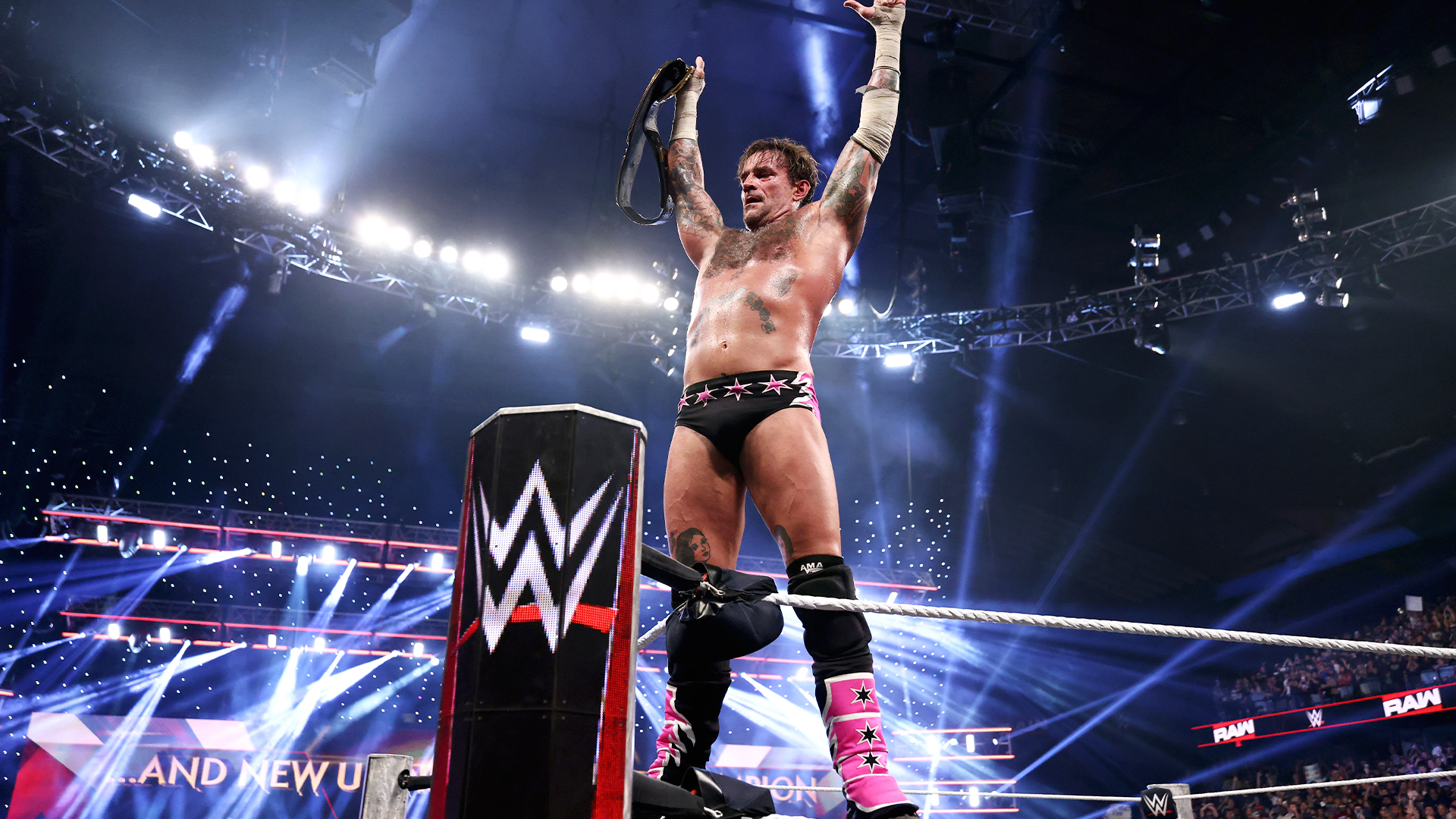
CM Punk's return is running on fumes and bad chemistry
4 days, 14 hours ago
Ethan Page and the math of modern WWE roster turnover
5 days agoNJPW's G1 Climax 36 gamble shifts to Chicago soil
1 week agoMore Analysis
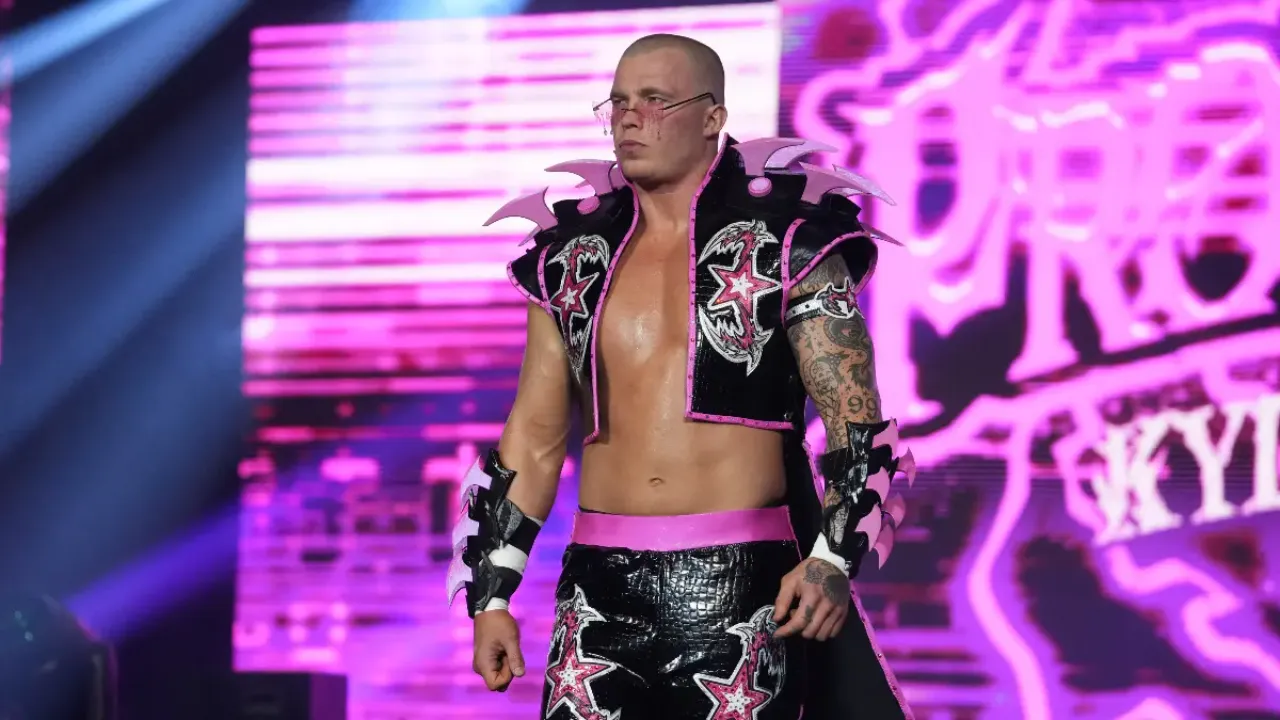
AEW Collision's move to Thursday is a dangerous experiment
1 week, 3 days ago
Why TNA's bizarre AMC ratings split forces an inevitable timeslot shift
2 months, 4 weeks ago
AEW is drifting into the WrestleMania shadow and it shows
3 months, 1 week ago
AEW Collision is fighting a losing battle with the calendar
3 weeks, 2 days ago
AEW Collision Thursday experiment just hit a speed bump
1 week, 3 days ago